New videos: long line extraction, spot fires, and battles lost

The Wildland Fire Lessons Learned Center has released a dozen videos in the last month. They can all be seen on their YouTube Channel, but here are three of them.

The first is a recording of a webinar, in which Brian Potter, a research meteorologist with the USDA Forest Service, presented a summary of the state of science behind spot fires. Spotting is one characteristic of “extreme fire behavior,” capable of short range acceleration of fires as well as producing long-distance spot fires that complicate management efforts. The presentation summarizes current knowledge and tools, as well as knowledge gaps

The next, below, was produced by the National Wildfire Coordinating Group, and describes our wildland fire fatality history, and the hard lessons learned.

The third one shows an emergency longline extraction on the Freezeout Ridge Fire,
September 21, 2014. For more information about the incident, see the Freezeout Ridge Facilitated Learning Analysis.

Helicopter pilot killed in crash in South Africa

South African Police ServiceThe South African Police Service issued the following statement about the firefighting helicopter pilot that died in the line of duty while working on a fire Saturday, March 7:

****

“Western Cape Provincial Commissioner, Lieutenant General Arno Lamoer has conveyed his sincere condolences on the passing of Colonel Hendricks Willem Marais who died when his helicopter crashed while water bombing a fire in the Cape Point Nature Reserve.

Colonel Marais worked as the first unit commander of the South African Police Service’ Airwing in Cape Town. He retired in 2004 at the age of 60. His former colleagues described him as a remarkable human being who was always prepared to help others. Colonel Marais was sworn in to the SAPS in 1990.

Lt General Lamoer remembers Col Marais as a pilot with strong work ethic, who was dedicated to his work. “He was affectionately called Bees and trained a number of police members with the Airwing environment. What an incredible human being he was. You could not miss his positive spirit. Our thoughts and prayers are with his wife, family and colleagues. He will be sorely missed. On behalf of the SAPS family we say may his Soul rest in peace.”

****

Our sincere condolences go out to Colonel’s family and co-workers.

South Africa firefighter killed in vehicle accident

From iol Mobile, March 6, 2015:

“Cape Town – A young firefighter from the West Coast District Municipality died on Thursday when the fire truck he drove left the road and plunged down the side of the Dasklip Pass.

Nazeem Davies, 25, from Worcester, was on his way back to the Vredenburg station from the Winterhoek Mountains, near Porterville, where he and his colleagues had helped put out a fire.

West Coast District Municipality spokesman Kallie Willemse said Davies and a colleague, Niklaas Nel, were on their way back to Vreden.

Nel escaped with slight injuries, but the truck hit a large boulder on the way down, which stopped it but crushed the truck to the point where hydraulic jaws had to be used to extricate Davies’ body from the wreck.”

Our sincere condolences go out to the firefighter’s co-workers and family.

NTSB report on the crash of Tanker 11

Air Tanker 45
Air Tanker 45, similar to Tanker 11, on final to drop on the Whoopup Fire near the South Dakota/Wyoming state line in 2011. Photo by Bill Gabbert.

The National Transportation Safety Board probable cause report on the June 3, 2012 crash of Tanker 11 concluded that while preparing to drop retardant on the White Rock fire near the Utah/Nevada state line, the flight crewmembers “did not properly compensate for the wind conditions while maneuvering”. The aircraft impacted the ground before it reached the location for the intended drop, causing the death of pilots Todd Tompkins and Ron Chambless.

A photographer got some pictures of the tanker as it was attempting to make the drop (below). It is likely that the pilots jettisoned the retardant when it became obvious they were too low.

tanker 11 crash
Tanker 11 before the crash. Photo from NTSB.

The P2V, operated by Neptune Aviation, was about to make its second drop on the fire that day. Shortly before the crash it made a dry run over the target area, then when lining up for the drop on the next pass took a different path, which was lower, and made a wider right turn, according to the report.

T11 flight pathThe same day that Tanker 11 crashed, another P2V, Tanker 55 operated by Minden, had a mechanical failure and landed at Minden, Nevada with a main landing gear not fully extended. The aircraft was heavily damaged, but there were no serious injuries. The landing was recorded on video.

In June of this year Tanker 48, another Minden P2V, landed with a collapsed nose gear. Thankfully there were no reported injuries.

We covered the 2012 accidents on Wildfire Today (before Fire Aviation was created).

On June 26, 2010 air tanker 44, a P2V operated by Neptune Aviation also experienced a hydraulic failure upon landing, had no brakes, and went off the runway at Rocky Mountain Metropolitan Airport (JeffCo) in Colorado (map). Both pilots self-evacuated and were walking around when the fire apparatus arrived to put out a fire in one of the engines. Neptune repaired the aircraft and put it back into service.

The NTSB released a nine-page Factual Report on the crash of Tanker 11. Below is the complete text of the one-page probable cause report, released September 24, 2014:

****

14 CFR Public Use
Accident occurred Sunday, June 03, 2012 in Modena, UT
Probable Cause Approval Date: 09/24/2014
Aircraft: LOCKHEED P2V-7, registration: N14447
Injuries: 2 Fatal.

NTSB investigators either traveled in support of this investigation or conducted a significant amount of investigative work without any travel, and used data obtained from various sources to prepare this public aircraft accident report.

Tanker 11 departed the tanker base to conduct its second fire retardant drop of the day in the same location. Upon arriving in the fire traffic area, Tanker 11 followed the lead airplane into the drop zone, which was located in a shallow valley 0.4 mile wide and 350 feet deep. The lead airplane flew a shallow right turn onto final and then dropped to an altitude of 150 feet above the valley floor while approaching the intended drop zone. While making the right turn onto final behind the lead airplane, Tanker 11’s right wing tip collided with terrain, which resulted in a rapid right yaw and subsequent impact with terrain. The wreckage created a 1,088-foot-long debris field, and a postimpact fire ensued.

Two witnesses took photographs of the accident sequence photos, and an examination of these photographs showed that the lead airplane was positioned ahead of the tanker throughout the flight; however, the orientation of the lead airplane compared to the orientation of Tanker 11 indicated that Tanker 11 did not directly follow the lead airplane’s path to the final drop course. Rather, it was about 700 feet left of the lead airplane’s path and made a wider right turn as it attempted to align with the final drop course. The accident flight crewmembers had previously flown nearly the same exact drop and the lead pilot cautioned them about tailwind conditions during the flight; however, the wider turn suggests that they did not properly compensate for the wind conditions while maneuvering. In addition, the previous flight was conducted at an altitude above the ridgeline. GPS evidence indicates that the accident flight was conducted below the ridgeline, which would have made it more difficult to detect the rising terrain during the wider turn. A review of the airplane’s cockpit voice recorder audio information revealed that the flight crew did not recognize or attempt to correct the reduced clearance between Tanker 11 and the rising terrain until about 2 seconds before impact.

The National Transportation Safety Board determines the probable cause(s) of this accident as follows:

  • The flight crew’s misjudgment of terrain clearance while maneuvering for an aerial application run, which resulted in controlled flight into terrain. Contributing to the accident was the flight crew’s failure to follow the lead airplane’s track and to effectively compensate for the tailwind condition while maneuvering.


Firefighter killed in South Australia

Brian Johnston
CFS volunteer Brian Johnston.

A firefighter was killed December 9 in South Australia. Below is an excerpt from an article at news.com.au:

Country Fire Service volunteer Brian Johnston would have marked 50 years of fighting fires in 2015 — a heroic milestone cut short by a tragic accident Tuesday afternoon.

The 65-year-old, who was a member of the Millicent Brigade and Deputy Group Officer of Wattle Range, was killed when he was hit by a truck while preparing to fight a grass fire at Rendelsham in the state’s Southeast late yesterday afternoon.

Mr Johnston was standing behind the CFS utility he had been driving on the Southern Ports Highway, about 12km northwest of Millicent, and preparing to fight a fire when another truck attending the blaze crashed into him.

Shortly before the crash, at about 4.30pm on Tuesday, CFS fire trucks had been called to a grass fire in the area.

Mr Johnston, who had retired just 12 months ago from an extensive career at the Kimberley Clark mill in Millicent was the second CFS volunteer to be killed this year, after father-of-two Andrew Harrison was killed while fighting a fire at Nantawarra in October.

CFS chief officer Greg Nettleton said the tragedy had happened in low visibility, due to smoke from a the nearby fire Mr Johnston was fighting.

Our sincere condolences go out to Mr. Johnston’s family and co-workers.

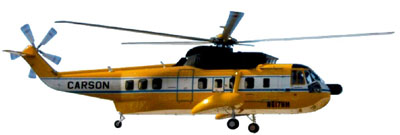
Former Carson Helicopters VP pleads guilty to charges related to crash that killed 9 firefighters

Carson helicopter

Today in federal court in Medford, Oregon, a second person pleaded guilty to charges related to the crash of a helicopter in 2008 that killed nine wildland firefighters.

Steven Metheny, 44, the former Vice President of Carson Helicopters, pleaded guilty to one count each of filing a false statement and of conspiracy to commit mail and wire fraud while submitting documents to obtain $20 million in firefighting contracts with the U.S. Forest Service.

Read the rest of the story at Wildfire Today.

Another person pleads guilty to charges related to the Carson helicopter crash that killed 9 firefighters

Today in federal court in Medford, Oregon, a second person pleaded guilty to charges related to the 2008 crash of a helicopter in northern California that killed nine wildland firefighters.

Steven Metheny, 44, the former Vice President of Carson Helicopters, pleaded guilty to one count each of filing a false statement and of conspiracy to commit mail and wire fraud while submitting documents to obtain $20 million in firefighting contracts with the U.S. Forest Service.

In January of 2013, Mr. Metheny was indicted for conspiracy to defraud the United States, plus 22 other counts of mail fraud, wire fraud, making false statements to the Forest Service, endangering the safety of aircraft in flight, and theft from an interstate shipment.

The two charges that Mr. Metheny pleaded guilty to today combined have a maximum federal prison sentence of 25 years and fines up to $500,000. U.S. Magistrate Judge Mark D. Clarke set a March 2 sentencing date. According to the plea agreement in this case, the U. S. Attorney’s Office will be seeking an enhancement to Mr. Metheny’s sentence based on the offense involving the reckless risk of death or serious bodily injury.

United States Attorney Amanda Marshall said today:

This is a particularly important case. Submitting false information about helicopter payload capabilities in the bid process both defrauded the Forest Service and created a reckless risk of harm to those who used the information in firefighting operations. This includes those who were relying on the false information when a Carson helicopter crashed near Weaverville, California on August 5, 2008, killing nine and seriously injuring four others.

In September of 2013, Levi Phillips, 45, the former maintenance chief of the company, pleaded guilty to a single charge of fraud and now faces up to 20 years in prison and up to $250,000 in fines. He agreed to cooperate with authorities in the case against Mr. Metheny. Mr. Phillips’ sentencing  is set for February 2.

The crash of the Sikorsky S-61N helicopter occurred on the Iron 44 Fire (or Iron Complex) on the Shasta-Trinity National Forest near Weaverville, California. Killed were the pilot-in-command, a U.S. Forest Service check pilot, and seven firefighters. The copilot and three firefighters were seriously injured. The helicopter was operated by Carson Helicopters, Inc. of Grants Pass, Oregon.

Killed in the crash were pilot Roark Schwanenberg, 54; USFS check pilot Jim Ramage, 63; and firefighters Shawn Blazer, 30; Scott Charlson, 25; Matthew Hammer, 23; Edrik Gomez, 19; Bryan Rich, 29; David Steele, 19; and Steven “Caleb” Renno, 21. The copilot and three other firefighters were seriously injured.

According to the National Transportation Safety Board, there was “intentional wrong-doing” by Carson Helicopters that under-stated the weight of the helicopter and over-stated its performance in the documents they provided to the U.S. Forest Service when bidding on their firefighting contract. The NTSB estimated that the actual empty weight of the helicopter was 13,845 pounds, while Carson Helicopters stated in their contract proposal that the weight was 12,013 pounds. For the purpose of load calculations on the day of the crash, the pilot assumed the weight to be 12,408 pounds, which was 1,437 pounds less than the actual weight estimated by the NTSB. According to the NTSB, for the mission of flying the firefighters off the helispot that day, the helicopter was already over the allowable weight even without the firefighters on board.

In Mr. Metheny’s plea agreement there was an admission that the helicopters had not actually been weighed.

In addition, here is an excerpt from the NTSB report:

The altered takeoff (5-minute) power available chart that was provided by Carson Helicopters eliminated a safety margin of 1,200 pounds of emergency reserve power that had been provided for in the load calculations.

The pilot-in-command followed a Carson Helicopters procedure, which was not approved by the helicopter’s manufacturer or the U.S. Forest Service, and used above-minimum specification torque in the load calculations, which exacerbated the error already introduced by the incorrect empty weight and the altered takeoff power available chart, resulting in a further reduction of 800 pounds to the safety margin intended to be included in the load calculations.

The incorrect information—the empty weight and the power available chart—provided by Carson Helicopters and the company procedure of using above-minimum specification torque misled the pilots to believe that the helicopter had the performance capability to hover out of ground effect with the manifested payload when, in fact, it did not.

In March of 2012, a jury in a civil suit ordered the manufacturer of the helicopter’s engines, General Electric, to pay $69.7 million to William Coultas (the surviving pilot), his wife, and the estate of Roark Schwanenberg (the pilot who was killed).

Nina Charlson, the mother of Scott Charlson, said before the guilty plea today, “Justice needs to be served. Metheny is not the only person who did less than quality work.” She contends the U.S. Forest Service should have weighed the helicopter to confirm the information submitted by Carlson Helicopters.

South Australia firefighter killed while fighting vegetation fire

In South Australia a Mt. Templeton Country Fire Service volunteer firefighter, Andrew Harrison, 38, was fighting a fire when he suffered severe burns. He was flown to the Royal Adelaide Hospital in critical condition with severe burns to much of his body and later died.

There are reports that the fire originated from a lentil harvesting operation. CFS chief officer Greg Nettleton said there had been a spate of fires involving lentil harvesting over the past year.

“We will be speaking to the farmer representative bodies to sit down and say how can we work in partnership to reduce the potential for fire during farming operations whatever they may be,’’ he said.

Research by Queensland academic Graeme Quick for Grain Producers SA earlier this year found lentil dust had a lower ignition point than other grain residue.

Our sincere condolences go out to the family of Mr. Harrison.

Memorial service for air tanker pilot planned

Firefighters will gather to pay their respects to airtanker Pilot Geoffrey “Craig” Hunt who paid the ultimate sacrifice with his life while fighting the Dog Rock Fire near El Portal, California. A celebration of Craig’s life, with full Line of Duty Death fire service honors, will take place Tuesday, October 21, 2014 at 10 a.m.

On October 7, 2014, Dyncorp Pilot Geoffrey “Craig” Hunt was involved in a fatal crash while flying a CAL FIRE S-2T Airtanker over the Dog Rock Fire burning near Yosemite’s Arch Rock.

“We continue to mourn the tragic loss of Craig.” said Chief Ken Pimlott, CAL FIRE Director.

“We know wildland firefighting is an inherently dangerous job, but Craig made the ultimate sacrifice.”

“Our thoughts and prayers are with the pilot’s family during this difficult time,” said Jeff Cavarra, program director for DynCorp International.

Geoffrey “Craig” Hunt was born October 14, 1951 in Richmond, IN. He is survived by his wife, Sally, who he married in September of 1975, and his two daughters, Nancy Hunt and Sarah Hunt Lauterbach. Hunt served as a US Navy P3 pilot from 1975-1984 and was in the reserves for 20 years. Hunt earned a Master’s in Business as well as in Biochemistry and was a chemistry teacher in the off season at the University of Santa Cruz. He had a love for flying, golfing, fishing, hiking, bird watching, scuba diving, math/sciences, teaching and dogs.

“My dad died a hero. There was not a day that went by that I didn’t talk to my dad. He was my best friend”, said Sarah Hunt Lauterbach.

Memorial Service
Location: Church on the Hill, 500 Sands Dr., San Jose, CA 95125
Date: Tuesday, October 21, 2014 at 10 a.m.
Attire for uniformed personnel is to be either Department Class A Uniform or Work Uniform with tie.
Public Safety Departments or Agencies that wish to attend or send apparatus for the memorial static display, please click here. Please arrive at the church by 9:00 a.m. for set up.

Cards can be sent to the family in care of:
The Hunt Family
c/o CAL FIRE Firefighters Local 2881
1731 J Street, Ste. 100
Sacramento, CA 95811

In lieu of flowers donations can be made to:
G. Craig Hunt Memorial Fund
Ashville School
360 Ashville School Road
Ashville, NC 28806
This fund will be designated for scholarship and athletics at the Ashville School.
Contact: Tom Marberger at (828) 254-6345 ext. 4081

Geoffrey "Craig" Hunt
Geoffrey “Craig” Hunt. Courtesy of Mr. Hunt’s family.

NTSB has tentatively ruled out mechanical issues as cause of T-81 crash

CAL FIRE Director Ken Pimlott
CAL FIRE Director Ken Pimlott addresses the media on October 10, 2014, concerning the status of the investigation into the crash of Tanker 81 on October 7. On the left in the white shirt is NTSB investigator Josh Cawthra. Over Director Pimlott’s right shoulder is CAL FIRE Chief Pilot Bill Payne.

In a press conference on Friday an investigator for the National Transportation Safety Board said they have tentatively ruled out mechanical issues as the primary cause of the October 7 crash of the air tanker on the Dog Rock Fire near Yosemite National Park in California.

Pilot Geoffrey “Craig” Hunt was killed when the S-2T air tanker impacted the ground while he was attempting to make his second retardant drop on the fire.

NTSB investigator Josh Cawthra said that while it is early in the investigation which will take six to eight months to complete, mechanical or fatigue issues do not appear to be factors in the crash. In addition, he said they have received no reports of turbulence in the drop area. They expect to have a preliminary report available on the NTSB website within about five days.

The investigators began by conducting an aerial recon over the crash site to become familiar with the very steep terrain and the extent of the debris field. After the fire activity had diminished, they documented it from the ground.

The team has completed the on-scene portion of the investigation but they still need to recover, reconstruct, and examine some portions of the wreckage which are scattered over an area about 1/4 mile long. There is still some active fire in the area, and they will be working with CAL FIRE and the National Park Service to remove the aircraft parts after the fire has cooled down.

The investigators will be looking at “man, machine, and the environment”, Mr. Cathra said, and:

This accident is extremely tragic. We have a community that was threatened by a wildland fire, there were evacuations being done. These pilots put their life on the line. They were out there in a very — it’s a controlled environment, but yet there is also an amount of risk. And it is something that affects everybody as a whole. We get to know these pilots as well throughout the year. Our primary mission with the NTSB is to figure out what happened, why it happened, and how we can prevent this from ever occurring again.

Director Ken Pimlott said beginning today, Friday, CAL FIRE will start transitioning their tanker pilots back into their aircraft, after having been grounded since immediately after the accident. Each of them will be evaluated, but some, he said, will require more time to deal with the tragedy than others.

He recognized and thanked the U.S. Forest Service for providing air tankers to cover the state of California while the 22 remaining S-2Ts were not available. Providing that coverage was made less complicated by the lack of wildfire activity in the rest of the United States.

In the video of the press conference below, the people you will see, in the order of  appearance, are:

  1. Daniel Berlant, CAL FIRE Information Officer
  2. Ken Pimlott, CAL FIRE Director
  3. Josh Cawthra, NTSB Investigator
  4. Bill Payne, CAL FIRE Chief Pilot, and
  5. Daniel Berlant, CAL FIRE Information Officer