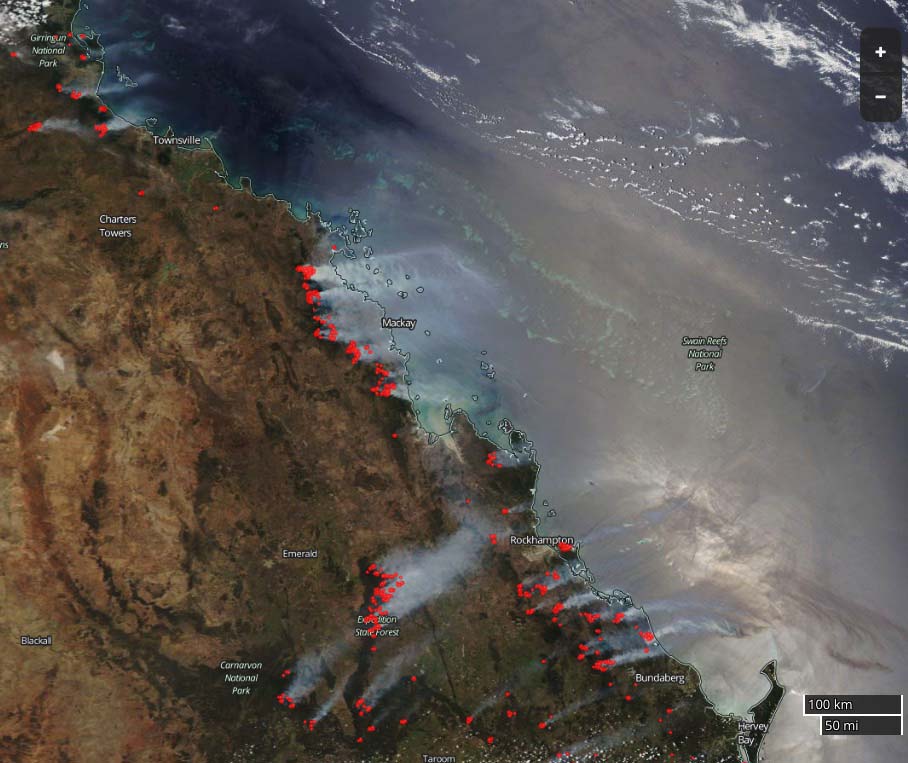
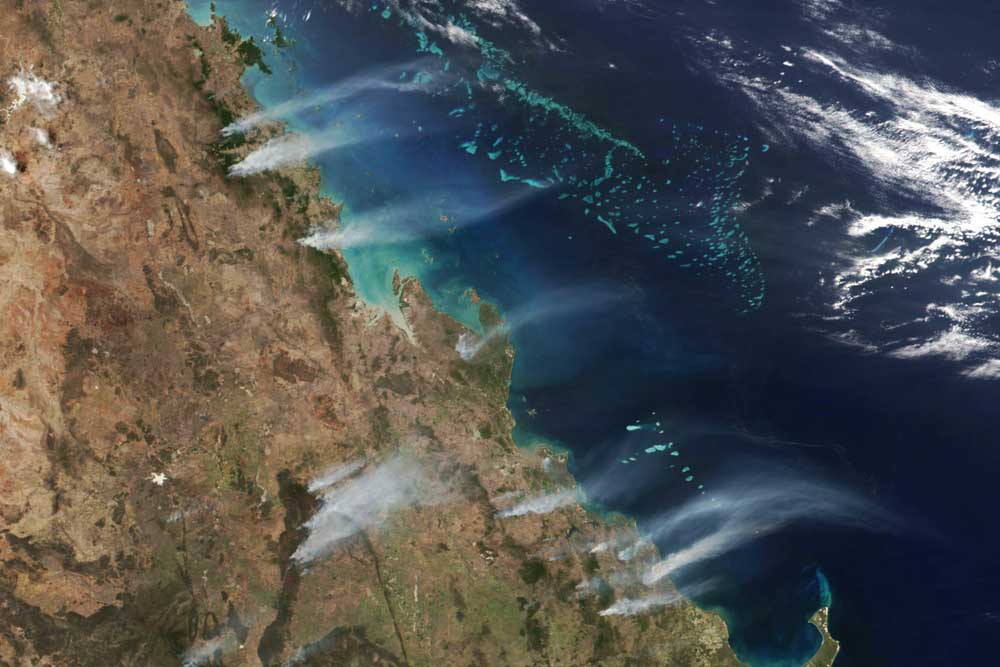
Satellite photo showing smoke from wildfires in Queensland, Australia November 29, 2018. NASA
Firefighters in Queensland are expecting another five days of exceptionally hot and dry weather. There are 130 fires currently burning, with about seven of them described as fast moving and significant.
Hundreds of firefighters have arrived from New South Wales and other areas to lend a hand.
An evacuation order remains in place for Deepwater, while a number of areas including Dalrymple Heights, Winfield, Carmila and Captain Creek are being urged to “stay informed”.
Record temperatures are forecast for Longreach in excess of 45 C (113 F) in the coming days before the heatwave is expected to move down to the southeast next week.
The premier of Queensland, Annastacia Palaszczuk, has been monitoring the situation closely and is helping to spread important information to the residents of her state.
Thank you everyone for obeying authorities in fire affected areas.
I urge you to keep doing that. Today’s situation is changing rapidly from hour to hour in many different communities.
So please listen to ABC radio & follow @QldFES & @QldPolice constant updates. pic.twitter.com/rCQaf3Yuae
— Annastacia Palaszczuk (@AnnastaciaMP) November 29, 2018
A television station in Sacramento, ABC10, has recently produced several videos 8 to 13 minutes long about the wildfires in California. We will be showing you a few of them over the next couple of days.
The example below is about the Eldorado Hotshots, and features a former military sniper and another who initially received his fire training as a member of an inmate crew.
Australia’s National Aerial Firefighting Centre (NAFC) has updated the graphic showing their aerial firefighting resources. The text is hard to read in this image, but you can download a higher-res version and a booklet.
Several times over the last month President Trump has expressed his opinions about wildland fire management. On two occasions he said forests were being mismanaged in California, but did not specify exactly how, or if he was referring to the half of the forested land in the state that is managed by the federal government, or possibly the state managed lands, or private property. He also threatened twice to cut funding in the state because “forest management is so poor”, but it was not clear what funds he wants to reduce.
On November 27 Mr. Trump expanded on his wildfire management opinions in a lengthy interview with two reporters from the Washington Post, Philip Rucker and Josh Dawsey. Below is what he said to them about fires, according to the Post:
“The fire in California, where I was, if you looked at the floor, the floor of the fire they have trees that were fallen, they did no forest management, no forest maintenance, and you can light — you can take a match like this and light a tree trunk when that thing is laying there for more than 14 or 15 months. And it’s a massive problem in California. … You go to other places where they have denser trees — it’s more dense, where the trees are more flammable — they don’t have forest fires like this, because they maintain. And it was very interesting, I was watching the firemen and they’re raking brush — you know the tumbleweed and brush and all this stuff that’s growing underneath. It’s on fire and they’re raking it working so hard, and they’re raking all this stuff. If that was raked in the beginning, there’d be nothing to catch on fire. It’s very interesting to see. A lot of the trees, they took tremendous burn at the bottom, but they didn’t catch on fire. The bottom is all burned but they didn’t catch on fire because they sucked the water, they’re wet. You need forest management, and they don’t have it.”
This quote was in the Post’s Fact Checker column, written by Glenn Kessler and Salvador Rizzo, in which they checked a number of statements made in the interview. If you scroll down you will see what the authors determined to be factual, or not, in the President’s comments about fire.
An association that represents about 30 vendors who supply shower and catering services at wildland fires is seeking a modification of certain hours-of-service rules when they en route to a fire. These companies provide hot showers and on site meals for wildland firefighters while they are working on fires, usually in the Western United States.
The National Mobile Shower & Catering Association (NMSCA) submitted to the Federal Motor Carrier Safety Administration (FMCSA) a request to modify the Federal hours-of-service (HOS) rules for their commercial motor vehicle drivers while they are traveling to an assignment under a Resource Order:
Extend the 14-hour duty period to no more than 16 hours;
Not include “waiting time” while not performing duties in the calculation of the 16-hour duty period;
Not comply with the minimum 30-minute rest break provision;
Extend the maximum 60 hours on duty in any 7-day period to 80 hours on duty in any 7-day period;
Extend the 11 hours of driving time to 12 hours; and,
Extend the “8 days in 30” exception in the electronic logging device (ELD) rule to “12 days in 30.”
The FMCSA is requesting public comment on the NMSCA application for exemption, which must be received on or before December 27, 2018. Instructions for commenting are at the Federal Register.
Thanks and a tip of the hat go out to Bob. Typos or errors, report them HERE.
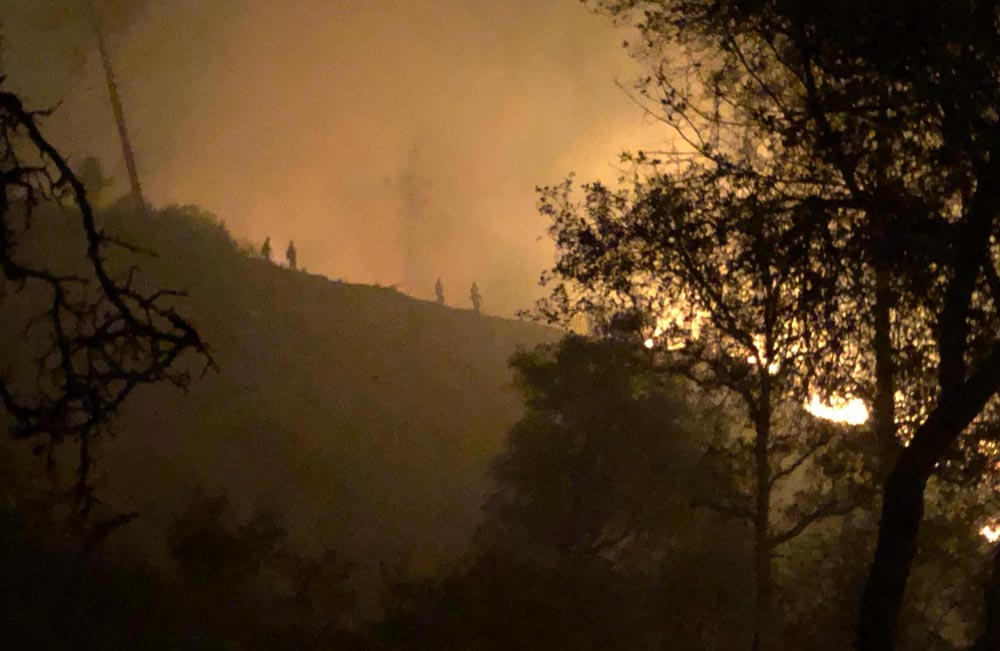
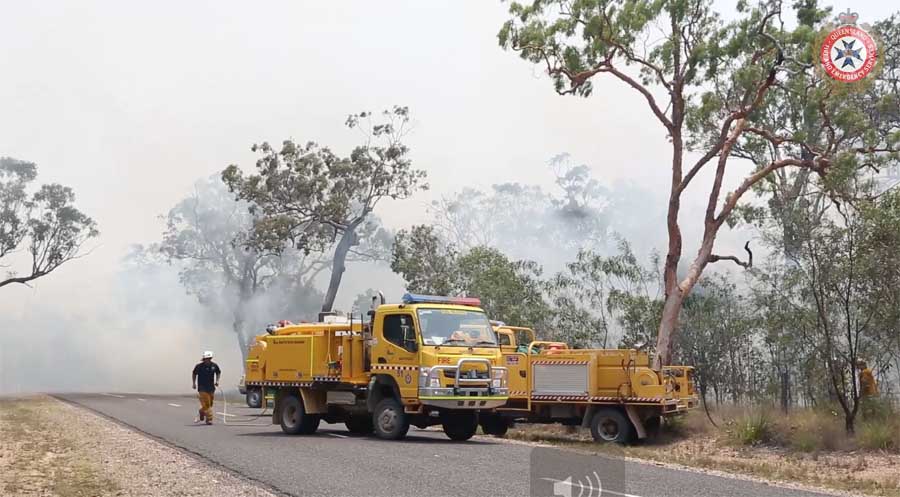
Firefighters battle the wildfire near Deepwater in Queensland. F&ES photo.
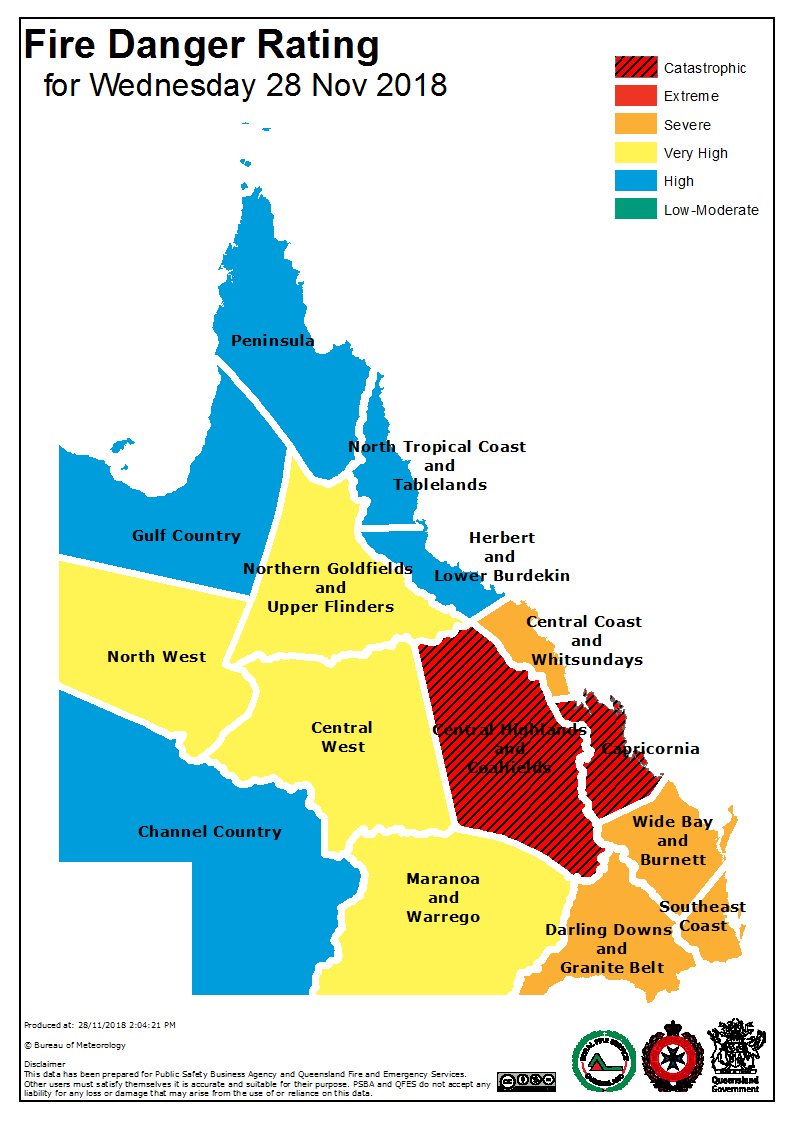
Firefighters and residents of Queensland in northeast Australia are figuring out how to deal with unprecedented conditions — 135 wildfires all burning at the same time during very hot, windy conditions. Fire officials have elevated the fire danger to a level previously unseen in the state, “catastrophic”. Evacuations are underway in several communities.
The Queensland Bureau of Meteorology wrote in their tweet with this image: “Fire ? Danger Ratings have reached Catastrophic for the first time in #Queensland due to the combination of a very dry, hot airmass and strong, gusty westerly winds. Follow the advice of @QldFES during these extremely challenging fire weather conditions.
This is supposed to be the wet season in Queensland.
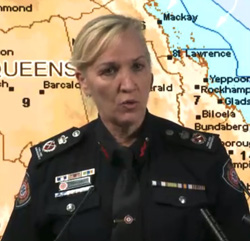
Katarin Carroll, Commissioner of Queensland F&ES at briefing November 26, 2018.
In a public briefing Wednesday evening, Katarin Carroll, Commissioner of Queensland Fire and Emergency Services, said they saw this coming and began ordering additional firefighting resources from New South Wales and other states last week. The forecast calls for the extraordinarily hot and dry weather to continue in Queensland through Tuesday, December 4. Meanwhile farther south, New South Wales is receiving large quantities of rain, causing flooding in some areas.
This is normally the dry season in NSW.
In the video below Annastacia Palaszczuk, Premier of Queensland, begins the November 26 evening briefing about the fire situation, followed by Commissioner Carroll.
Wildfires are affecting a number of areas in Queensland, including Campwin Beach, Sarina Beach, Deepwater, Baffle Creek, Rules Beach, Oyster Creek, Caloundra, Gracemere, Eungella, and Kowari Gorge.
Satellite photo of smoke from the fires in Queensland, Australia, November 26, 2018. Since then clouds have made it difficult to obtain a good image of the area. NASA