A long-awaited funding support for a vital bushfire information service across northern and remote Australia has been included in an Australian Government $12 million package to boost bushfire preparations ahead of a predicted active fire season across the southern states.
Prime Minister Anthony Albanese has announced a series of measures before the El-Nino charged summer fully kicks in and follows his earlier boost to the National Aerial Firefighting Fleet.
None of these initiatives are new, but provide continued support for their development and use:
NAFI was created by a community of fire researchers and managers in 2002 and is managed by Charles Darwin University. It has long survived on piecemeal support and grant funding from various government sources. NAFI tracks current fire ‘hotspots’ from a number of different satellites including NOAA and NASA. It is the only service that provides critical fire information over the 80% (remote/regional) of Australia where 99.3% of fires occur. It is free for users to access.
The main fire season in the north of Australia typically begins around April/May and ends around now in the buildup to the Wet Season, so it’s inclusion in this pre-season package is unexpected, but welcomed.
NAFI Service Manager Kerry Crosbie said she was delighted to get to continued federal support that will run to end of June 2028.
“This investment will help ensure land managers, Indigenous ranger groups, emergency services and government agencies can continue to access the information they rely on for effective fire management and informed decision-making.”
Fire and water, ice and snow. The Wildland Canada Conference 2026 photo contest produced a spectacular range of still life snapshots of wildfire on the land.
The 600 delegates in Saskatoon, Saskatchewan for the conference last week voted for a first and second place in three divisions – Cultural Fire, Wildland Fire and Prescribed Fire.
The Carriere family from northern Saskatchewan took out both first and second prize for their photos in their We Are Fire program.
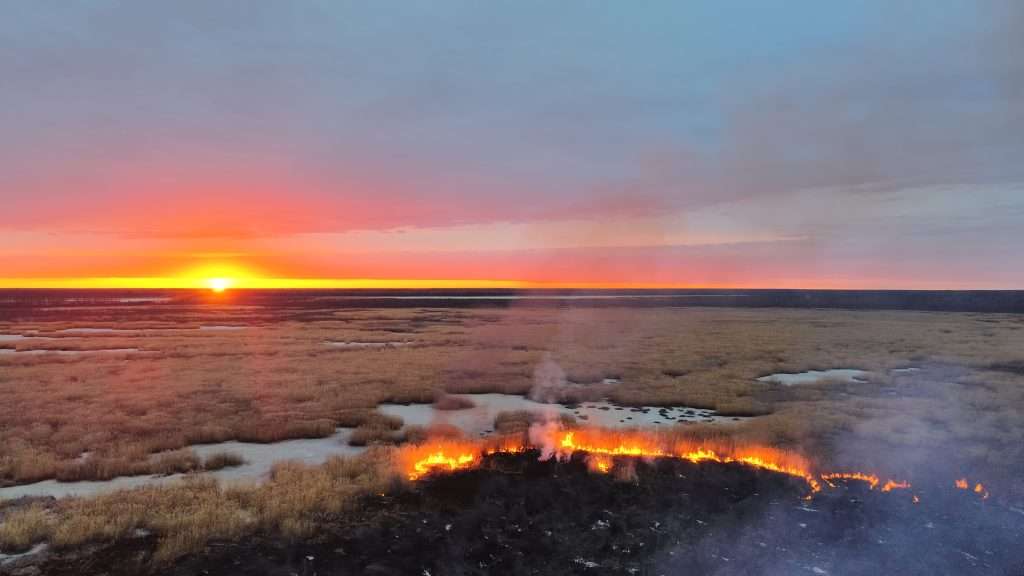
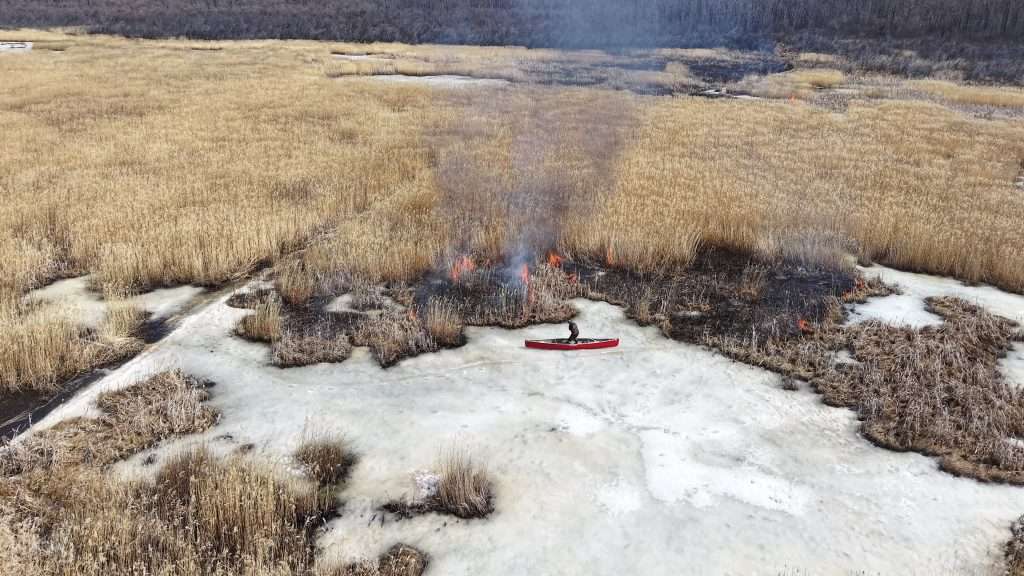
Michela’s photo of a cultural burn on the Saskatchewan River Delta was taken on her DJI Air3s drone. Her caption read: “Beautiful image captured as the sun was setting, the conditions were perfect for the burn. Part of the We Are Fire movement and Muskrats to Moose collective.”
Renee Carriere’s photo was titled Where Fire Meets Water. “An Elder Fire Land Guardian moves through the frozen channels of the Saskatchewan River Delta as fire travels through the golden marsh grasses. From above, the contrast between flame, ice, and the vast northern landscape reveals both the power of fire and the beauty of this living ecosystem. Cultural burning is more than the act of lighting a fire — it is a relationship with the land, guided by knowledge, observation, and respect. In this moment, fire and water meet in a landscape shaped by generations of connection to the land.”
Wildland Fire
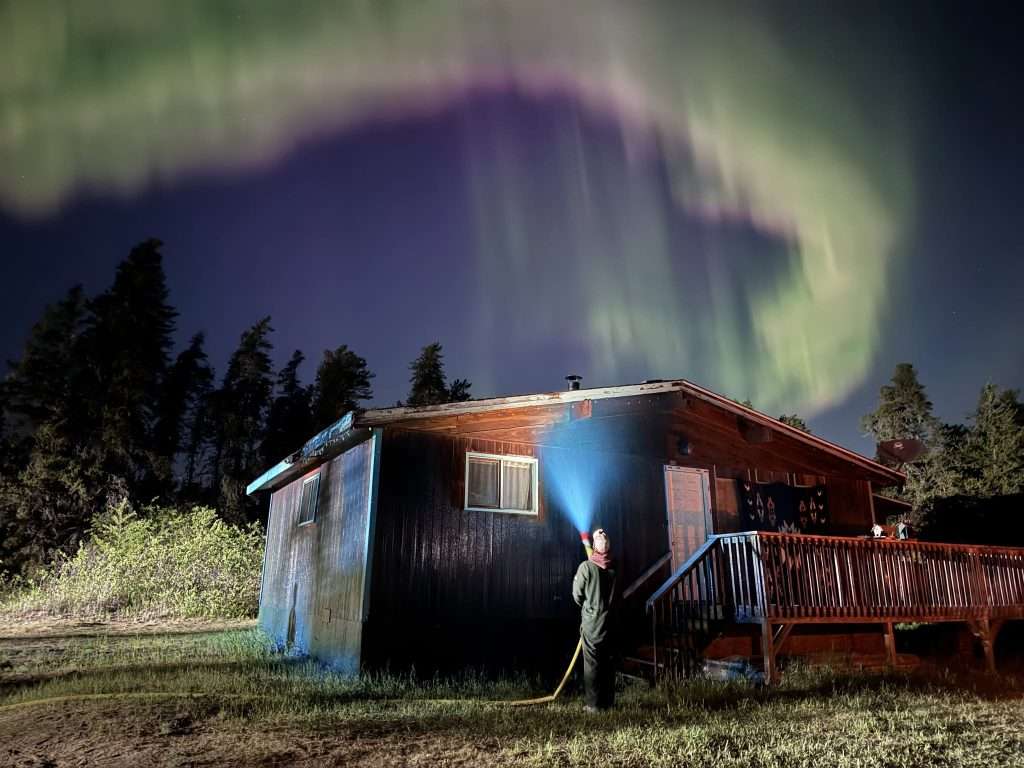
Wildland Canada Conference 2026 photo contest winner. Photo by Sarah Pratchler.Wildland Canada Conference 2026 photo contest winner. Photo by Natalie Krizan.
Sarah Pratchler from Gel Systems Canada won the category with the capture of the spectacular colours during the application of her organisation’s FG-2 Ready-To-Use Gel on a house at Molanosa (Montreal Lake Cree Nation) during the 2025 DITCH fire.
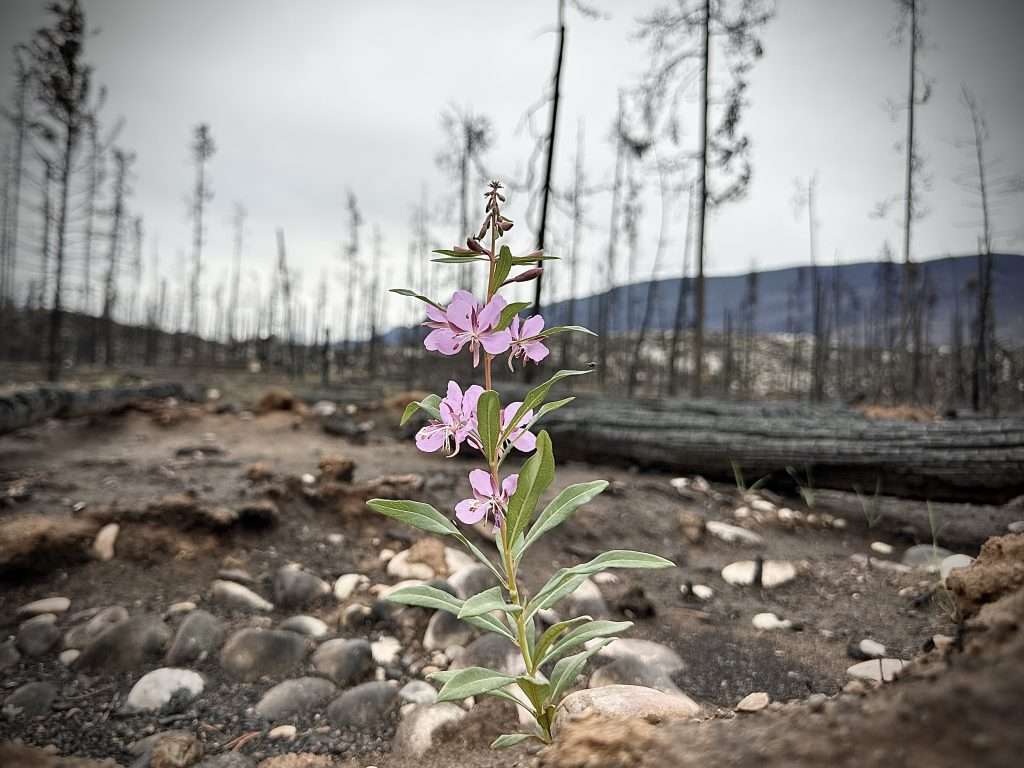
Runner up Natalie Krizan from the University of Lethbridge caught the regrowth after the severe Jasper wildfires of 2024. “Regrowth begins again a mere few months after, as bright purple fireweed contrasts against the charred landscape.”
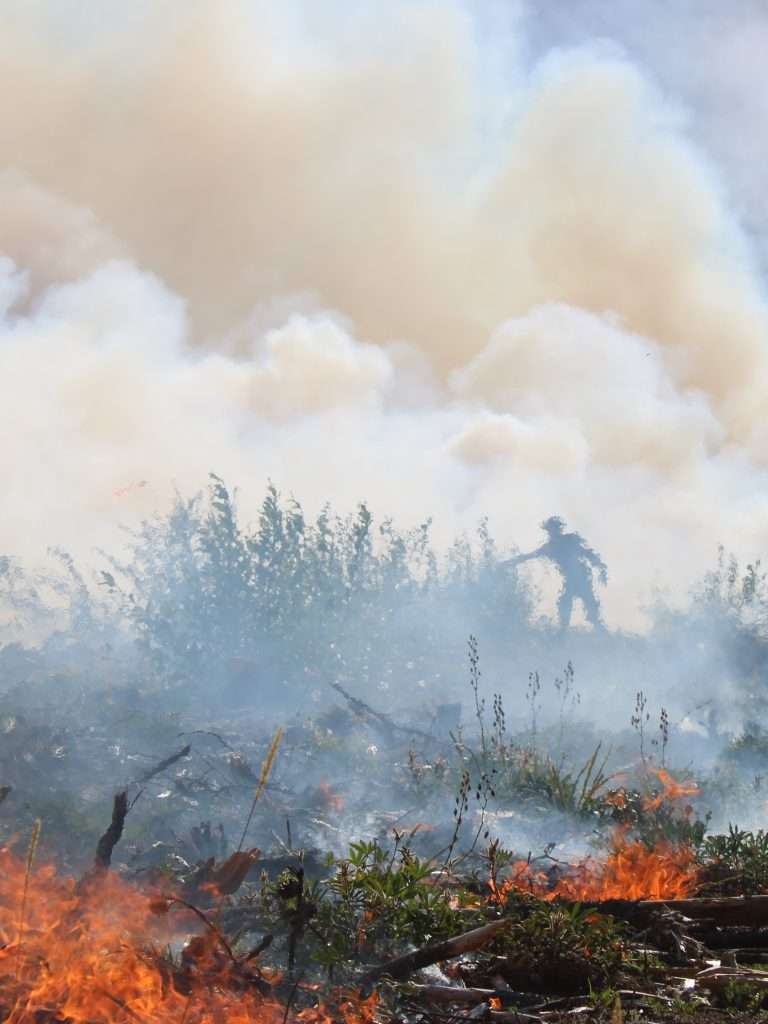
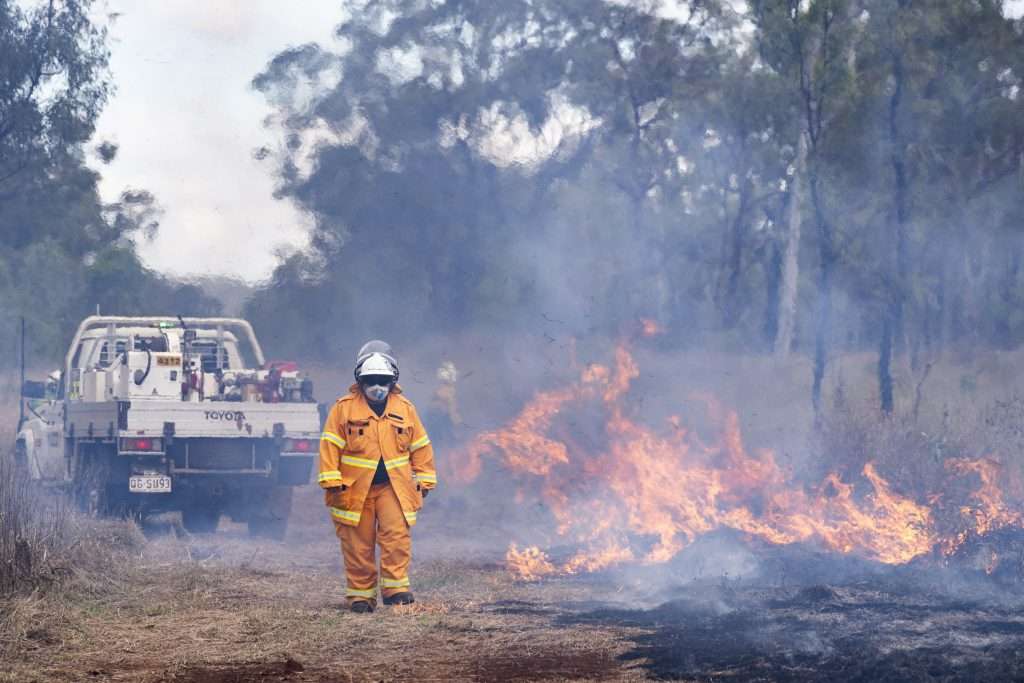
Natalie Krizan, University of Lethbridge, won this category with an intriguing image taken during a prescribed fire within the Whitehorse South fuel break. “The heat of the burn blurs the figure of a firefighter as he uses a drip torch to ignite the next row of protective flame.”
Sheldon Brewer’s photo was a riot of red as a firefighter worked on a firebreak around a community.
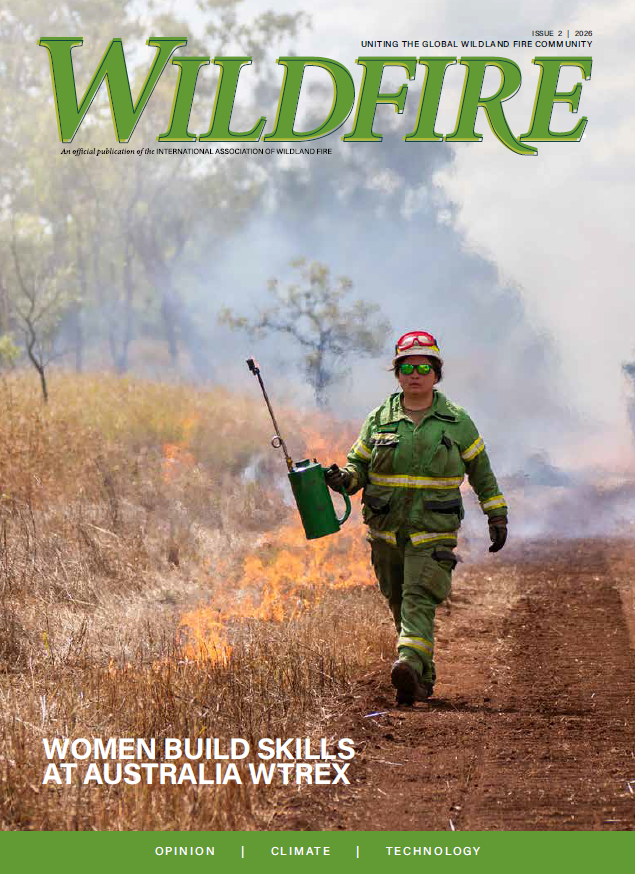
A fire training program for Indigenous women in Australia has resulted in increased confidence and knowledge among participants, a broader network of colleagues, and a commitment to share ideas and techniques.
The 12-day Australia Women-in-Fire Prescribed Training Exchange (AUS WTREX) in May 2025 was evaluated by researchers from Monash University in Melbourne and included interviews with participants.
“You’re around other women and they always push you and they show you new things that you didn’t know, and they didn’t degrade you if you didn’t know, or if you didn’t know an answer you could ask that question,” said Participant 8.
Participant 16 agreed that the majority-women program created a comfortable environment.
“I just felt it was just amazing being in there because usually here at work, our ops are mainly males . . . and I get a bit nervous to ask, can I help out or try to do this stuff? I feel like I’m going to get criticised or judged or if I do something wrong, I’m going to get into big trouble.”
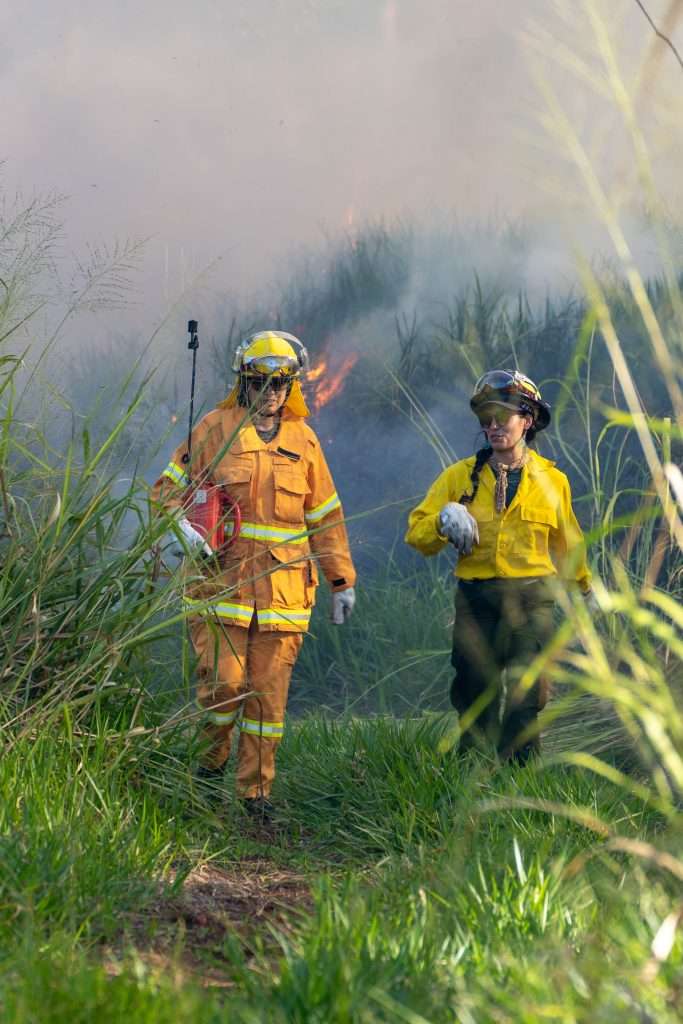
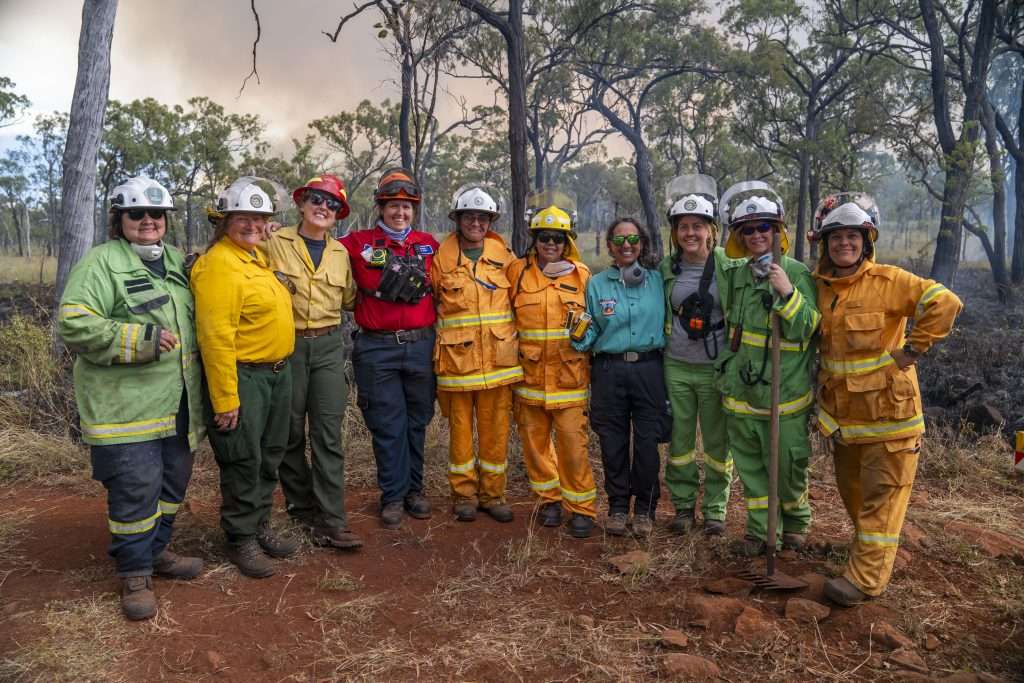
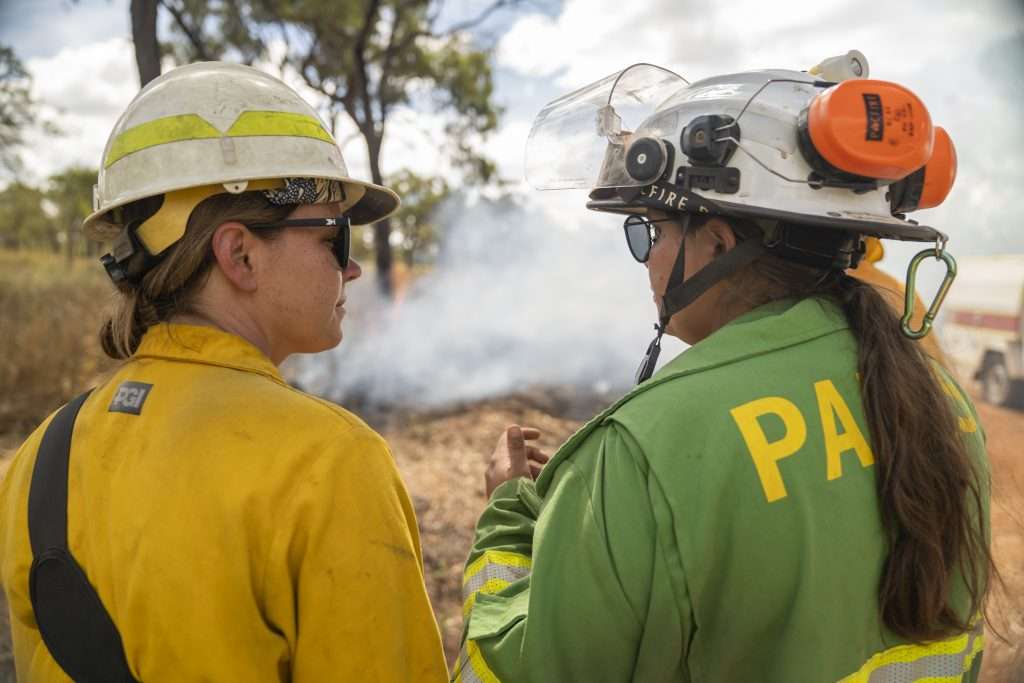
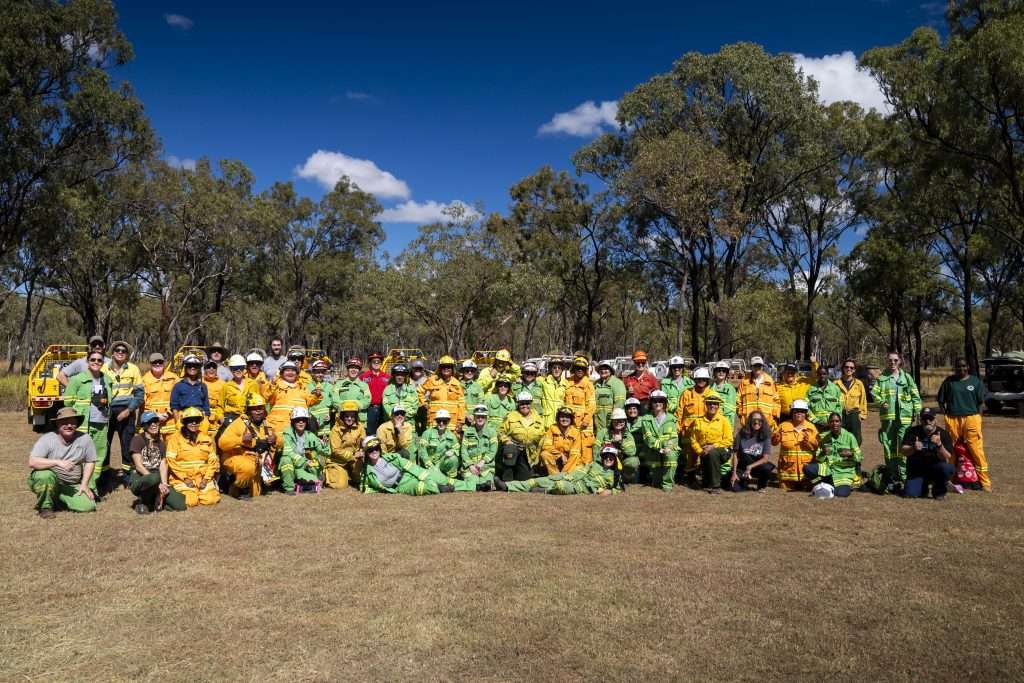
AUS WTREX participants gathered in North Queensland and burned in both the savannah and rainforest landscapes; they shared their knowledge, built their skills, talked about their challenges, and supported each other as fire practitioners.
The WTREX program, from its beginnings in North America, has resulted in the growth of an international network of women in fire management.
AUS WTREX participants gathered in North Queensland and burned in both the savannah and rainforest landscapes, May 2025. Photo: Queensland Fire Department.
Why Australia?
Following the destructive bushfires of 2019-2020 across eastern and southern Australia, the Royal Commission into National Natural Disaster Arrangements highlighted the potential of cultural burning to reduce fuel load and risk and to offer cultural and ecological benefits.
The Australian WTREX event, hosted by the Queensland Fire Department and Queensland Parks and Wildlife Service, provided an opportunity for researchers to document and evaluate how such initiatives brought a cultural benefit to First Nations women working or volunteering in Caring for Country, and fire- and land-management roles. Caring for Country is an Australian Indigenous worldview – the understanding that if you look after Country, Country will look after you. (Country is a term often used by Indigenous peoples of Australia to encompass lands, waters, seas and skies, and the relationships held within Country; this means that if Country is sick or unwell, the people connected to Country are also sick or unwell.) The WTREX evaluation report highlights the profoundly positive impacts of a culturally responsive professional development program on First Nations women.
Zoe Schultz, researcher with the National Indigenous Disaster Resilience project through Monash University in Melbourne, and Abby Gonzalez, originally from Mexico and is now with Karuk Department of Natural Resources in California. Gonzalez was a participant in the Women-in-Fire Prescribed Training Exchange (WTREX) event in Karuk and then helped with the Queensland training. Photo Queensland Fire Department.
The research team was led by associate professor Bhiamie Williamson, a Euahlayi man and academic in Indigenous disaster resilience, and included Nell Reidy, Zoe Schultz and Jess Walters. Canadian researcher Amy Cardinal Christianson advised the team; Christianson is Métis from northern Alberta and an IAWF board member.
Prescribed Fire Training Exchanges (TREX) were developed by the North American-based organization Fire Networks for intensive, hands-on training. In 2015, some female fire managers who participated in a TREX event in North Carolina adapted the program for women, and there have since been WTREX events in the United States, Canada, Portugal and South Africa.
In 2022, the first Indigenous women’s WTREX was hosted by the Karuk Tribe in the Klamath Mountains of northern California – the first time in more than 200 years that the Karuk people had been able to conduct cultural burning on their ancestral lands.
Four Indigenous Australian women from Queensland – Chloe Swiney, Kylee Clubb, Evelyn Ivey and Alex Lacey – were supported by their workplaces to participate in the Karuk WTREX; it was their first experience in such a program, and it inspired them to bring WTREX to Australia.
Lacey, a Ewamian woman and Undara Volcanic National Park ranger, is a co-author of the report along with Swiney and Lacey, and the Monash team. In the report, Lacey describes the event as life changing.
“To have worked with my sisters in fire to bring AUS WTREX to life, and then to see the powerful effect the program has had on other Indigenous women and firefighters from across the world, fills me with pride that we contributed to this growing international network of empowered Indigenous women in fire.”
Participants in the Australia Women-in-Fire Prescribed Training Exchange (AUS WTREX) in May 2025. Photo: Queensland Fire Department.
Twelve days with fire on country
In Queensland, the women enhanced their fire practitioner skills and shared cultural and western burning knowledge. The participants, who ranged in age from 19 to 60-plus, came from a range of professions and workplaces, including fire and land management roles within government agencies and Traditional Owner corporations. (Traditional Owner corporations are legal entities representing Indigenous Peoples who hold traditional rights and responsibilities to a specific area of land and waters (Country).)
Participants learned about incendiary burning, native plant species, the history of savannah and rainforest burning from Traditional Owners, took up roles in the incident command system, and practised traditonal Indigenous weaving with a range of materials.
Researchers used interviews, participant journals, and participant observation to evaluate the program, specifically looking at how First Nations women-led spaces and cultural knowledge exchanges impact wellbeing and memory.
According to the researchers’ report, there was a shared passion among the women toward culture and fire, with some participants describing cultural burning as cleansing. Deeper messages also emerged related to experiences of sexism, fear-based relationships with fire, and the impacts of colonisation and government laws, policies and practices on individual and family wellbeing.
The AUS WTREX participants spoke to researchers about the program as a safe and supportive space alongside other women in fire; this sentiment was particularly significant for those who said they were often the only woman, or the only Indigenous person, in their workplaces.
“The whole [AUS WTREX] program was really a big discussion of what challenges as women we face,” said Participant 3.
“ . . . women in the fire service [are few], but Indigenous women, even [fewer],” said Participant 5.
The research report indicates that participants became more confident through the act of teaching others.
“When I was there, I think it made me realise I actually know a lot of the stuff, especially the fire stuff,” said Participant 16.
“It built me with a lot of confidence in wanting to go and be more than just an operational ranger, which I’ve been for most of my working career, and wanting to go into those even more male-dominated spaces,” said Participant 1.
Participants exchanged knowledge about different burning techniques, learning from women who practice cultural and western-style burning across varied landscapes throughout Australia and overseas. Some participants said they were in awe of other Indigenous women who conduct aerial burns from helicopters.
“So, they were incendiary burners and they’re young women, young Aboriginal women that are doing this. And it’s like, wow, look that they’re out there in the choppers doing incendiary burnings,” said Participant 4.
Instructor Maura O’Connor with The Nature Conservatory North America Fire Team, from Brooklyn, New York, and WTREX participant Ivana Fuller, from Queensland Parks & Wildlife. Photo: Qld Fire Dept.
A safe, supportive program
The evaluation found that the AUS WTREX program was highly valuable, providing a safe and supportive space for First Nations women to build confidence, step into leadership roles, and exchange critical fire skills.
Swiney, the manager of bushfire mitigation for the Rural Fire Service Queensland and one of the event organisers, said the program went far beyond traditional training.
“By bridging the gap between western hazard reduction and cultural burning, the program allowed women to protect cultural heritage while fostering deep personal healing and lifelong professional networks rooted in shared lived experiences,” Swiney said.
“For many, it was their first opportunity to participate in a cultural burn or use their skills to protect cultural heritage.
“The impact went beyond networking and skills development. These women found companionship within a workforce that can be challenging and isolating for First Nations women. They returned to their communities changed and empowered, though the real challenge now is ensuring their workplaces actually recognise and value their expertise when they return.”
The researchers said they hope their report provides a practical framework for the wider emergency management sector; they believe the evaluation demonstrates that investing in targeted, culturally supportive programs directly strengthens workforce capability and wellbeing.
The report concludes that as Australia faces increasingly complex climate challenges, learning from this model offers government agencies a clear pathway to building a more inclusive and resilient frontline workforce.
Schultz, the lead author of the evaluation report and a research fellow with the National Indigenous Disaster Resilience program, said that while gender equity has improved in fire and land management, targeted professional development and support for First Nations women remains scarce.
“While some programs recruit young women into the fire sector, specific professional support for First Nations women already on the frontline is virtually non-existent,” Schultz said. “As Australia faces more frequent and severe fires and floods, we cannot afford to ignore such a highly capable and valuable part of this workforce.
“First Nations women are driving incredible initiatives to protect community and Country, but they are often doing it without adequate support. This research proves that investing in culturally supportive, women-led programs isn’t just a win for gender equity – it directly strengthens our national workforce on the frontline against climate disasters.”
Swiney – speaking in the report as a representative of supportive partner organisation Rural Fires Service Queensland – said she hopes the program has a strong future in Australia.
“AUS WTREX created a space for connection, learning, and knowledge sharing, grounded in respect for culture and Country. I hope this research helps inform and inspire First Nations women in fire, recognising this is just the beginning of something much bigger.’’
David Bruce is the program manager for the International Association of Wildland Fire, based in Melbourne, Australia, and is editor of Wildfire Today.
Participants in the Australia Women-in-Fire Prescribed Training Exchange (AUS WTREX) in May 2025. Photo: Queensland Fire Department.
The enduring debate over what fire did or didn’t do before colonial powers arrived has been given another airing with research published in Nature that looks at 1000 years of mud – or more accurately, sediment cores drilled from a lakebed in south-east Victoria, Australia.
As the researchers explain, year after year, pollen, charcoal and soil drifted to the lake bottom and settle, stacking up a record of everything that grew and burned around it. A sediment core, a column of mud drilled from the lakebed, lets us read those layers back one year at a time.
“Charcoal tells us what burned. Infrared analysis of the charcoal tells us how hot it burned, magnetic minerals track the soil washing off the land, and radiocarbon dating anchors the whole story in time,” said researchers Professor Michael-Shawn Fletcher, Anthony Romano and Harriet Magee, from the University of Melbourne.
It is worth reading the full research paper in Nature for the full story (subscription required), but the short version is that forest expansion and thickening after British colonisation created landscapes more prone to burning, amplifying the influence of climate change and propelling Australia’s current bushfire dangers.
Before the British settlement on Australia’s shores began in 1788, fire use by the Indigenous Gunaikurnai people of that region maintained stable, open woodlands through frequent, fine-grained, low-temperature cultural burning. Colonial disruption drove cascading changes: increased fire temperature, a fourfold rise in eucalypt cover, a shift from open woodland to forest and increased soil erosion.
Importantly, they conclude, these transformations preceded anthropogenic warming, showing that the vulnerability of these forests to wildfire is shaped by the legacies of colonial land-use.
The researchers call for better integration of Indigenous knowledge into fire management. “Managing fire in southeastern Australia must reach beyond hazard-reduction burns and climate adaptation to restore Indigenous land practice, with Traditional Owners resourced and supported to lead. We are now taking this research to other sites across Australia, to test how widespread the pattern is.
“But Purghagoolah [the lake in the study] already tells us something hopeful. For at least eight centuries, through seasons of severe fire weather, fire came largely on people’s terms. Country needs care. When people care for Country, even dangerous seasons need not bring disaster.”
David Bowman, Professor of Pyrogeography at The University of Tasmania – and not part of this study – said this new research tackled a difficult problem given the sparse data and the complexities of climate-fire-people influences.
“The study has important implications for forest and fire management, supporting calls for thinning of overgrown forests, and restoration of Indigenous patch burning techniques…This task demands substantial and ongoing investment from governments to support Aboriginal fire manager groups to lead fire regime restoration interventions, working alongside scientists and government land managers”
The number and size of large, destructive fires in the remote Kimberley region of northern Australia have been significantly reduced, mostly due to Indigenous-led fire management over the last decade.
In a paper just published in the International Journal of Wildland Fire, the authors argue that although the region has historically linked with a high number of large and intense fires – typically in the late Dry Season – the shift to more strategic burns early in that season have limited both the number and size of extreme fires that would have otherwise been impossible to control and damaging to the landscape.
The Kimberley is a fire-prone savanna region, with much of the biodiversity dependent upon regular fire, but not high intensity destructive fires. The area is sparsely populated with around 700 residents across the 102,000 km2 study area. Fire was used for tens of thousands of years by the Indigenous inhabitants until contemporary times – but in the last decade there has been a resurgence in proactive fire management, primarily, but not exclusively by Indigenous groups, with the Department of Fire and Emergency Services (Western Australia), Western Australia Parks and other landowners.
North Kimberley project study area, Western Australia. The inset map shows the location of the North Kimberley study region in Australia. The burnt area mapping used in this study covered the grey-shaded area, and roads and tracks are shown in red. Regional towns and communities are marked in red.
The study was a group effort of researchers and practitioners from the Balanggarra Aboriginal Corporation, the Dambimangari Aboriginal Corporation, the Wilinggin Aboriginal Corporation, the Wunambal Gaambera Aboriginal Corporation and Charles Darwin University (CDU).
Lead researcher Rohan Fisher, from CDU, said the study suggests that since 2015, hands-on people-driven landscape management has been a more significant driver of fire regime change than climate.
“On-ground, Indigenous-led fire management appears to have played a significant role in reducing the number of the largest and most severe wildfire events. Indigenous leadership on fire management works. Climate change impacts on fire regimes can be managed, with lots of hard work.”
Fisher says the study shows that bushfire mitigation goals have largely been achieved, with a decrease in large fire events’ contribution to total area burned across the North Kimberley over the study period, particularly after 2016.
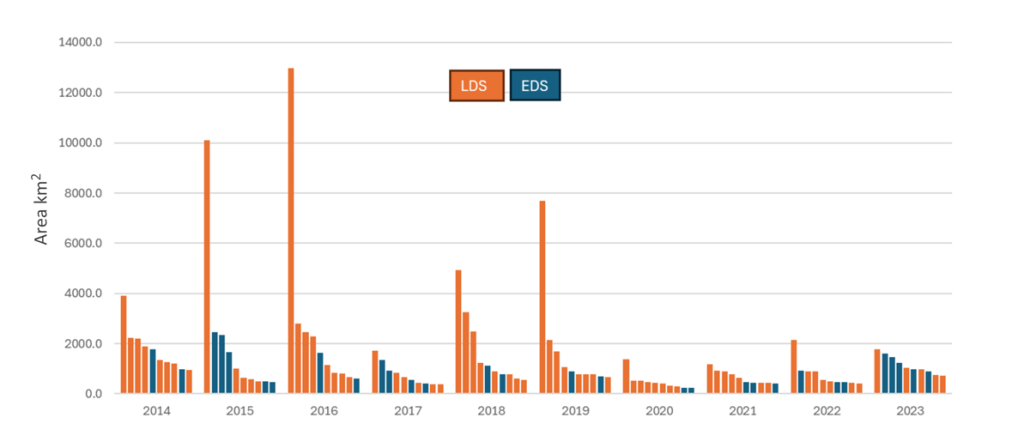
The largest fires by year and season, covering the early and late dry seasons (EDS and LDS, respectively) from 2014 to 2023.
The analysis showed:
A dramatic reduction in the number of large fires across the North Kimberley over the last 10 years.
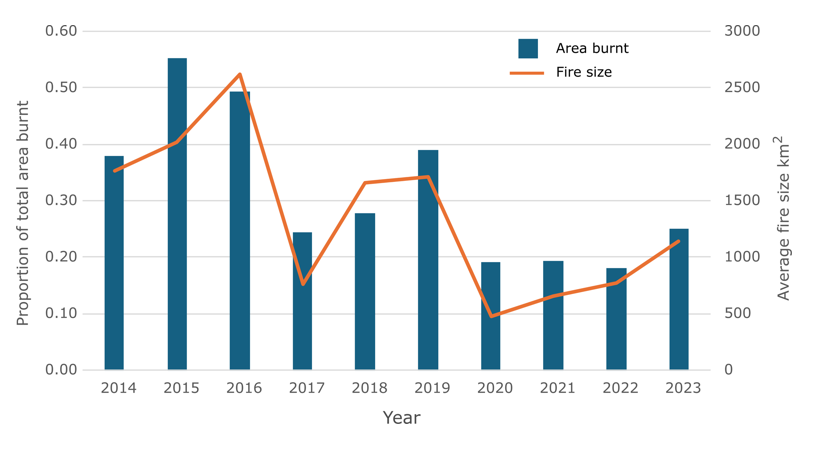
A small number of large fires (1%) were responsible for a large proportion of the total area burned (55%), while 96% of fire events accounted for only 25% of the area burned.
Large, severe fires mostly began in areas remote from roads or ground access. These remote ignitions accounted for a substantial proportion of the total area burned late in the year and are most likely to have been lightning-ignited. Arson does not appear to be a primary factor in large fire ignition in the Kimberley. So, any assumption that removing people from the area would remove the risk of fire is not true, with lightning playing the biggest role in fire starts.
The proportion of total area burnt by the ten largest fires and their average size for 2014–2023, Nth Kimberley.
Wildfire agencies are regularly approached by companies spruiking the next best thing in innovation for wildfire prevention, preparedness, detection, response, recovery or fuels management.
The decision to adopt, or to not adopt, any particular innovation is a difficult one that straddles the competing priorities of budget limitations, risk appetite and technological wisdom. How do you know if this is any good? How can we decide if it is worth paying for? Who else is using it?
Firetech Labs has taken up these challenges of innovation adoption with a platform that allows organisations to share insights and track who else is looking at what.
Firetech Labs started in 2025 as a successor to Firetech Connect, a startup hub out of Noosa Council, north of Brisbane, Queensland in Australia. Initially focused on Australia, it now works internationally.
In Canada, Firetech Labs worked with FP Innovations on the recently released Innovation Adoption Framework for the Wildfire Resilience Consortium of Canada. This free and public framework to access technology was a pre-cursor for the development of Firetech Labs online platform – Heyden – that allows agencies share their results.
Heyden coordinates innovation efforts across agencies and groups of agencies that agree to share their data. It shows what technology others are evaluating, piloting and using operationally.
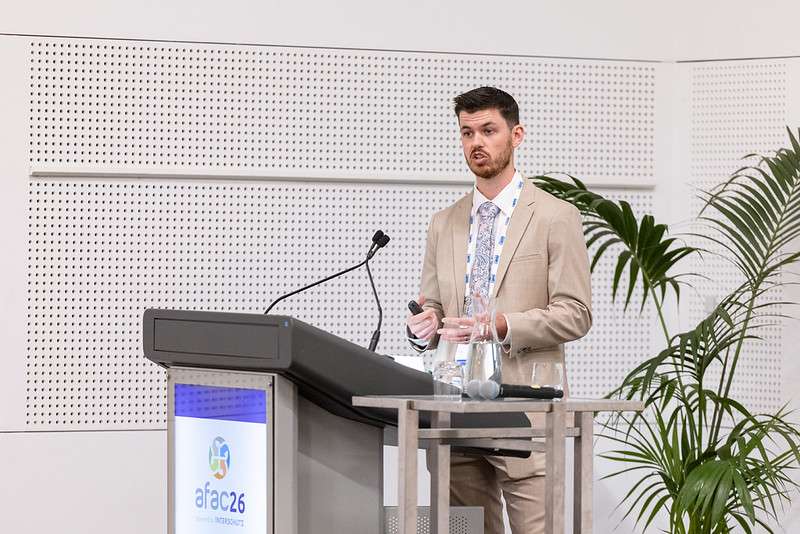
Firetech has just returned from presenting to the World Fire Congress in the United Kingdom, after presenting at the AFAC2026 Intershutz conference in Australia. CEO Connor Wilson noted that despite the interest in innovation, most fire chiefs the world over had a low appetite for risk.
“A standout question at WFC from a European Fire Chief was how do we prove value for money in adopting these tools? Agencies are challenged in that they have tight budgets of public monies and therefore have a very low appetite for procurement risk. They have limited baseline data to measure the current performance of a system which means quantifying improvements is difficult.
Innovation is listed as an organisational priority in most fire agencies, federal governments and other wildland fire, including AFAC and the World Fire Congress, but the problem is how to practically access it all and find the right fit.
“Increasing fire severity globally has caused the sector to boom with an influx of government and private investment, with startups and large companies, like Anduril and Airbus, announcing new fire tech innovations.
“The challenge is that these innovations are getting stuck at the door of the agencies. The agencies are tackling the same challenges and require a collaboration platform to share corporate knowledge and lessons learned on the evaluation and adoption of these technologies.
Wilson says that Firetech Labs’ Heyden allows agencies to manage their internal innovation process and also conduct market research on technologies being tested, trialed and adopted across a family of fire agencies, reducing duplication of effort, improving the efficiency of technology adoption. Users can create a free account to view the listings and upgrade to a paid account to access all the features.
It is now peak fire season in Australia. In September? That’s news for Australia’s densely populated southerly regions two and half months away from a summer that is predicted to be an active one for bushfire as the El Nino takes hold.
But across the top half of the continent, the picture from the Northern Australia Fire Information shows that there are currently eight active fires with burnt areas larger than 100 square kilometres (38 square miles) across the Northern Territory right now. So, in terms of fire size alone, peak season it is.
The map below shows fires currently burning in the Northern Territory and the area (km2) burnt.
Fires currently burning and the area (km2) burnt so far, Northern Territory, Australia, September 2026. Graphic: NAFI
In total, more than 12 million hectares (29 million acres) have burnt across the NT in the last three weeks and the scene is becoming more extreme over the next month, as the north enters its late Dry Season.
A few large fires account for the majority of all burnt area, with the 10 largest fires in the NT this year burning 1,837,712 hectares (4.4 million acres).
Rohan Fisher, from Charles Darwin University, notes that most of these bigger fires are in the central parts of the NT, where there is less fuel management.
“I should point out that this is not unusual and not all of these fires are necessarily bad”, he says of his NAFI data. “After years of big wet seasons (wet summers) there is a lot of fuel about. Further north where extensive, Indigenous led, fuel management is done. we don’t see fires of this scale.”
Further south, Queensland firefighters have battled more than 50 fires in recent weeks, with the South Burnett region currently the main point of activity.
And even further south, the Tasmania Fire Service was busy with 60 fires over the last week.
The 2026 fire season to September showing burnt areas across Northern Australia. Graphic: NAFI
Burn Bot is large, tank-like vehicle that wants to solve the most troubling of fuel mitigation questions – how can you manage more area, across all sorts of terrain, in all sorts of weather, at all times of the year, without overtaxing or endangering local crews, and without smothering communities with smoke?
Mechanical fuel mitigation is not new, nor are air curtain burners (AirBurners, for example) or other mobile burning units (See the Blacklining Machine we wrote about in 2011). Burn Bot is a remotely operated, moving fire box that offers a neat option to burn at scale over extended windows across large areas of open terrain or in strategic or sensitive areas.
And neat is the word – Burn Bot can establish a remarkably clean and straight firebreak or containment line. Burn Bot hopes this will attract those who conduct roadside burns, or fuel reduction under powerlines or near sensitive built up areas such as schools, aged care centres or the other community hubs.
After establishing itself on the west coast in the United States, with a base in San Francisco, a single Burn Bot vehicle has just arrived in south-east Queensland, Australia.
It sparked a fair bit of interest at the recent AFAC2026 Fire and Emergency Services conference trade show in Melbourne where Head of Australia for Burn Bot, Clinton Neumann, pitched it as a bigger and better way to get loads more fuel mitigation completed.
“What we are looking to do is to scale up the amount of treatment that can happen across landscapes, to mitigate the impact of destructive wildfires. One of the constraints of prescribed fire is the weather window, where the opportunity to put in prescribed fire becomes increasingly complex and more limited,” says Neumann.
“Because we can control the temperatures in the chamber and dial it up to suite the fuel bed you are operating in, it really gives you a much broader range of operating conditions. You can burn really uncured, green grass, right through to conditions that would be a bit marginal for open burning. It stretches the envelope at both ends.”
The three rows of propane burners aim to operate between 750 to 800 degrees Celsius, with an upper limit of 1100 degrees Celsius, inside the combustion chamber. It travels at the walking pace of the operator beside it with the remote-control device, with a spotter close by to make it a two-person operation at a minimum. The unit has water sprayers all round to catch any escapes but in most circumstances there is also a local crew present on a tanker.
Photo: BurnBot
In conditions considered less suitable for the Burn Bot (dense forests, rocky ground, steep gullies), the company brings in its other remote-controlled machines including mulchers or traditional hand-held means.
It is early days for considering it for use in suppression work. It would be a brave fire manager who brought it into a landscape already in a wildfire situation, but under some circumstances it could be used for containment lines.
“Potentially, it could be used for defensive firing operations, where you have got a lot of open edge and grassy country. It’s capable of burning 24-7, so overnight work to put in containment lines could be a good use for it.”
The almost absence of smoke is the other aspect that caught people’s attention at the AFAC2026 expo. With such high temperatures in the fully contained chamber, the amount of combustion smoke is minimal.
“Most of the product you see coming out is actually steam from the moisture content in the fuel…We did some comparisons with open burning and with air curtain burners and things like that, and it performs pretty well.”
The lack of prescribed burning smoke is appealing to complex environments, such as in California, which have strict requirements on air quality. “In California, which is the most complex environment we operate in, it is often exempt from any of the air quality permit requirements.”
Burn Bot is pitching its service to a range of potential users – fire and land agencies, state and local government, large private land holders and utilities. The plan is not so much to sell the units, but to offer a full-service fuel mitigation business where the Burn Bot is one component alongside mulching and other conventional methods.
Europe’s largest aerial firefighting operator Avincis will get five of the newly modified 214ST helicopters from Australia’s McDermott Aviation.
At the tail end of a demanding European wildfire season, Avincis has signed a Letter of Intention for five of the McDermott 214ST medium-lift twin-turbine helicopters, scheduled for a 2028 delivery.
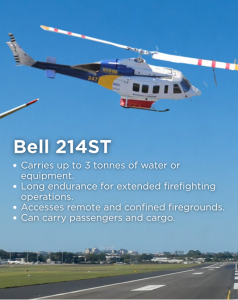
The 214ST offers up to 3,000 kg of useful load, a maximum external hook load of 3,582 kg, endurance of up to 4.1 hours and a cruise speed of 120 knots. Its twin CT7-2A engines and large cabin make it suited to water-dropping, the transport of crews and equipment, external-load operations and missions from remote or confined locations.
John Boag, Group CEO of Avincis, said investing in versatile medium-lift aircraft was essential.
“These five aircraft give Avincis another powerful option within our integrated fleet. The 214ST’s lift, endurance and hot-and-high performance will strengthen our rotary-wing response, while its utility capability will allow us to deploy the aircraft across a wider range of critical missions throughout the year.”
By the end of July this year, Avincis says it had completed more than 12,600 firefighting flight hours and nearly 5,400 missions across Spain, Portugal and Italy – almost 90% more flight hours than at the same point in 2025 – while dropping more than 225 million litres of water.
The aircraft will be deployed across Avincis’ operations to support wildfire and utility operations, with their allocation determined by operational requirements and seasonal wildfire demand across the Group’s operating regions.
The latest acquisition by Avincis follows on from several recent announcements to increase its fleet including the June 2026 order for 15 Airbus five-bladed H145s and 15 Leonardo aircraft, 5 AW139s and 10 AW169s, and the July leasing of two Super Scoopers.
Avincis operates from more than 180 bases across Chile, Denmark, Finland, Greece, Italy, Mozambique, Norway, Portugal, Spain and Sweden, and the company oversees operations from its headquarters in Lisbon, Portugal. With a fleet of around 210 aircraft (helicopters ~170 and aeroplanes ~40), Avincis has a team of more than 2,400 including pilots, crews, technicians and support.
Avincis is a vocal proponent for the need to expand European wildfire response capacity. At the Aerial Fire Fighting Series: Global Conference and Exhibition,’ in Rome, Italy, this year, it released a report that concluded: “Europe is dangerously unprepared to tackle a surge in wildfires across the continent and must act urgently and cohesively to expand aerial firefighting capabilities and investment levels.”
After a brief respite for parts of Europe, extreme and very extreme wildfire conditions are forecast across most of southern, central and eastern Europe. The main areas of wildfire risk are in Spanish Iberia, France, the Alps, northern Italy, western Balkans, Greece, Turkey and Ukraine.
Other areas recently hit hard by wildfires in recent weeks are now at a low fire danger, including the British Isles, Baltic states, Poland and most of Scandinavia. Above average rainfall is expected to continue across most of these areas, with barely a drop forecasted elsewhere.
A new visualisation from Copernicus EU shows the extent of fire across Europe and North Africa during the peak summer period of July and August. There were large fires across Spain and Portugal, southern France, Italy, Greece, the Balkans, Ukraine and Algeria.
This visualisation uses data from the European Forest Fire Information System (EFFIS), part of the Copernicus Emergency Management Service, and shows fires larger than 30 hectares between 1 July and 31 August 2026. This only shows total area burnt, and not other impacts.
Across the area shown, more than 1.2 million hectares have been identified as affected. The circles highlight larger burnt areas, including those associated with 19 fires, each exceeding 10,000 ha. Smaller burnt areas are shown as orange polygons.
2026 has been a big year for fire across Europe with 647,375 hectares burnt. But just not as big as the record breaking 2025, which had 994,419 hectares burnt over the same period. The number of fires is slightly less too – 1913 this year, 1986 at the same time last year.
It is not clear from the data why this chart shows 647,375 hectares burnt since the start of the year, but the above chart shows 1.2 million hectares “identified as affected” in just two months.
The European Unition last week increased its support to fight wildfires in Serbia – 4 helicopters from the RescEU fleet based in Czechia, Romania and Slovakia, were mobilised, alongside ground firefighting teams from Germany and Romania.