British Columbia starts season with most applicants in a decade

More than 2,000 applicants wanted to be a part of the British Columbia Wildfire Service in 2024, the highest number of applicants the service has seen in the past decade. The agency told WildfireToday that the application boost was linked to feedback received from the Expert Task Force on Emergencies established last October by BC Premier David Eby after the province’s historic 2023 wildfire season. The task force issued 31 recommendations, some of which were enacted swiftly ahead of the 2024 wildfire season.

Fire management made numerous enhancements to the Service’s wildland firefighter recruitment and hiring process as a result of the recommendations. Upgrades included expanding First Nations boot camps, extending the hiring period for new recruits, and encouraging applicants to indicate their work location preference.

The Service directly attributed the improvements to their having a full staff of 162 Initial Attack Crews and 30 Unit Crews in 2024, compared with the 149 Initial Attack Crews and 30 Unit Crews in 2023. Approximately 1,300  fire crew positions are employed directly with the Service, including an additional 500 permanent staff and 300 seasonal positions; 250 new recruits were invited by the Service from its New Recruit Boot Camps and First Nations Boot Camps this spring. The provincial 2024 budget provided $38 million to support stable, year-round staffing, including fire crew leaders and frontline staff who work in structure protection, prevention, risk reduction, and wildfire land-based recovery.

“People living in First Nations, along with rural and remote communities bear a disproportionate impact from the rising threat of wildfires,” said Wayne Schnitzler, task force member and executive director of First Nations’ Emergency Services Society. “I’m pleased to see the Province is boosting recruitment initiatives, including expanding First Nations boot camps as recommended by the Premier’s expert task force on emergencies. These initiatives break down barriers and pave the way for increased participation of Indigenous peoples as wildland firefighters.”

Apart from hiring, the Service said it will continue to implement numerous task force recommendations through 2024, including:

        • Launching a wildfire training and education center at Thompson Rivers University
        • Increasing new technology use to predict wildfire movement and growth
        • Increasing community evacuee support funding
        • Increasing the volunteer pool to support evacuees
        • Boosting wildland firefighting fleet and equipment
        • Enhancing wildfire recruitment tactics

BC Wildfire Service airtankers, meanwhile, are conducting practice flights from Kamloops and Penticton airports in the afternoons. The BCWS said airtankers out of Kamloops are flying the east side of Adams Lake, and  the Penticton aircraft will conduct practice about 40 nautical miles east of Penticton.

CastanetKamloops.net reported that BCWS noted the exact location and timing of tanker practices are subject to change depending on weather and other conditions; the practices don’t involve active fire. After six days with no flying activity, practices are run to make sure aviation teams are ready to respond. “It is important for air attack officers and pilots to practice, as it allows them to remain proficient and prepared to respond to active wildfires,” BCWS said. “Practices also ensure the aircraft are mechanically sound and ready to respond.”
San Diego’s East County readies for season

Story and photos by Josh Stotler

June 12, 2023 (San Diego’s East County) — As the longer, warmer days of summer approach, San Diego braces for an all too familiar phenomenon: wildfire.

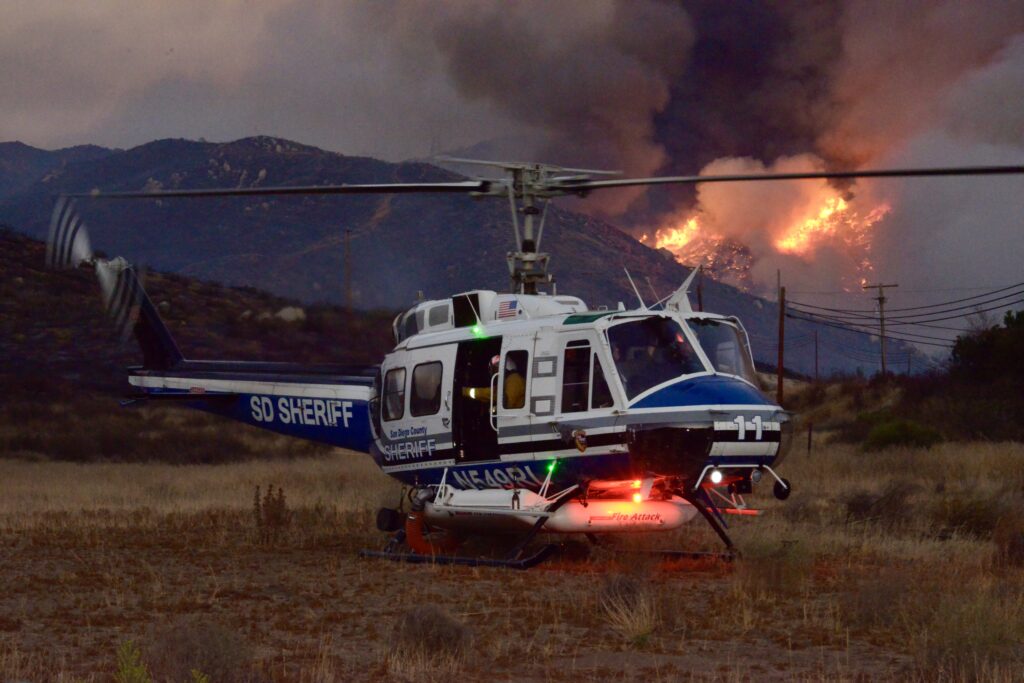
SDSO Copter 11 Border 32 Fire: San Diego Sheriffs/Cal Fire Copter 11 photo © Josh Stotler
SDSO Copter 11 Border 32 Fire:   photo © Josh Stotler

According to Cal Fire, eastern San Diego County experiences an average of 192 wildland vegetation fires per year, burning 5,843 acres — and that number is increasing with each new season. Thankfully, 95 percent of these incidents are contained at 10 acres or smaller, a target that local and state fire agencies strive to uphold. The wildland/urban interface grows larger every year, as San Diegans build further and further into the eastern parts of the county.

When it comes to wildfire, it is important to be alert, informed and prepared. This article will help answer some important questions as well as introduce you to some of the agencies and resources that make San Diego one of the most prepared places on earth when it comes to wildfire.

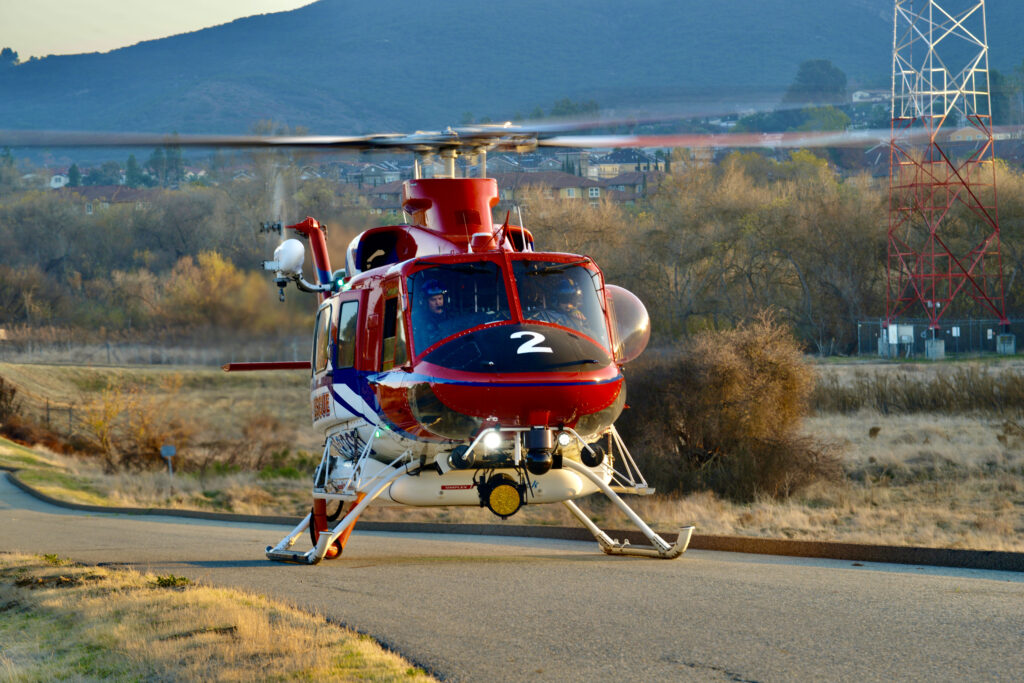
SDFD Copter 2, a Bell 412EP at the Mast LZ -- photo © Josh Stotler.
SDFD Copter 2, a Bell 412EP at the Mast LZ — photo © Josh Stotler

It’s late afternoon. It’s hot and dry and there is a slight wind blowing. A hint of smoke wafts through a neighborhood just off Interstate 8 in East County. It’s not long before a plume of smoke is hundreds of feet high and can be seen for miles. Calls to 911 pour in as residents realize something is terribly wrong. An ember from a poorly extinguished campfire has blown into a grove of pine trees; the ground is thick with dead needles and a fire is born. Bark beetles have destroyed the water-starved trees, turning them into the perfect vehicles to spread a growing fire; tall brush is abundant from the unseasonal rains that spring brought — the perfect recipe for disaster. Alarms ring at a local fire station, and dispatch alerts firefighters of a “vegetation initial attack.”

Often, the initial attack units will be able to handle a small, slow-moving fire with minimal fuel, but that’s not the case here. Initial responders call in a large fire in steep foothills covered in heavy fuel with a fast rate of spread. Alarms go off all over the county as engines, brush units, hand crews, attack aircraft, bulldozers, and law enforcement personnel are dispatched to the incident. All of these assets are carefully coordinated and assigned to aggressively attack the fire and establish a containment perimeter.

Through a partnership with CAL FIRE that started in 2005, the San Diego Sheriff’s Department’s ASTREA (Aerial Support to Regional Enforcement Agencies) unit provides San Diego County with among its most valuable resources: three Bell 205 fire/rescue helicopters. Staffed with a Sheriff’s pilot and full CAL FIRE Helitack crew, these units pair law enforcement with fire personnel aboard a mixed-crew helicopter. This arrangement has proven very successful in immediately putting crews on the ground and water on a fire.

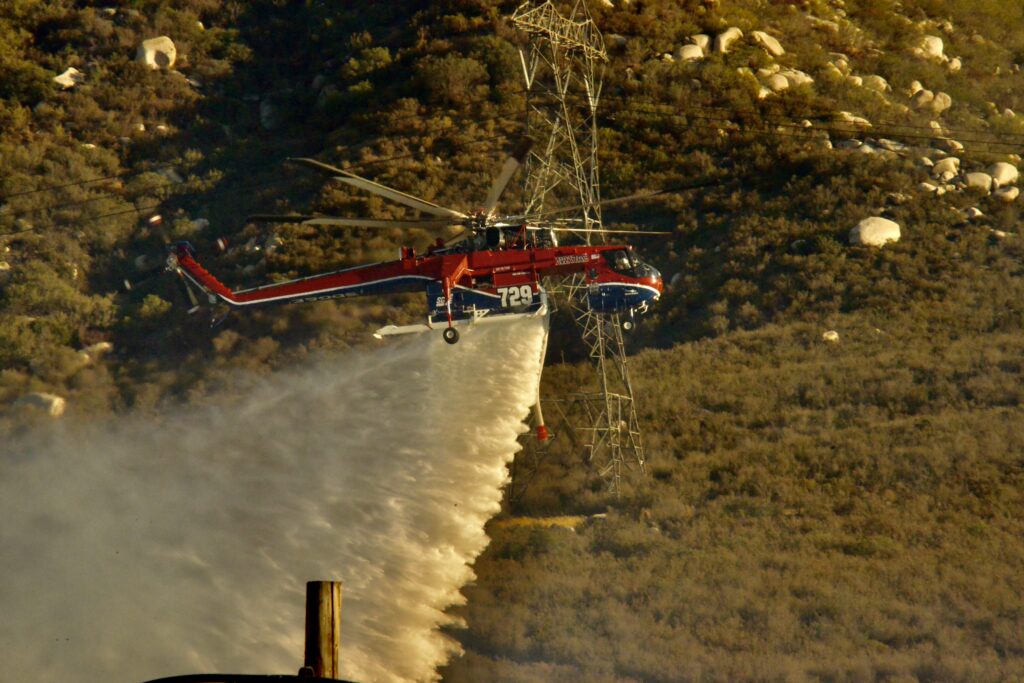
San Diego Gas & Electric’s Helitanker 729 make a drop on the Border 32 Fire in Dulzura, Ca. an unincorporated area of San Diego County.
San Diego Gas & Electric’s Helitanker 729 make a drop on the Border 32 Fire in Dulzura, Ca. an unincorporated area of San Diego County. photo © Josh Stotler

San Diego County Fire includes the San Diego County Fire Protection District and CAL FIRE San Diego working under a cooperative agreement; 35 stations scattered throughout the county ensure extended around-the clock-protection of 1.5 million acres of unincorporated San Diego County. Around 500 first responders on staff uphold the mission to “coordinate, regionalize, and improve fire protection and emergency response services provided to the unincorporated areas of San Diego County.”

San Diego Gas & Electric Co.
In addition to providing San Diego with gas and power, SDG&E has expanded its role to include firefighting and incident command capabilities. SDG&E has added some very high-tech units to its fleet: an S-60 Blackhawk helicopter, which can reach 140 mph and carry 850 gallons of water, an Erickson Aircrane that can deliver 2,650 gallons, and three Incident Support Vehicles. Within minutes, SDG&E can have firefighting aircraft in the area with the capability to relay information to first responders and fire managers.

Whether you are in El Cajon or Alpine, Ramona or the Cleveland National Forest, there are firefighters and other first responders ready and willing 24 hours a day to respond to a wildfire call. What are some things you can do to prepare for fire season? CAL FIRE Capt. Mike Cornette offers some advice.

“Ready, Set, Go is what we would like our residents to know,” he says. “We need to be ready by creating defensible space and hardening the home against embers. Getting set includes making a wildfire action plan, assembling an emergency supply kit, and signing up at AlertSanDiego. Go and go early when wildfire strikes. The earlier you are able to leave the better — it ensures you get out safely and frees up roadways for emergency responders.”

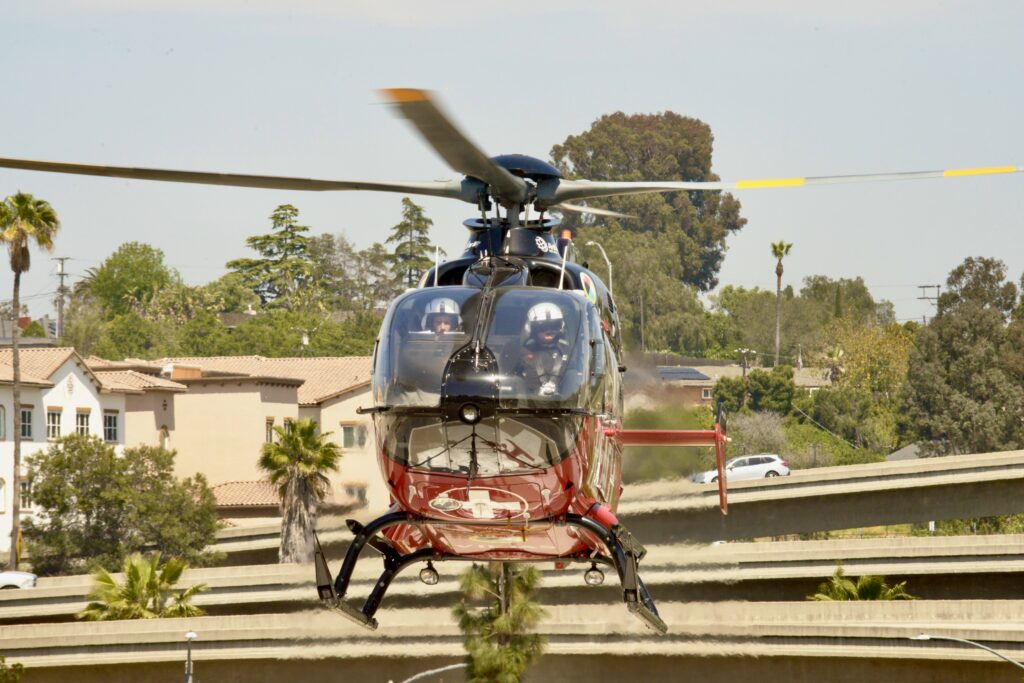
REACH Air Medical H135. photo © Josh Stotler

Through a partnership with CAL FIRE, the Resource Conservation District of San Diego County, and local Fire Safe Councils, no-cost chipping and defensible space assistance can be provided to local residents. Check out the details at ReadyForWildfire.org or firesafesdcounty.org

Creating a defensible space around your property and home is vital to improving the survivability of your home in a wildfire situation. There are other factors that most of us don’t think about when it comes to preventing wildfires, too. Capt. Cornette says, “You may be doing the right things the wrong way.” He explains, “You should try to use your mower no later than 10 a.m. — and never when it’s windy. Metal blades can cause a spark that can create a fire. Always maintain your equipment and never fuel your equipment in grass or brush. Keep a fire extinguisher or hose nearby. Do not drive in tall grass or drag trailer chains — and keep your cell phone with you at all times. In case of emergency, call 911 immediately.”

Something new this year is the authorization for emergency vehicles in California to use the “Hi-Lo” siren tone to alert citizens that they are in immediate danger and need to evacuate. The European type two-tone siren is easily identifiable, is different from the normal response siren, and sends a clear message: “When you hear the Hi-Lo, it’s time to go.” Take some time today to check your evacuation plan, update your emergency kit, and ensure your home is within county guidelines for fire safety. A little planning and common sense can mean the difference between being prepared for wildfire season and finding yourself in real trouble. If you have questions regarding wildfire preparedness, contact your local fire agency.

Josh StotlerJosh Stotler is an East County native and freelance photojournalist with over 20 years of fire service experience. Many thanks to him for this feature, first published by East County Magazine.