Australia set for a normal summer fire season

Launch of the Australian Spring 2025 Seasonal Bushfire Outlook.

Australia is set for a “normal” fire season across the southern states this upcoming summer, with only parts of western Victoria and eastern South Australia threatening anything more serious.

Almost two years of extremely low rainfall in those parts have created deeply dried vegetation and soils that will quickly become more volatile once the weather heats up.

The Australian Seasonal Bushfire Outlook for spring was released today at the AFAC25 conference in Perth, Western Australia. The Australasian Fire and Emergency Service Authorities Council (AFAC), the Bureau of Meteorology and the nation’s Fire Commissioners and Chiefs prepare the quarterly outlook to prepare resources and community messages tailored for each state. The spring outlook is the most important for the populous eastern and southern states as it leads into the main summer bushfire season.

Launch of the Australian Spring 2025 Seasonal Bushfire Outlook.

The Bureau of Meteorology is predicting likely good rainfall this spring in these parts but the quantity and extent of coverage is less certain. If rain eventuates, it will increase the green vegetation and could result in a subdued fire season. If the rains do not come the heat will surely dry the abundant fuels that will burn with the help of the underlaying dryness.

Despite large parts of the country more likely to receive wetter than normal conditions, parts of the east and west still have a heightened risk of fire.

The Outlook for spring 2025 identifies a heightened risk of fire for the Dampier Peninsula, Derby Coast and the Central Kimberley, Little Sandy Desert, and south-eastern Pilbara in Western Australia, the south-eastern agricultural areas of the Murraylands in South Australia. and the south, southwest, central, and southwest Gippsland regions in Victoria.

The higher risk of fire in Western Australia follows increased fuel growth following seasonal rains, coupled with the predicted warmer than normal temperatures and higher likelihood of below average rainfall through spring.

Towards the southeast of Australia, surface moisture is hiding deeper drying that has resulted from long term rainfall deficiencies built over the last 12-18 months. Some places have reported their lowest ever rainfall during this period. If spring rainfall doesn’t eventuate, the conditions will rapidly switch to an increased risk of fire.

A strong Wet season across much of northern Australia has saturated the land, reducing the risk of early season fires, particularly in the forested areas of Queensland. The grasslands are expected to be the only source of trouble for fire authorities as they quickly dry out, particularly in the sparse Kimberley and Pilbara regions.

AFAC CEO Rob Webb stressed that even in a “normal” season, fast moving and dangerous fires will likely still occur and communities needed to prepare now. “No matter where you live or travel this season, everyone can play an important role in bushfire safety this spring by being prepared and staying alert to warnings and advice. Having a plan doesn’t take long and might just make the difference. Local fire authorities will be monitoring bushfire risk this season so you can stay up to date and ready to act if there is an emergency.”

Wildfire Today is a Media Partner of the AFAC25 Conference Powered by Intershutz.

See the full Australian Seasonal Bushfire Outlook.

Australia’s firefighting fleet expanding

Australia is expanding its aerial firefighting fleet to include multi-use aircraft to respond not just to fires but also to natural disasters such as floods and major storms.

abc.net.au reported that longer and overlapping fire seasons are increasing  pressure on the country’s firefighting fleet. The new federal budget includes an extra $35 million to source more multi-use aircraft, while a national audit is underway to ensure Australia has the capacity to meet building demand.

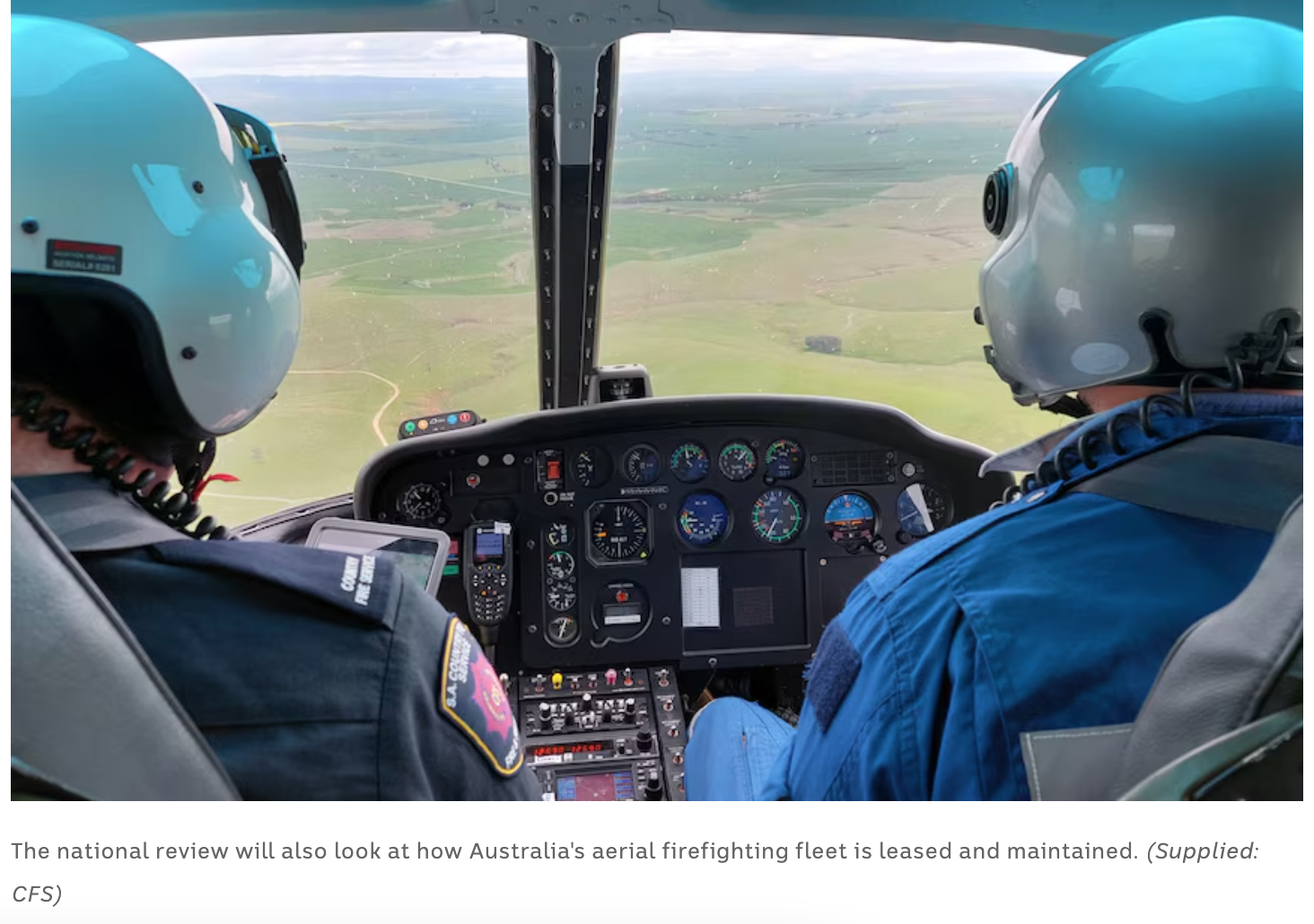
Country Fire Service helicopter pilots

National Emergency Management Authority (NEMA) deputy coordinator general Joe Buffone said recent fire seasons illustrated the demand for more versatile aircraft.

“The key focus is to broaden the fleet so that it’s multi-use,” said Buffone. “This means aircraft will be able to be changed around so they can do evacuation, resupply, support remote communities, and help other emergencies way beyond just fire.”

NEMA reports that the Australian government will ensure that the country  is better prepared by funding more aircraft to respond to fires, floods, and other severe weather events.


NEMA logoThrough the 2024-25 budget, the government will provide an additional $35 million over the next two years to the National Aerial Firefighting Centre (NAFC), for delivery of national, state and territory aircraft for fire and emergency services. This investment will provide a range of aerial assets, from specific firefighting aircraft to a mix of fixed-wing and rotary multi-use aircraft, boosting protection for communities as they face more intense, frequent, and concurrent disasters.

CFS
 

Australian Flying reported last month that Aerial  Application Association of Australia (AAAA) CEO Matt Harper welcomed the news that the government will spend $35 million through NAFC in support of aerial firefighting. The funding will help establish a sovereign aerial capability, as recommended by the Royal Commission into National Natural Disaster Arrangements, and it’s expected to ease pressure on military personnel and firefighting aircraft.

Australian Meteorology
Australian Meteorology — bom.gov.au

Harper said AAAA members invest heavily in their helicopters and SEATs, and they employ and train pilots, ground support, and mechanics. He added that because Australian firefighting expertise is internationally recognized, many of their members are headed to the northern hemisphere for the summer fire season. “Any consideration of future capability will need to balance speed and accuracy with cost and sustainability,” said Harper, “and we look forward to continuing to work with NAFC to demonstrate the vital role of Australian owned, crewed, registered, and maintained aircraft.”

Murray Watt, Minister for Emergency Management, said the increased funding boosts the government’s total contribution to national aerial capability to approximately $48 million a year.

As of March 2024 the fleet comprises 162 aircraft, including:

        • 6 large fixed-wing airtankers
        • 15 heavy helicopters
        • 70 medium and light helicopters
        • 56 fixed-wing airtankers
        • 15 light fixed-wing aircraft

The fleet is supplemented by additional state-owned and state-contracted aircraft hired for peak demand periods. In total more than 500 aircraft, provided by over 150 operators, are available for firefighting across Australia.

“With this investment, we are not only increasing the number of aircraft available,” said Minister Watt, “but also broadening the type of aircraft so they can be used for different activities such as heavy lift, transportation and evacuations, and resupply operations.” He added that international requests for crewed aircraft are likely to increase as fire seasons in the northern hemisphere expand — enough that their season and the Australian fire season are overlapping now in higher-risk climate and extreme weather.

Longer and overlapping fire seasons are upping the pressure on the Australian existing fleet. Country Fire Service photo.

Buffone said the investment should reduce the need for the Australian Defence Force to step in during disasters. “There are some pressures on the system,” he explained. “We’ve got the northern hemisphere that quite often overlaps with the southern hemisphere season, so there’s more demand on aircraft. We’re trying to make sure we can actually have aircraft for aerial firefighting and for other emergencies.”

Most but not all of the aircraft contracted under NAFC are Australian-owned and registered, including several large airtankers, 15 large helicopters that can carry up to 11,000 litres (~3000 gallons), along with a mix of smaller rotary-wing aircraft.

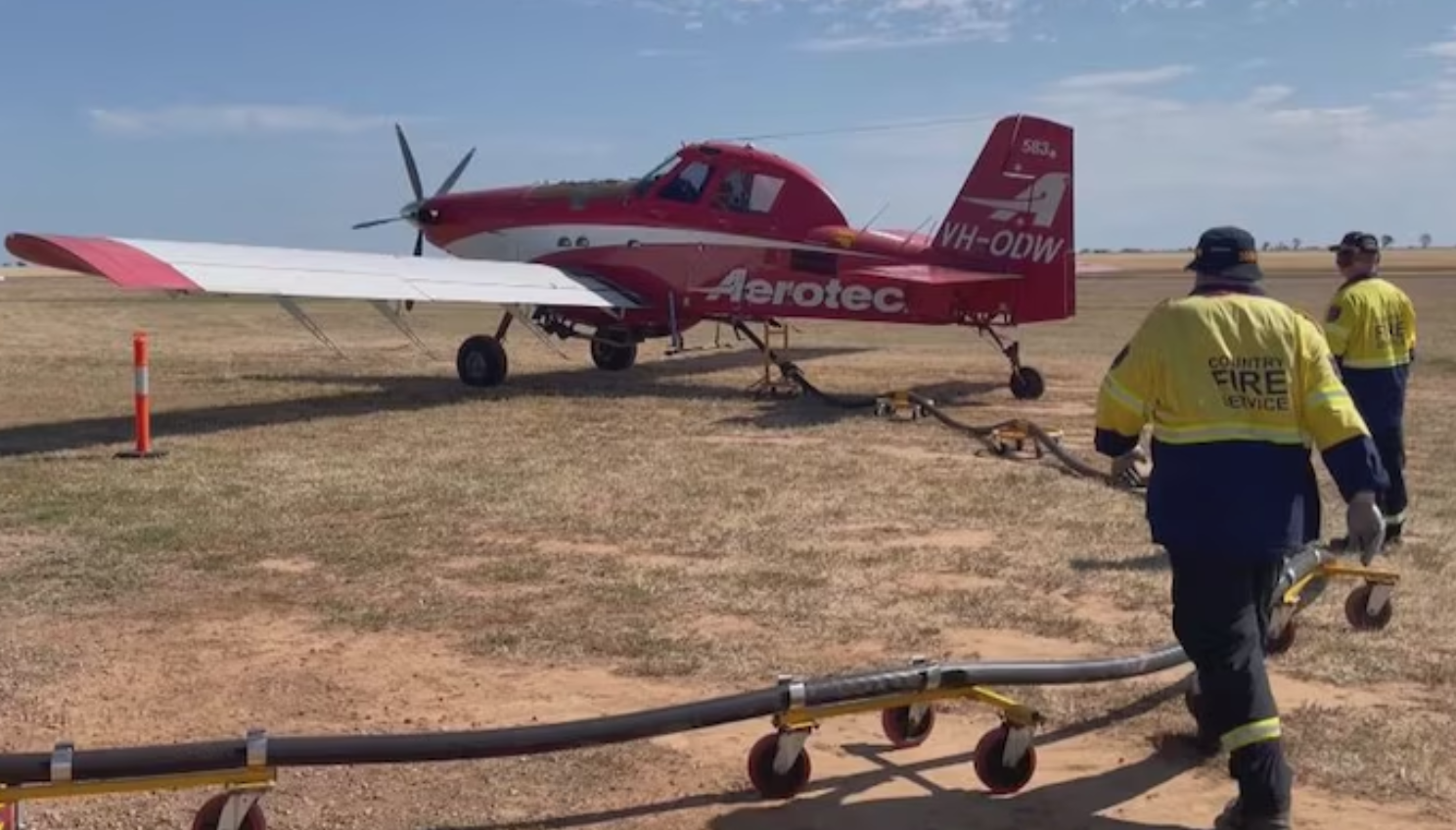
South Australia's aerial fleet made 1,602 drops during summer, putting 4.68 million litres of water on fires. Country Fire Service photo.
South Australia’s aerial fleet made 1,602 drops during summer, putting 4.68 million litres of water on fires. Country Fire Service photo.

Country Fire Service state aviation operations manager Nik Stanley said South Australia deployed its largest-ever firefighting fleet last summer.

“We had 31 aircraft for this season and we have that number for the next four seasons to come,” he said. “We are continuously evaluating our fleet, every year … looking at the capabilities that we have available, are they still suitable for us moving forward.”