
It happened September 6 in Northern California
Continue readingFirefighter seriously injured on wildfire in Okanogan County, Washington
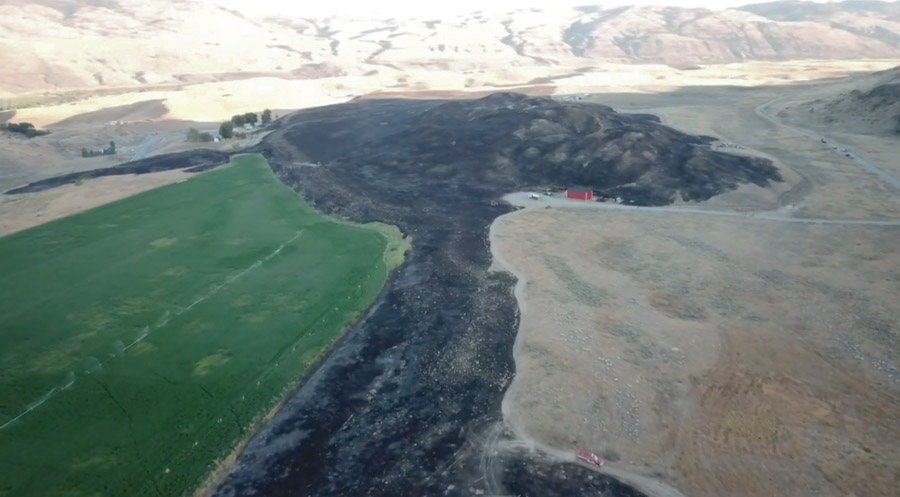
A firefighter suffered serious burns September 1, 2019 while working on a 142-acre fire near Spring Coulee Road in Okanogan County, Washington.
The information below is from Okanogan County Emergency Management, September 3:
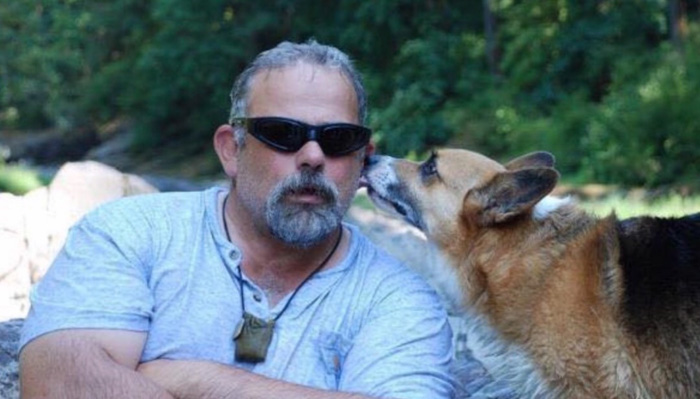
Christian Johnson, Assistant Chief of the Okanogan Volunteer Fire Department, has suffered serious injuries while on the Spring Coulee Fire. He has second and third degree burns over 60% of his body.
Christian is currently in a medically-induced coma at Harborview Medical Center in Seattle. They are trying to stabilize him so they can proceed with skin graft surgery. He will be looking at a minimum of 2-3 months in the ICU.
Christian has served his country as a sergeant in the Army, and was deployed with the Washington State National Guard from November 2003- May 2005 in Baghdad. He retired after 22 years of service and has volunteered for the Okanogan Fire Department for 20 years.
Christian is a selfless man, who is always willing to help those in need, and never asks for anything in return. We are now asking for your help to make this long journey a little easier for him and his family. Any amount of donations are greatly appreciated and will go towards helping the family with travel, housing, food, etc.
If anyone would like to make a donation, they may use the GO FUND ME account or make a donation to: Christian Johnson Donation Account at North Cascades Bank, PO Box 672, Okanogan WA 98840.
Below: Video of the Spring Coulee Fire in Okanogan County, Washington, September 1, 2019. Okanogan County Emergency Management.
Thanks and a tip of the hat go out to Tom. Typos or errors, report them HERE.
Engine burned over on Country Fire east of Auburn, California
Injuries to two firefighters were described as minor
Continue readingTexas volunteer firefighter dies after injuries from March 10 grassfire
A Texas firefighter injured two week ago while working a brushfire has died, officials confirmed.
Firefighter Larry Marusik, a member of Ellinger Volunteer Fire Department, died Friday at Brooke Army Medical Center, according to the Caldwell County Office of Emergency Management. He was 68 years old.
“The Caldwell County Office of Emergency Management offers our sincere condolences to the family and friends of Firefighter Larry Marusik,” officials said. “We also send our profound sympathies to his fellow firefighters in Fayette County, especially the Ellinger VFD.”
Marusik grew up in the community and moved back after he retired, KXAN news reported. He was a member of the fire department for four years.
Additional details about the injuries he suffered or the incident he was working were not immediately available.
Three firefighters suffer burns on Arizona fire
All three are expected to make full recoveries
Continue readingTwo firefighters injured on prescribed fire in Texas
 Two firefighters suffered burn injuries March 9 while working on a prescribed fire in the panhandle of Texas and were airlifted to a hospital. The Borger Fire Department (map) has confirmed that two of their personnel, fire fighter Clay Lozier and fire chief Bob Watson, were injured transported to Lubbock for treatment.
According to Amarillo.com:
Borger Fire Chief Bob Watson remains in serious condition Saturday at the UMC Timothy J. Harnar Burn Center in Lubbock, according to BFD Lieutenant Stacy Nolen, and Borger firefighter Clay Lozier, who was injured in the same incident, has since been released from the burn unit.
News Channel 10 reports that the prescribed fire on the JA Ranch in Donley County was going well until a juniper tree torched, causing a spot fire. The firefighters almost had that contained when a fire whirl “threw fire 30 yards in every direction”, ranch owner Andrew Bivins said.
There was a burn ban in effect in Donley County but Texas law exempts prescribed fires from burn bans.
Another firefighter burned by chain saw “fuel geyser”
Last month a firefighter suffered serious burns when gasoline forcefully vented while he was removing the fuel cap on a Stihl MS461 chainsaw.
The incident occurred October 10, 2016 (we first reported it here) on the Pingree Hill prescribed fire near Rustic, Colorado. For years the land management agencies have been warning firefighters about the dangers of gasoline being forcefully released from chain saws. Some of these incidents have occurred with saws that have the new quarter-turn gas caps. After a chain saw has been running for a while pressure can build up in the gas tank causing vapor lock, which can prevent the saw from running. Thinking it may be out of fuel, the operator opens the quarter-turn gas cap and the pressure in the tank forces out fuel and vapor. If there is an ignition source nearby, it can quickly ignite and cause very serious injuries.
Below is an excerpt from a report issued about the October 10 incident. We pick up the narrative as the saw team is finishing a break:
…After roughly fifteen minutes, the sawyer sizes up the second snag and identifies a rock adjacent to the tree that he can stand on to make his cuts. He enters the burned area, steps onto the rock, and pulls on the starter cord. The saw starts but quickly sputters and dies, he opens the choke and tries again with the same result. After two or three more tries he thinks the saw may be out of gas. The saw is equipped with the newer “1/4 turn” quick release fuel and oil caps making it easy to simply flip the saw on its side and open the cap while remaining in a standing position. On older model saws with the threaded caps, this process involved using a scrench to loosen and unscrew the cap, making it difficult to open the tank without setting the saw down.
As he opens the cap the fuel sprays out in two distinct bursts spraying liquid and vaporized fuel on his stomach area and right arm. He quickly realizes this is a very dangerous situation… “I had an oh s*** moment!” The swamper looks, and notices fuel “boiling and bubbling” out of the fuel tank and sees open flame beneath the sawyer’s feet. He yells to the sawyer, but it’s too late. Fuel ignites from the ground, running up toward the saw and the sawyer. Immediately the sawyer’s nomex shirt ignites around his right arm and stomach area. He swings the saw to the left, drops it in the rocks, then sprints downhill through the black to the unburned area beneath the handline and drops to the ground. The swamper reacts and jumps on top of the sawyer and helps extinguish him by throwing dirt on the flames and rolling around to smother the fire.
Once the fire is extinguished the sawyer grabs a radio and calls the Supt. and initially gets no response. He calls the Crew Boss Trainee who responds immediately. The sawyer calmly states “I am burned pretty bad, code red, need an air transport, need to go to the hospital now.”
[…]
The patient is in good spirits and is recovering well but did say:
“The one thing I hope comes out of this is that people will give it one last second thought…before you pop the cap”.
The firefighter received 2nd and 3rd degree burns on his right arm and abdominal area.
The report says the extraction of the firefighter went smoothly, thanks largely to the incident within an incident training the crew conducts on a regular basis. About an hour elapsed between the injury and the helicopter taking off to fly him to the burn center.
Two firefighter injuries, a snakebite and gasoline fire

Reports about two notable injuries to wildland firefighters have been released in recent days.
A “72-hour” report provides very little information about another in a series of accidents that may involve a “gasoline geyser”. The document does not include the date of the injury, the location of the accident, or the name of the fire or incident, but it was issued by the Arapaho and Roosevelt National Forest and Pawnee National Grassland headquartered in Fort Collins, Colorado. It is titled “Pingree Hill Chainsaw Incident” and says a firefighter that was working on a prescribed fire sustained gasoline fire burns to the abdomen, arm, and wrist related to a chainsaw while working on a prescribed fire. He was flown to the Northern Colorado Burn Center where he is recovering.
Since at least September 30, 2016 Inciweb has had information about a 2,027-acre “Pingree Hill Prescribed Fire” near Rustic, Colorado that apparently is being conducted on an intermittent basis.
Many injuries have been reported in the last couple of years related to gasoline being forcefully released from chain saws. Some of these incidents have occurred with saws that have the new quarter-turn gas caps.
Here is a video released a year ago on the subject:
The second injury is titled “Rattlesnake Bite” in the Rapid Lesson Sharing report that was released by the Wildland Fire Lessons Learned Center. It happened on the Kent Fire in Montana July 24, 2016. The firefighter never saw or heard the snake that bit him, the report says.
Below are excerpts from the report:
A team of more than five EMTs were assigned to patient care, with one EMT identified as lead caregiver.
[…]
Disagreement Involving Interventions and Patient Care
Once the ambulance arrived on scene, there was a disagreement between the ambulance personnel and onsite EMTs involving interventions and patient care being provided. Because of the dispute and increased level of pain experienced by the patient, Division Whiskey decided to transport the patient via the DNRC [Montana Department of Natural Resources and Conservation] helicopter.
The lead caregiver and one other DNRC EMT joined the patient in transit to Baker. The DNRC Task Force Leader followed via ground transport in order to bring the EMTs back once patient care had been transferred.
Upon arrival at the Baker Municipal Airport, the patient was transported to the Fallon Medical Complex emergency room. Medical personnel assessed the bite and cleaned wound.
Because it was determined that side-effects could have adverse effects on this patient, it was decided to hold off on administering antivenin, a biological product used in the treatment of venomous bites and stings. After tissue samples were taken and sent to the lab, it was determined that the bite was nonvenomous.
The patient was monitored and released that evening.
Two fire crew vehicles hit by truck, 5 firefighters injured
Five members of the Mid-Plains Interagency Hand Crew received minor injuries.
Continue readingOklahoma firefighter run over by brush truck
The Oklahoma State Firefighters Association announced that on February 26 a Ponca City firefighter suffered traumatic leg injuries after accidentally getting run over by a brush truck.
Lt. Lyle Crandall with the Ponca City Fire Department was seriously injured Friday afternoon [February 26] while responding to a reported grass fire. Lt. Crandall and one other firefighter were on a special detail when the call came in. They had to respond back to the fire station to pick up a brush pumper. During this transfer, Lt. Crandall was accidentally run over by the front tires of the fire engine. Lt. Crandall received immediate treatment from the other Ponca City firefighters and was taken by ambulance to the hospital where they were met by a medical helicopter. Lt. Crandall was flown immediately to OU Medical Center in OKC. He sustained traumatic injury to his left foot and leg as well as his right leg.
Please keep Lt. Crandall, his family, and the Ponca City Fire Department in your thoughts and prayers.
Sincerely,
Dereck Cassady
Ponca City FD
OSFA 3rd VPRaanon Adams, President