


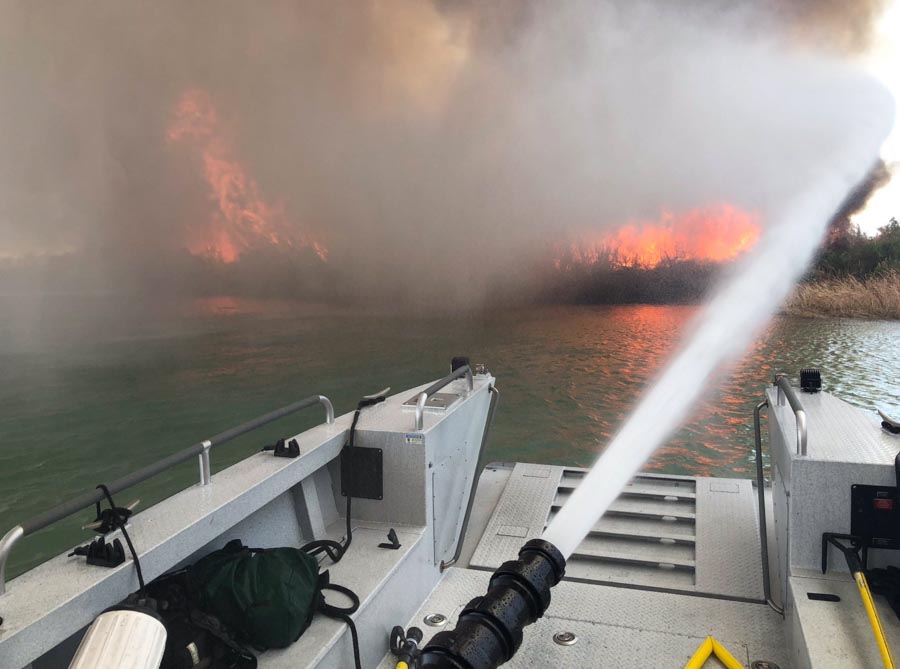
Contaminants from wildfires can create long term water quality concerns in areas far from the fire-impacted zones as drifting smoke plumes and rainfall runoff challenge standard water filtration techniques.
A recently published analysis of 23 studies across 28 watersheds determined that the concentrations of numerous pollutants in waterways experienced significant increases for five years after a wildfire burns. Researchers found that the presence of heavy metals and other toxic chemical compounds in affected bodies of water was up to 66,000-fold above environmental standards.
“Most wildfires leave behind a barren, blackened landscape, and within this changed environment, important impacts can leave their mark,” the researchers said in a piece published in The Conversation. “Streams, rivers and water reservoirs receive a sudden pulse of ash, sediment and fire-suppressant chemicals washed off the land. For communities that depend on those waters for drinking water, wildfires can quickly become a long-term water-quality problem.”
The extent of water contamination depended on numerous factors, including burn severity, the types of soil and vegetation present, and how close the burned area was to nearby streams and reservoirs. But, the researchers also found that water contamination can extend far past where a fire burned. They looked data from watersheds in Canada, the US, Australia and Portugal.
Most of the toxic chemicals produced during wildfires are transported to nearby waterways during runoff from rain and other precipitation, but the study determined that smoke plumes also transport compounds to other water sources distant from the fire’s perimeter. One of the studies analyzed by researchers said certain toxic chemicals were transported 54 miles from a wildfire, while another study said waterways over 400 miles away could be contaminated by smoke plumes.
“Conventional treatments, such as coagulation and flocculation, sedimentation, rapid sand filtration, and, occasionally, granular activated carbon adsorption, are not designed to handle simultaneous spikes in turbidity, organic matter, trace metals, and other wildfire-derived contaminants, resulting in health risks to the inhabitants.”
“Unlike direct runoff from burned areas, the combined mechanism of atmospheric deposition followed by hydrological transport in unburned watersheds remains poorly quantified,” the researchers said in the analysis. “Despite their long-term persistence and toxicity, post-wildfire concentration variations of trace metals, PAHs, POPs, and WFFCs have not been studied extensively, especially concerning their persistence in sediments and possible remobilization, indicating that further research is required to understand their long-term effects on surface water bodies and aquatic environments.”




2 Comments
We continue to hear how wonderful wildfires are in nature. There are some ecosystems that depend on wildfires to regenerate their systems. The question is – why do we have to put up with those statements. Wildfire is costly, chaotic, and traumatic. It does not have to happen everywhere. Ecosystems that worked with wildfire in the old days can be changed to work without wildfires.
Forest management can remove much of the risk with strategic harvesting of older wildfire risk timber areas and reforesting them. Fire smart treatments around communities as First Nations had done is important, too.
We have seen many wildfires in parks and protected areas due to “don’t do this” policies. Forest management in remote areas and in parks or protected areas needs to be done as in operational areas to maintain them as well.
Let’s be proactive on our land base. It will save a lot of grief and add to our wildlife, water, and socioeconomic benefits.
For years hotshot crews breathed these pollutants with simple bandanas for protection from the smoke and ash. Our first line wildfire crews suffered the consequences. Epidemiologists have not done extensive studies of this aging population. The traumatic injuries and deaths from fires like storm King and Grantite Mountain received far more attention. Masks are not a great answer, but more information about the risks would be helpful.pful.