
The crew will provide intelligence on emerging and existing large fires in central Alaska
Continue reading100 firefighters attend aircraft Safety Fly-In at Durango
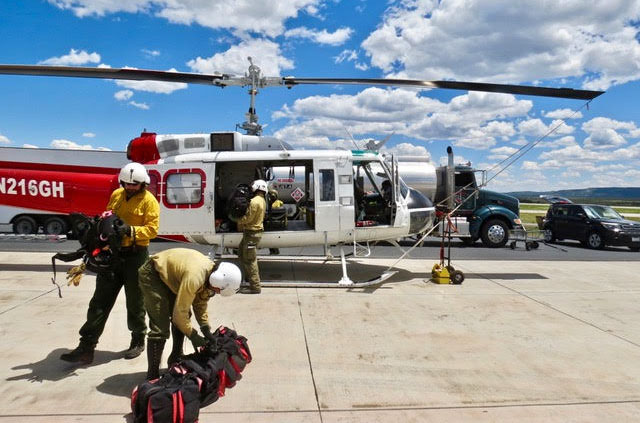 The Durango Helitack crew demonstrates crew loading.
Rick Freimuth sent us these photos and description of a Safety Fly-In that occurred Friday, May 31 at the Durango Air Tanker Base in Colorado. Mr. Freimuth staffs the Benchmark Lookout west of Telluride, Colorado where he normally would have been, starting three weeks ago, but snow on the roads has made that impossible. The tower is at 9,262′ elevation.
Yesterday I attended the San Juan National Forest Safety Fly-In event at the Durango Airtanker Base. It’s an annual event (except last year because of our busy fire season) held for the local jurisdictions – USFS, BLM, NPS, Durango Fire & Rescue and other local towns and counties. The Fly-In is designed to familiarize the firefighters with air-to-ground radio protocol, general aircraft safety, crew loading, hard landings (turning off fuel, electrical and rotor brakes).
Durango Helitack was represented with their Bell 205, pilot, crew manager and crew. They demonstrated sling load loading and hookups, bucket hookups and crew loading. To increase performance for their older ship the 205 is hopped up with wider composite rotor blades, fins along the tail boom and the tail rotor is repositioned on the right side instead of the traditional 205 left side. Interesting. Of course Durango Helitack’s primary mission is IA but they also perform bucket work and rescues with the ability to carry two patients.
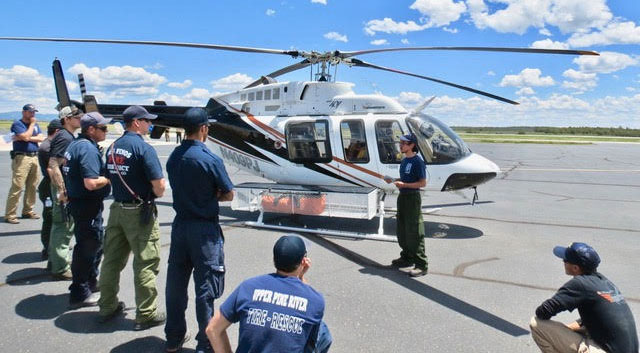 Mesa Verde National Park Helitack crew member describes National Park Service aviation protocol.
Mesa Verde NP Helitack was there with their Bell 407. They gave us a great demonstration of capabilities from their crew manager and one of their IA firefighters. Their primary mission is IA but are also equipped for bucket work and they are the only Short Haul capable crew in the Four Corners area. They’re capable of in-cabin litter transport as well.
Flight For Life’s orange A-Star 350 based at Durango’s Mercy Regional Medical Center was there with pilot, flight nurse and paramedic. They talked about their protocol as well as their A-Star’s excellent capabilities at high altitude rescue in the local San Juan mountain ranges. They gave an excellent demonstration of patient loading with firefighters assisting.
An interesting addition to the Fly-In was a Bell 206 from the Durango & Silverton Narrow Gauge Railroad excursion train. Simply referred to as the train helicopter. It’s mission is to follow the train up and down the route for fire suppression in case the coal burning engines ignite fuels in their right-of-way. They carry a 75 gallon bucket filled 3/4 full for several hours a day looking for smoke. The reason for the reduced fill is to increase fuel efficiency during the day at high altitudes.
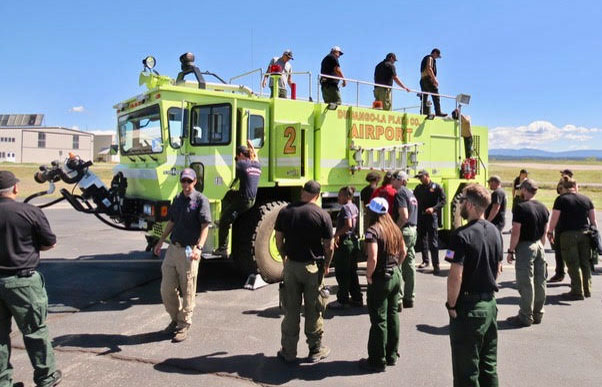 Durango airport’s Oshkosh crash rescue truck.
The Durango-LaPlata County airport showcased one of their two, huge Oshkosh fire engines including a thorough discussion of the airport firefighters duties and responsibilities for the myriad aircraft that may land at the field in emergency situations.
The most interesting aircraft, for me, was the State of Colorado’s Multi Mission Aircraft (MMA). The Colorado Division of Fire Prevention and Control has two Pilatus PC-12 airplanes that have been outfitted with state-of-the-art fire detection infrared (IR) and color sensors (EO) operated by sensor operators from the Division of Fire Prevention and Control Wildland Fire Management staff. The pilot, Carl Gordon and sensor operator, Jesse, gave us a complete description of their real-time fire mapping capabilities. Jesse said they were able to send their maps to the ICs and firefighters within twenty minutes of flying the fire. The firefighters are then able to access the up-to-date fire maps on Avenza.
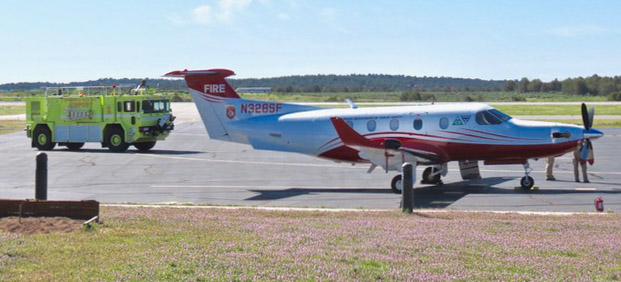 Colorado’s Pilatus PC-12 multimission aircraft, and Durango airport’s Oshkosh crash rescue truck.
The retardant base was an interesting station at the Fly-In. We were given a thorough explanation of mixing Phos-Chek with water to create the loads appropriate to fuels and elevation. Durango Airtanker Base is the highest elevation tanker base at 6,685′. The retardant loads have to be altered to the summertime temperatures, high elevation of the airport and the, possibly, higher elevations of the fires. Durango Airtanker Base’s retardant base is now able to fill two air tankers at a time.
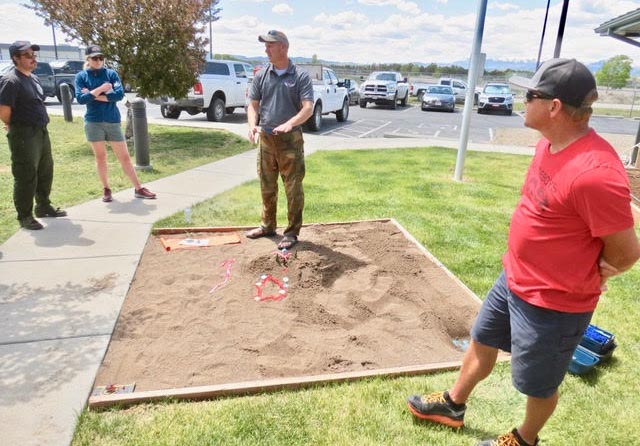 Jerran Flinders (center, wearing sandals) uses a sand “table” to explain air attack strategy, with Mike Bryson, on the right.
The last station at our Fly-In event was the sand table (sand box in our case). Jerran Flinders, the San Juan National Forest’s Aviation Officer and Mike Bryson, the Durango Airtanker Base Manager gave the attending firefighters scenarios of making a resource order for air tankers or helicopters on an active fire. The sand box had a fire climbing a slope through timber and approaching a ridge-top structure. Jerran lead the scenarios through requesting aircraft, communicating with air attack and delivering the retardant load. This was an excellent demonstration, for green firefighters, of what to do and what not to do during a wildfire event.
The Safety Fly-In was attended by roughly one hundred fire staff including firefighters, fire overhead, and one lookout.
Colorado beta testing drone system that would enhance firefighters’ situational awareness
(Originally published at Wildfire Today)
The state of Colorado is working on a system that would use drones to provide live video of wildfires to wildland firefighters’ cell phones. The Center of Excellence for Advanced Technology Aerial Firefighting is beta testing a DVI Mavic drone that would push the real time video to firefighters using software developed by the military, Android Team Awareness Kit (ATAK).
The program has the capability of displaying data from tracking devices carried by soldiers, or firefighters, and identifying their location on a map, which in this case could also show the fire in real time.
If they are successful in developing and implementing a system that can provide to fire managers real time information about the location of a wildfire AND firefighting resources, it would achieve what we call the Holy Grail of Wildland Firefighter Safety — knowing those two elements of information.
The DJI Mavic can only stay in the air for 20 to 30 minutes before having to return to base to replace the battery. So this beta test is probably only a proof of concept attempt, perhaps leading to a more robust drone, rotor or fixed wing, that could stay in the air for a much longer period of time.
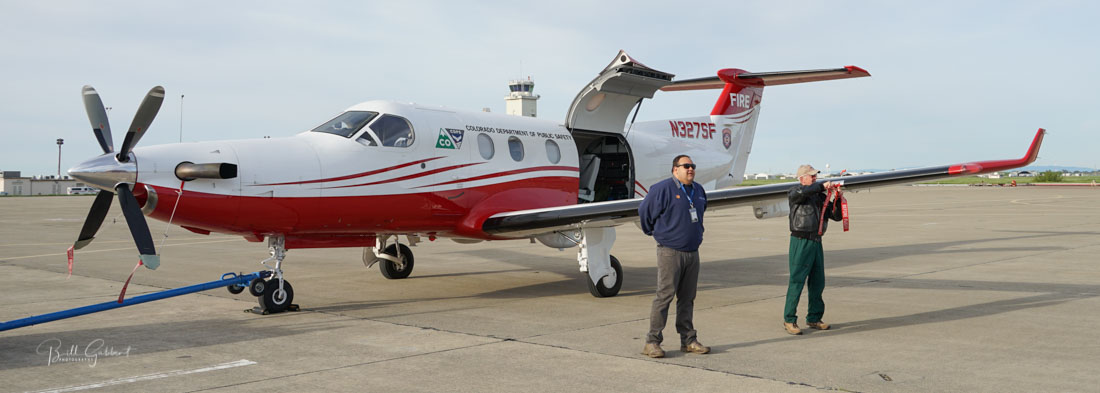 One of the two State of Colorado’s Pilatus PC12’s, was photographed in March of 2016 in Sacramento.
Colorado already has the ability to transmit near real time imagery of fires from their two MultiMission Aircraft, Pilatus PC12’s. They are integrated with the Colorado Wildfire Information System, a geospatial database that displays incident images and details to local fire managers through a web based application.
Air Force reconnaissance aircraft is being used to detect and map wildfires in the Northwest
Warning: Trying to access array offset on value of type bool in /home/customer/www/wildfiretoday.com/public_html/wp-content/themes/jupiterx/lib/api/image/functions.php on line 61
Deprecated: ltrim(): Passing null to parameter #1 ($string) of type string is deprecated in /home/customer/www/wildfiretoday.com/public_html/wp-content/themes/jupiterx/lib/api/utilities/functions.php on line 206
Deprecated: preg_replace(): Passing null to parameter #3 ($subject) of type array|string is deprecated in /home/customer/www/wildfiretoday.com/public_html/wp-content/themes/jupiterx/lib/api/image/class-image-editor.php on line 177
Warning: Undefined array key "extension" in /home/customer/www/wildfiretoday.com/public_html/wp-content/themes/jupiterx/lib/api/image/class-image-editor.php on line 179
Deprecated: preg_match(): Passing null to parameter #2 ($subject) of type string is deprecated in /home/customer/www/wildfiretoday.com/public_html/wp-includes/functions.php on line 3089
Deprecated: is_file(): Passing null to parameter #1 ($filename) of type string is deprecated in /home/customer/www/wildfiretoday.com/public_html/wp-includes/class-wp-image-editor-gd.php on line 95
Deprecated: preg_match(): Passing null to parameter #2 ($subject) of type string is deprecated in /home/customer/www/wildfiretoday.com/public_html/wp-includes/class-wp-image-editor-gd.php on line 95
An RC-26 from Fairchild Air Force Base in Spokane is assisting with situational awareness in the firefighting effort.
Continue readingInfrared aircraft detects single-tree wildfire
Multi-Mission Aircraft (MMA) detection flight to Durango pic.twitter.com/sEfoLIMrQW
— COFirePrev&Control (@COStateFire) July 20, 2016
The Colorado Division of Fire Prevention and Control posted this video which apparently shows one of the state’s Multi-Mission Aircraft using infrared sensors to detect a single-tree fire. In the brief period of normal (not infrared imagery) there is very little visible smoke.
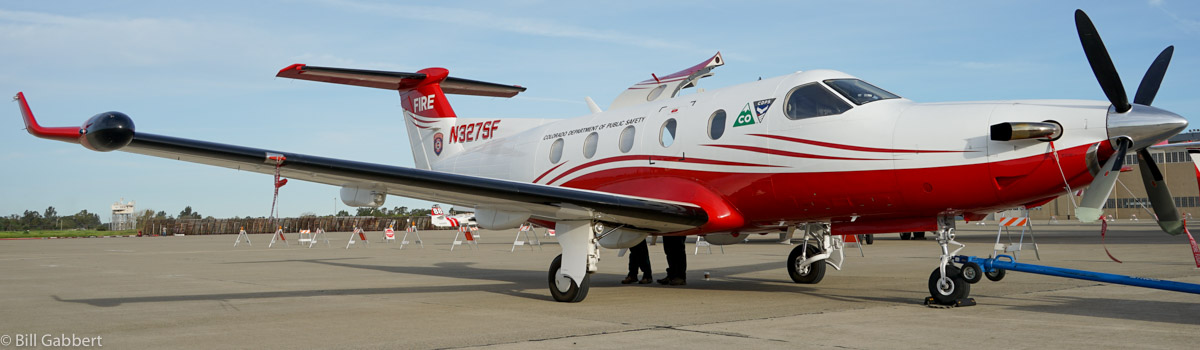 One of Colorado’s two Pilatus PC-12 “Multi-Mission Aircraft” at McClellan Air Field March 23, 2016. Photo by Bill Gabbert.
Introduction to the Redmond Tanker Base
Above: a 47-second video showing the aircraft at the Redmond Tanker Base on June 13, 2016.
Clouds were hovering just above the ridges bordering the valley around the Redmond, Oregon airport when I was there on Monday, June 13. There was a chance of rain across the entire Pacific Northwest and there were no orders for the four large air tankers staged at the Redmond Air Tanker Base.
Eric Graff, who has been the base manager for the last 12 years, said they had been busy in recent days sending tankers to fires in Oregon and northern California. They had pumped 165,000 gallons of fire retardant into tankers so far this fire season.
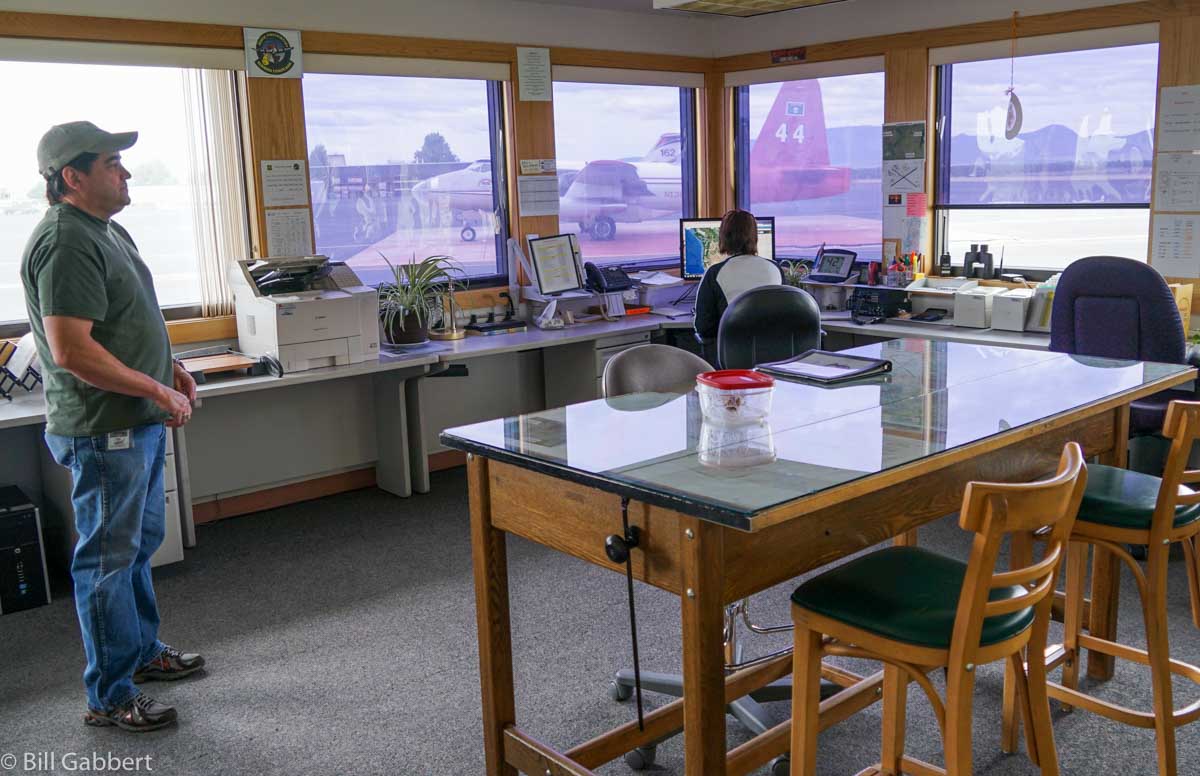 Base Manager Eric Graff (left) and timekeeper Cynthia Buehner at the Redmond Air Tanker Base.
Working with Mr. Graff on Monday was Cynthia Buehner, in her third season as timekeeper for the base, and summer seasonal, Marissa Kraweczak, whose previous experience before this year was on the Zigzag Hotshots.
Also at the base was the normal contingent of pilots and mechanics for the four tankers that were on the ramp — three Aeroflite RJ85s, and one Neptune Aviation P2V. One lead plane was also on scene.
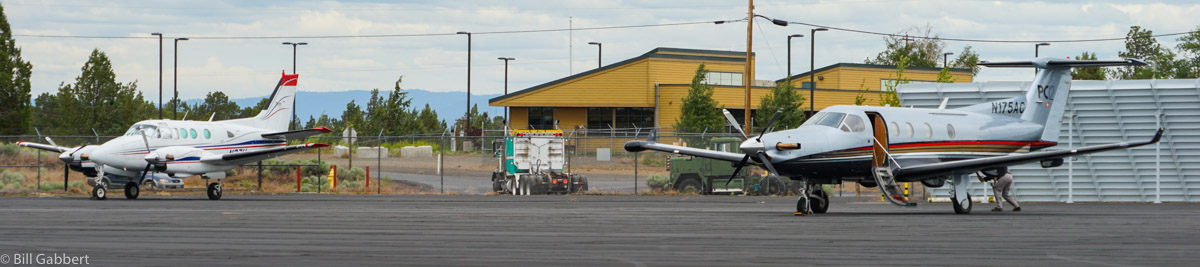 Aeroflite’s Pilatus PC12 (right) and a lead plane (left) at Redmond, Oregon. Photo by Bill Gabbert.
I asked Mr. Graff if dispatchers proactively tried to group aircraft from the same company together at a tanker base, and he said no, it was not intentional. Aeroflite recognized that they had three of their tankers and crews at Redmond and called a meeting, with executives flying in on the company’s Pilatus PC12. The state of Colorado recently purchased two PC12s to use as intelligence gathering and communications platforms, calling them “multi-mission aircraft”.
Other fire-related operations at the Redmond Airport include the Redmond Smokejumpers, the Northwest Fire Training Center, the Redmond Hotshots, and the Regional Air Group which supplies pilots for the jumpers and lead planes.
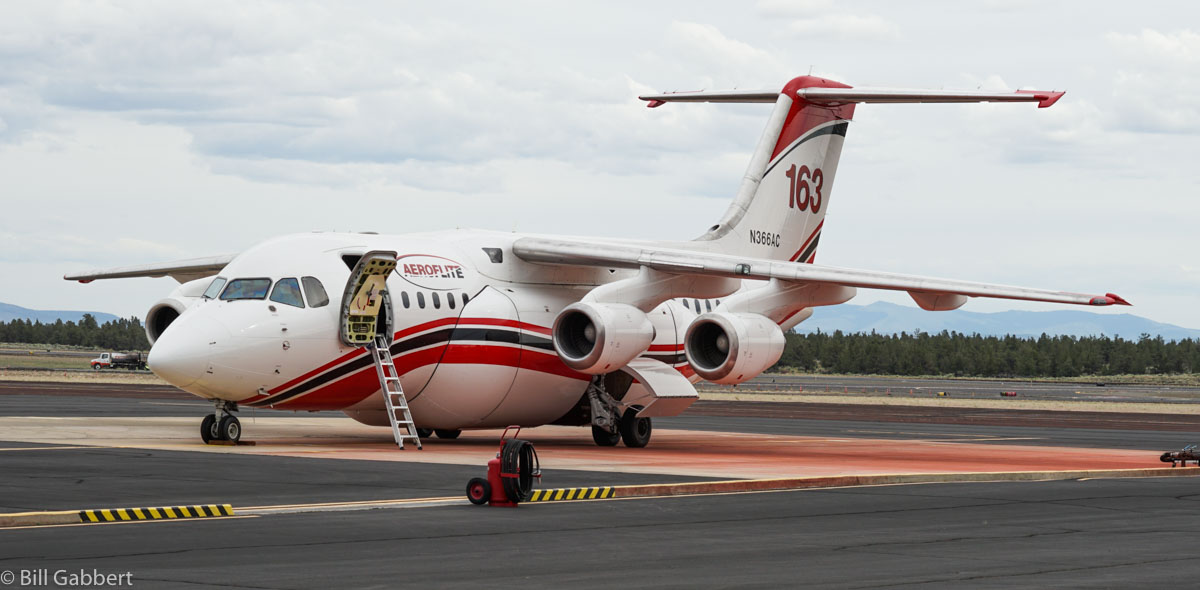 Tanker 163 at Redmond, June 13, 2016. Photo by Bill Gabbert.
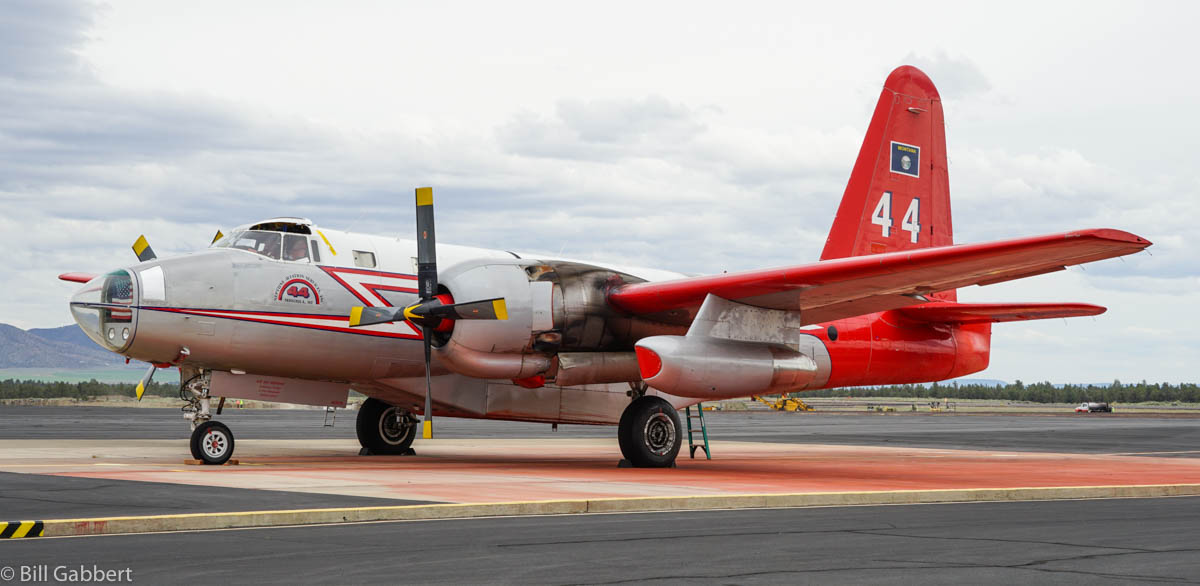 Tanker 44 at Redmond, June 13, 2016. Photo by Bill Gabbert.
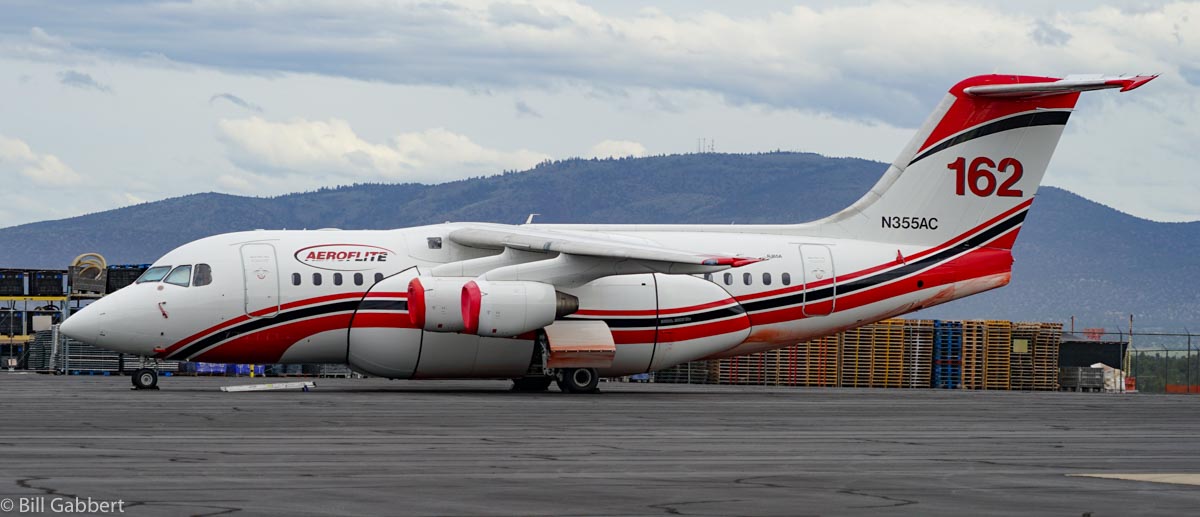 Tanker 162 at Redmond, June 13, 2016. Photo by Bill Gabbert.
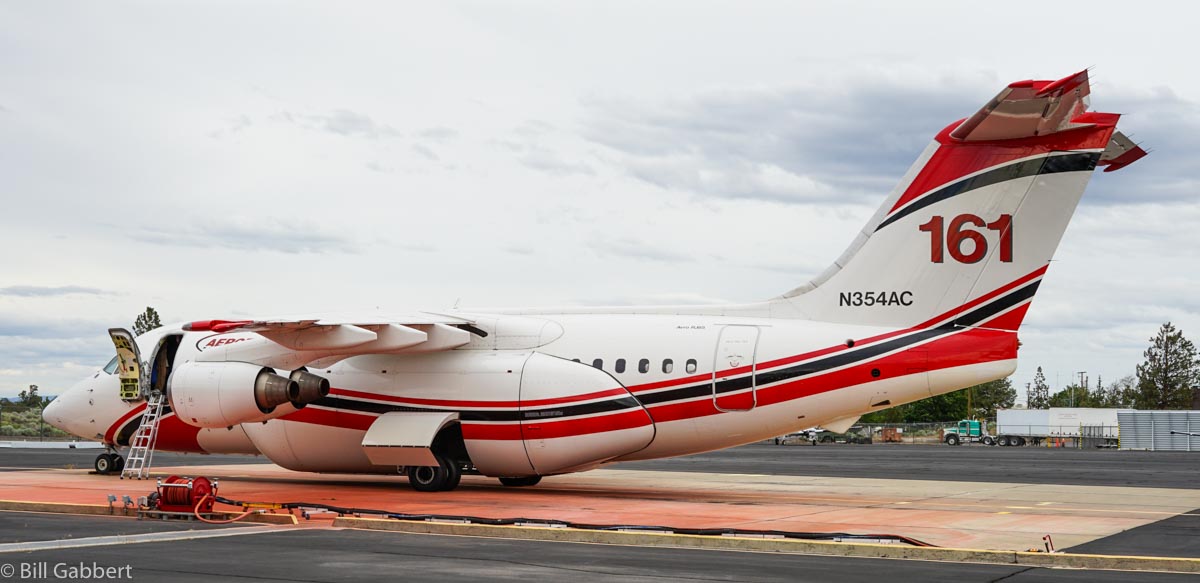 Tanker 161 at Redmond, June 13, 2016. Photo by Bill Gabbert.
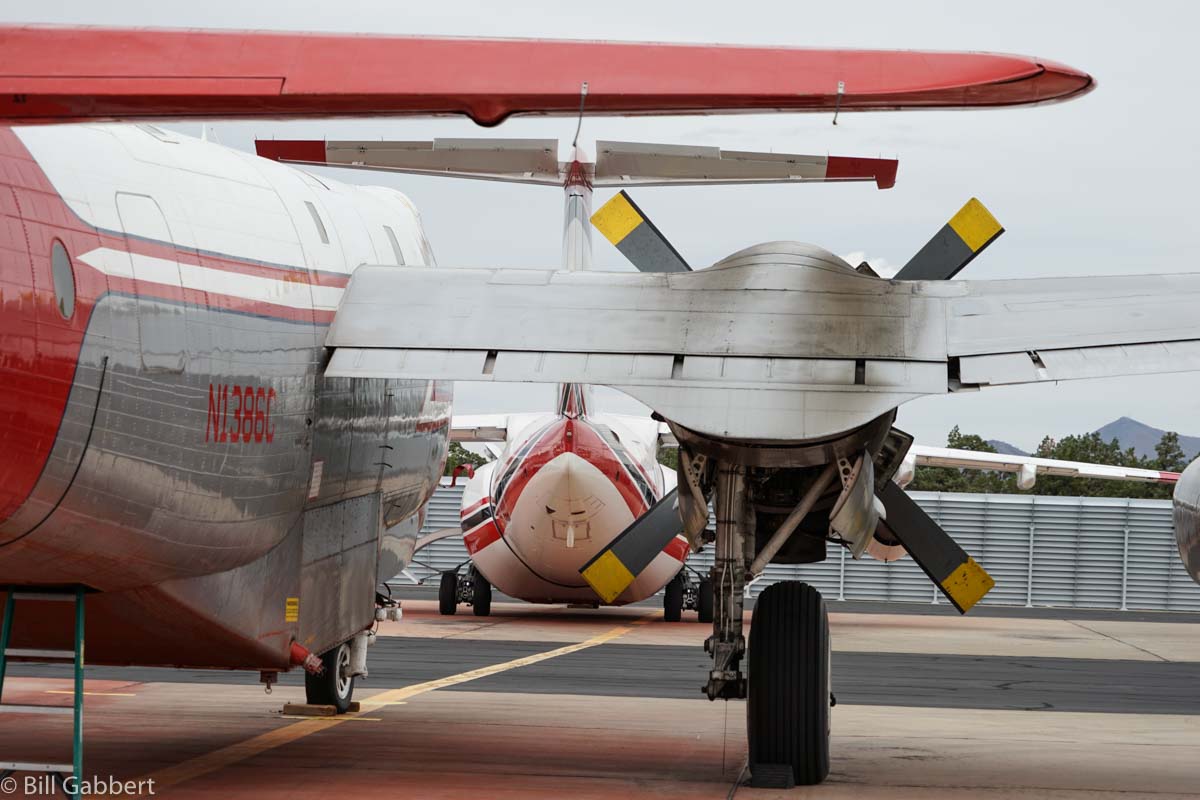 Tanker 44, in the foreground, and Tanker 161 at Redmond, June 13, 2016. Photo by Bill Gabbert.
Colorado requesting information about methods for transmitting near real-time fire information to firefighters

Above: One of Colorado’s two Pilatus PC-12 “Multi-mission Aircraft” at McClellan Air Field, March 23, 2016. Photo by Bill Gabbert.
This article was originally published on Wildfire Today.
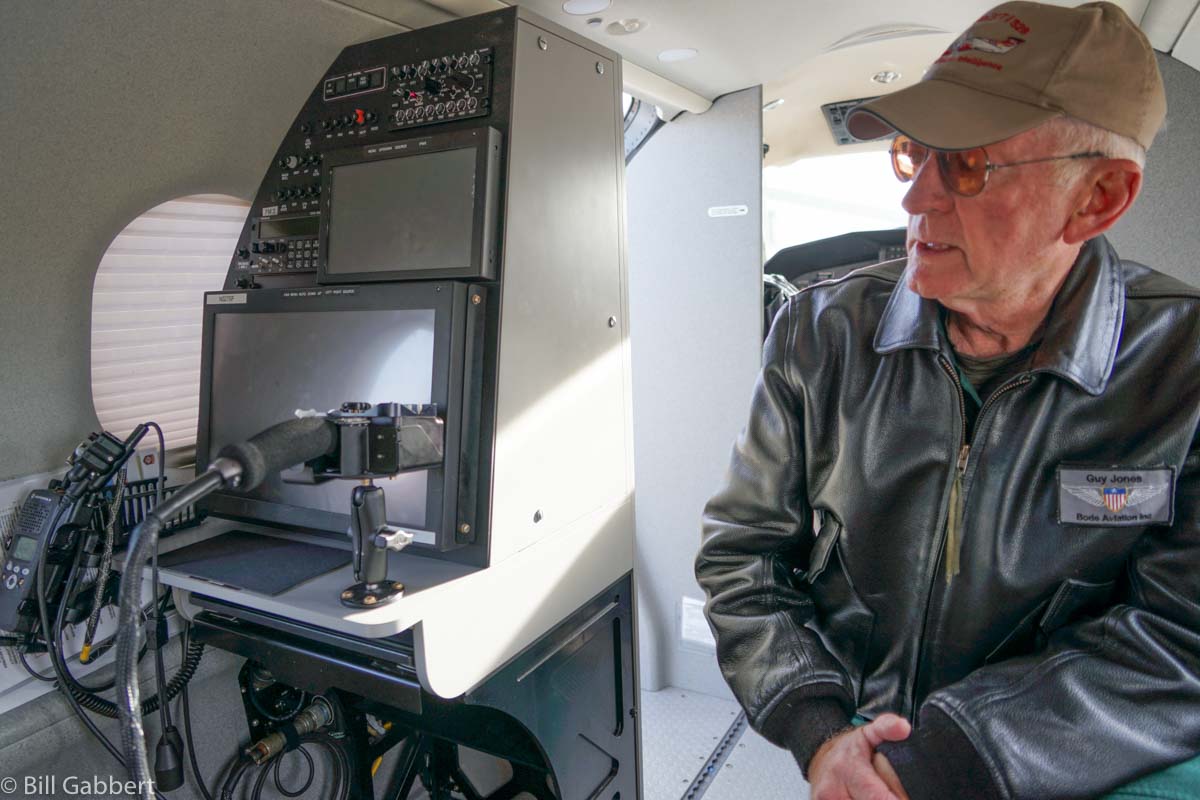
Colorado’s Center of Excellence for Advanced Technology Aerial Firefighting is requesting information from vendors who could supply equipment that would transmit from aircraft near real-time information about wildfires directly to firefighters on the ground.
The state’s Division of Fire Prevention and Control recently acquired two Pilatus PC-12 Multi-Mission Aircraft. Sensors on the planes can detect and map the location of fires and transmit near real-time spatial data, still images, and short video clips to the Colorado Wildfire Information Management System (CO-WIMS), a web-based situational awareness platform. Fire managers can log into CO-WIMS to view fire perimeters and the other data generated by the aircraft. Firefighters on the ground who have access to the system can view the information as long as they have a good 4G cellular connection. However, many remote areas do not have cellular service.
Colorado’s Request for Information is asking for descriptions and prices of systems that could get this data directly into the hands of firefighters actively engaged in suppressing a fire. Responses are due by June 13, 2016.
This could supply half of the Holy Grail of Wildland Firefighter Safety, providing to firefighters near real-time information about the location of a fire. The other half is near real-time information about the location of firefighters.
Thanks and a tip of the hat go out to Bean.
Checking in on Colorado’s MultiMission Aircraft
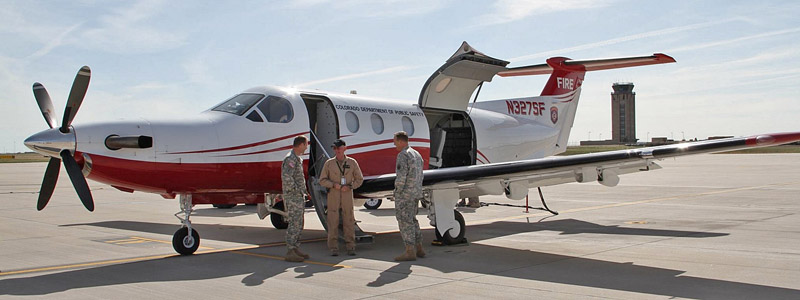
Colorado has two Pilatus PC-12 intelligence gathering aircraft.
Continue readingColorado’s Multi Mission aircraft enhance firefighter safety
(This article first appeared on Wildfire Today, October 26, 2015.)
The two Multi Mission Aircraft (MMA) recently purchased by the Colorado Division of Fire Prevention and Control could be significant progress toward what we have called the Holy Grail of Firefighter Safety — knowing the real time location of a wildfire and firefighters.
The Pilatus PC-12 single-engine aircraft have sensors on board combined with communications and software capabilities that can provide a version of the Holy Grail to office-bound fire managers as well as firefighters on the ground.
Operating well above firefighting air tankers and helicopters, the MMAs have two cameras, color and infrared. The color camera provides video similar to that used by news helicopters orbiting over a wildfire in California. The heat-detecting infrared sensor can map the location of large fires and can find small ones that can be difficult or impossible to spot from the air using just human eyesight. The cameras can be used to monitor the locations of firefighters on the ground, however their identities or resource designators would not be automatically provided.
The suite of communications and software, called Colorado Wildfire Information Management System (CO-WIMS), transmits the data from the sensors in a usable form to a network where it can be accessed by authorized personnel in offices, fire apparatus, and firefighters on the ground with hand held devices.
Half of the Holy Grail appears to be provided with the MMAs — the real time or near-real time location of the fire. The other half, knowing the location of firefighters, can be determined to a certain extent, but only if the equipment operator devotes a significant amount of their time using the cameras to follow personnel and equipment on the ground. On a small fire this could be done while still maintaining the big picture of the spread of the fire, but on large incidents with hundreds or thousands of resources, it would be impossible. However, if a crew reported that they were in a dangerous situation (think Yarnell Hill Fire, where 19 firefighters died), perhaps the operator could use the infrared and visual sensors to locate them and relay that information to resources on the ground or in the air that could provide assistance.
The wildland firefighting agencies still need to adopt hardware and communications systems that can track every piece of apparatus, crew, and any resource operating alone on the fireline. That information could then be accessed on a display that could be monitored, at a minimum, by a Safety Officer, and others as needed; eventually by fire supervisors with hand held devices.
Some of the air attack aircraft under federal contract either have or will have video capabilities similar to that on Colorado’s MMAs, but a system needs to be utilized by the U.S. Forest Service and other agencies that can make it usable to firefighters on the ground. Colorado has provided a template proving it can be done.
The CO-WIMS being used now by Colorado to provide real time intelligence is a huge step forward. While the state is far from developing a comprehensive organization for responding to and managing wildland fires, they deserve kudos for what they have already implemented with the MMAs and CO-WIMS.
It’s kind of like a homeless person being given a pair of $500 shoes. It’s a nice addition to their wardrobe, but there is still more that needs to be done.
More information: A .pdf version of a DCFPC presentation about the MMA and CO-WIMS at the October 21-23, 2015 Colorado State Fire Chiefs Fire Leadership Conference.
The following videos demonstrate some of the intelligence gathering capabilities of the MMA:
Colorado sends multi-mission aircraft to assist oregon with large wildfires

The Colorado Division of Fire Prevention and Control (DFPC) sent one of its two Multi-Mission Aircraft to the State of Oregon yesterday to assist with the current wildfire situation in that state.
The national structure for combatting wildland fires is a cooperative, interagency system involving local, state, and federal agencies. “When Colorado needs help to fight wildfires in our state, we rely on other states to send resources,” said State Fire Director Paul Cooke. “We were fortunate that Colorado’s wildfire season has been fairly light thus far,” said Cooke, “so we can afford to help out others with their needs.”
The situation in Oregon now is much like what Colorado experienced in 2012; significant amounts of dry lightning contributing to ignitions and abundant very dry fuels coupled with high temperatures and erratic winds have resulted in extreme fire behavior and rapid spread.
“With the threat of dry lightning and even more fire starts feared, Colorado’s aircraft will be of tremendous benefit”, Cooke said. The State of Colorado’s Multi-Mission Aircraft (MMA) program is unique to the country. The program is comprised of two Pilatus PC-12 airplanes outfitted with state-of-the-art infrared (IR) and color sensors operated by Division of Fire Prevention and Control personnel. The primary mission of the aircraft is the early detection of wildfires and providing important information to ground forces during initial attack. However, the aircraft can also provide persistent surveillance of large wildfires, providing real time information, including live video, to incident commanders to assist them in making tactical decisions and improving the safety and efficiency of firefighting efforts.
Cooke says that since their arrival late yesterday, Colorado’s aircraft has been providing updated intelligence on Oregon’s two largest wildfires. The Stouts fire, burning in southwest Oregon quickly grew to over 15,000 acres since it started on Thursday, and is only 3 percent contained. The Cable Crossing fire, also in southwest Oregon, has burned more than 1,100 acres since it started on Tuesday, and is currently 15 percent contained.
Cooke says that even though the assistance is reciprocal, Colorado will be reimbursed by the State of Oregon for the use of the resources on loan.