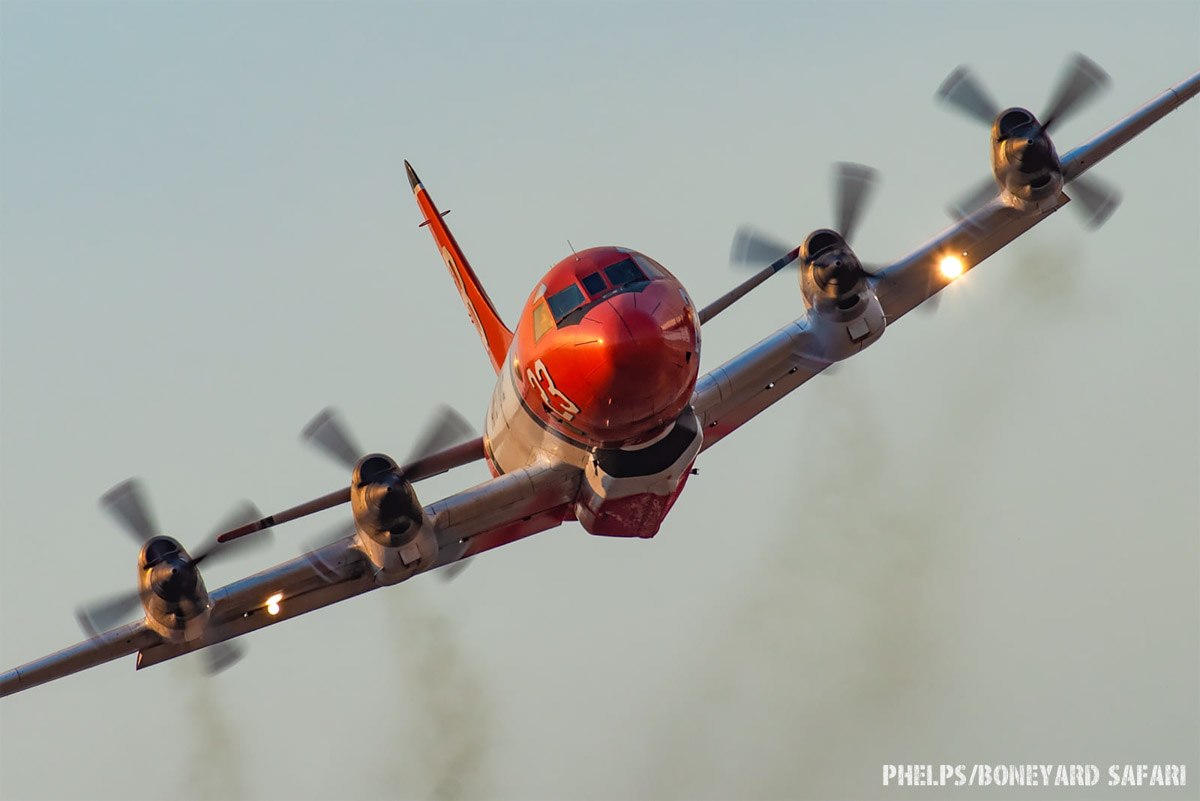
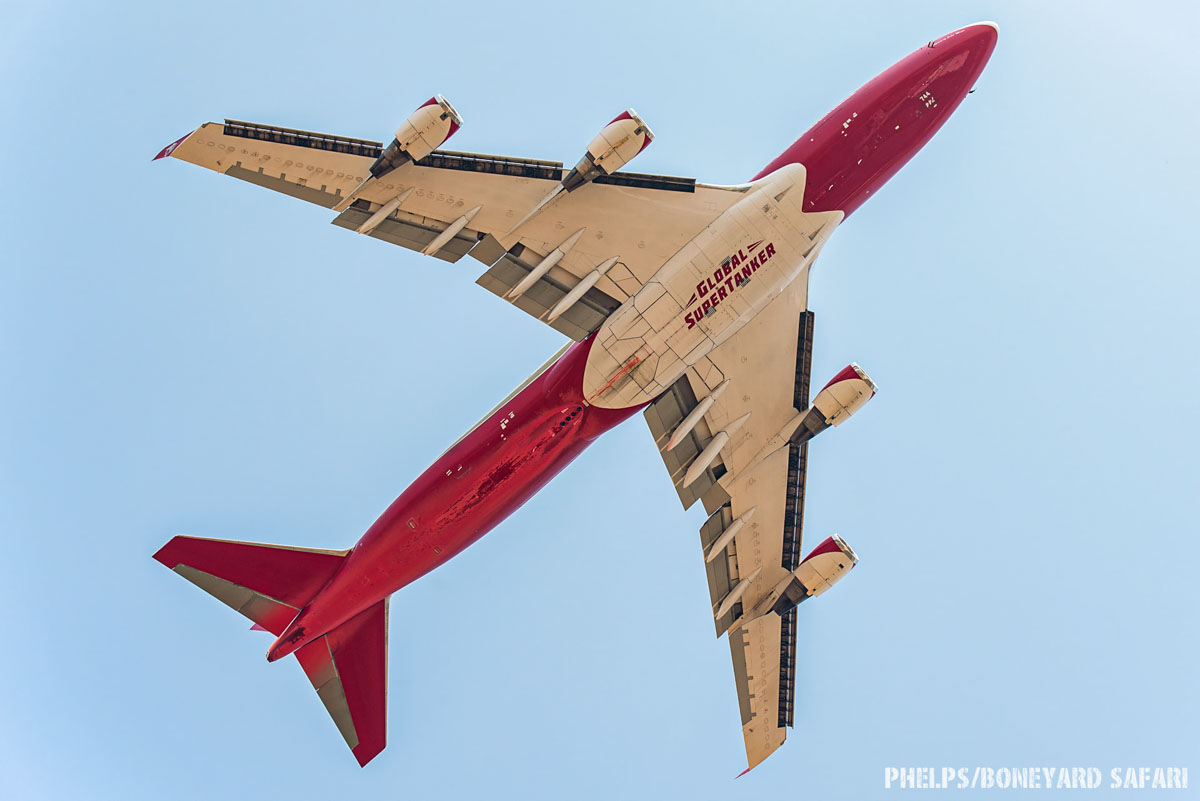
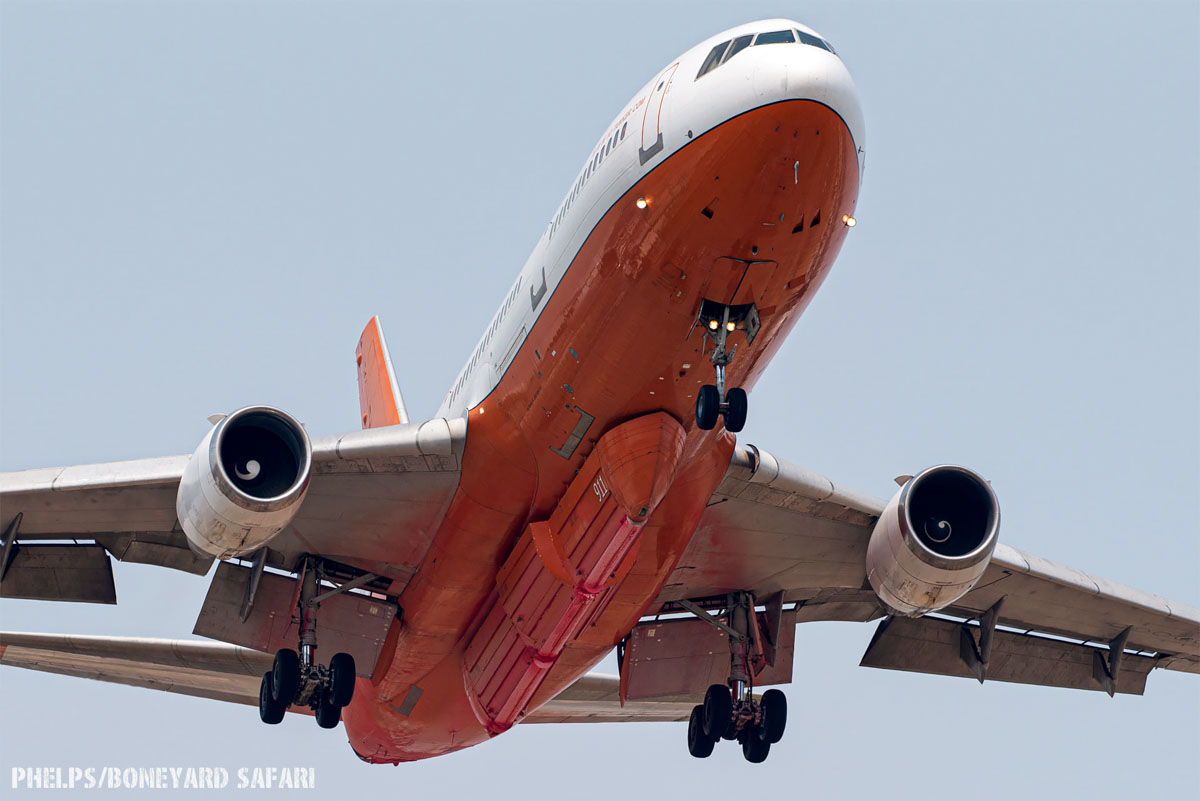
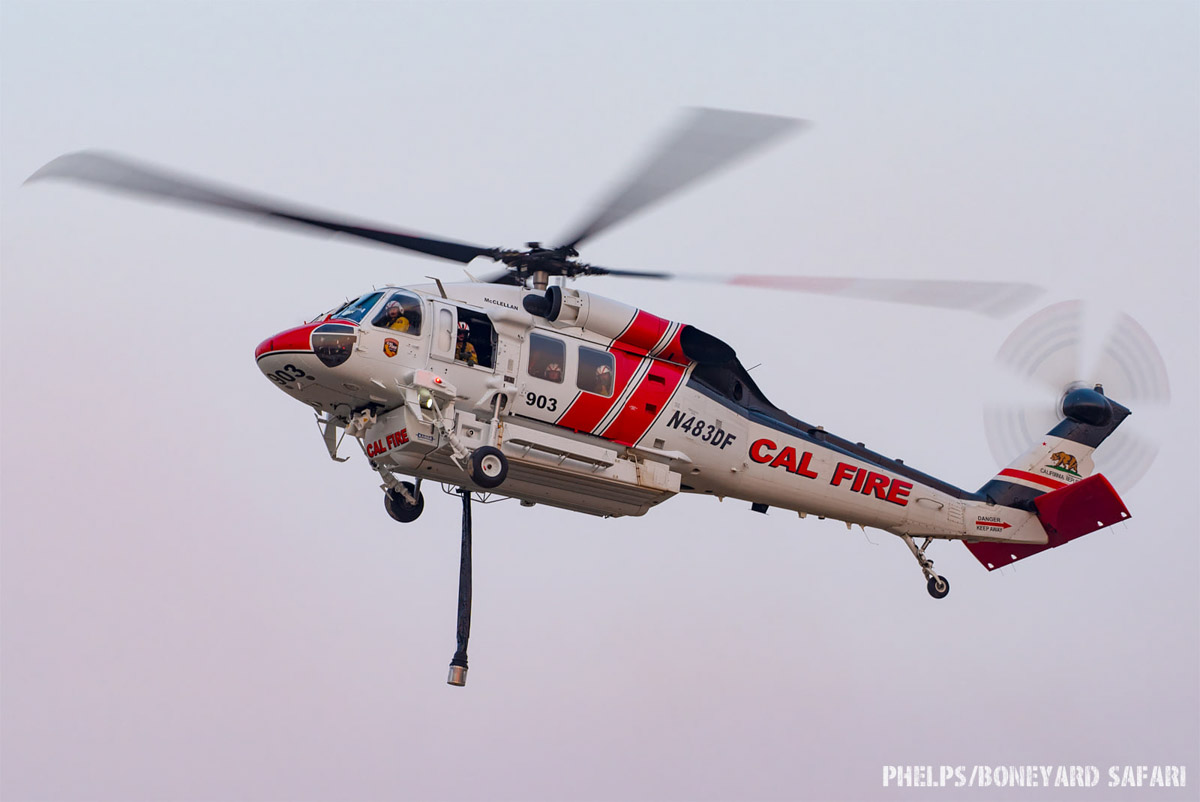
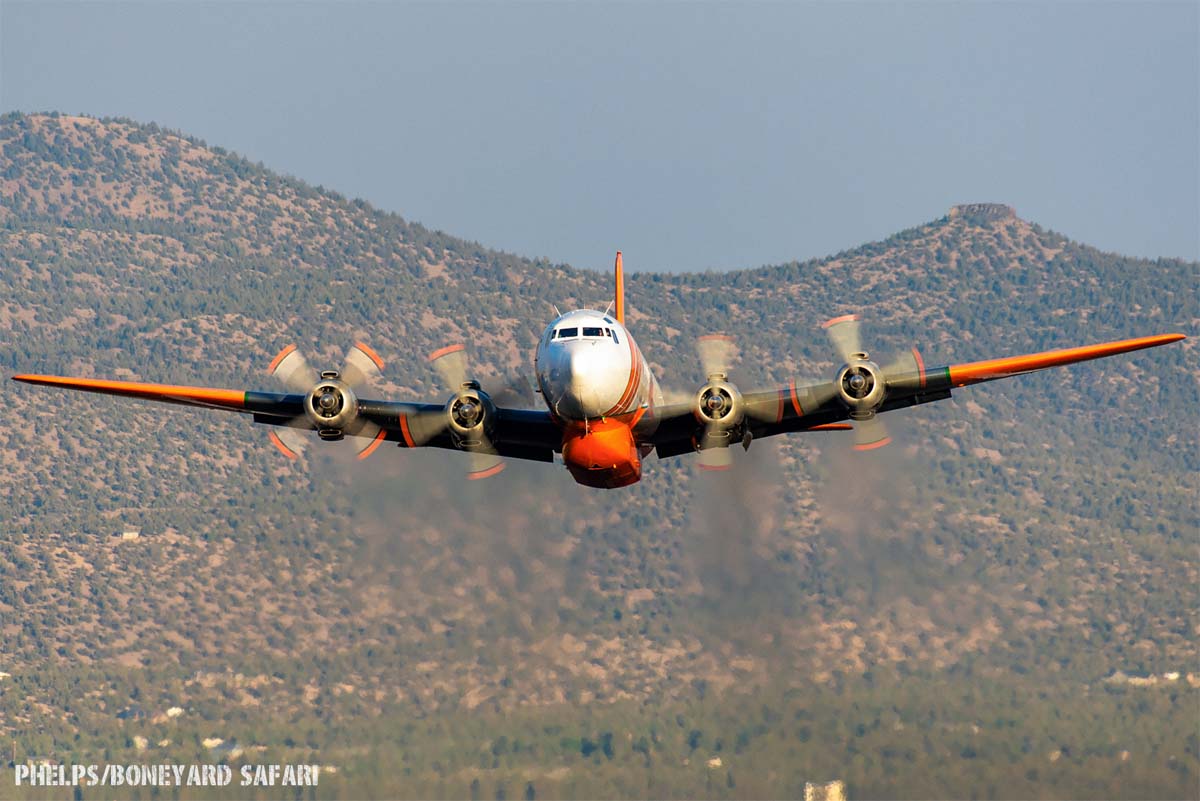
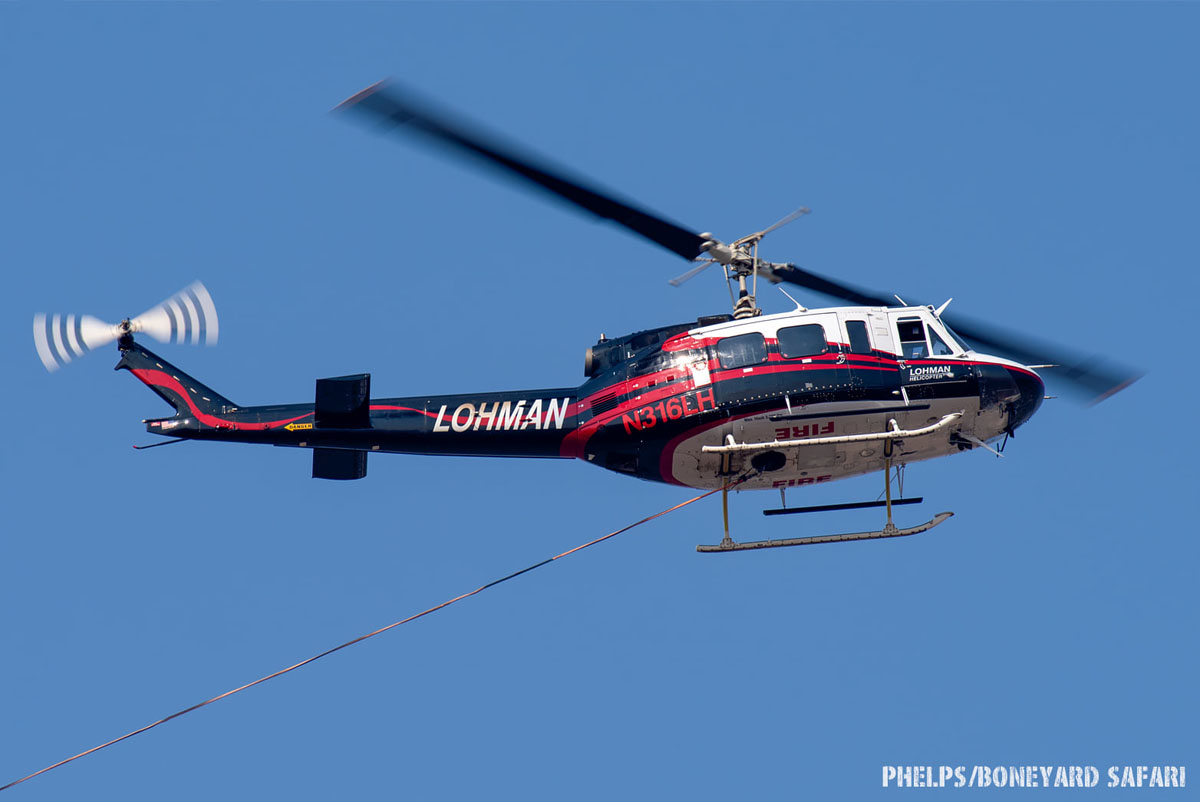
Dylan Phelps sent us these photos that he captured at various Northern California airports in the first part of September as our firefighters were going up against one of the most vicious wildfire seasons on record.
Thanks Dylan!
T-944, Boeing 747-466, N744ST, Photo by Dylan Phelps T-911, N17085, Photo by Dylan Phelps T-481, Lockheed L-188C Electra, C-FLXT, Photo by Dylan Phelps CAL FIRE H-903, Sikorsky S-70i FireHawk, N483DF, Photo by Dylan Phelps T-60, Douglas DC-7, N838D, Photo by Dylan Phelps Bell 212, N316LH, photo by Dylan Phelps
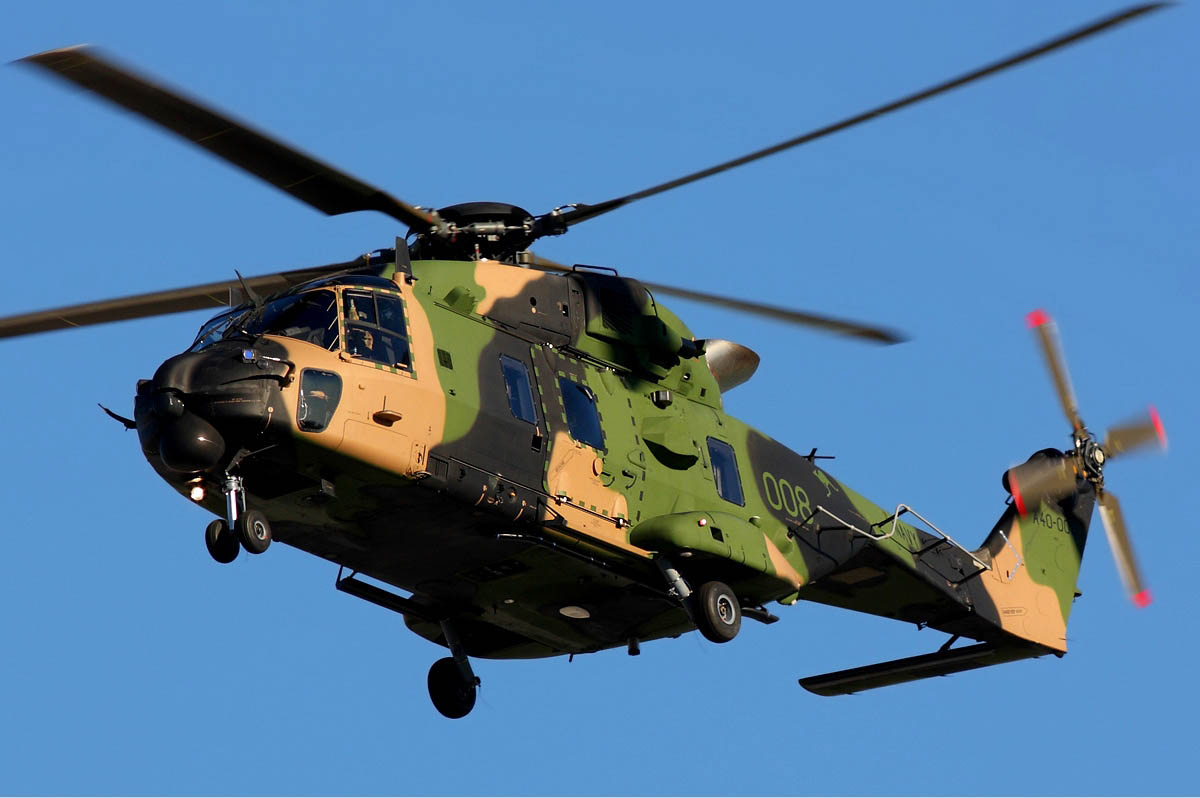
Several bushfires in the Australian Capital Territory (ACT) have kept firefighters busy in recent days. The Department of Defense admitted that one of the fires two weeks ago was caused by heat from a landing light on an MRH-90 Helicopter. It burned within a kilometer of Tharwa, a suburb south of Canberra.
From the Australian Broadcasting Corporation:
“The fire started during routine aerial reconnaissance and ground clearance work being conducted in the area in support of our local firefighters and authorities,” Emergency Services Minister Mick Gentleman said on behalf of the Department of Defense.
Lieutenant General Greg Bilton said the helicopter was using the lights to help it land in smoky conditions, but the heat set a fire that grew rapidly and damaged the aircraft. He said defense was investigating the issue but operating procedures would be changed so that the landing lights were not used in extreme conditions.
It is reportedly the first time a fire has been started by a helicopter landing light.
Smoke from another fire in the ACT that shut down the Canberra Airport for a while was caused by beekeepers checking hives. The fire started January 22 and for several hours threatened homes and businesses.
From the ABC:
The Beard fire jumped the Molonglo River on Thursday and came close to the suburbs of Beard, Harman and Oaks Estate. It also merged with a second fire on Kallaroo Road, which began in the same suburb of Pialligo earlier in the day.
The combined fire reached 424 hectares in size and was at emergency alert level for much of the afternoon, but by 9:00pm was down to 379 hectares.
The hives are part of a national honey bee surveillance program that regularly checks for the arrival of exotic pests that might threaten Australia’s bee population.That process uses smokers to calm the bees so the hives can be inspected, which requires lighting fuels to generate the smoke. The hives are maintained on behalf of the ACT Government by Canberra Region Beekeepers — the program is usually run through state agriculture departments in other jurisdictions.
Air tankers based in Richmond, New South Wales have been busy recently. Between January 26 and 31 a DC-10, Tanker 911, flew 22 missions, while T-137, a 737, flew 12. Their destinations were in or near the ACT and in southern NSW.
Tanker 131, a C-130Q based in Avalon, Victoria completed several missions north of Melbourne and along the Victoria/NSW border.
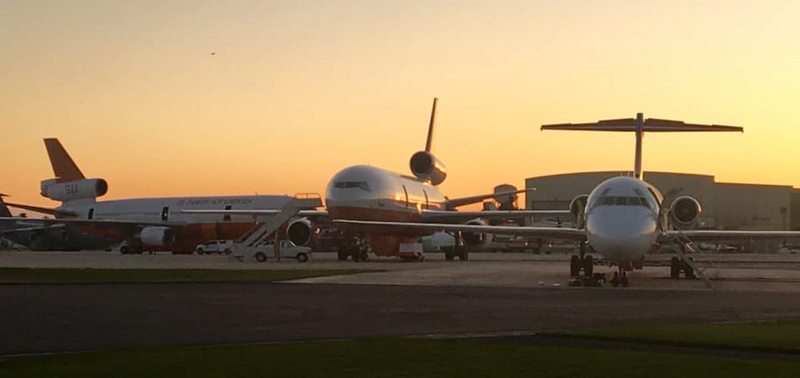
Left to right, DC-10 Tankers 911 and 914 at Santa Maria, CA Nov. 1, 2019. Photo by RK Smithley.
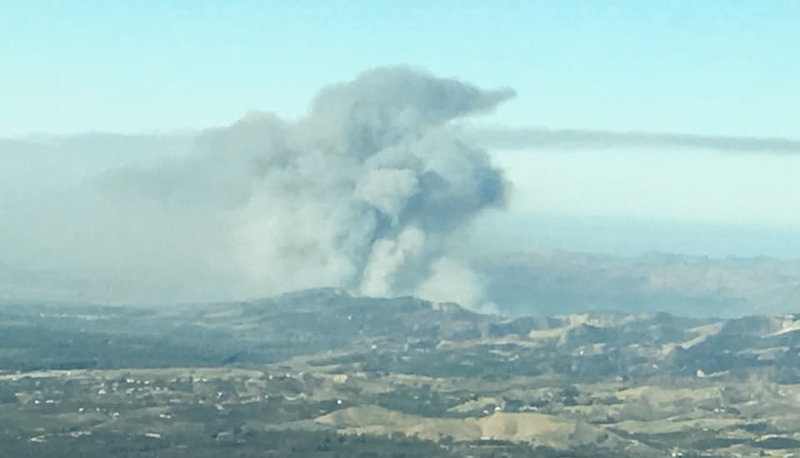
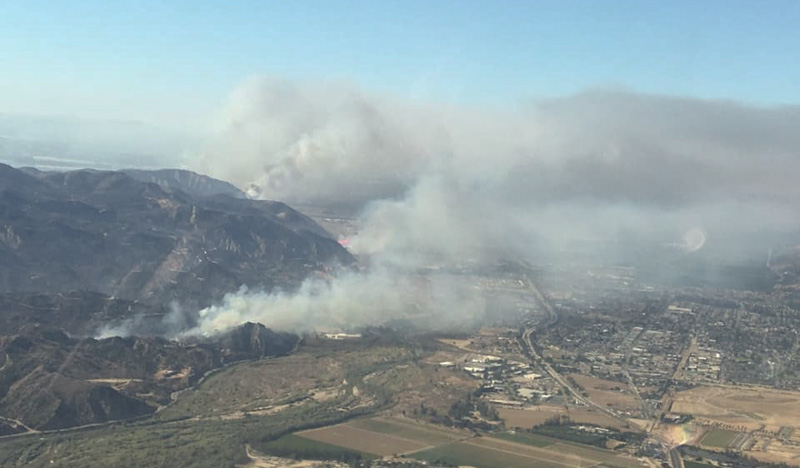
These photos and the text below are from RK SMithley who was the Captain on Air Tanker 911 while the DC-10 (and many other aircraft) were assisting firefighters on the 9,412-acre Maria Fire east of Ventura, California by dropping 9,400 gallons of retardant on each sortie. He starts off by describing the photo above.
“Sunset comes to the San Bernardino Air Tanker Base 11/01/19, after a fairly busy day of fire operations on the Maria Fire at Santa Paula, CA. At right in the loading pit is our T914, which concluded its duty and is released by the USFS off contract with T911 at left, which continues active service. Both ships, along with T910 worked the Maria this date and 910 recovered to Santa Maria where she continues active duty. T914 will be flying the SBD Fest airshow at San Bernardino with two demonstration water drops both Saturday (about 2:30) and Sunday (about 11:00) so come on out and see her perform. T912 has concluded service with Cal Fire and will reposition back home from the Cal Fire Air Tanker Reload Base at Sacramento-McClellan Airport to ABQ this morning. Incidentally, that’s Erickson T107,
a Douglas MD-87, on the right. Their T105 also operated from SBD on the Maria Fire with us as well as Aeroflite T167 and a whole host of other large tankers from other bases in SoCal. The Maria Fire was pretty much out after being pounded by all the air tankers and helicopters today, with fixed-wing air ops starting shortly after daybreak.”
Maria Fire as seen from Air Tanker 911, a DC-10, November 1, 2019. Photo by RK Smithley. Maria Fire as seen from Air Tanker 911, a DC-10, November 1, 2019. Photo by RK Smithley.
(The tweet below of the DC-10 working the Maria Fire are obviously not from Mr. Smithley)
A giant sized firefighter helps battle the Maria fire in Ventura County. The DC-10 is making a drop on a flareup near Santa Paula Friday afternoon #mariafire#santapaula#moorpark @CountyVenturapic.twitter.com/kPlQF836G6
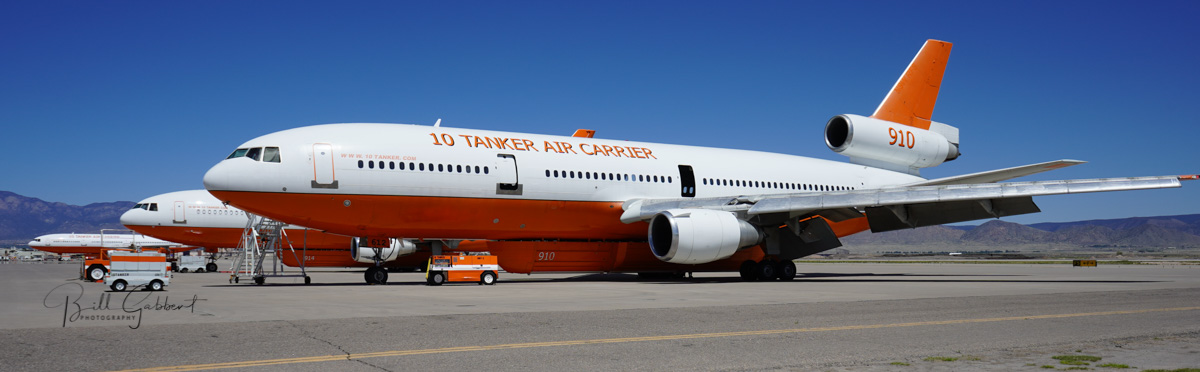
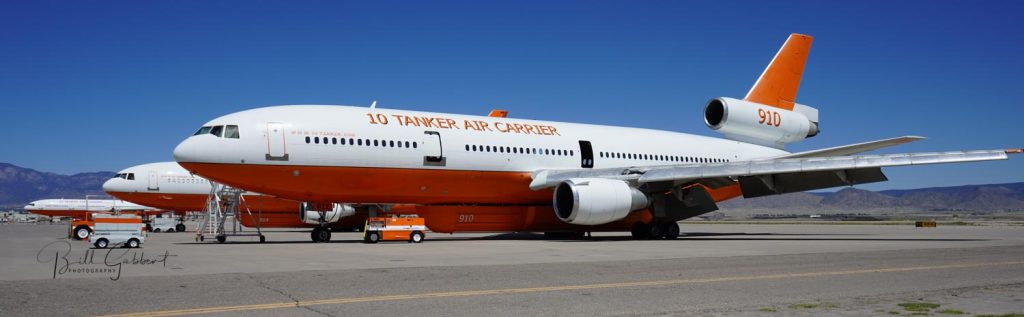
Air Tankers 910, 911, and 914 at Albuquerque, May 3, 2019.
On May 3 after the IAWF Fire Behavior and Fuels Conference I stopped by the headquarters of 10 Tanker Air Carrier at the Albuquerque airport. Not long ago the company moved into roomier facilities at the airport and it looks like they are settled into the new digs.
The company has four DC-10-30 Very Large Air Tankers (VLATs) now fully operational. The last one to be added to the fleet, Tanker 914, began service in 2018, joining Tankers 910, 911, and 912. T-910, the first DC-10 to be converted into an air tanker was originally a DC-10-10. In 2015 it was replaced with a DC-10-30 and now all four of the company’s aircraft are the same model, DC-10-30. The’30 series has more powerful engines and a much higher maximum take-off weight (MTOW) — 572,000 pounds which is far more than the earlier model.
When we were there one of the aircraft, T-912, had just left to start its exclusive use contract, and T-914 was going to depart in a few days to be based, for a while anyway, at Mesa, Arizona.
Two of the DC-10s spent much of February fighting fire in Chile. The original order called for just one, but on the first day at work in the country a tire failed in spectacular fashion, sending rubber shrapnel into one of the flaps, creating three holes. It took several days to fix it, working with the FAA and bringing mechanics with sheet metal expertise from the United States. John Gould, President and CEO of 10 Tanker, said the company told CONAF, the National Forest Corporation that handles wildland firefighting in Chile, that they could send a replacement DC-10 while the repairs were made. The CONAF representative said, in effect, You have more DC-10s? Bring another and we will use it along with the first one during the fire season. So a second was dispatched and they were based at opposite ends of the long, narrow country.
The Goodyear tire failed on its eighth landing — which obviously is very unusual.
In the gallery below, mouse-over the photos below and a caption will appear. Click on a photo to begin a slide show of LARGE images, with the caption then at upper-left.
[envira-gallery slug=”dc-10-vlats-abq-5-3-2019″]
Mr. Gould said fully loaded the DC-10 VLATs weigh 405,000 pounds with a full load of retardant and 2.5 hours of fuel and 9,400 gallons of retardant, which gives the pilots a 167,000-pound margin when maneuvering for a retardant drop, compared to if it was loaded to MTOW.
The DC-10 operates with a crew of three, two pilots and a flight engineer who monitors the aircraft systems and inputs the specifications for the retardant drop.
The aircraft has five retardant tanks, three holding 2,700 to 4,000 gallons each, and two smaller fairing tanks at the front and rear. The fairing tanks are no longer used, which gives the VLAT a 9,400-gallon capacity.
En route to a fire it cruises at 340 knots, but when returning to reload it bumps the speed up to 380 knots. It drops retardant at 200 to 300 feet above the ground at 150 knots.
The first drop over a fire by a DC-10, Tanker 910, was on July 16, 2006 after being awarded a Call When Needed contract by the California Department of Forestry and Fire Protection, CAL FIRE.
Each DC-10 is followed by a support crew of seven maintenance technicians equipped with a four-door pickup and goose-neck trailer carrying spare parts and equipment.
John L. Ames of the Florence Fire Department took this photo of Air Tanker 911, a DC-10, dropping on the Lolo Peak Fire south of Missoula near Florence, Montana August 19, 2017.
Mr. Ames said it made several drops along with numerous other air tankers and helicopters.
Since the fire started on July 15 it has spread across 27,000 acres. About 9,000 of those acres burned Friday, August 18.
Above: Tanker 105 at McClellan Air Field, August 5, 2017. It is a good view of the external tank, or pod, that was fabricated and installed below the retardant tank doors, which lowered the release point by 46 inches. The intent was to keep the flow of the retardant away from the engines. Photo by John Vogel.
(Originally published at 6:04 p.m. MDT August 5, 2017)
John Vogel shot these excellent photos on August 5 of air tankers at McClellan Air Field near Sacramento.
Thanks John!
Tanker 911 at McClellan Air Field, August 5, 2017. Photo by John Vogel. Tanker 62 at McClellan Air Field, August 5, 2017. Photo by John Vogel. Tanker 133, Coulson’s most recent air tanker conversion, at McClellan Air Field, August 5, 2017. Photo by John Vogel. Tanker 944 at McClellan Air Field, August 5, 2017. On August 4 the company moved the aircraft out of Colorado Springs to avoid a hailstorm. They hope to get it carded by CAL FIRE and the U.S. Forest Service. Photo by John Vogel.
Above: Air Tankers 910 departs from Medford, July 28, 2017, en route to the Lake Fire in northeast California. Photo by Tim Crippin.
(Originally published at 6:43 p.m. MDT July 30, 2017.)
Tim Crippin shot these photos of two DC-10 air tankers, T-910 and T-911, at Medford July 28. He said they were working the Lake Fire, part of the Modoc July Complex of fires in northeast California.
Air Tankers 910 and 911 at Medford, July 28, 2017. Photo by Tim Crippin.