Report released for the fatal Coal Canyon Fire

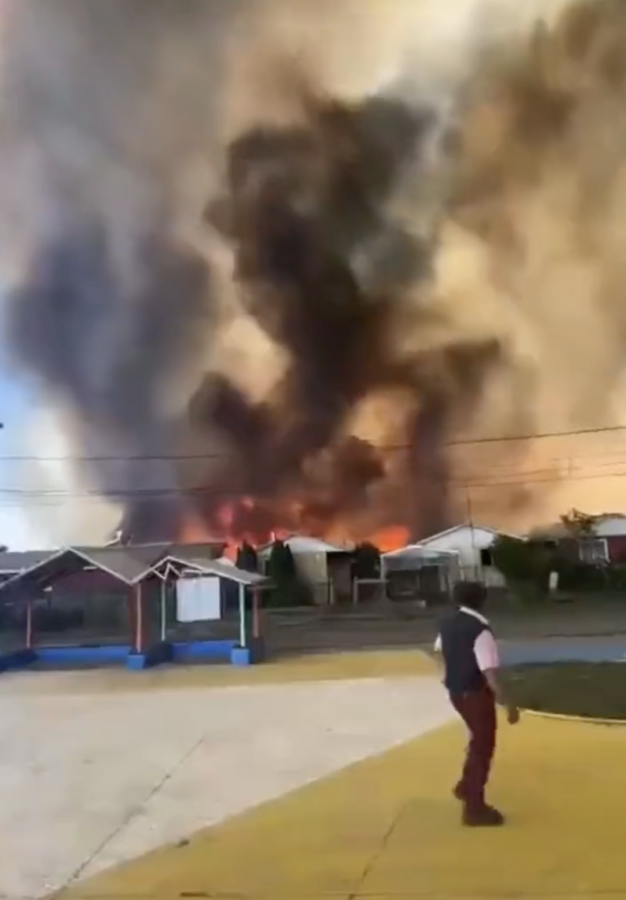
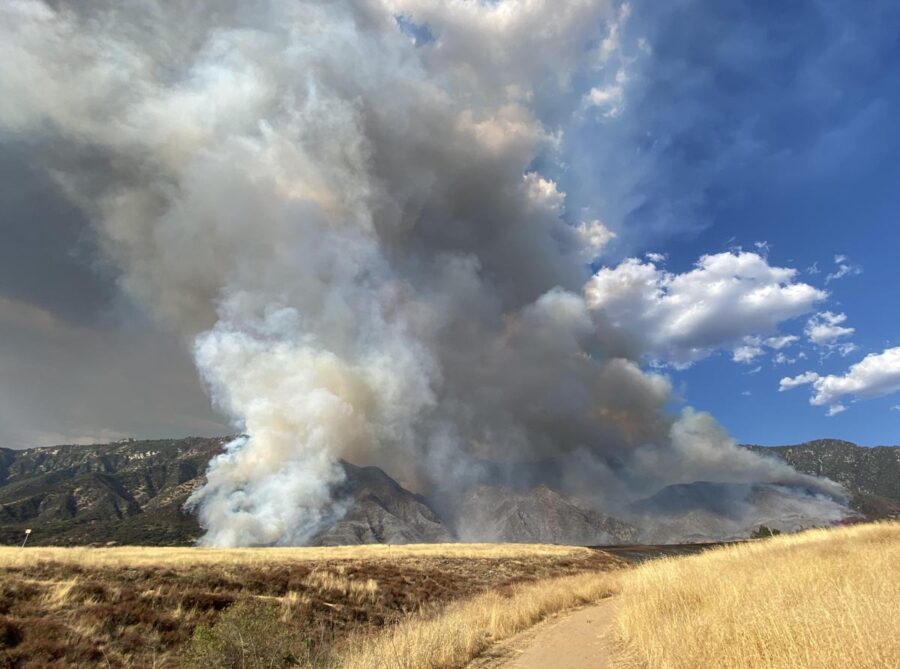
Coal Canyon fire entrapment report, cover photos

Photos on the cover of the report. A portion of one of the photos was redacted.

The U.S. Forest Service has released the Serious Accident Investigation Report for the Coal Canyon Fire, on which firefighter Trampus Haskvitz of Hot Springs, South Dakota was killed August 11, 2011 in the Black Hills of South Dakota north of Edgemont. In addition to Trampus, two firefighters received serious burns and two others had minor burns. Two firefighters were entrapped in an engine. One, Trampus, remained entrapped and died; the other, K.C. Fees escaped. Austin Whitney who was outside the engine, was transported to a Greeley, Colorado Burn Center. The two firefighters who received minor burns during rescue efforts were treated at local hospitals and released. Mr. Haskvitz and Mr. Whitney both worked for the South Dakota Wildland Fire Suppression Division.

Coal Canyon fire entrapment site photo w-graphics

This photo looks down on the entrapment site. The fire spread according to the numbered arrows: along arrow 1 during E 2's initial escape attempt, arrow 2 as they came around the corner, and arrow 3 during the entrapment itself. The fire remained too hot along paths 1 and 2 for them to escape. Photo by Travis Lunders, taken the day after the accident. The image is from the Google Earth version of the report.

You can download the report HERE. It is heavily redacted, and clumsily so, making it more difficult to understand than it should be. The redactions mostly seem to be related to protecting the names of individuals; large sections of text are not redacted. There is also a zipped file that contains a presentation that you can view on Google Earth. It is a great service providing the Google Earth presentation, but here is a tip. Since almost every “slide” presents the fire from a different vantage point, which makes the sequence of events difficult to comprehend, click on the blue titles of the “slides” until you find a view that you like (such as “1350 1st resources arrived”), then don’t touch those again, just click on the circles to the left, which will change the graphics that are superimposed over the terrain. This makes it possible to follow the spread of the fire and the movement of the engines. However, clicking on the blue “slides” reveals explanatory text. The Google Earth presentation uses first names of people throughout. I could not find any explanation, but assume that they are fictitious names, and not the actual names of the individuals involved in the incident.

You should read the entire report and carefully go through the Google Earth presentation to get a clear understanding of the sequence of events, but here are some of the key points:

About 15 minutes after the first engine crews arrived at the scene of the fire, they said it was about 1.5 acres in size and estimated the flame lengths to be 0 to 3 feet. Their plan was to anchor near the fire’s origin and use direct fireline to pinch off the fire. Their escape route was down the road beyond the fire’s heel.

Coal Canyon fire entrapment 1350

The approximate location of the fire when the initial attack engines arrived, at 1:50 p.m. The image is from the Google Earth version of the report.

The engines were on a narrow dirt road. The fire was on a slope below them and also on the slope on the opposite side of the drainage. A spot fire occurred above the road, then the main fire spread up the slope to the road and crossed it.

Coal fire entrapment  at 3:05 p.m.

The approximate location of the fire and the entrapped engine at 3:05 p.m. The image is from the Google Earth version of the report.

Other engines were able to leave the area before the worst of the fire hit the road. One engine tried to escape by driving forward but encountered a wall of fire crossing the road. They backed up in the heavy smoke, going less than 80 feet, and hit a cut bank. At that point truck’s engine died and the fire overran their location. Two firefighters, Haskvitz and Fees, were in the truck as it ignited and began to burn. They deployed one fire shelter inside the cab and tried to use it to protect them both, but the other person had difficulty deploying the second shelter in the cab of the truck. A helicopter heard their mayday calls and tried to drop water on the burning engine, but initially the pilot could not see it in the smoke.

Other firefighters made several heroic attempts to rescue the entrapped firefighters but were driven back by the heat. Fees took a deep breath and escaped from the burning engine, but Haskvitz did not make it out of the cab.

The report does not speculate why the truck’s engine stopped running, but it has happened before on fires when vehicles are in very heavy smoke and there is simply not enough oxygen in the air to support combustion of the fuel in the vehicle’s engine.

A third crewmember assigned to the engine was outside it to the rear when the engine with the two people tried to escape by driving away. As it departed a blast of heat hit him and he dropped to the ground with no time to deploy his fire shelter.

Below is an excerpt from the “Analysis and Conclusion” section of the report:

…Up until the accident, the firefighting professionals involved in the Coal Canyon Fire reasoned the risks of engaging and suppressing this fire to be relatively low and the benefits of direct suppression to be worth this low risk. After considerable review of the incident, including the leadership, qualifications, training, interagency cooperation, fuels, weather, the organization, and local policies, the SAI team has concluded that the judgments and decisions of the firefighters involved in the Coal Canyon Fire were appropriate.

Firefighters all performed within the leaders’ intent and scope of duty, as defined by their respective organizations. The team did not find any reckless actions or egregious violations of policy or protocol. In fact, the SAI Team found the actions of the firefighters involved with the Coal Canyon Fire to be fully consistent with local and national policy and meeting the intent of leadership expectations. Many decisions and actions on the Coal Canyon Fire were manifestly heroic, demonstrating the best of wildland fire professionalism.

The report has very little in the way of analysis and recommendations. Later the investigation team intends to produce separate documents focused on learning from this tragedy. Those documents will provide an Expanded Narrative and an in-depth Discussion and Analysis around human variability, risk management and resilience, as well as additional considerations and recommendations.

Wildfire Today covered the fire, the fatality, the severely burned firefighter, and Trampus’ funeral services, which were attended by approximately 1,700 firefighters and other mourners. A procession of over 130 fire department vehicles escorted Trampus to the cemetery. We recorded most of the procession on video.
An earlier version of this article misidentified one of the firefighters that was in the entrapped engine. Wildfire Today regrets the error.

Share

Connecticut firefighter dies responding to brush fire

A Connecticut firefighter died Sunday night, April 15, while responding to a brush fire. Lt. George Marshall Sanford, 67, a former Chief of the Redding, Connecticut Fire and EMS Company, collapsed and died from an as-yet-undetermined cause. He had been a member of the department for over 50 years.

Our condolences go out to the family and friends of Lt. Sanford.
Thanks go out to Dick

Share

LA County firefighter dies during physical training

David L  Bailey

David L. Bailey

This morning a firefighter with the Los Angeles County Fire Department died during physical fitness training. At approximately 11:30 a.m. Fire Captain David Bailey suffered a medical emergency, resulting in his untimely death at Los Angeles County Fire Department Camp 14 in Santa Clarita.

Captain Bailey, 50, was a resident of Acton, and is survived by his wife. He had no children. Funeral services will be announced at a later time.

We offer our sincere condolences to Captain Bailey’s wife and his coworkers.

UPDATE  at 6:17 p.m. MT, April 4, 2012

The original information above came directly from PIO Captain Mark Savage of the LACFD. Chuck Bushey talked Captain Savage later who told that Captain Bailey was walking on a hiking trail during his morning physical training when he died, which agrees with what we posted yesterday. However, some other internet articles are reporting slightly different versions of the circumstances. We stand by our original version, as well as Chuck’s additional details.

Share

Unlearned lessons in Nebraska

When we report on serious accidents or fatalities on wildfires, we always try to obtain a copy of the official investigation report from the jurisdiction involved. But for the incidents on federal land at least, and on other lands in most of the western states, the responsible organizations almost always make the report available freely and conveniently, usually on the internet.

The primary reason to distribute accident reports as widely as possible is to reduce the chance of similar accidents. We call these “lessons learned”. There are entire organizations and web sites devoted to this concept, such as the Wildland Fire Lessons Learned Center, the U.S. Army’s Center for Army Lessons Learned, and the Department of Homeland Security’s Lessons Learned Information Sharing site. We put together the document titled Infamous Wildland Fires Around the World, which is a partial list, by date of the year, of some of the more famous, or infamous, multiple fatality wildland fires around the world over the last 150 years. We hope that firefighters will remember these accidents and the lessons learned from them.

But it is much more likely that mistakes made on fires in Nebraska will be repeated.

When we searched for an official report about the triple fatality on the April 28, 2011 prescribed fire near Trenton, Nebraska, we came up with nothing. We linked to a pretty good newspaper report, and asked if our readers were aware of an official report on the incident. One them told us that there was a multi-step process that involved many exchanges via snail mail to get a copy of a fire accident report in Nebraska. And it usually takes about a month, they said.

We called Jim Heine, the Assistant Fire Marshal in Nebraska and asked him how to obtain a copy of a report. He said it was a “simple one-step process”. But it turns out that there are five six steps.

  1. Complete an application form to request the report. The form can be downloaded from the Fire Marshal’s web site, printed, and completed by hand.
  2. Send it to the Fire Marshal’s office by fax or by snail mail.
  3. The agency’s legal counsel reviews the request. If it is approved….
  4. The Fire Marshal’s office sends you an invoice.
  5. You send the Fire Marshal’s office the payment for the report (a typical fee is $3.50).
  6. The Fire Marshal’s office snail mails you the report.

We asked Mr. Heine why the reports were not available on the internet. He said “If you had a family member who died on a fire would you want the report to be public?”

We have heard of many family members who had loved ones that died on a fire who are vehement that the circumstances and lessons learned become public. They would like to prevent other families from losing a loved one and going through the same pain and suffering. Two recent examples that come to mind are the CR 337 fire in Texas last year and the Carson Helicopter crash in 2008 on the Iron Complex fire near Weaverville, California.

Lynette Hamm’s son, Caleb Hamm, passed away on the CR 337 fire in Texas last July. When told about Nebraska’s policy on accident reports, she said:

I can only surmise Mr. Heine has never lost a loved one before. If so, I believe he would want to get to the bottom of it, however it happened, and have those findings available for future training. If the firefighting community really wants to learn from past mistakes/accidents, wouldn’t we want those reports to be made available to everyone in the hopes of preventing another occurrence? I would think so.

Nina Charlson’s son, Scott Charlson, died along with eight other firefighters and air crew members in a helicopter crash on the Iron Complex (or Iron 44) fire in 2008. Ms. Charlson has been very active in following up on the investigations of the accident. When she and family members of other firefighters attended a National Transportation Safety Board forum in November, she released a statement that included the following:

…We cannot bring our loved ones back but if we can stand up for safety changes for future passengers – that is what we want to do.

When told about Nebraska’s policy, she replied in part:

I think it is reasonable that if the victims families did not want to have details made public (maybe their firefighter made a stupid mistake) they could request it – but still firefighters should have the information for future safety measures.

The purpose for any future actions of the Iron 44 families part is definitely for the purpose of safety.


Share

Followup: three fatalities on 2011 prescribed fire in Nebraska

Casey, one of the people who commented on our article about the most significant stories of 2011, pointed out to us that in addition to the one person that was killed April 28 on the prescribed fire near Trenton in southwest Nebraska, two others also died weeks and months later. Theresa Schnoor, 46, passed away at the scene, but Robert Seybold, 40, died May 18, 2011, and 37-year-old Anthony Meguire died at a burn center in Lincoln, Nebraska September 18, 2011. The three of them along with five others were conducting the prescribed fire on privately owned land.

May they all rest in peace.

Casey also pointed out to us an article written by David Hendee of the Omaha World-Herald that summarizes an investigation of the incident conducted by the Nebraska Fire Marshal’s office. The article is quite disturbing to read. Not because of any gore or graphic details, but because it points out many factors that might have resulted in a more favorable outcome if they had been handled differently. The issues included planning, organization, briefing, fire departments that were asked but did not assist, equipment, personal protective equipment, alcohol, and weather and how it related to the prescription.

Reason swiss cheeze model

This multiple fatality incident could be an example of the “swiss cheese” model developed by James Reason. A single error or unsafe act may not result in an accident, but multiple unsafe acts may align, like holes in layers of swiss cheese, to produce an unfortunate outcome.

We were not able to find a copy of the original Fire Marshal’s investigation report over the weekend, but if anyone has access to it, please let us know.

=====================

UPDATE: January 10, 2012:

We found out more about Nebraska’s policy which makes it difficult to learn lessons from accidents on fires.

======================

Thanks go out to Casey

Share

California inmate dies while training with CAL FIRE

On Wednesday an inmate that was training with CAL FIRE died. Our condolences go out to the family, friends, and coworkers.

Here is an excerpt from a news release by the California Department of Corrections and Rehabilitation:

===============================================================

THURSDAY, JANUARY 5, 2012

Inmate Firefighter Dies of Presumed Natural Causes

SAN LUIS OBISPO – A California Department of Corrections and Rehabilitation (CDCR) inmate firefighter assigned to Cuesta Fire Camp at the California Men’s Colony died of presumed natural causes Wednesday afternoon during a training exercise with the California Department of Forestry and Fire Prevention (CAL FIRE).

The inmate, Crisanto Leo Lionell, 54, was participating in a training exercise at the California National Guard’s Camp San Luis when he lost consciousness. Emergency personnel transported him to a local hospital where he was pronounced dead at approximately 4:45 p.m.

Lionell was received by CDCR on February 10, 2010, to serve an 11-year sentence for transportation and possession for sale of controlled substances in Tulare County.

CDCR and CAL FIRE will conduct a review of the incident.

CDCR currently operates 44 adult and two Division of Juvenile Justice Conservation Camps in California. CDCR jointly manages 39 adult and juvenile camps with CAL FIRE and five adult camps with the Los Angeles County Fire Department. Nearly 4,000 offenders participate in the Conservation Camp Program (CCP), which has approximately 200 fire crews.

Since 1946, the CCP has provided the State’s cooperative agencies with an able-bodied, trained workforce for fire suppression and other emergencies, such as floods and earthquakes.

Share