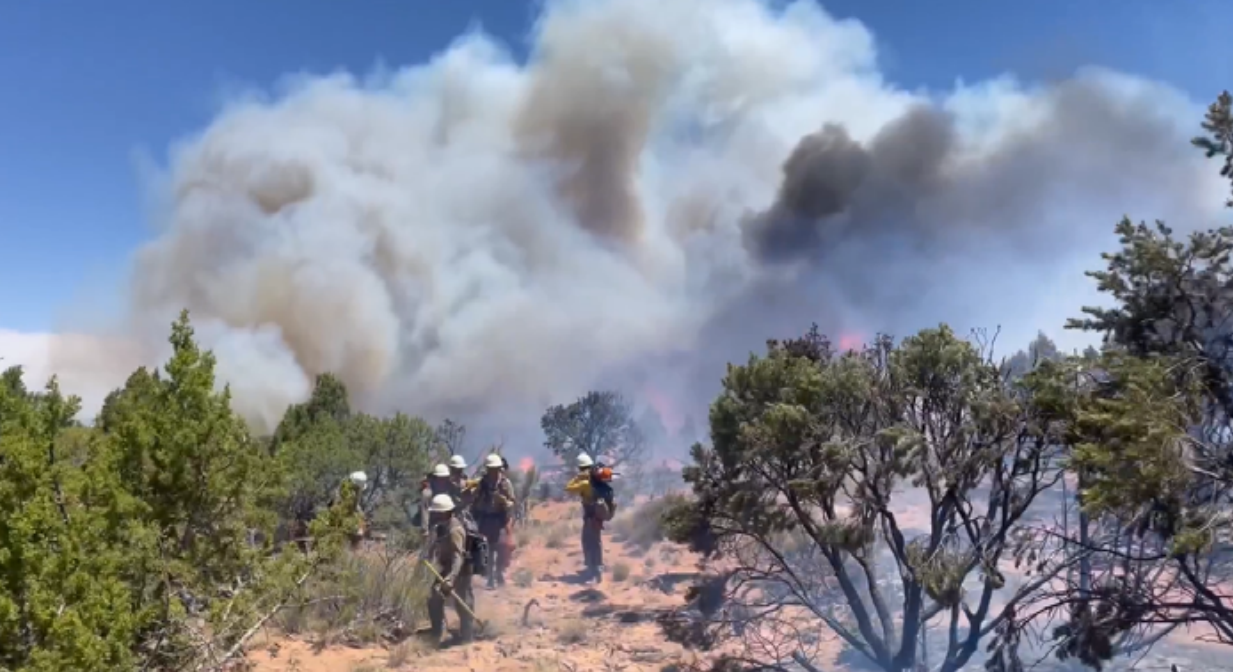
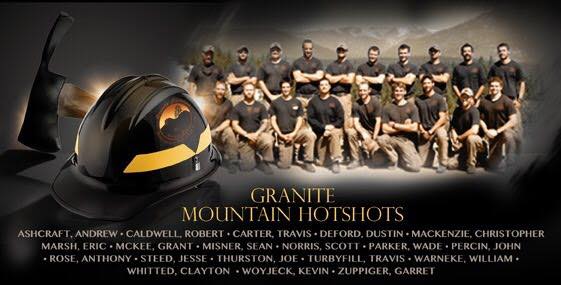
 When I think about the June 30, 2013 tragedy where 19 firefighters were killed battling a fire near Yarnell, Arizona, I remember Abraham Lincoln’s Address as he and others dedicated a military cemetery in Gettysburg, Pennsylvania, where thousands of soldiers died almost exactly 155 years ago, July 1-3, 1863, in what has been described as the turning point of the Civil War. We don’t even know for sure the number killed, with estimates ranging from 7,000 to 8,000.
The President was honoring those who were killed in the battle. The men fought each other, the North vs. the South. Wildland firefighters, thankfully, don’t fight each other, but there are similarities between fighting wars and fighting wildfires.
That day in 1863 the President said in part:
“…It is rather for us to be here dedicated to the great task remaining before us—that from these honored dead we take increased devotion to that cause for which they gave the last full measure of devotion—that we here highly resolve that these dead shall not have died in vain.”
It is difficult to find positive outcomes in a mass casualty incident like the Yarnell Hill Fire. But one thing that is doable, is to at least learn some lessons, and more importantly, use them to take action to reduce the number of fatalities on wildland fires. We will never eliminate all risks of firefighting, but proactive management locally, at the national level within the agencies, and in Congress, can make a difference.
Excerpt from Lincoln’s Gettysburg Address:
“…Now we are engaged in a great civil war, testing whether that nation, or any nation so conceived and so dedicated, can long endure. We are met on a great battle-field of that war. We have come to dedicate a portion of that field, as a final resting place for those who here gave their lives that that nation might live. It is altogether fitting and proper that we should do this.
“But, in a larger sense, we can not dedicate—we can not consecrate—we can not hallow—this ground. The brave men, living and dead, who struggled here, have consecrated it, far above our poor power to add or detract. The world will little note, nor long remember what we say here, but it can never forget what they did here. It is for us the living, rather, to be dedicated here to the unfinished work which they who fought here have thus far so nobly advanced. It is rather for us to be here dedicated to the great task remaining before us—that from these honored dead we take increased devotion to that cause for which they gave the last full measure of devotion—that we here highly resolve that these dead shall not have died in vain—that this nation, under God, shall have a new birth of freedom—and that government of the people, by the people, for the people, shall not perish from the earth.”