Australia 4 years ago today


December 31, 2019 Australia bushfire smoke

Very large bushfires in December of 2019 were rapidly spreading through areas of New South Wales and Victoria in southeast Australia, leaving behind hundreds of thousands of burned hectares, blackened forests, and destroyed structures in their wakes.

Victoria
Authorities in Victoria confirmed that at least 43 structures were destroyed in the Gippsland region where more than 400,000 hectares (988,000  acres) had burned. Many of the structures were in the Sarsfield and Buchan areas.

The military was activated to assist firefighters and the public. The Australian Defense Force deployed Black Hawk and Chinook helicopters, as well as fixed-wing aircraft and Navy vessels for firefighting support and evacuations. Authorities were considering using helicopters to fly in food and other supplies to people cut off by fires and road closures. Fire aviation specialists from the United States and Canada arrived in Australia to help manage aircraft.

12/31/2019 New South Wales

New South  Wales
At least 40 homes were destroyed by fires in Conjola Park on the south coast of NSW as the fire burned through on December 31. Many residents fled to the beach.

Many structures burned in Cobargo, including some of those along Princes Highway, the main street going through the town.

An engine crew from Fire and Rescue New South Wales Station 509 Wyoming recorded the video below showing the moment their truck was overrun by a fire south of Nowra, NSW. The crew was forced to shelter in their truck as the fire front passed through. The video was posted by NSW Rural Fire Service December 31, 2019 local time.

Aero-Flite expanding at Spokane

Aero-Flite Inc. is expanding operations at Spokane International Airport, where the company is planning a 30,000-square-foot maintenance hangar to handle its growing fleet, says general manager Chris Niemann.

The Spokane Journal reported that the company has filed a pre-development conference application with the city of Spokane to review plans for the structure, valued at over $8 million. The company bases its operations in 33,000 square feet of hangar space, which includes a 6,000-square-foot attached tent; Niemann says the new hangar will be built next to the existing facility and it will improve winter maintenance capacity.

Aero-Flite scoopers
Aero-Flite ducks in a row

He says the fleet will grow from 12 to 14 aircraft. The  company added one plane in 2023 and will add two more next year. The FAA issued a Supplemental Type Certificate (STC) on the Dash 8-400AT airtanker last spring; Aero-Flite has pursued the U.S. certification of the airtanker version of the Dash-8 airliner.

Also operating AVRO RJ-85 and Canadair CL-415 airtankers, Aero-Flite plans to expand their fleet; with the new STC, Aero-Flite will add two Dash 8-400ATs and the FAA approval will allow U.S.-registered Dash 8-400ATs to fly aerial firefighting missions across all states.

The Aero-Flite airtankers will operate under a long-term, multiyear contract with the State of Washington.

Aero-Flite maintenance
Expanding its hangar space will reduce employee time spent moving aircraft around during maintenance time in the off season. Aero-Flite photo

The maintenance hangar will be a pre-engineered metal building with insulated panels for siding. Spokane-based Garco Construction will be the contractor. Since Niemann joined the company in May 2021, Aero-Flite has added 40 employees, bringing the  workforce to about 180 people. That includes 125 Spokane-area employees.

For four years running, Aero-Flite’s been named by the Spokane Journal of Business as one of the best places to work in the Inland Northwest.

Tanker 260
Tanker 260 — Aero-Flite photo

AirMed&Rescue reported back in the spring that Aero-Flite is a business with 60 years of experience in the aerial firefighting sector. It employs over 170 aviation experts, including 51 pilots and 74 mechanics, and operates a mixed fleet of fixed-wing aircraft, including seven Avro RJ85 airtankers and four De Havilland CL-415 waterbombers; the Dash 8-400AT is one of the world’s most modern airtankers.

 ~ Thanks and a tip of the hardhat to RJ 


1990 Picacho C-54 airtanker

Picacho
Picacho

Any of our resident aviation experts have details on this?  IMWTK.

The Army National Guard heliport?

From: Iain Mackenzie <iainamac@tiscali.co.uk>
Subject: Tanker aircraft at Picacho Az.

Message Body:
Looking for info.
In 1990 during a photo-tour of Arizona, I came upon a C54 tanker sitting on what I thought was a random field near Picacho. We were told it was on standby or stored for the quiet season. Later years I
see that there used to be an auxiliary airfield there, and it's now a U.S. Army helo training field. Can anyone confirm this is indeed where the aircraft was parked,and the reason?
Thanks and Happy New Year from Scotland!

--
Email sent from a contact form on FireAviation:
(https://fireaviation.com)

Maybe it wasn’t the hurricane that blew up the Maui wildfires

Scientists have introduced a new theory for the cause of the Maui fires in August, and the theory casts doubt on previous assumptions that linked the wildfires to nearby Hurricane Dora. Weather models show the fires were actually blown by the same meteorological phenomenon that’s often behind California’s worst wildfires — a downslope windstorm (see Rattlesnake).

Nearly four months after the Lahaina Fire that devastated Maui — leaving 100 people dead and 6,000 still homeless — scientists have clarified a new theory; according to a report by the Daily Mail, video footage documenting the fire revealed a wind-driven firestorm, but the power outages during the firestorm left scientists uncertain about which factors had caused the fire behavior.

Atmospheric researchers have now simulated the weather and fire trends in western Maui. In Lahaina, the main cause of the fires was a strong high-pressure system north of Hawai’i that intensified the easterly tradewinds, and when those winds ran up against the slopes in West Maui, the speed increased as the winds blew downhill. When they hit Lahaina they’d reached hurricane strength.

Simulations by the University of Nevada-Reno and the State University of New York at Buffalo showed that sustained winds in Lahaina on August 8 were nearly 80 mph with gusts exceeding 90 mph. Studies by the University of Hawaii and the University of Washington simulated similar wind speeds.

Cliff Mass, an atmospheric sciences professor at the University of Washington who simulated the Maui windstorm, said the combination of fuels, strong winds, and ignition sources is a common set-up for destructive wildfires.

“There’s a real story for Californians here because what happened in Maui, what happened in the Marshall Fire, what happened at Paradise … they’re all the same thing,” Mass told the San Francisco Chronicle.

The Chronicle reported that videos from Lahaina showed a wind-driven fire, but that because weather stations in the area had lost power during the fire, researchers could not be certain about exactly which factors had  combined to create the firestorm. Many had initially attributed the disaster to Hurricane Dora near the island.

Below is a  forecast vertical cross-section of the situation on the island at about 11 a.m. Hawaii time. Cliff Mass explains that winds are shown by the color shading and arrows.  “The solid lines are potential temperature. An extraordinarily high amplitude wave had formed, with air descending the western side of  the Maui Mountains, accelerating as it plummeted toward Lahaina. At low elevations, the flow abruptly ascended, in a feature often termed a hydraulic jump.”
Cliff Mass illustration -- Maui Mountains
Cliff Mass illustration — Maui Mountains

He said the Lahaina situation involved a wet winter, followed by a dry summer, causing grasses to grow exceptionally in the spring to create a  dense fuel load, ready to burn.

Nearly 6,200 people still struggle to find housing while residents and their beloved Maui town of Lahaina works to rebuild.

~ Thanks and a tip of the hardhat to Jim. 

A400M used in Mission: Impossible – Rogue Nation

Bill Bailey sent us the following info for sharing.
(Thanks, Bill!)

Airbus A400M Grizzly, November 2023, Airbus photo

Airbus A400M Grizzly
A4M006
c/n 006

This A400M, then registered as F-WWMZ, was the one used in Mission: Impossible – Rogue Nation.

“Filming of an action scene featuring Ethan Hunt … hanging on the outside of a flying Airbus A400M Atlas took place at RAF Wittering near Stamford. Tom Cruise performed the sequence, at times suspended on the aircraft over 5,000 feet (1,500 m) in the air, without the use of a stunt double. To pull off this stunt, the production team were given a limited period of only 48 hours. The plane took off and landed eight times before they had the perfect shot.” (Wikipedia)

=========================

Airbus upgrades A400M firefighter prototype kit
December 2023
GETAFE, SPAIN — Airbus Defence and Space has conducted a new flight-test campaign of the A400M roll-on/roll-off firefighting prototype kit, dropping 20,000 litres of retardant (OVER 5,000 GALLONS) and creating high-concentration lines over 400 metres long on the ground.

Over a period of two weeks, the A400M carried out a ground- and flight-test campaign in southwestern and central Spain, including six drops, three of which using retardant and three using water.

“We have tested a new version of the kit, improving dropping efficiency and reducing discharge time by over 30 percent  compared with last year, while combined with rapid deployment and easy installation on the A400M aircraft,” said Jean-Brice Dumont, head of Military Air Systems at Airbus Defence and Space. “We continue to pioneer new solutions and capabilities for our A400M fleet, in this case protecting populations and natural environments from fires.”

An easy-to-install solution
This roll-on/roll-off kit does not require any modification to the aircraft and therefore is interchangeable to any aircraft in the A400M fleet. The water or retardant is stored in a tank in the cargo hold of the aircraft, and by using a mechanical lever, a door is opened to allow the liquid to flow out of the aircraft by gravity means through a discharge pipe. The current design of the prototype is capable of dropping 20,000 litres in a single discharge.

The tanks can be filled in less than ten minutes using standard high-pressure pumps on the ground. The A400M is characterised by its ability to take off and land on short and unpaved runways and a wide range of air bases and airfields.

During the campaign, the 43rd Firefighting Squadron of the Spanish Air Force has been involved as technical advisors,  assuring that this capability in the A400M has operational value for any potential operator.

In July 2022, Airbus tested a removable firefighting demonstrator kit on the A400M for the first time. The company concluded that the A400M firefighting kit offers additional capabilities not available on the market thanks to its high drop capacity, high maneuvrability with the latest safety standards, day and night operation, and the potential to convert any regular A400M in any fleet to a firefighting aircraft at very short notice.

Source: Airbus


used in Mission: Impossible – Rogue Nation.

Fire on New Zealand’s Matakana Island

SunMedia reported that emergency services are responding to a large fire on Matakana Island. “Fire and Emergency was alerted to a forest fire on Matakana Island near Tauranga in the Bay of Plenty at 7.36pm this evening,” said Fire and Emergency Shift Manager Garreth Lewis. The fire was  approximately 300 x 300 meters early on, but was very visible from the mainland.

Brigades from Matakana Island and Greerton were responding and the fire plume was seen from across Tauranga, with SunLive readers in Pahoia, Matua, and Maungatapu saying they can view it from their properties.

“We have multiple crews that will respond to the fire tomorrow morning by barge,” said Lewis, and a helicopter on scene at first light.”

Matakana Island

Matakana Island

New Zealand fire
New Zealand fire
New Zealand fire

could

Another $250 million for PacifiCorp’s 2020 firestorm liability

PacifiCorp has settled with 10 timber companies in Oregon for $250 million after the utility company was found liable for starting many of the 2020 Labor Day fires.

Oregon Public Broadcasting (OPB) reported that for the second time this month, the utility provider will pay out hundreds of millions to end a lawsuit over its negligence in the wind-driven wildfires that started over Labor Day weekend in 2020 in western Oregon.

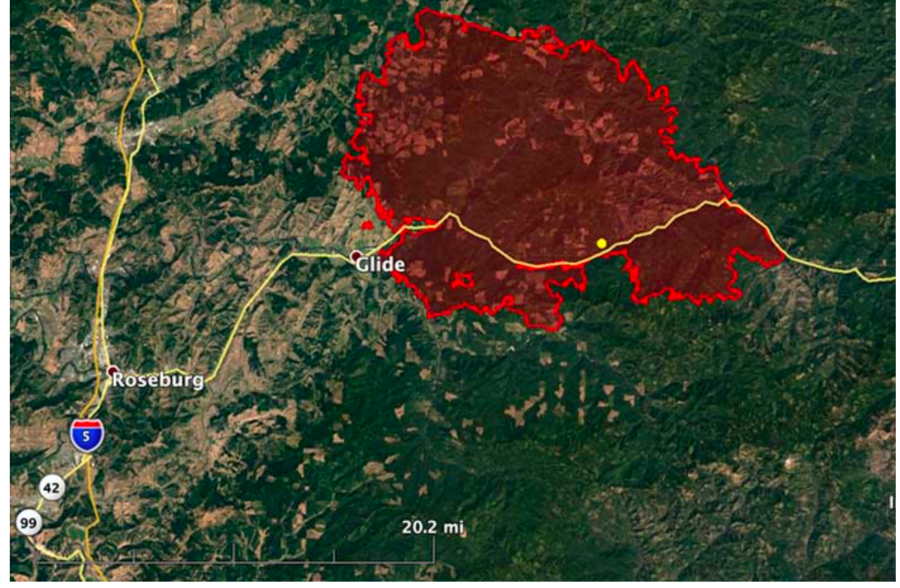
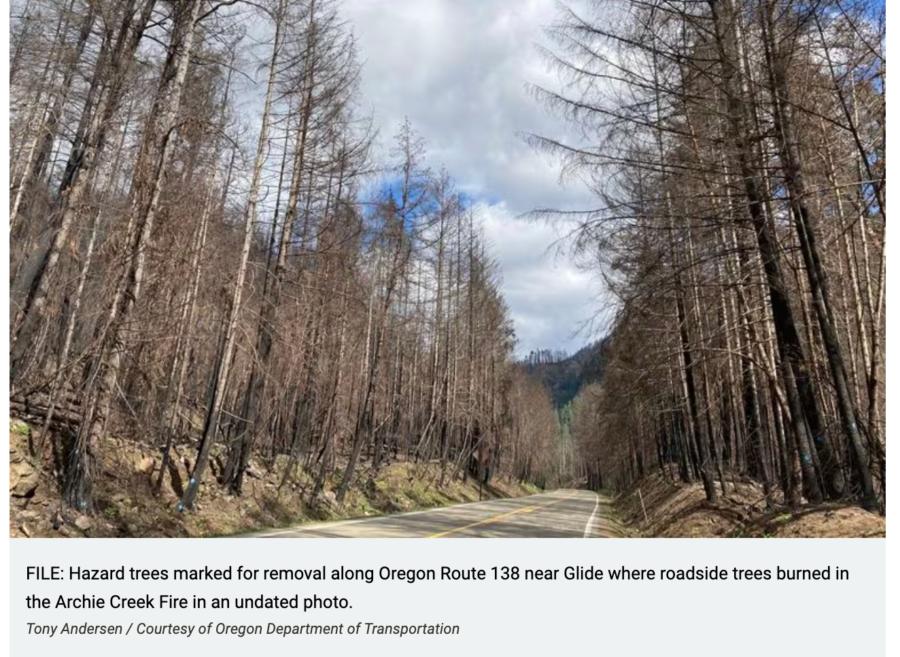
The settlement will resolve a lawsuit the timber companies brought against the utility for the Archie Creek Complex in west-central Oregon.

2020 Archie Creek Fire
Archie Creek Fire map, 2:35 p.m. PDT Sept. 22, 2020.

On December 5, the Berkshire Hathaway-owned company paid $299 million to settle another lawsuit brought by Oregon residents who lost their homes and property in the same fire, bringing PacifiCorp’s payouts this month to more than a half billion dollars.

[UPDATE 12/21/2023: How much Pacific Power rates are increasing.]

This lawsuit alleged that PacifiCorp’s employees ignored warnings from the National Weather Service and others on Labor Day weekend and decided to not power down its electrical equipment — or fall hazard trees and clear vegetation around powerlines.

“The 2020 wildfires were undeniably tragic,” the company said in a statement, “and PacifiCorp is pleased to resolve this matter on behalf of our impacted customers and communities.”

“I am proud to have recovered fair and full damages for Oregon’s timber industry,” said attorney Mikal Watts. He said that after the Archie Creek Fire had started, a lineman mistakenly re-energized a line after a tree had fallen into it, which ignited another separate fire. He said the timber companies lost of thousands of acres of timberlands in the fires. Watts explained that he hopes to work with PacifiCorp, along with Oregon lawmakers and utility regulators, to create a statewide risk pool for utilities, which would allow people to receive payouts without the need to file lawsuits after a fire. California created a  similar fund in 2019 after the bankruptcy of Pacific Gas & Electric caused by its wildfire payouts. A risk pool would be funded up front by utility customers and utilities themselves.

“The Public Utilities Commission ought to work together with this utility to try to recoup these costs to make it go away,” said Watts.

2020 fires aftermath

According to a KATU-TV report, PacifiCorp said this settlement is in addition to others with individuals and businesses that lost homes and other property, plus hundreds of insurance claims that PacifiCorp settled in which homeowners and businesses received insurance payments for damages.

Happy Anniversary DC-3 and her fans

Miss Montana, in case you didn’t know, was the jump ship at Mann Gulch in 1949. Her story’s here. The [late] tanker pilot Chuck Ott of Alaska and Montana fame used to say in his retirement years that he’d really like to fly a DC-3 one more time before he died. I don’t think he got to.

Miss Montana

KPAX TV — the best broadcaster in Montana — has a terrific collection of info and photos online. And thanks to Connor and  EAA.org for the heads-up!