

Three accident reports: two heavy equipment rollovers and a bucking incident

The Wildland Fire Lessons Learned Center has posted three Rapid Lesson Sharing reports. The photos above are from two rollovers of heavy equipment, a forwarder and a hydro ax. Click on the image to see a larger version.
The photo below is from a report on a serious bucking accident in which two people were injured. Both were transported to a hospital, one in an ambulance and the other in a helicopter.
 As Sgt. Phil Esterhaus said, “Let’s be careful out there.”
CAL FIRE Situation Report, September 17, 2014
Report: trees are dying from no obvious cause in the Rocky Mountains
A report issued by the Union of Concern Scientists concluded that in some areas of the Rocky Mountains trees are dying from no obvious cause:
Besides increases in tree-killing insects and wildfires, scientists have found a rise in “background mortality”—the rate at which trees die from no obvious cause. For example, tree mortality in relatively undisturbed old-growth forests across the West has doubled in recent decades, with no compensating increase in the number of tree seedlings. And tree mortality has been highest in recent years.
But, the report goes on to suggest that hotter and drier conditions across the West are driving these changes. There are other factors impacting the health of trees the document says, including, tree-killing insects and more wildfires.
Notable are the effects on three “iconic tree species”, as you can see in this excerpt:
****
“Whitebark pines (Pinus albicaulis)—a high-elevation species with unique ecological importance in the Northern Rockies— have faced both blister rust and epidemic-level infestations of mountain pine beetles, part of the recent West-wide outbreak. Earlier outbreaks of mountain pine beetles at high elevations were shorter and less severe, because winter temperatures were typically cold enough to kill the beetles. However, the sustained higher temperatures of recent winters have allowed the beetles to overwinter and thrive. Today whitebark pines are in catastrophic decline throughout their range in western North America. Mortality in some areas has been 90 percent to 100 percent. This die-off has led the U.S. Fish and Wildlife Service to determine that they are in such risk of extinction that they qualify for listing under the Endangered Species Act.
Quaking aspens (Populus tremuloides), an emblematic species of the Rocky Mountains, have seen abrupt and extensive die-off across large areas of their range, in response to extreme heat and dryness at the beginning of this century. From 2000 to 2010, some 1.3 million acres in the Southern Rockies saw significant aspen decline, and regeneration of new aspens has been much lower than normal.
Piñon pines (Pinus edulis) are a foundation species of the forests that flank the Southern Rockies and many other areas in the Southwest. In 2002–2003, these areas suffered a mass die-off of piñon pines triggered by severe drought and exceptional heat. Sites in Mesa Verde National Park in Colorado, near Los Alamos in northern New Mexico, and near Flagstaff, AZ, lost some 90 percent of their piñon pines. One team of scientists described the mass piñon pine die-off as “one of the most extensively documented examples of a sudden ecosystem crash in response to climate change.” ”
****
Report: PBS to air program tonight on the 1910 fires
There are reports that the PBS television network will air a program tonight, September 9, about the fires of 1910 that changed wildland firefighting forever. The program is part of the American Experience series, and is named “The Fire That Changed Everything — The Big Burn”. It is based on Timothy Egan’s best-selling book, “The Big Burn”.
The video trailer above states that it is “Coming to PBS September 9, 2014”. The U.S. Forest Service Twitter account for the California Region said they were told it would be on PBS in the Bay Area September 9. And, we found an article about the program that said it would be on tonight from 9 until 10 p.m. ET.
But, we searched the PBS schedules for several cities across the country and could not find it listed. However, we found a PBS page for “American Experience” that said “The Big Burn” would air on January 1, 2015, and also “AIR DATE TBD”.
From the trailer, it appears that the program will be interesting. If anyone can confirm the air date for the program, please let us know in a comment.
Report released on CL-415 accident in Newfoundland and Labrador

The Transportation Safety Board of Canada (TSB) has released an investigation report on the CL-415 water-scooping air tanker that was involved in an accident on Moosehead Lake in Newfoundland and Labrador July 3, 2013, which we first covered HERE. Fortunately the two pilots were not injured and climbed out of the partially submerged aircraft, used a cell phone to call their headquarters, and waited on the wing for 30 minutes until they were rescued.
The previous day the flight crew had completed 53 water-drop flights at a fire northeast of Wabush, Newfoundland and Labrador, with each flight taking about 3 minutes. The accident occurred on the first flight of the next day while they were working on a wildfire, scooping water from Moosehead Lake in Newfoundland and Labrador.
The scooping system on their CL-415 had a feature that when activated by an Auto/Manual switch would automatically retract the water-scooping probes that while skimming the surface of a lake inject water into the tank. The system, when on Auto, allows a predetermined amount of water into the tank. The water drop control panel computer uses the aircraft’s zero-fuel weight and the weight of the onboard fuel and chemical foam to calculate the maximum amount of water that can be scooped without exceeding the aircraft’s maximum take-off weight of 47,000 pounds.
The Auto/Manual switch was in the Manual position on the first flight that day and the probes did not retract while scooping, resulting in a 3,000-pound overweight condition. The probes being down for an extended period of time combined with the too-heavy aircraft meant that it was on the lake surface for a much longer distance than on the previous days flights, 3,490 feet versus 1,200 feet after touchdown. As land approached, the pilot turned the aircraft to use more of the lake surface. The initiation of the left turn resulted in the left float contacting the water while the hull became airborne. This created a downward force on the left float, which acted as a pivot point around which the aircraft rotated, causing the hull to impact the water.
The forward force of 1.1 g was not sufficient to activate the emergency locator transmitter which requires 2.0 g, and it was not manually activated by the flight crew. One of the pilots was able to escape with a life vest, but the other vest floated away out of reach. Neither could gain access to the life raft located in the rear of the fuselage. The pilot contacted company personnel by cellular telephone and advised them of the situation. Within about 30 minutes, Department of Natural Resources employees arrived by boat and transported the flight crew to shore.
The aircraft floated partially submerged for at least four days, eventually settling on the lake bottom about 225 feet from the southern shore of the lake. There was substantial damage to the aircraft. The report described it as “destroyed”.
On August 14, 2014 another water-scooping air tanker was involved in an accident in Canada. A single-engine Air Tractor 802 Fireboss crashed and and sank while scooping water on Chantslar Lake in British Columbia, Canada about 30 kilometers west of Puntzi Mountain.
Below are some excerpts from the report on last year’s CL-415 accident:
****
Because the PROBES AUTO/MANUAL switch locks in the MANUAL position, an inadvertent movement of the switch from the MANUAL selection would be unlikely. However, the switch can be easily moved from the AUTO to MANUAL selection by simply pulling the centre pedestal cover rearward during removal.
At the end of the previous day, the aircraft was shut down and the switch was left in the AUTO position. The centre pedestal cover was installed and remained there until the following day, when it was removed by the Pilot Flying (PF). Neither of the pilots purposely repositioned the switch during the occurrence flight. Therefore, it is likely that the PROBES AUTO/MANUAL switch was inadvertently moved from the AUTO to MANUAL position when the centre pedestal cover was removed.
An inadvertent movement from the AUTO to the MANUAL selection can lead to the aircraft being in an overweight situation if the flight crew does not monitor the water quantity. When a flight crew is operating with the switch in the AUTO selection, there is an expectation that the probes will always automatically retract at the predetermined water quantity, as was the case on the 53 flights of the previous day. When the flight crew expects the system to work properly, it is likely that less priority is given to the importance of monitoring the water quantity.
The aircraft flight manual (AFM) instructs flight crews to monitor the water quantity even when the PROBES AUTO/MANUAL switch is in the AUTO selection. At the time of the occurrence, the flight crew was occupied during the scooping run with other flight activities, and did not notice that the water quantity exceeded the predetermined limit until after the tanks had filled to capacity. This situation resulted in the aircraft being over the maximum take-off weight.
2.7 Firefighting training
Aerial firefighting is a specialized operation that not only requires the flight crew to be competent in their aircraft operation skills but also to be familiar with the specialized techniques associated with using the aircraft to fight fires. This familiarity allows crews to better adapt to difficult flying situations under intense workload. The Newfoundland and Labrador Government Air Services (NGAS) did not provide any specific ground training syllabus for aerial firefighting.
Thanks and a hat tip go out to Chris.
BBC report on the Redding smokejumpers
The BBC produced this report on the U.S. Forest Service smokejumpers based in northern California at Redding.
Report: Fuel treatments made two Arizona fires more controlable
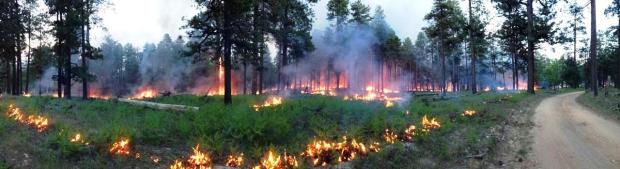
Forest treatments to reduce hazardous fuels made it easier to contain two wildfires in Arizona this year, according to Wally Covington, the director of the Ecological Restoration Institute, and a Regents’ professor of forest ecology at Northern Arizona University. In an op-ed at LiveScience, Mr. Covington said the fires had the conditions, and the chance, to burn hundreds of houses and destroy some of the state’s most coveted recreational tourist attractions, but they didn’t.
He is referring to the 21,000-acre Slide Fire and the 7,000-acre San Juan Fire which started in May and June, respectively. While they still grew into large fires, Mr. Covington said they could have become very damaging megafires, if not for the fuel treatments previously conducted on the Apache-Sitgreaves and Coconino National Forests.
Below is an excerpt from the article:
…The San Juan fire also provided lessons about how treated areas did what they were designed to do: slow a fire’s advance and restore a forest’s natural ability to self-regulate. How a wildfire behaves when it reaches a treatment area is a good test of how those treatments work. Fire crews and incident management teams reported that when the fire burned into areas that had been thinned, it burned with low severity and on the ground, not in treetops. The dry, frequent-fire forests of the West evolved with this type of fire, a slow-moving, low severity surface fire that would remove young trees and revitalize understory grasses and forbs. Anecdotal evidence from the San Juan Fire also suggests that the previously treated areas allowed fire crews to safely conduct burnout operations, thus enabling them to manage and control the fire.
New report about rising costs of fighting wildfires
Today the U.S. Department of Agriculture issued a new report about the rising costs of fighting wildfires, and how robbing money from non-fire programs to pay for the fires has negative effects on the management of our national forests.
****
“New Report Shows Budget Impact of Rising Firefighting Costs
Other Forest Programs, Including Efforts to Help Prevent and Mitigate Fire Damage Have Shrunk;
Secretary Vilsack Renews Call to Better Protect Public Forests from Wildfire Threats
WASHINGTON, August 20, 2014—Agriculture Secretary Tom Vilsack today announced a new report showing that as the cost of fighting forest fires has rapidly increased over the last 20 years, the budgets for other forest programs, including those that can help prevent and mitigate fire damage, have substantially shrunk. The Forest Service’s firefighting appropriation has rapidly risen as a proportion of the Forest Service’s overall budget, increasing from 16 percent in 1995 to 42 percent today, forcing cuts in other budget areas.
“Climate change, drought, fuel buildup and insects and disease are increasing the severity of catastrophic wildfire in America’s forests,” Vilsack said. “In order to protect the public, the portion of the Forest Service budget dedicated to combatting fire has drastically increased from what it was 20 years ago. This has led to substantial cuts in other areas of the Forest Service budget, including efforts to keep forests healthy, reduce fire risk, and strengthen local economies.”
Vilsack noted that on top of the budget reductions outlined in the new report, the Forest Service’s non-fire program budgets are affected by “fire borrowing.” Funds spent on fire suppression have exceeded the allocated amount in all but four years since 2000. In these cases, the shortfall is covered through transferring, or “borrowing” additional funds from Forest Service programs that have already been cut over the last 20 years. Secretary Vilsack renewed his request to Congress to allow an existing disaster fund to provide resources to fight catastrophic fires in years when Forest Service and Department of Interior fire costs exceed the amount Congress has budgeted, rather than forcing borrowing from non-fire programs.
“Bipartisan proposals to fund catastrophic fire like other natural disasters could help ensure that efforts to make forests more healthy and resilient and support local tourism economies aren’t impacted as significantly as they have been in recent years,” Vilsack said. “These proposals don’t increase the deficit, they just budget smarter by allowing existing natural disaster funding to be used in cases of catastrophic wildfire.”
Today’s report shows the extent to which many Forest Service program budgets have been cut even before borrowing occurs to accommodate for the rapid rise in firefighting costs in the past 20 years. For example:
- Funding for the Vegetation and Watershed Management Program – a cornerstone for forest, rangeland, soil and water restoration and enhancement activities, and a key factor in post-fire restoration – has been cut by 22 percent since 2001. This has reduced the Forest Service’s ability to prevent and limit the spread of invasive species, which can weaken forest health and make forests more susceptible to fire.
- Maintenance and capital improvements on approximately 21,600 recreation sites and 23,100 research and other administrative buildings has been reduced by two-thirds since 2001.
- Support for recreation, heritage and wilderness activities that connect the public with our natural lands and support tourism and thousands of jobs (visitors to national forests contributed more than $13 billion to America’s economy each year) has been cut by 13 percent.
- Wildlife and fisheries habitat management has been reduced by 17 percent, limiting recovery efforts for threatened and endangered species.
- Research funding has declined by over $36 million in the ten year period ending in 2013.
While fire staffing has increased 110 percent since 1998, staffing for those dedicated to managing National Forest Service lands has decreased 35 percent over the same period.
Vilsack said the average number of fires on Federal lands has more than doubled since 1980 and the total area burned annually has tripled. He said that climate change, population growth near forests, brush and fuel buildup have drastically increased wildfire severity and the cost of fighting them.
Vilsack’s request to change the way catastrophic fire costs are funded is included in the Obama Administration’s proposed budget and is supported by a bipartisan group of lawmakers. The change means that in years when the cost of fighting wildfires exceeds the firefighting budget provided to the Forest Service by Congress, additional resources would be provided from an existing fund already in place to help provide emergency funding for natural disasters, rather than forcing the Forest Service to take money from other programs designed to protect forest health.
To read the full report, go to:http://www.fs.fed.us/sites/default/files/media/2014/34/nr-firecostimpact-082014.pdf “
72-hour report on Beaver Fire shelter deployment
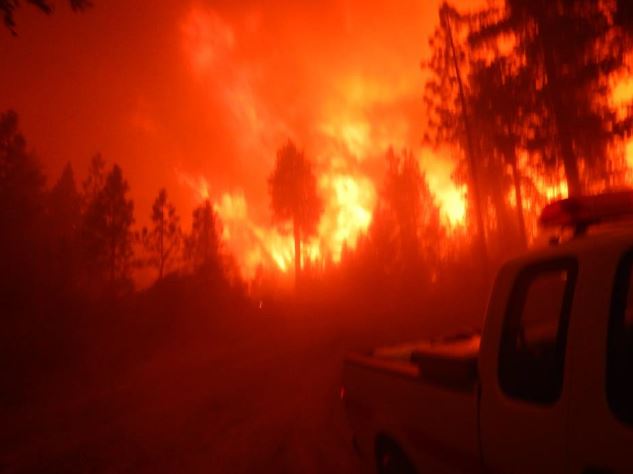
A 72-Hour Report has been released for the incident on the Beaver Fire in which three people took refuge from a wildfire inside their fire shelters. The near miss occurred August 11 at 5:30 p.m. on the Klamath National Forest in northern California, approximately 15 miles northwest of Yreka. We first wrote about it on August 12. Below is the Incident Summary from the report:
****
“At approximately 1730 on August, 11, a Division Supervisor, contract dozer and a Heavy Equipment Boss deployed their fire shelters on the Beaver Fire on the Klamath National Forest in northern California (U.S. Forest Service Incident CA-KNF-005497). The individuals involved were improving line on the far western edge of the fire, approximately 2 miles from the fire front. Fuels in the area consisted of a pine overstory and manzanita surface fuels. Extreme to exceptional drought, at the highest levels on the Drought Monitor system, existed over nearly all of northern California.
As indirect dozer line construction progressed downslope, outflow from a thunderstorm which had already tracked through the area, caused a dramatic and large scale pulse in fire behavior. As fire activity increased, the Division Supervisor drove down to the Heavy Equipment Boss and Dozer Operator to check their status. The dozer operator was in the process of constructing a predetermined safety zone. The fire quickly traveled a significant distance through heavy timber, impacting the indirect dozer line, requiring the three firefighters to deploy fire shelters to survive the heat blast and ember shower. The contract dozer operator received non-life threatening burn injuries, but was referred to a burn center for further evaluation.
PROPERTY DAMAGE: The DIVS pickup truck parked at the deployment site received heat damage and the bed and back seat caught fire. The Division Supervisor and Heavy Equipment Boss were able to put the fire out with two fire extinguishers. The Dozer received minor damage from a small fire which started behind the seat in the open cab.
Based on the nature of this incident, the Pacific Southwest Region will be utilizing the Facilitated Learning Analysis (FLA) process to maximize learning opportunities and better manage future incidents.”