
Average fire size decreased by 95 percent
Continue readingPreliminary report released for fatal SEAT crash in Idaho
The pilot was killed September 22, 2020 southeast of Emmett, Idaho
Continue readingCompany issues statement about the drop gate on the air tanker that crashed in Idaho
The company that manufactures the gate that allows the retardant to be dropped from the Single Engine Air Tanker that crashed in Idaho September 22, 2020 said the FAA and the National Transportation Safety Board to their knowledge have not released preliminary findings regarding the cause of the crash.
Ricky Fulton was killed while flying the Air Tractor 802A when it crashed while attempting to drop retardant on a wildfire southeast of Emmett, Idaho.
On September 24, 2020 KWTV – NEWS9 reported that Mr. Fulton’s family said, “The preliminary finding from the FAA is saying that the dump gate malfunctioned and didn’t open to dump the fire retardant, so he wasn’t able to pull up over the ridge,”
Victor Trotter, President/CTO of Trotter Controls that made the gate, said, “Neither FAA or the NTSB has made any preliminary statements or findings regarding the cause or possible causes of the crash. We have not been notified that a gate malfunction contributed to the incident. …Air Tractor and our company is fully cooperating with the NTSB. Documentation related to the FAA approved documents including the operation instructions (AFM), ICA (maintenance instructions), and Installation Instructions have been forwarded to the NTSB.”
The Single Engine Air Tanker that crashed was manufactured this year and was registered for the first time July 10, 2020. It was an Air Tractor 802A, N836MM, SN 802A-0836, owned by Aero S.E.A.T. Inc. of Sterling, Colorado, and was working on a call when needed contract with the Department of the Interior.
The SEAT that crashed Sept. 22 in Idaho was first registered two months ago
 Ricky Fulton
The Single Engine Air Tanker that crashed in Idaho September 22 was manufactured this year and was registered for the first time July 10, 2020. The aircraft was an Air Tractor 802A, N836MM, SN 802A-0836, owned by Aero S.E.A.T. Inc. of Sterling, Colorado. It was working on a call when needed contract with the Department of the Interior.
The pilot, Ricky Fulton, died in the accident.
The aircraft took off from Ontario, just across the Oregon border, at 6:07 p.m. MDT and was over the fire southeast of Emmett, Idaho 30 minutes later, according to FlightRadar24. It circled the fire about four times before it could no longer be detected.
 SEAT flight from Ontario, ID to Schill Fire. N836MM.
The family of Mr. Fulton told KWTV – NEWS 9 there was a malfunction related to the crash:
“The preliminary finding from the FAA is saying that the dump gate malfunctioned and didn’t open to dump the fire retardant, so he wasn’t able to pull up over the ridge,” family said.
It will be many months, at least, before an official report on the cause of the crash is released by the National Transportation Safety Board, so that information reportedly from the FAA should be considered preliminary at best.

(Update September 28, 2020: the company that manufactures the gate that allows the retardant to be dropped from the Single Engine Air Tanker issued a statement about the crash.)
The Air Tractor 802A can hold up to 820 gallons of fire retardant weighing approximately 7,380 pounds. If any air tanker pilot is depending on the release of retardant to make it possible to clear terrain while exiting the drop area, a malfunction preventing that release would affect the aircraft’s ability to climb, possibly resulting in impact with terrain.
Our sincere condolences go out to the pilot’s family, friends, and co-workers.
Pilot identified in crash of air tanker in Idaho

Updated September 23, 2020 | 3:40 p.m. MDT
The Bureau of Land Management has provided more information about the crash of a single engine air tanker:
“On Tuesday, Sept. 22, 2020, at approximately 7 p.m. MDT, a Single Engine Air Tanker with one pilot on board was involved in a fatal accident during initial attack operations on the Schill Fire, located approximately 2 miles southeast of Emmett.
“The pilot, Ricky Fulton, perished. The aircraft, T-857, was owned by Aero S.E.A.T. Incorporated and was on an on-call contract with BLM Fire and Aviation at the National Interagency Fire Center in Boise. Firefighters on the scene rendered medical aid to the pilot and called for Life Flight, but the pilot did not survive his injuries.
“The 30-acre Schill Fire started at approximately 4:30 p.m. on Tuesday, Sept. 22 in grass and brush in steep terrain. It was contained at approximately 10 p.m. on Tuesday. The cause of the Schill Fire is under investigation.”
Originally published September 23, 2020 | 8:58 a.m. MDT
The Bureau of Land Management announced that the pilot of a single engine air tanker (SEAT) was killed Tuesday evening September 22 while working on a wildfire near Emmett, Idaho. The agency said more information will be released following family notifications.
KTVB reported the accident occurred near Pearl Road about two miles southeast of Emmett. The fire started around 4:30 p.m. and grew to 25 acres as two SEATs and one helicopter assisted firefighters on the ground. According to the Gem County Sheriff’s Office, the air tanker was dropping retardant when it went down.
#BLMBOD and multiple cooperators are fighting the #SchillFire near Emmett, Idaho. 25+ acres. No closures or structures threatened. Estimated containment at 10 pm tonight. Estimated control at 6 pm tomorrow. pic.twitter.com/BJaXT6KABa
— Bureau of Land Management Idaho Fire (@BLMIdahoFire) September 23, 2020
This is the sixth firefighting pilot and the third SEAT pilot to be killed in the United States this year. In addition, three members of the crew of a C-130 from the U.S. died when their air tanker crashed January 23, 2020 while fighting a bushfire in New South Wales, Australia.
Our sincere condolences go out to the pilot’s family, friends, and co-workers.
Thanks and a tip of the hat go out to Steve, and Tom.
Pilot killed in Idaho air tanker crash
 BLM
Updated September 23, 2020 | 3:33 p.m. MDT
The Bureau of Land Management has provided more information about the crash of a single engine air tanker:
“On Tuesday, Sept. 22, 2020, at approximately 7 p.m. MDT, a Single Engine Air Tanker with one pilot on board was involved in a fatal accident during initial attack operations on the Schill Fire, located approximately 2 miles southeast of Emmett.
“The pilot, Ricky Fulton, perished. The aircraft, T-857, was owned by Aero S.E.A.T. Incorporated and was on an on-call contract with BLM Fire and Aviation at the National Interagency Fire Center in Boise. Firefighters on the scene rendered medical aid to the pilot and called for Life Flight, but the pilot did not survive his injuries.
“The 30-acre Schill Fire started at approximately 4:30 p.m. on Tuesday, Sept. 22 in grass and brush in steep terrain. It was contained at approximately 10 p.m. on Tuesday. The cause of the Schill Fire is under investigation.”
Originally published September 23, 2020 | 8:58 a.m. MDT
The Bureau of Land Management announced that the pilot of a single engine air tanker (SEAT) was killed Tuesday evening September 22 while working on a wildfire near Emmett, Idaho. The agency said more information will be released following family notifications.
KTVB reported the accident occurred near Pearl Road about two miles southeast of Emmett. The fire started around 4:30 p.m. and grew to 25 acres as two SEATs and one helicopter assisted firefighters on the ground. According to the Gem County Sheriff’s Office, the air tanker was dropping retardant when it went down.
#BLMBOD and multiple cooperators are fighting the #SchillFire near Emmett, Idaho. 25+ acres. No closures or structures threatened. Estimated containment at 10 pm tonight. Estimated control at 6 pm tomorrow. pic.twitter.com/BJaXT6KABa
— Bureau of Land Management Idaho Fire (@BLMIdahoFire) September 23, 2020
This is the sixth firefighting pilot and the third SEAT pilot to be killed in the United States this year. In addition, three members of the crew of a C-130 from the U.S. died when their air tanker crashed January 23, 2020 while fighting a bushfire in New South Wales, Australia.
Our sincere condolences go out to the pilot’s family, friends, and co-workers.
Thanks and a tip of the hat go out to Steve, and Tom.
Firefighter’s family killed in structure fire
And unrelated, a firefighter died in a vehicle accident while commuting home
Continue readingEight years ago today — Anne Veseth
Ms. Veseth was killed by a falling tree while working on a fire in Idaho
Continue readingAlaska fire crews mobilized to the lower 48

Three Alaska wildland firefighting crews traveled to the Lower 48 states on Friday to assist with wildfire suppression efforts in the western United States.
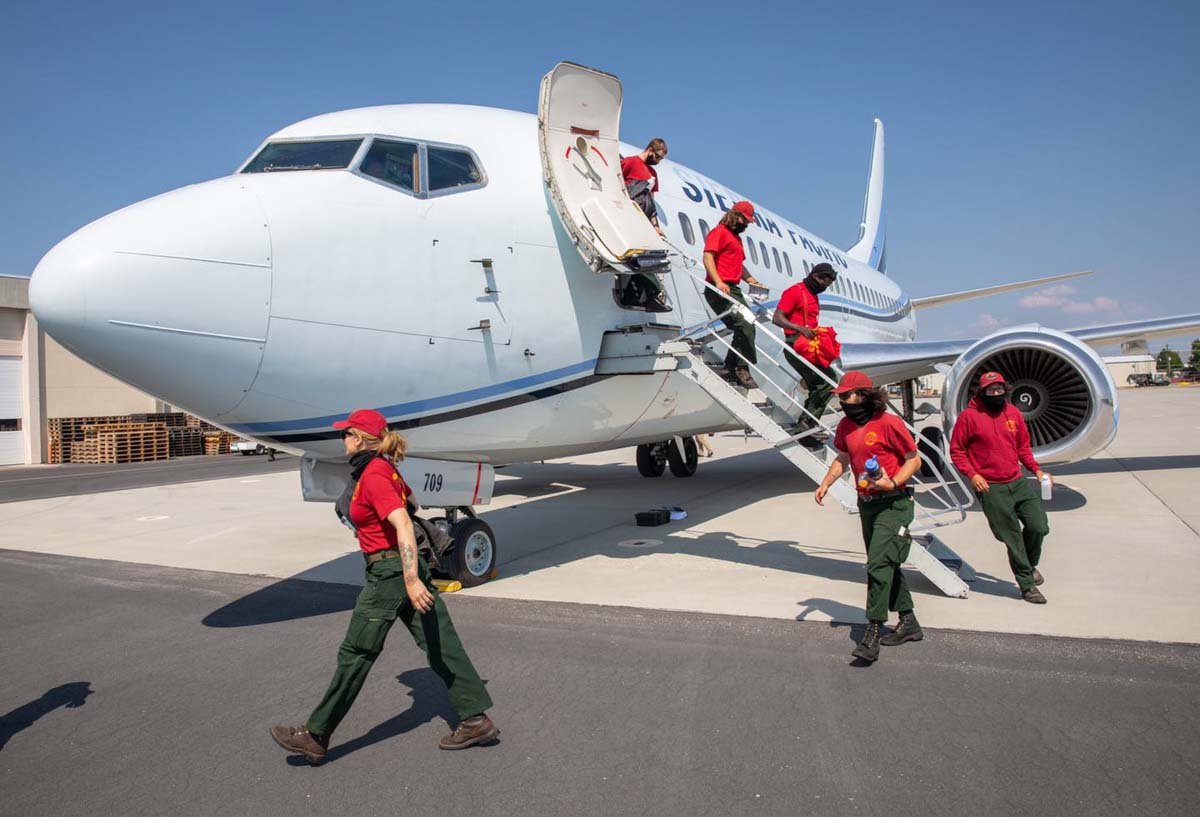
The three crews – the BLM Alaska Fire Service Midnight Sun Hotshots, Chena Hotshots, and the Alaska Division of Forestry White Mountain Type 2 Initial Attack Crew – boarded an airliner at Fort Wainwright in Fairbanks Friday morning. The aircraft came up to Alaska from the National Interagency Coordination Center in Boise, Idaho Thursday to transport the crews to Boise, where they will be quickly assigned to one of a multitude of wildfires burning in the western U.S.
“It’s always sad leaving Alaska but it will be good to get down there,” Iris Sager, crew superintendent for the Chena hotshot crew, said.
Alaska’s fire season was slowed by abundant and widespread rainfall the past five weeks that has dampened wildfire danger across the state. Because of this, Alaska’s wildland fire agencies have made many resources available to assist with the national firefighting effort while keeping adequate firefighters and aircraft in Alaska to handle any fire activity here.
The mobilization of firefighting resources to the Lower 48 is an annual tradition, similar to Alaska importing firefighters and aircraft from the Lower 48 to assist with wildfires here. Firefighters from Alaska travel to the Lower 48 almost every year to help other agencies battle wildfires after the Alaska fire season winds down, usually in mid- to late-July.
The three crews that departed Alaska on Friday totaled 62 firefighters and will add to the 60 other Alaska firefighting personnel that are already working in the Lower 48. One other crew – the Division of Forestry’s Pioneer Peak Hotshots – flew south last week and is working on the Cedar Fire in Nevada.
In addition, 13 Alaska Smokejumpers are in the Lower 48 working, as well as multiple other personnel filling positions such as dispatchers, heavy equipment managers, engine bosses and division supervisors.
Three more Division of Forestry crews – the Gannett Glacier, Tanana Chiefs, and Yukon Type 2 initial attack crews – are scheduled to fly to the Lower 48 early next week.
Given the fact that Alaska’s wildland fire season has been very slow this season and crews have been relegated to working on fuels reduction projects and other project work the past several weeks, firefighters welcomed the opportunity to head south to work on actual fires.
“We’ve spent less than 20 days on fires this summer,” White Mountain crew superintendent Owen Smith said as he waited to board Friday’s flight. “Everybody is ready for an assignment.”
As of Friday, a total of 309 fires had burned an estimated 178,025 acres in Alaska this summer, which is well below the approximately 650,000 acres that burns in a typical fire season.
Barring any major drying event in Alaska over the next month or two, crews will likely remain in the Lower 48 until fire season in the western U.S. dies down, which isn’t typically until September or October.

Firefighters wore facemasks as they lined up to board the plane on Friday at Fort Wainwright. BLM Alaska Fire Service workers, also wearing facemasks, handed each firefighter a bagged lunch as they boarded the flight to Boise.
While the increase in COVID-19 cases in Alaska and across the U.S. is a concern, it’s something the crews and other Alaska firefighting personnel have been dealing with since the season started in April. Agencies and crews have COVID protocols in place to help prevent the spread of the virus and each crew was traveling with at least three days of personal protective equipment such as facemasks and hand sanitizer.
“I think it would be harder if any of us had families and didn’t live by ourselves,” Smith said in reference to mobilizing to the Lower 48 during the pandemic. “It definitely makes it interesting.”
Returning personnel will follow Alaska state and local health mandates addressing testing and quarantining upon return from their Lower 48 assignments. In some cases, personnel will spend days off in the Lower 48 instead of returning to Alaska in between fire assignments.


From the BLM Alaska Fire Service
Rappeller training in Idaho modified for COVID-19
 Rappel training in Salmon, ID. USFS photo.
Courtesy of the U.S. Forest Service
CURRENT HEALTH GUIDELINES TO BE IMPLEMENTED AT FIREFIGHTER ACADEMIES
As the fire season approaches, annual firefighter and rappel training conducted in May and June on the Salmon-Challis National Forest in central Idaho continues this year, but with modifications for COVID-19.
“We are taking steps to minimize all risk of exposure in order to keep our wildland firefighters and our communities safe,” said Salmon-Challis National Forest Supervisor Chuck Mark. “Rappellers provide a vital service as wildland firefighters trained and prepared to operate in aerial operations, and as aerially delivered firefighters.”
Specific mitigation measures include reducing the number of rappellers in training, screening all participants for COVID-19 prior to their travel, closely following current Centers for Disease Control and Prevention (CDC) health guidelines and social distancing practices, and aligning with the State of Idaho’s mitigations measures for each stage of the plan.
Training events are as follows:
- Week of May 19: Twenty-three veteran rappellers from six of the twelve Rappel bases around the nation, along with fifteen additional support staff and three helicopters with flight crews training in Salmon. The training will take place at the Salmon Air Base and Sal Mountain.
- Week of May 21: Salmon Air Base will be hosting Spotter Emersion training with twenty-three personnel participating in training which will better prepare the trainees for becoming a qualified rappel spotter to deploy rappellers and cargo safely.
- May 27 through June 7 or until complete: Thirty-nine rookie rappellers, along with fifteen support staff and three helicopters and flight crews training at the Salmon Air Base and Haynes Creek.
The Salmon-Challis National Forest hosts new firefighters from across the country every year for this intensive, performance-based training. The purpose is to train rappellers and spotters in accordance with the National Rappel Operations Guide; to strengthen leadership, teamwork, and communications within the rappel community, and to produce quality aerial delivered firefighters for use in fire and aviation operations.
The USForest Service National Helicopter Rappel Program’s primary mission is initial attack. Rappel crews may be utilized for large fire support, all hazard incident operations, and resource management objectives.