
Looking at the experience of prescribed fire
Continue readingBurn Boss: A History of Fire and People in Big Cypress National Preserve

Above: screenshot from the video below.
Big Cypress has released their second in a series of three films about prescribed fire in the south Florida Park, titled, Burn Boss: A History of Fire and People in Big Cypress.
Here is their description:
The job of the Burn Boss is difficult. Perhaps the toughest in all of professional conservation. To be the Boss of Fire, you must be willing to take responsibility for one of nature’s most powerful forces: Fire.
Jennifer Brown and Into Nature Films worked shoulder-to-shoulder with Big Cypress National Preserve to tell the history of the National Park Service’s most accomplished fire program. With beautiful cinematography, fascinating interviews, and tantalizing story, this film highlights the colorful people and places in the wild heart of south Florida, narrated and written by Rick Anderson, a descendent of Florida pioneers. Rick has dedicated his life to the use of fire for the land.
Last month the first film in the series was released, “Fire Swamp”, that explains the relationship between fire and the swamp.
New film reveals the untold story of fire in a swamp
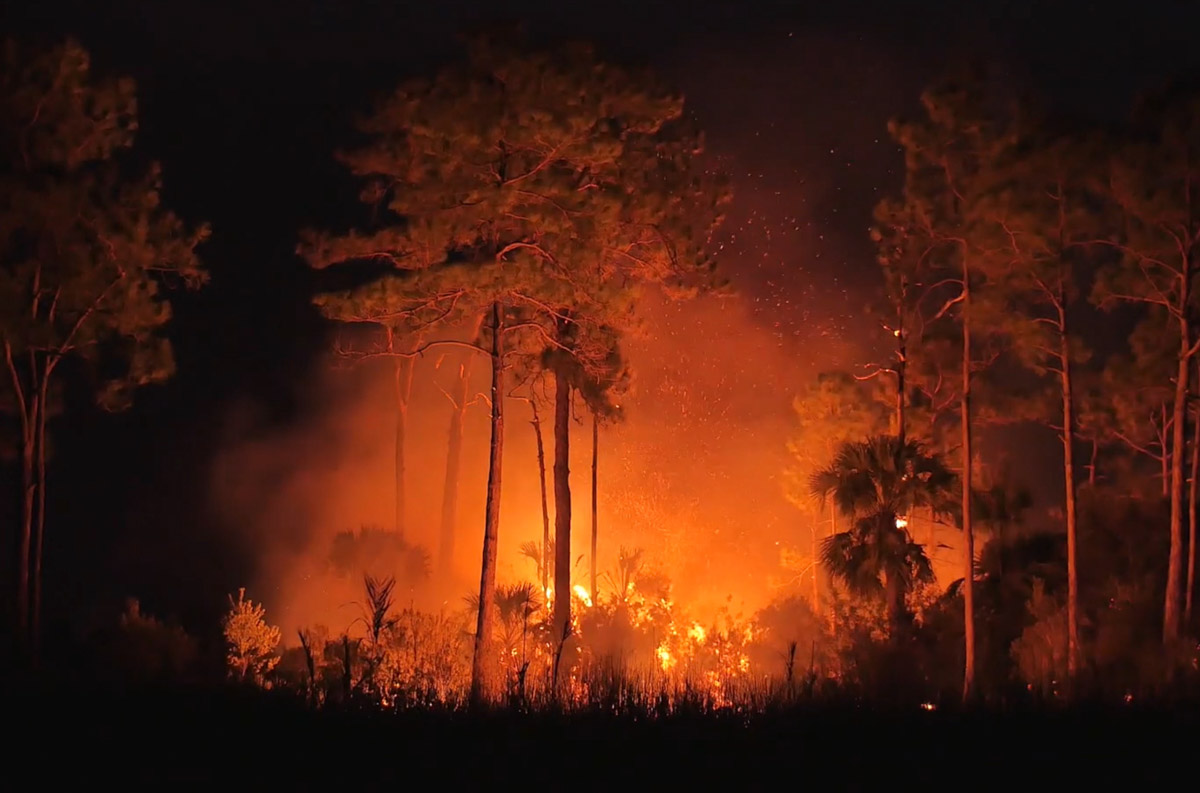
Much of Big Cypress National Preserve in south Florida is swampland. And like most areas with native vegetation it evolved with fire as a major component of the ecosystem.
Today the Preserve released a new film, “Fire Swamp,” that explains the relationship. Here is how they describe it:
‘Fire Swamp’ reveals the untold story of how fire burns in a swamp. Get a front row seat to fire flowing through our interwoven ecosystem of high and dry pinelands to cypress swamps with two National Park Service professionals who manage this dynamic ecosystem. Down here in the Big Cypress, the borders between fire, water, people, limestone, plants, and animals creates an exquisite mosaic of beauty.
Jen Brown, and recently with Rick Anderson, has been making films about fire in South Florida since at least 2012. Their company, IntoNatureFilms, has helped the land management agencies in the area interpret for the general public the value of public lands and inform them about how they are managed. More agencies around the country could learn from this approach.
New film released — “Fire: In the Florida Scrub”

Above: Screenshot from the film.
In 2012 when I first heard of Jennifer Brown she was working in the Interpretation Division in Everglades National Park and her term appointment was about to end. She had just produced for the National Park Service an excellent film about prescribed fire titled “River of Fire”. Now with many other videos about fire under her belt with her company Into Nature Films, she has produced another — “Fire: In the Florida Scrub”. As with some of her other projects, she partnered with the former Fire Management Officer at Everglades National Park, Rick Anderson.
Here is the official description of the film:
Fire is one of the earth’s dominant forces. ‘Surviving Fire: In the Florida Scrub’ features three decades of discovery by Dr. Eric Menges. After watching this powerful short film, you will never look at Florida plants the same away again. This film pays tribute to the special people who dedicate their lives to improving fire management. Join Eric Menges for a 16 minute exploration into the elegant and unexpected ways plants survive fire. Funded by the National Science Foundation (NSF) and produced by Into Nature Films in collaboration with Archbold Biological Station.
Like the other “Into Nature Films”, this one is beautifully photographed and very clearly tells the story. It’s impressive how they had video footage to illustrate almost every point brought up in the narration.
Ms. Brown’s other films can be seen at articles on Wildfire Today tagged “Jennifer Brown”.
Painting with flame

Jennifer Brown, who has produced at least six excellent short films featuring wildland fire, partnered with the former Fire Management Officer at Everglades National Park, Rick Anderson, to make this video, Burning Florida. The footage was gathered at a prescribed fire last week in the Florida Dry Prairie at Kissimmee Prairie Preserve State Park. The film has shots from the air (quadcopter) and ground along with the dedication from Mr. Anderson.
Film about the Last Dance Fire in the Everglades
Jennifer Brown has produced another excellent film about wildland fire management. For this one she concentrated on the Last Dance wildfire in the Loxahatchee National Wildlife Refuge in the Everglades in south Florida. It features an informative interview with Jon Wallace who was the Incident Commander of the fire shortly before he transferred to a new job as Deputy Regional Fire Management Coordinator for the U.S. Fish and Wildlife Service in Atlanta.
Land managers should commission quality film making like this more often — it can result in improved public understanding and support for what they do.
Documentary film about the Mud Lake Complex of fires in Florida
This 10 minute video is a documentary about the Mud Lake complex of fires that burned 35,000 acres in Big Cypress National Preserve in south Florida in May of this year. The film was commissioned by the Fire and Aviation section of Big Cypress. The producer, director, and editor was Jennifer Brown of Into Nature Films, who has a history of creating excellent films about wildland fire management in south Florida.
Below is the description provided by the National Park Service:
****
“Big Cypress National Preserve and the Southeast Region of the National Park Service are pleased to announce the release of the new short film, Mud Lake Mosaic. The documentary covers the management of the Mud Lake Complex, a series of wildfires caused by lightning strikes at Big Cypress in late spring 2015.
The Mud Lake Complex wildfires burned over 35,000 acres of Big Cypress National Preserve. Although naturally-ignited wildfires have helped shape the fire-adapted and fire-dependent Big Cypress landscape for thousands of years, fire managers cannot allow fires to freely roam the preserve without some degree of management. In the case of the Mud Lake Complex, major transportation corridors, private property and public safety all had to be protected.
Big Cypress fully embraces the scientific role of fire in the preserve’s cycle of life – from the plants, to the trees, to the wildlife. The preserve’s goal in their response to wildfire is to manage fire so it can provide natural benefit to the area and its inhabitants without threatening human safety.
The initial fire, the Ellison fire, began on May 8. Fire managers established boundaries to contain the fire, but continued lightning strikes over the next 48 hours ignited numerous other fires throughout the preserve.
Big Cypress requested help from the brightest minds in the firefighting and natural resources communities. Help came in from all over the country in the form of collaboration with other local, state and federal agencies and multiple interagency incident management teams.
The Mud Lake Complex lasted for over a month but resulted in a successfully executed strategy that helped to maintain and restore a resilient landscape. The film, Mud Lake Mosaic captures all the nuances of these challenging fires.”
Wildland fire management in the Everglades
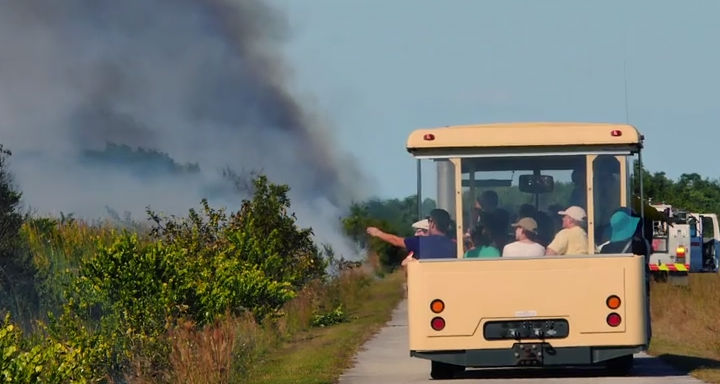
Everglades National Park, at the southern tip of Florida, has been using prescribed fire since 1958 to reintroduce and maintain fire as a part of an ecosystem that has been altered by humans. They have been doing it so long that they apparently feel comfortable having park visitors bicycle or take a tram along a road that is used as a fireline on an active prescribed fire.
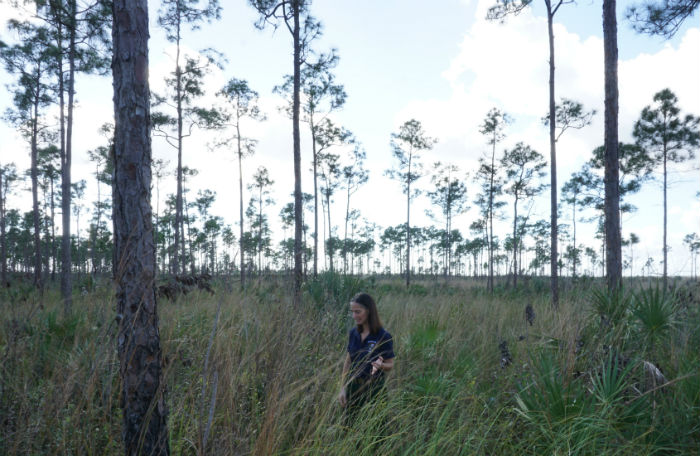
In 2014 Everglades prescribed burned about five times as many acres as were blackened in wildfires — 23,162 compared to 4,641 acres. Only about four percent of the acres burned in unplanned fires last year were on fires that were completely suppressed. The rest were managed, or not entirely put out and allowed to accomplish resource management objectives.
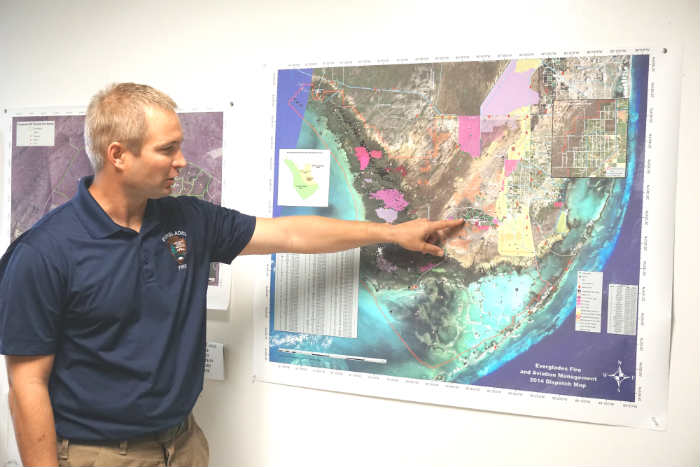
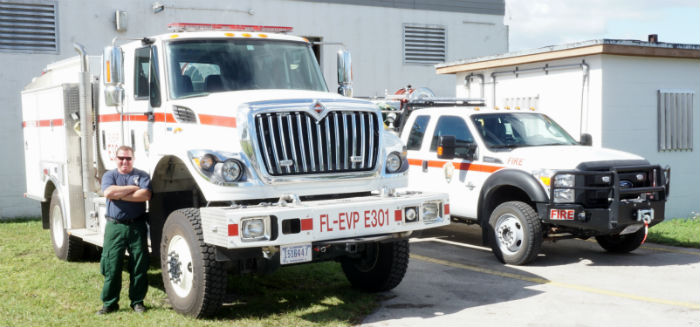
The park also has a very active aviation program, using helicopters extensively, occasionally several in one day. For decades they have used an exclusive use contracted helicopter plus call when needed aircraft, but in April, 2014 acquired their own ship, a Bell Long Ranger. For now they are using pilots under contract, but are considering, AFMO Weer said, hiring their own pilot. We have more information at FireAviation.com regarding the helicopter program.
In 2012 we told you about an excellent film that the park commissioned, titled The River of Fire. It was produced, directed, and edited by Jennifer Brown who at the time was an NPS Interpretation Division employee whose term appointment was about to end. Ms. Brown, now with Into Nature Films, has produced another great film about a 28,000-acre prescribed fire the park conducted in December, 2014. Check it out below:
Everglades National Park’s Boy Scout prescribed fire
Everglades National Park has produced another excellent video about their prescribed fire program. You may have seen one of their others, River of Grass, by then National Park Service employee Jennifer Brown, who now has her own video production company, Into Nature Films. Ms. Brown made this video as well, working with Fire Management Officer/Executive Producer Rick Anderson.
Boy Scout Camp Prescribed Fire from Into Nature Films on Vimeo.
Here is the description of this video:
“National Park Service managers conduct a prescribed fire in cooperation with Boy Scouts of America. Camp Everglades is in the Pine Rocklands of Everglades National Park. This active Boy Scout Camp is in a fire dependent pine forest. Plants and animals that live in this rare and imperiled forest have adapted to frequent fires that are ignited by the abundant lightning that visits the land during summer storms. Humans may have used fire in this area to stimulate the growth of fresh green shoots in this otherwise nutrient poor forest. Coontie, a primitive plant who’s roots were processed to make a starch-rich bread by Native peoples and Florida pioneers, responds well to frequent fire. Everglades fire managers work with the Boy Scouts to reduce accumulations of brush and other flammable vegetation to reduce the threat of severe unplanned wildfires.”
Thanks go out to Tristan
Video about wildfire and the endangered Cape Sable Seaside Sparrow
Deer Hammock Wildfire from Into Nature Films on Vimeo.
This five-minute film features a lightning-ignited wildfire and the endangered Cape Sable Seaside Sparrow in Everglades National Park. These last, remaining sparrow populations increase the complexity of fire management in the Everglades.
The video was produced by Jennifer Brown of Into Nature Films. If her name sounds familiar it may be because we embedded one of her other films that she produced for Everglades NP when she was working there under a short-term appointment. That video, River of Fire, is excellent. It’s a shame that the National Park Service could not figure out a way to retain an employee with such unique and valuable skills. But she is still available as a contractor.