The USFS Community Wildfire Defense Grant Program helps communities and tribes reduce their wildfire risk and become more fire-resilient. The program prioritizes its grant funding to low-income communities in high or very-high wildfire hazard potential areas, or those that have been affected by a severe wildfire that has increased its wildfire risk.
The program’s two goals are to develop and/or revise Community Wildfire Protection Plans (CWPPs) and to implement projects from said plans. The program also helps communities restore and maintain landscapes, create fire-adapted communities, and improve wildfire response.
Eligible at-risk communities include:
Local governments representing communities at risk of wildfires
Native American/ Indigenous Tribes
Non-profit organizations that assist at-risk communities
State forestry agencies
Alaska Native Corporations
Interested applicants can read details at grants.gov and find instructions in the “notices of funding opportunities” to apply. Applications are accepted until 11:59 p.m. ET on October 31. To apply, follow the instructions online or search for the grant opportunity number specific for your notice (USDA-FS-2023-CWDG-TRIBES, USDA-FS-2023-CWDG-CWSF, USDA-FS-2023-CWDG-NEMW, USDA-FS-2023-CWDG-SGSF).
The maximum amount of funding that a community can receive is $250,000 for creating or updating CWPPs and $10 million for a project described in a community’s CWPP that is less than 10 years old.
Applicants are highly encouraged to coordinate with their state forestry agency in proposal development. Forest Service staff are also available to assist with coordination, can provide liaison support for Tribes, and can assist with application submission if needed.
A virtual information session is scheduled for October 25 from 2 p.m. to 4 p.m. ET and you can register [HERE].
The USDA recently selected 100 applicants for funding, including applicants across seven tribes and 22 states. Every applicant selected was in a high or very high wildfire hazard potential area, and 86 percent of applicants met the definition of an “underserved community.”
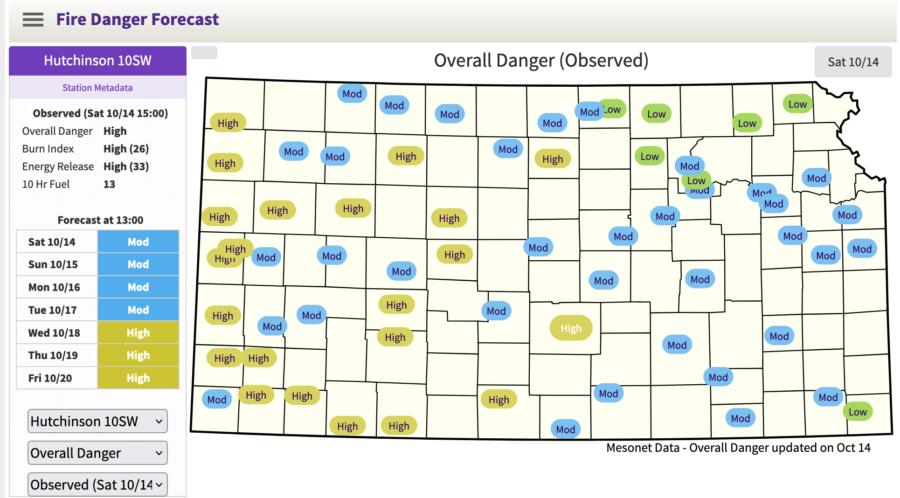
Kansas residents can now easily find their local wildfire risk through a new tool released by the state’s Forest Service.
The Kansas Wildfire Risk Explorer at kansaswildfirerisk.org allows residents to enter an address, city, or specific coordinates into an interactive map to see whether their current risk is low, moderate, high, or extreme. Residents can then generate a report specific to their area, along with precautions they can take to be prepared if a wildfire burns nearby.
Kansas wildfire risk assessment
“As a homeowner, you are not powerless in your defense against wildfires,” the website says. “By taking a proactive approach to wildfire mitigation, you can significantly increase your safety and your home’s likelihood of survival during a catastrophic wildfire event.”
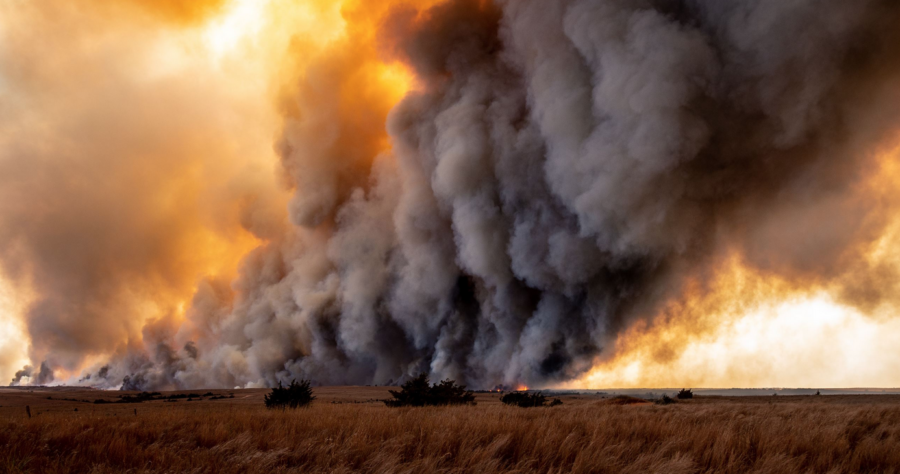
Wildfire in Kansas, photo courtesy State Fire Marshal’s Office
The tool began development in 2018 in conjunction with Kansas State University as an evolution of the National Fire Danger Rating System (NFDRS), which uses National Weather Service forecasts to predict fire danger.
In addition to wildfire risk, residents can also use the tool to evaluate “Wildfire Effects,” or areas where drinking water, infrastructure, and multiple environmental factors would be adversely affected by wildfires. This layer also shows areas where wildfire suppression would be especially difficult because of steep terrain or very dry vegetation.
The risk viewer also shows historical ignition patterns. This layer doesn’t map probability, but shows where ignition rates and frequency have been higher. The map shows that most ignitions have happened on the outskirts of the state’s most populated cities.
Kansas recorded more than 8,000 wildfires in 2022, about 3,000 more than the state’s yearly average. The last time the state hit its average of ~5,000 wildfires was in 2021 when two people died, 20 people were injured, and over 185,000 acres were burned, according to the Kansas Fire Marshal. Around 95 percent of the state’s wildfires were caused by humans.
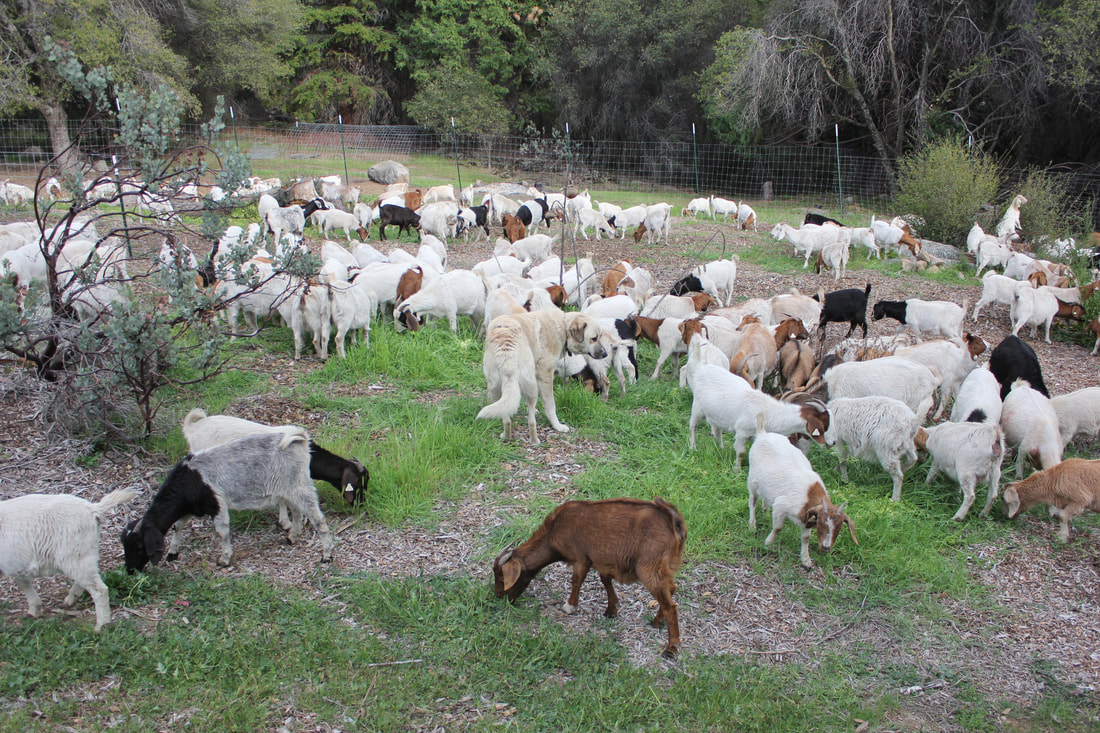
New teams of wildfire prevention experts are sprouting up across the world, but they aren’t made up of hotshots or forest managers — they’re herds of goats.
Michael Choi is the creator of Fire Grazers Inc., a fire brush management company that deploys free-range goats in fire-prone areas around California to clear dead vegetation and prevent wildfires.
“Our goal is to assist in the management of fire-hazardous zones through fuel modification, thereby addressing an accelerating regional problem that threatens the livelihood and prosperity of many residents of California,” Choi said on his website. “Our grazing goats can clear an unbelievable amount of brush and weeds. A well-sized herd can complete a job in a single day that would take two or three times as long with a landscaping crew.”
Before and after views with GoatsRock fuels reduction.
Goats’ mountain climbing expertise gives them a leg up on other wildfire managers. Some areas that may be treacherous for humans are easily scalable for goats, including steep hillsides and canyons.
Fire Grazers Inc. has been around since the early 2010s, but Choi’s technique is getting noticed across the world. Chile’s goat brigades have prevented both wildfires and erosion in the country’s forests, Nevada deployed goats in Reno through a state-funded program, and the City of Quesnel in central British Columbia announced in June it had deployed a herd of 132 goats to eat vegetation in and around designated Fuel Management Trails.
Quesnel’s strategy has been a success. While multiple wildfires burned around the area of the city in 2023, none threatened the city’s residents. The Quesnel Cariboo Observer reported that multiple wildfires west of Quesnel in August triggered evacuations in the nearby town of Eliguk Lake in August. Two other evacuations in July were triggered by the Townsend Creek Fire. British Columbia had its worst fire season on record in 2023, with over three million hectares burned.
Quesnel still stands. The city sits in one of the lowest-priority fire danger areas of the province, according to Canada’s Government. The goats are looking to keep it that way.
The first-ever review of the interagency hotshot crew program found that hotshots have been working under an “unsustainable system” and recommended 50 changes to improve current labor conditions.
Geronimo Hotshots on the Big Windy Complex, Oregon, 2013. USFS photo by Lance Cheung.
“The hotshot program is at a crossroads. In a time where more wildland firefighting capacity is needed, applicant lists for hotshot crews are less robust and the workforce is diminishing,” the report says. “If these challenges are not addressed in a timely manner, the current unsustainable system may leave crews unable to provide the leadership, expertise, and capabilities required in today’s wildland fire environment.”
The report summed up its recommendations in 12 points, which included:
Develop a specific wildland firefighter job series and increase pay
Provide a $40,000 minimum annual supply budget to each crew
Require a three-day rest and recuperation period
Allow crewmembers to attend personal events
Modify the hiring process
Start an outreach program to increase recruitment
Create a 30-day process to fill key vacancies
Update and clarify the Standards for Interagency Hotshot Crew Operations (SIHCO) so they are no longer misinterpreted by host units
Create an annual charter and program of work for the hotshot crew program to further limit gaps between leadership and the field
Update the repair and procurement processes for hotshot vehicles
Develop a minimum facility standard for hotshot crew facilities
Add housing, modify housing costs and create a consistent housing policy
The review addressed potential challenges to meeting the recommended changes, including lack of investment, systemic pushback, and cultural norms. Hotshot crew superintendents also said they’d prefer freedom and flexibility to make decisions for their own crews.
Without the recommended changes, the committee said agencies may not be able to sustain the current number of crews.
“It is important to acknowledge that while the fundamental reasons hotshot crews exist have not changed, the environment they operate in has,” the report said. “Unprecedented environmental challenges and increased social and political expectations contribute to IHCs finding themselves in high demand and short supply.”
The committee said similar reviews should be conducted by other program managers before the recommendations are broadly applied.
Utah burned much more than usual in 2020 and, more than ever before, humans were to blame. The state had its worst year of human-caused wildfires on record that year, when 1,500 wildfires burned more than 100,000 acres of land across the state. Officials say 1,143 of those fires were caused by humans, beating the state’s previous single-year record by more than 250.
Utah launched a statewide campaign called “Fire Sense” to reduce human-caused wildfires, and it was incredibly effective. The state marked a 60 percent reduction in human-caused wildfires in the two years following the start of the program. In 2023 that number has gone down even more, with only 295 of Utah’s 772 wildfires recorded as human-caused as of October 6.
A Bronze Smokey
The program was recently awarded a Bronze Smokey, which is a national award for statewide service, for its by-the-numbers success.
“This is a great honor for Fire Sense,” said Kayli Guild, the Fire Prevention and Communications Coordinator for the Utah Division of Forestry, Fire & State Lands (FFSL), after receiving the Bronze Smokey. “We launched this campaign to raise awareness surrounding the impact our behaviors as humans have on wildfire starts. Over the past two years, we have seen a drastic decrease in human-caused starts as we have seen Utahns implement Fire Sense.”
Fire Sense is basically a PSA package geared toward educating Utah’s residents about how they can help avoid starting wildfires throughout the state. All of the usual bases are covered, including telling people to put out their campfires, not drag chains, and not fire guns on hot and windy days. The execution of the project, however, seems to be what made it so effective.
“This strategy worked because Fire Sense is common sense!” according to FFSL . More details on the Fire Sense program are available from the utahfiresense.org website.
Smokey Award Levels:
Gold: This is the highest honor given to organizations or individuals for outstanding wildfire prevention service that is national in scope over at least a two-year period. A maximum of three Gold Smokey Bear awards may be given annually.
Silver: This is the highest honor given to organizations or individuals for outstanding wildfire prevention service that is regional (multistate) in scopeover at least a two-year period. A maximum of five Silver Smokey Bear awards may be given annually.
Bronze: This is the highest honor given to organizations or individuals for outstanding wildfire prevention service that has impact within a state over at least a two-year period. A maximum of 10 Bronze Smokey Bear awards may be given annually.
Keeping wildland fires from spreading to human communities is the first and foremost priority of the U.S. Forest Service’s firefighters, according to the agency’s 2022 Wildfire Crisis Strategy Implementation Plan.
“Community exposure is a central factor in the strategy to confront the wildfire crisis,” the plan’s text reads. The plan goes on to identify what it called “high-risk firesheds” within National Forest Systems lands that it would focus on shifting land management towards increasing fuels and forest health treatments.
Recent research published in the Environmental Research Letters journal, however, found that the USFS hallmark decade-long plan misses the mark and doesn’t truly address what would stop more intense wildfires from igniting in the centuries to come: reducing carbon lost by wildland fire.
Conifer forests throughout the western U.S. play an integral role in sequestering and storing carbon in Earth’s atmosphere when these forests have a wildfire burning through them, carbon is not lost equally. Higher amounts of litter, duff and downed woody material consumed by fire, as well as post-fire decomposing trees, cause a greater risk of carbon loss. An increase in carbon output into Earth’s atmosphere will further increase the effects of climate change and, in turn, make wildfires more widespread and intense.
The study, a collaboration with the Forest Service, the Nature Conservancy, and University of Montana researchers, first evaluated where carbon was the most exposed and sensitive to wildfires. “Exposed” was defined as the largest concentrated areas of living and dead biomass’ burn probability, while “sensitive” compared areas for potential carbon loss and carbon recovery following wildland fire. They found that the most exposed carbon was not necessarily the most sensitive to wildfire.
“Relative to their total conifer forest area, states containing the greatest proportion of most exposed carbon … were California (63%), New Mexico (49%), and Arizona (44%),” researchers said. “In contrast, states with the greatest proportion of most sensitive carbon … were New Mexico (74%), Utah (67%), and Colorado (66%).”
Researchers then built upon the agency’s “high-risk firesheds” by combining high-risk areas for human communities and high-risk areas for wildfire-caused carbon loss.
Firesheds represented in gold to emphasize that improving reciprocal relationships between humans and forests can support multiple ecological, social, and cultural values concurrently.
“After overlaying our 308 opportunity hot spots on previously published maps of 140 high-risk all-lands firesheds for human communities, we observed that 64 firesheds overlapped,” the researchers said. “Here we represented those firesheds in gold to emphasize that improving reciprocal relationships between humans and forests can support multiple ecological, social, and cultural values concurrently.”
The U.S. House of Representatives and Senate both passed a bill late Saturday, September 30 to keep federal agencies fully funded, effectively averting a government shutdown. A provision in the bill also temporarily keeps wildland firefighter pay at its current rate.
The passed bill, H.R. 5860, makes specific mention of averting the looming mass exodus of wildland firefighters that would have resulted from the expiration of a 2021 pay increase.
“Amounts made available by section 101 for Department of the Interior — Department-Wide Programs — Wildland Fire Management and Department of Agriculture — Forest Service — Wildland Fire Management shall be available for the federal wildland firefighter base salary increase provided under section 40803(d)(4)(B) of Public Law 117–58 and may be apportioned up to the rate for operations necessary to continue to fund such base salary increase,” the bill’s text reads.
Wildland firefighters aren’t out of the woods yet. While the bill is set to be signed by President Biden before the October 1 deadline, it funds the government for only 45 days as legislators continue debating what to do with federal finances. The pay cliff’s new deadline is November 17.
Picking up the pieces is often the main focus of those whose homes or businesses have been destroyed by wildfires. In that singular focus, it’s understandable why someone who claims they can help pick those pieces up for cents on the dollar would be welcomed with open arms by those who have lost it all.
But that kindness, according to multiple state agencies, is sometimes too good to be true.
The Gray Fire in Washington killed one person and destroyed 185 structures. Victims in the devastated community of Medical Lake are falling prey to an ongoing scam, according to the state’s Department of Labor & Industries (L&I). The scam involves “contractors” showing up uninvited and offering to help people rebuild. The fake contractors offer to do work and ask for a deposit, only to disappear and raise their prices once the funds are handed over.
The scam has recently happened frequently enough in the Washington community of Medical Lake that L&I issued a warning telling residents affected by wildfires not to accept these solicited offers.
“Disasters like our state’s recent wildfires often bring out scam artists itching to make a buck from homeowners desperate to quickly rebuild or repair their homes,” the warning read. “That’s why [L&I] is urging people recovering from the devastating fires to be sure to hire contractors registered with the department.”
The department outlined numerous ways people looking to rebuild can avoid becoming victims of the scammers. The department recommended obtaining a written contract, getting three written bids, and never paying in full before a job is completed. L&I also said it has an entire database where interested people can look up and verify a contractor’s registration status.
“L&I requires construction contractors to be registered and have liability insurance, a business license, and a bond to provide some financial protection if something goes wrong with the project,” the department said. “It’s easy to verify contractor registration at ProtectMyHome.net or by calling L&I at (80)647-0982 and choosing 2.”
A similar warning was shared by California’s Insurance Commissioner in 2018, warning wildfire victims to not fall for schemes involving price gouging, debris removal, or fraudulent charitable solicitations.
“Because property loss from a disaster can be so traumatic, victims of disaster can become easy targets for fraud,” the commissioner’s website said. “It is important to keep a sharp lookout for people who try to play on the emotions of those stricken by disaster.”
Disaster assistance: Resources are also available through the Spokane County Disaster Assistance Center at the Spokane Falls Community College, Building 9, 3305 W. Whistalks Way, Spokane, WA 99224 – (509)998-2750. Additional resources for property clean-up can be found at Spokane Regional Health and Spokane Air: bit.ly/44o05BX.
On the morning of October 20, 1991, fearsome Diablo winds whipped flames hot enough to melt gold across the hills above Oakland and Berkeley.
Cooling temperatures and incoming moisture often provide relief to much of the country during early autumn, but conditions in especially dry parts of California can blow up wildfire risk in the state thanks to a combination of summer’s dry vegetation and fall’s fierce winds.
“It is a common misconception that the most dangerous time for fires in California is during July and August,” according to the Western Fire Chiefs Association website. “While there may be fewer fires in September and October, the fires that do occur are far more destructive and burn through many more acres.”
October 2006, en route to the Esperanza Fire, photo by Laguna IHC.
This explosive wildfire situation is caused mainly by a combination of dry vegetation from hot summer weather and the intense dry winds that blow over California fires in the fall.
Known as the Santa Ana winds in southern California and the Diablo winds in northern California, they’re characterized by downslope gusts blowing from the mountains toward the coast. Despite their different names, the winds are caused by similar autumn weather patterns, differing mostly by their locations — the Santa Anas in the south blow down from the Santa Ana Mountains, while the Diablos in northern California blow from the Diablo Range.
1991 Oakland Hills firestorm. View of the fires above the Claremont Hotel on October 20, 1991. Oakland local wiki pages.
And while these autumn winds now build in the state, some areas are still benefiting from the record-breaking wet winter across the Southwest at the beginning of 2023. Crews in the Santa Cruz area reportedly had to start their season late since the ground was too wet to conduct planned prescribed burns.
“Because it was so moist, my burn crews were not available until early July,” Sarah Collamer, forester and Cal Fire burn boss, told KSBW. “We usually burn in June, but it was too wet.”
As we head into October, we’ll see who wins in the perennial battle between seasonal dry winds and the unseasonal wet ground.
But how do officials even determine whether wildfires were intentionally or accidentally started? It’s not what TV would have you believe.
The biggest offender of incorrect investigation portrayals, CSI: Crime Scene Investigation (and its numerous offshoots), has long frustrated detectives, forensic scientists, and other law enforcement personnel, but the frustration doesn’t stop at police shows. CAL FIRE, the agency portrayed on the popular show Fire Country, voiced its frustrations with the show’s inaccuracies from the moment the trailer dropped.
Fire Country largely skirts the actual evidence that helps investigators determine the cause of fires. Because of that, fire investigators are often reduced to an antagonizer role in the show. The reality of fire investigation is much more important and in-depth than Fire Country makes it out to be, especially at a time when arsonists are setting some of the world’s most devastating wildland fires.
Tiger Island Fire 08-27-2023 — Extreme fire behavior persisted over the weekend as the Southern Area Red Team took command of the incident. Inciweb photo.
Greece’s Civil Protection Minister Vassilis Kikilias announced that there have been 79 arrests of “arsonist scum” in connection to the hundreds of wildfires burning around the nation. A man in Canada is facing charges in connection to numerous forest fires that forced evacuations. Albania officials arrested two men caught on camera starting the area’s worst wildfire of the season. And the arsonist who lit the fatal Esperanza Fire in southern California in 2006 was sent to Death Row at San Quentin after a jury in 2009 found him guilty on 42 of 45 counts including 5 counts of first-degree murder, 20 counts of arson and 17 counts of using an incendiary device to start fires.
But how does a fire scene turn into a crime scene? It all rests on investigators to determine the origin and the cause of the fire, according to an NWCG handbook.
“Accurate wildland fire origin and cause determination is an essential first step in a successful fire investigation,” the handbook reads. “Proper investigative procedures that occur during initial attack can more accurately pinpoint fire causes and preserve valuable evidence that might be destroyed by suppression activities. If a fire is human-caused, the protective measures described in the guide can preserve evidence that may lead to effective and fair administrative, civil, or criminal actions.”
Separating some of the wildland fire arson myths perpetuated in media like Fire Country is also a focus of the handbook. While fictional arsonists are depicted as highly sophisticated and using elaborate electronic devices to set numerous large fires in rapid succession, real-life arsonists are usually unskilled offenders who use matches or other simple devices to set small fires that may escalate in frequency and severity.
(Two classic wildfire arsonist stories — and investigations — are detailed in books by John Maclean: The Esperanza Fire and River of Fire.)
Patterns often accompany arson fires, usually involving multiple fires geographically near to each other within a close timeframe. Most wildland arson fires are set at a location that can be accessed by motor vehicle and are not in rugged terrain. Arson can also be indicated by a lack of evidence, like when numerous fires with undetermined causes exceed normal fire history.
Despite the in-depth guide provided by NWCG, humans often can’t determine the cause of a fire on their own. Fortunately, arson dogs can often pick up where humans are lacking; State Farm actually has had an arson dog training program for about 30 years, and many states keep a trained accelerant-detection arson dog on staff.
Investigators of the Tiger Island Fire used one of the state’s five arson dogs to help determine the wildfire’s cause. The dogs are trained to detect 15 different types of ignitable liquids and identify whether they were used at the origin of fires.
You can learn more about arson dogs, specifically Pablo from the Louisiana Office of State Fire Marshal, [HERE].