
The intelligence-gathering helicopters had been used on wildfires by the USFS for 19 years.
Continue readingForest Service terminates Firewatch Cobra helicopter program
The Cobra program lasted for 19 years
Continue readingAn introduction to the Cobra Air Attack helicopter
 Pilot Morgan Mills talks about the USFS Cobra air attack helicopter.
In this video pilot Morgan Mills takes us for a walk around a U.S. Forest Service demilitarized Bell AH-1 Cobra Air Attack helicopter. This is one of two currently flying for the agency. He explains the roles and capabilities of this amazing machine.
We have written about the Firewatch Cobras several times in articles tagged “Cobra”.
Firewatch Cobras at Redding

While we were at Redding on August 8 the two U.S. Forest Service Firewatch Cobra helicopters were both going through their 150-hour service. Dan Johnson, the Regional Aviation Group Supervisor for the U.S. Forest Service’s North Zone in California, told us that they have both been heavily used in recent weeks and the 150-hour came due quickly.
The helicopters are retrofitted Bell AH-1 Cobra attack helicopters, two of the 25 that the U.S. Forest Service acquired from the military. Most of the other 23 are at the aircraft boneyard at Davis-Monthan Air Force Base near Tucson. A couple that are used for spare parts are sitting outside the hangar at Redding.

We first wrote about the Firewatch program in 2010 at Wildfire Today. The USFS has them outfitted with infrared and other sensors so that they can be used for close-in intelligence support for ground troops, such as GIS mapping, real time color video, geo-referenced infrared, and infrared downlink. In addition to intelligence gathering, they are also used as a platform for an Air Attack Group Supervisor (ATGS) or a Helicopter Coordinator (HLCO). Mr. Johnson said it would be possible to use them as lead planes, but he feels fixed wing aircraft are better suited for that role.

Aircraft at Redding, August 7, 2014
We spent some time yesterday at the Redding Air Attack Base in California and shot photos of the aircraft and will be posting them over the next few days. Here are a few to get started. Click on the photos to see slightly larger versions.
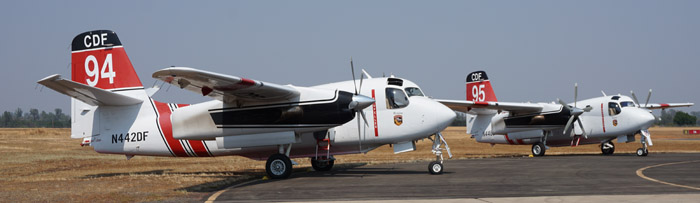


All of the photos were taken by Bill Gabbert and are protected by copyright.
Paint design approved for USFS C-130H air tankers
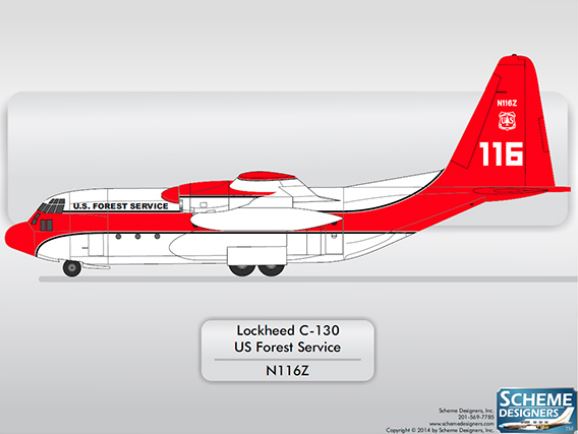
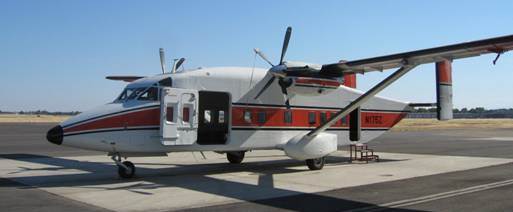
The Chief of the U.S. Forest Service has approved the paint design for the seven C-130H aircraft the agency is receiving from the Coast Guard. The National Defense Authorization Act required the transfer of the C-130Hs plus 15 Shorts C-23B Sherpas from the military. The C-130Hs are being converted by the Air Force into air tankers, while the Sherpas will be used to deliver smokejumpers and cargo and to perform other wildfire support missions. The C-130Hs will be owned by the USFS but will be operated and maintained by contractors. Some of the Sherpas will be flown by agency personnel and others by contractors. All of the Sherpas will all be maintained by private companies.
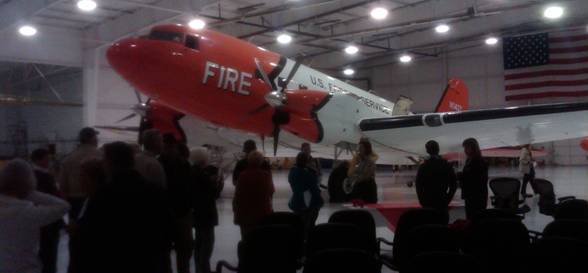
The paint for the C-130Hs was designed by a company in New Jersey, Scheme Designers. Craig Darnett, their founder and CEO, told Fire Aviation that they have also designed the paint for other USFS aircraft, including the DC-3 and some smokejumper planes. Other examples of their work can be found at Airliners.net. Scheme Designers will not actually paint the C-130Hs; most of their work is done on computers, however sometimes the aircraft owner will pay them to be on site and monitor the painting as it is done.
If someone is restoring an automobile that is at least 27 years old, as these C-130Hs are according to our research, paint is the very last step in the process. Five of the seven have to go through a 10-month wing box replacement, and then the rest of the conversion process can begin, including cutting a hole in the belly and installing a retardant tank system.
Initially bringing the 22 aircraft into the agency will be extremely complex and time-consuming, with FAA approvals, inspections, evaluating, painting, writing then awarding contracts for maintenance and pilots, deciding on a tanking system, contracts for installing tanking systems, avionics, etc. And, developing a comprehensive PLAN of how to manage the aviation assets now and in the future. The Air Force will do some of this, other than the planning, before the actual final transfer of the C-130s to the USFS (the Sherpas will not receive retardant tanks), but the Forest Service has to be involved in the decision making. Then, after the 22 aircraft are completely up and running, managing the programs on a continuing basis is not simply a part time job for one person.
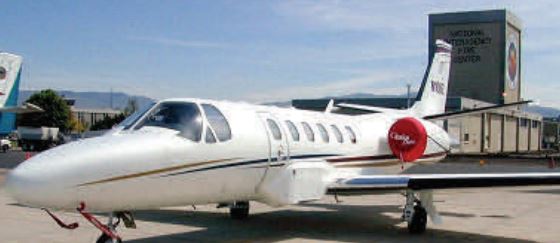
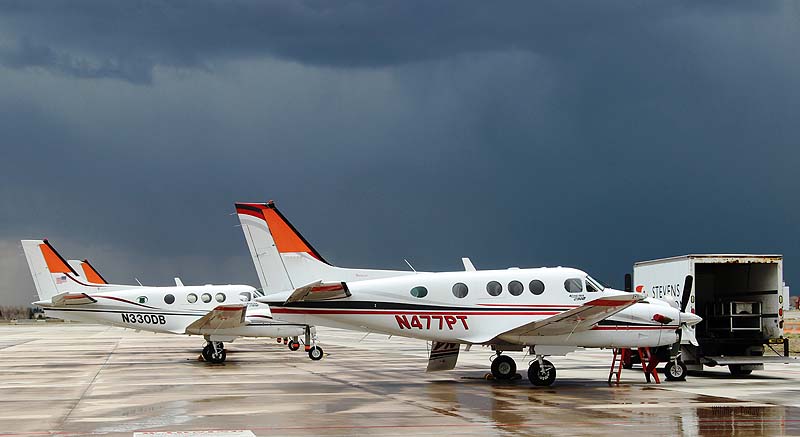
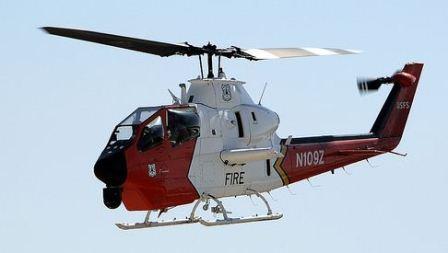
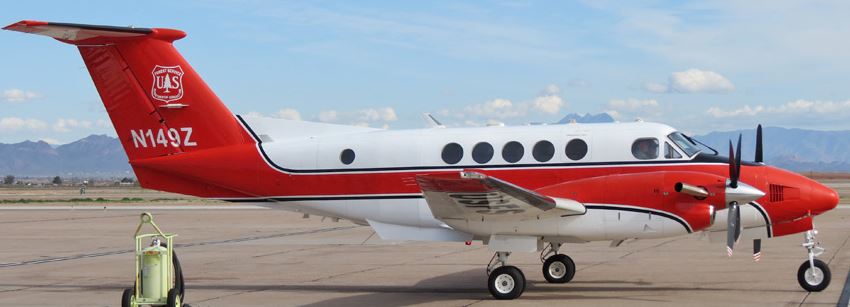
Below are some other paint designs on USFS aircraft:

Thanks and a hat tip go out to Leo