
They were working on the Coles Fire northwest of Coonawarra
Continue readingCounty Sheriff’s office completed a report on the Gales Fire fatality
A contract firefighter was killed by a falling tree in Oregon, August 23, 2021
Continue readingFirefighter killed while working on Oregon fire identified

The firefighter who died Monday while working on a wildfire southeast of Eugene, Oregon has been identified as 56-year old Frumencio Ruiz Carapia of Medford.
Mr. Carapia was working on the Gales Fire when he was struck by a falling tree, according to a news release Tuesday from Lane County Sheriff’s Sgt. Tom Speldrich.
Despite immediate efforts by those around him, Ruiz Carapia died at the scene, the news release said. No other injuries were reported.
The 14,000-acre Gales Fire is part of the Middle Fork Complex of fires. Personnel across the complex shared a moment of silence Tuesday morning in his memory.
Mr. Carapia was a member of a contract Type 2 Initial Attack hand crew. Two other firefighters who were injured were treated at the scene.
“The wildland firefighting community and our partners mourn this loss,” said Incident Commander Brian Gales of Northwest 13 Incident Management Team. “Our thoughts and prayers are with his family.”

A preliminary investigation showed the accident wasn’t the result of any tree cutting but that the tree unexpectedly snapped and fell to the ground, according to the sheriff’s office.
After his death Monday first responders formed a procession in the firefighter’s honor as his body, wrapped in an American flag, was wheeled past them before being prepared for transport back home.
Friends of Ruiz Carapia have established a GoFundMe page to support his wife and children.
U.S. Senator Ron Wyden put out a statement regarding Ruiz Carapia’s death on Tuesday evening:
“A sad reminder about the dangers that firefighters face to protect all of us here in Oregon. My deepest condolences to the family, friends and loved ones of Mr. Carapia.”
We send out our sincere condolences to the family, friends, and co-workers of Mr. Carapia.
Thanks and a tip of the hat go out to Al and others.
Analysis of 53 firefighter injuries during tree falling operations
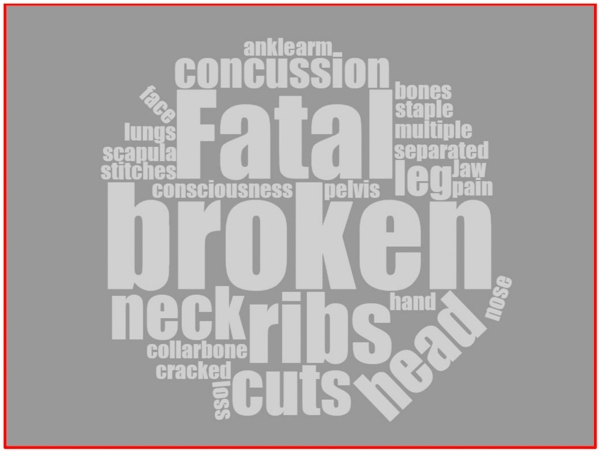
The report on the tree falling incident in which Captain Brian Hughes of the Arrowhead Hotshots was killed in 2018 recommended that an analysis of tree falling accidents be conducted “to assist in setting priority actions to reduce similar incidents.”
Captain Hughes died when a 105-foot tall Ponderosa Pine fell in an unexpected direction on the Ferguson Fire on the Sierra National Forest near Yosemite National Park in California.
A Tree Falling Accident Analysis was completed by the Wildland Fire Lessons Learned Center at the request of the the U.S. Forest Service and the National Park Service. Their study compares 53 incidents from 2004 to 2019 in which firefighters were injured or killed in the process of falling trees.
Anyone involved in tree falling should read the entire 17-page report, but here are some of their findings:
- 53% of the time the tree fell in the intended direction.
- 28% of the time, the tree impacted another tree during its fall—including 2 of the 8 fatalities.
- 19% of the time, the top broke out and came back—including 2 of the 8 fatalities.
- Of all the reports that included recommendations, 21% recommended enhancing training related to tree conditions (like rot) and species-specific traits.
- 19% of the time, the sawyer was working on a hung-up tree— including two of the eight fatalities.
- 51% of the time, the incident involved a direct helmet strike.
- Of the reports that include recommendations, 24% recommended research and development related to wildland fire helmets.
- 42% of the time, the person struck was not cutting—including in 5 of the 8 fatalities.
- 24% of the reports recommended somehow improving safe work distance and compliance.
- 40% of the time, the person struck was in the traditional escape route—including in 5 of the 8 fatalities.
- 79% of the reports recommended improving risk assessment.
- 13% of the time, the tree strike happened during training— including in 2 of the 8 fatalities.
- 26% of the reports recommended improving faller training.
- 21% of the reports recommended enhancing training related to tree conditions (like rot) and species-specific traits.
Report released for tree strike fatality on the 2018 Ferguson Fire

The National Park Service has released the Serious Accident Investigation Factual Report for the accident in which Captain Brian Hughes of the Arrowhead Hotshots was killed last year. Captain Hughes died when a 105-foot tall Ponderosa Pine fell in an unexpected direction during a hazardous tree felling operation. It happened July 29, 2018 on the Ferguson Fire on the Sierra National Forest near Yosemite National Park in California.
Captain Hughes, number two in the chain of command on the crew, was in charge of the crew at the time since the Superintendent was at the Ferguson Fire Helibase at Mariposa Airport.
You can download the Factual Report and the Corrective Action Plan. Below are excerpts from both.
Excerpt from the Executive Summary:
…Brian returned to California in 2015 and became a captain of the Arrowhead Interagency Hotshot Crew. As a captain, Brian was a trusted leader and mentor who led by example, inspiring others to train hard and develop their skills. His crew looked up to him and loved him as a brother.
The Ferguson Fire was reported July 13.
[…]
The Arrowhead Hotshots arrived on scene July 16, having spent the previous month and a half working prescribed and wildland fires ranging from one to ten days long. The crew spent the next eight days working alongside other highly experienced hotshot crews to build and prepare a fire containment line for burnout operations designed to burn away the available fuel in a given area and keep the original fire from spreading.
By July 28, the day before the accident, the Ferguson Fire had grown to 53,657 acres and was burning across multiple jurisdictional boundaries. Hughes and IHC-1 Squad Leader were working along the edge of a spot fire on steep, rocky terrain in Division G and identified several hazard snags—dead trees that posed falling and fire risks. One stood out: a 57-inch wide, 105-foot tall ponderosa pine burning approximately 10 feet below its top and producing a steady stream of embers. With winds expected the next day, they agreed the snag posed a significant risk to keeping the fire contained and agreed it needed to come down.
The Arrowhead Hotshots lead sawyer started cutting the tree down on the morning of July 29 with help from Hughes, who temporarily stepped in for the sawyer’s less-experienced swamper. The rest of the crew staged in an area safely uphill.
Hughes and the sawyer intended for the tree to fall uphill into an opening between trees. Instead, the tree fell downhill, hitting the ground approximately 145 degrees from the intended lay. It grazed another standing dead snag as it fell and then rolled and/or bounced farther downhill, coming to rest against other snags and brush.
Hughes and the sawyer had discussed the felling operation in detail. Warnings were issued prior to cutting. They also identified two escape routes in case something went wrong.
As the tree began to fall, the sawyer saw which direction it was going and instinctively ran directly downhill, escaping injury.
Hughes however, had moved about 20 feet downhill before the tree fell and then ran into the primary escape route as the tree started falling and was fatally struck. He was found lying underneath the tree in a space between it and the ground.
Efforts to save Hughes’ life were made on scene by the sawyer, fellow firefighters, and paramedics on the ground and in the air. Despite these efforts, Hughes was pronounced dead as he was being flown to the Mariposa Helibase.
Excerpts (Actions) from the Corrective Action Plan: (The full plan includes responsible parties and due dates)
- Propose to NWCG that beginning in Fiscal Year 19 the Hazard Tree and Tree Felling Subcommittee (HTTFSC) conduct an evaluation of the “Forest Service Chainsaw, Crosscut Saw and Axe Training-Developing a Thinking Sawyer” course for applicability within the interagency community as an updated NWCG S-212, Wildfire Chain Saws, course. Based on the evaluation NWCG could adopt the course as is or with modifications for S-212 and individual agencies could adopt and use as appropriate.
- Propose to NWCG that beginning in Fiscal Year 19 the Hazard Tree and Tree Felling Subcommittee conduct an evaluation and gap analysis of tree falling options, felling procedures, training and current best practices and update applicable supervisory operations position training and position task books as appropriate, i.e. Single Resource Boss, Strike Team and Task Force Leader, and Division Supervisor.
- Propose to NWCG the development of an Advanced Wildland Fire Chain Saws training course beginning in Fiscal Year 19 unless need negated by adoption of “Forest Service Chainsaw, Crosscut Saw, and Axe Training-Developing a Thinking Sawyer” course on interagency basis.
- Propose to NWCG a Fiscal Year 19 review and revision, if necessary, to FAL3, FAL2, and FAL1 competency and currency evaluation processes managed by NWCG.
- Propose USDA Forest Service National Technology and Development, in collaboration with the Western States Division of the National Institute For Occupational Safety and Health (NIOSH), conduct a study on effects of acute and cumulative fatigue on wildland firefighters and Incident Management personnel to include fatigue mitigation recommendations.
- Complete assessment of effects of fatigue, stress, and sleep management on wildland firefighters and incident management personnel to include methods to prepare for and mitigate the effects of fatigue, cumulative stress, and traumatic stress.
- Propose all wildland fire tree and chainsaw related accident reports since 2004 be reviewed, associated recommendations evaluated for redundancy or conflict, and the current implementation status of recommendations to assist in setting priority actions to reduce similar incidents.
- Evaluate how changing environmental conditions, such as extensive tree mortality in the west, and more extreme wildfires, are being factored into procedural practices and implementation of wildland fire policy, strategies, and tactics by agency administrators and Incident Management Teams.
- Assess and consider adoption of USDA, Forest Service Risk Informed Trade Off Analysis process incorporating geographically specific information on topography, fuels, and expected weather to inform decision makers during initial response and extended attack of wildfires.
Worker clearing road in Butte Fire scar killed by rolling log

A Calaveras County employee working on a brush clearing project along a road in the scar from the Butte Fire was killed Monday March 18 by a rolling tree or log. County Public Works personnel were working with a CAL FIRE Conservation Camp crew inside the perimeter of the fire that burned 71,000 acres south of Jackson, California in September, 2015.
Kevin Raggio, Calaveras County Coroner, identified the man as 57-year-old Ansel John Bowman.
A very brief “Blue Sheet”preliminary report released by CAL FIRE said the county employee “was hit by a previously downed tree and suffered fatal injuries”. He was pronounced dead at the scene.
The Butte Fire destroyed 233 residences and 175 outbuildings, and may have caused the deaths of two civilians.
Mom dies after saving son from falling tree in National Park
Falling trees caused 18 fatalities of wildland firefighters between 1990 and 2014 but it’s not supposed to happen to visitors in National Parks.
While a family was hiking on a trail in Great Smoky Mountains National Park in Tennessee on December 27 part of a tree fell killing the mother, Laila Jiwani, a 42-year-old pediatrician from Plano, Texas and injuring her 6-year-old son.
Below is an excerpt from an article at Knox News:
Her husband, Taufiq Jiwani, said Jiwani died “immediately upon the severity of the impact.”
The couple was hiking in the park with their three sons. One of the sons, Jibran, was also injured by the tree, which broke his leg in two places and caused “superficial head injuries,” according to the post.
Jibran, 6, was airlifted to the UT Medical Center with non-life threatening injuries, according to Litterst. He underwent surgery and was scheduled to be discharged on Saturday, according to the Facebook post.
“Doctors said that Laila saved Jibran’s life by taking the brunt of the impact,” Taufiq Jiwani wrote on Facebook.
Our sincere condolences go out to the Jiwani family.
And firefighters … be careful out there.
Firefighter killed on Ferguson Fire identified
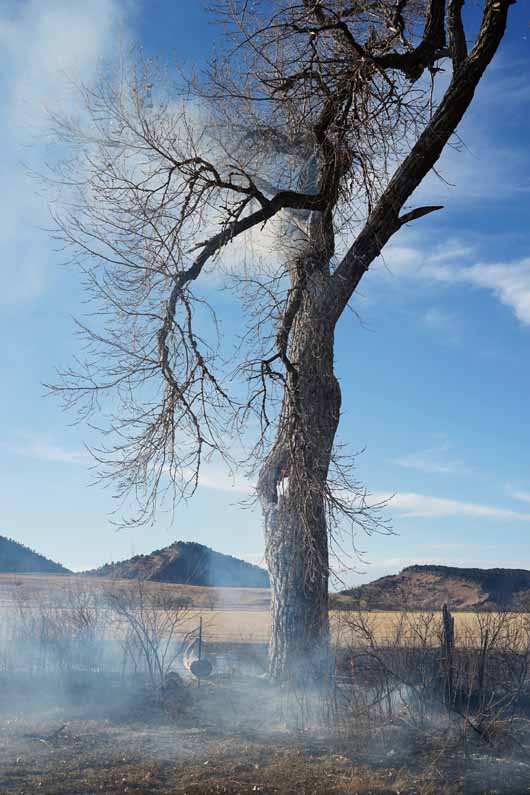
The National Park Service has identified the firefighter who was killed Sunday morning July 29 while battling the Ferguson Fire on the Sierra National Forest in California west of Yosemite National Park. It was Captain Brian Hughes of the Arrowhead Hotshots.
The incident occurred just before 9:30 a.m. Captain Hughes and his crew were engaged in a tactical firing operation on the east side of the fire. In an area with a large amount of tree mortality, he was struck by a falling tree. Captain Hughes was treated at the scene, but passed away before he could be transported to a hospital.
Report released — tree falls on engine

The incident occurred October 18 on the Nuns Fire in Northern California
Continue readingFirefighter killed in Montana by falling tree
(UPDATED at 1:38 MDT July 20, 2017)

A firefighter working for a private company was killed July 19 while working on a wildfire in western Montana. Trenton Johnson 19, was struck by a falling tree while helping to suppress the Florence Fire, a small fire near Florence Lake on the Lolo National Forest northeast of Seeley Lake.
Mr. Johnson, a resident of Missoula, Montana was a member of a Grayback Forestry Inc. 20-person hand crew under contract to the U.S. Forest Service.
Kelli Matthews, a spokesperson for Grayback, said as the crew was getting lined out to begin work on a small fire the top broke out of a burning tree and struck Mr. Johnson. He was taken to the nearest heliport about half mile from the fire where he was airlifted to Saint Patrick Hospital. He was later declared deceased.
Mr. Johnson was a sophomore at Montana State University in Bozeman.
Lolo National Forest Supervisor Tim Garcia issued a statement Thursday saying in part:
This is a heart-wrenching loss of life and Trenton leaves behind many friends and family members who are feeling this profound loss right now. This loss is rippling across the Lolo National Forest this morning and is most keenly felt on the Seeley Lake Ranger District, where Trenton’s sister works as a Forest Service employee.
Between 1990 and 2014 18 firefighters were killed on wildland fires by hazardous trees, which was 4 percent of the 440 firefighter deaths in the stats for that period kept by the National Interagency Fire Center.
Our sincere condolences go out to Mr. Johnson’s family, friends, and coworkers.
Thanks and a tip of the hat go out to Chris and Paula.
Typos or errors, report them HERE.