
Coal-burning trains operated by D&SNG in Colorado have started multiple wildfires in the San Juan National Forest
Continue readingNew South Wales to purchase a large air tanker
The state government also expects to buy two lead/aerial supervision aircraft
Continue readingSanta Barbara County FD plans to purchase a used Blackhawk helicopter
They hope to acquire it from the National Guard
Continue readingSanta Barbara County hopes to purchase a used Blackhawk
The Fire Department may acquire it from the National Guard
Continue readingAir Base Operator training in New South Wales

The New South Wales Rural Fire Service conducted an Air Base Operator joint training exercise last week for the new Large Air Tanker Base in Canberra, Australian Capital Territory.
Photo credit: Adrian.


Report released for rescue and extraction of water tender rollover victim
It happened on the Cougar Creek fire in Washington
Continue readingHay shed fire in New South Wales
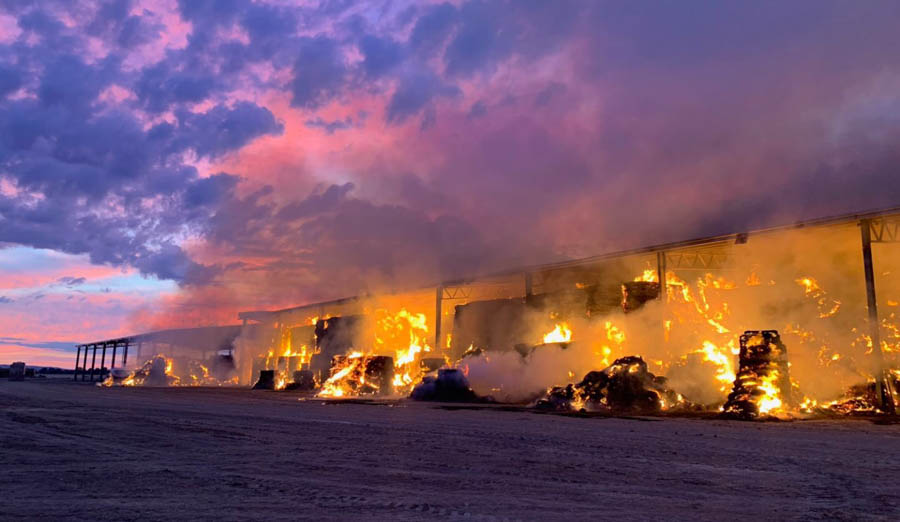
On December 12 firefighters from New South Wales Rural Fire Service and Victoria Country Fire Authority responded to a fire in a hay shed on Howlong-Balldale Road northwest of Howlong, NSW.
In a tweet the NSW RFS warned about spontaneous combustion:
With warmer weather the risk of hay stack fires increases. This fire attended by crews between Howlong & Corowa. With hot weather on the way landholders should check the temperature in stored hay & if possible ensure that farm machinery is kept in a separate shed.
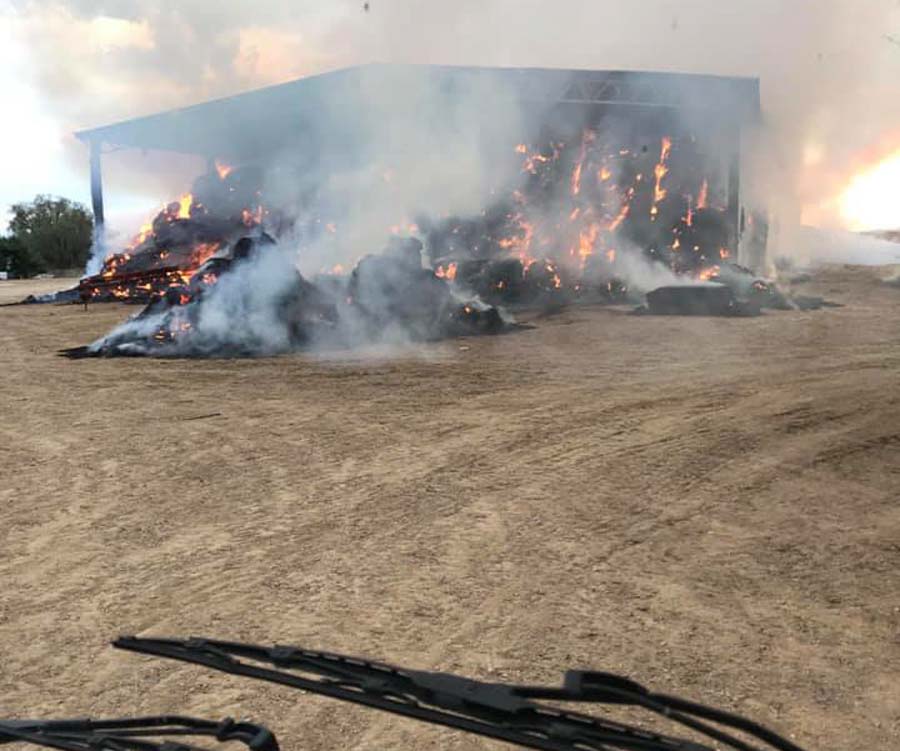
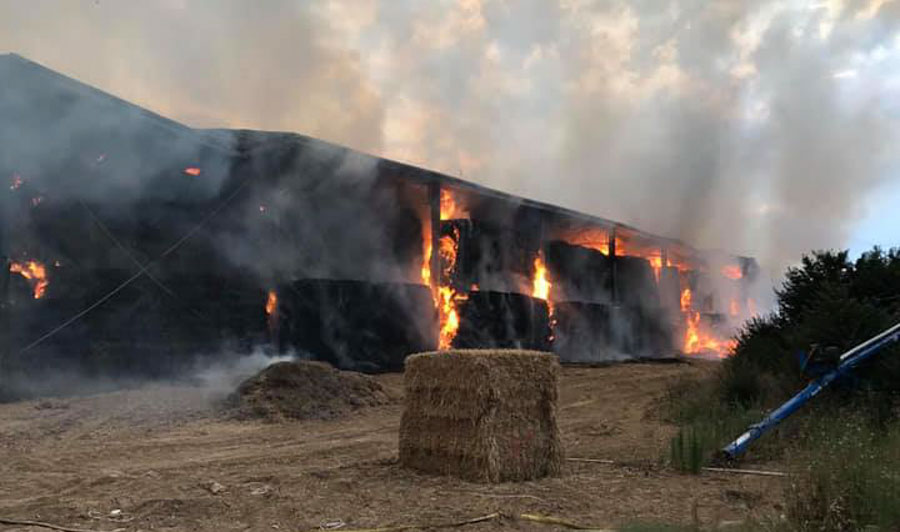
The University of Montana has information about spontaneous combustion in hay:
“Oddly enough, wet hay is more likely to lead to a spontaneous combustion fire than dry hay. If hay is put into a barn or stack when it has more than about 22 percent moisture, not only does the hay loose forage quality, but it has an increased risk of spontaneous combustion.
“High moisture hay stacks can have chemical reactions that build heat. Hay insulates, so the larger the haystack, the less cooling there is to offset the heat.
“When the internal temperature of hay rises above 130 degrees Fahrenheit (55 degrees C), a chemical reaction begins to produce flammable gas that can ignite if the temperature goes high enough.
“Hay fires generally occur within six weeks of baling. Heating occurs in all hay above 15 percent moisture, but generally it peaks at 125 to130 degrees F, within three to seven days, with minimal risk of combustion or forage quality losses. Temperature within a stack then declines to safe levels in the next 15 to 60 days, depending on bale and stack density, ambient temperature and humidity, and rainfall absorbed by the hay.
“To avoid hay fires, small, rectangular bales should not exceed 18 to 22 percent moisture, and large round or rectangular bales should not exceed 16 to 18 percent moisture for safe storage.
“In addition, you should check your hay regularly. If you detect a slight caramel odor or a distinct musty smell, chances are your hay is heating. At this point, checking the moisture is too late, and you’ll need to keep monitoring the hay’s temperature.”
Report released on fatality of Oklahoma grader operator
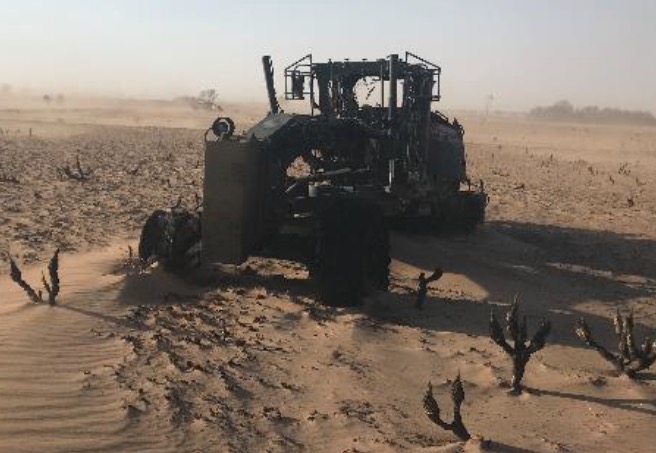
The Wildland fire Lessons Learned Center has released a Facilitated Learning Analysis on the fatality of Jack Osben, the grader operator who was burned over while working on the Shaw Fire in Western Oklahoma April 12, 2018. The tragedy occurred during extreme conditions — extended drought, 100 degrees, 5 percent relative humidity, 45 mph winds, and the fire was burning in thick grass that had not been grazed or hayed in seven to eight years.
The executive summary is below. The entire document can be downloaded (4 MB file).
*Except for Jack Osben, all names are pseudonyms
On April 12th, 2018, 61-year-old Jack Osben, a motor grader operator for Roger Mills County in Oklahoma and volunteer firefighter died as a result of thermal burns while providing initial attack to the Shaw Fire. The wildfire grew to approximately 3,500 acres in a mixture of grass and shrubs during a Red Flag Warning day. The employees of Roger Mills County were in a state of readiness due to a mixture of prolonged drought, extreme heat, and gusting winds that had created extremely dangerous wildfire conditions.
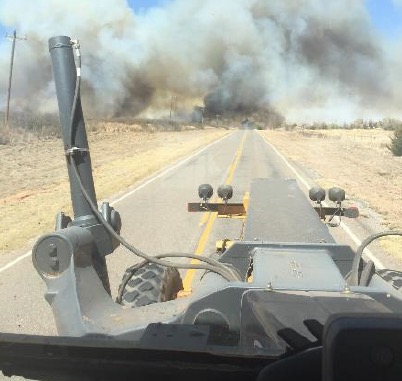
Jack was performing progressive line construction using a motor grader on the Shaw Fire. While he had been working as a grader operator for a few years, he had limited experience using the grader related to fire suppression activities. Between 1400-1430 hours Jack met up and began working with Alex, a fellow grader operator who had more than two decades of experience fighting fire.
Although they entered the field at different locations, they converged almost immediately. Alex instructed Jack to fall in line behind him to improve the initial grader line. After working together to establish line for about 4,000 feet, Alex lost sight of Jack’s grader in the smoke and flames, which had grown significantly and shifted directions quickly.
Due to the fire’s shift in direction, Alex was forced to abandon his grader. He began to walk toward a nearby road when he spotted Jack, who was also on foot emerging from the smoke. They spoke briefly when they met. Alex observed that Jack had visible burns to his arms and was possibly suffering from smoke inhalation. The reality was that Jack’s injuries were much worse than they appeared. He died as a result of thermal burns either during transit in the ambulance or right after arriving at the hospital.
This accident took place in Western Oklahoma where the tactical use of motor graders for wildland fire line construction is common. Additionally, there is different emphasis on values at risk, namely that firefighters in Western Oklahoma commonly protect grass for cattle grazing. Other regions may rank grass as a low value-at-risk but it is absolutely a consideration for how people in this region fight fire and manage land1.
This is the first Facilitated Learning Analysis (FLA) to emerge from the State of Oklahoma. In brief, the FLA process is meant to facilitate learning from unintended outcomes by interviewing people who were involved in the event, and sharing a collective story of their experiences. We also offer lessons learned from those involved and with their help, generate recommendations that may be useful for people within and outside of the region.
For many readers, this analysis will serve as an introduction to a different way of fighting fire with some of these methods appearing unconventional. But, in the words of one of the grader operators, “you make do with what you have.” Even if the methods and context are different, this statement ties together the ethos of wildland firefighters everywhere. It is also important to note that the men and women of Roger Mills County are exceptional at what they do and have an impressive record of doing it safely.
Skidgeon on the Cougar Creek Fire
BLM crew of veterans trains National Guardsmen
Continue readingFire prevention mascot in Chile
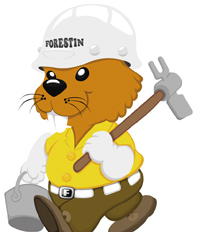 The United States has Smokey Bear for wildfire prevention and Woodsy Owl to promote caring for the environment. Chile has one mascot, Forestín, for both of these activities, and more.
According to Wikipedia:
Forestín is the official mascot of the National Forestry Corporation (CONAF) of Chile. It is a coypu (nutria) which can serve as fire brigade (yellow fire resistant jacket and helmet), park ranger (green shirt and quepi) or forester (yellow shirt and green planter), which was designed to educate the public about the dangers of forest fires.
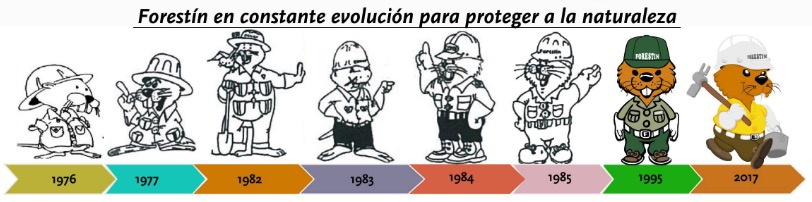
Forestín was introduced to the public in 1976 and since then has evolved.
Here are a couple of videos showing Forestín in action.