CAL FIRE adds aircraft

For the second year in a row, CAL FIRE is boosting its seasonal fleet across California — with more than $72 million provided by Gov. Gavin Newsom’s administration. The funding secures an additional 24 firefighting aircraft (19 helicopters and 5 planes) for a contracted period of 90-120 days. The Fullerton Observer reported that these aircraft are located in communities across the state and will be pre-positioned as needed.

“The deployment of more aircraft dedicated to the people of California marks a historic milestone, with the highest number of firefighting aircraft ever available for initial attack in the state for the second consecutive year,” said Director and Fire Chief Joe Tyler. He said rainfall this year has resulted in increased fuels; last week alone, CAL FIRE responded to over 300 wildfires.

Cal Fire Hawk

NEW HELICOPTERS:  Nevada-Yuba-Placer Unit Chief Brian Estes said that CAL FIRE’s new Fire Hawk is faster, with greater capacity, than the state’s aging 12 Super Huey helicopters, and the Hawks can also conduct night flight operations. According to a report by YubaNet.com in FY2022-2023 additional funding was approved to purchase four more S70i Fire Hawks to increase surge capacity and to maintain operational capabilities during mandatory maintenance cycles. The Fire Hawk can deliver up to 1000 gallons — or a 9-person helitack crew.

California’s aircraft are initially prepositioned in the following counties: Butte, Tuolumne, San Diego, Tulare, Humboldt, Mariposa, Nevada, Siskiyou, Sacramento, Fresno, Shasta, San Luis Obispo, Napa, Placer, Lassen, Riverside, and Sonoma.

C-130H tankersThe fixed-wing aircraft in the California fleet include three large airtankers that can carry up to 4,000 gallons. FireAviation reported last year that the U.S. Air Force was directed by Congress in December 2013 to perform maintenance on seven C-130H aircraft and convert them to airtankers. At that time the USAF was given $130 million for the project. Five years later in 2018 Congress appropriated an additional $20 million, bringing the total cost to $150 million. No recent estimates of totals were readily available.

The statewide fleet has grown to more than 60 fixed-wing and rotary-wing aircraft, according to the Chico Enterprise-Record, making CAL FIRE’s the largest civil aerial firefighting fleet in the world, including Grumman S-2T airtankers, Bell UH-1H Super Huey helicopters, Sikorsky S70i helicopters, and North American OV-10A (plus one D Model) Bronco Air Tactical aircraft. The aircraft are located at 14 airtanker bases, 10 helitack bases, and one CAL FIRE/San Diego County Sheriff helitack base.


On this holiday weekend, CAL FIRE reminds the public that the law strictly prohibits the use of drones in areas with fire activity. Drone operation can shut down aerial firefighting, endangers pilots and crew and firefighters, and poses major risks to lives, property and natural resources.

 ~ THANKS and a tip of the hat to Johnny.
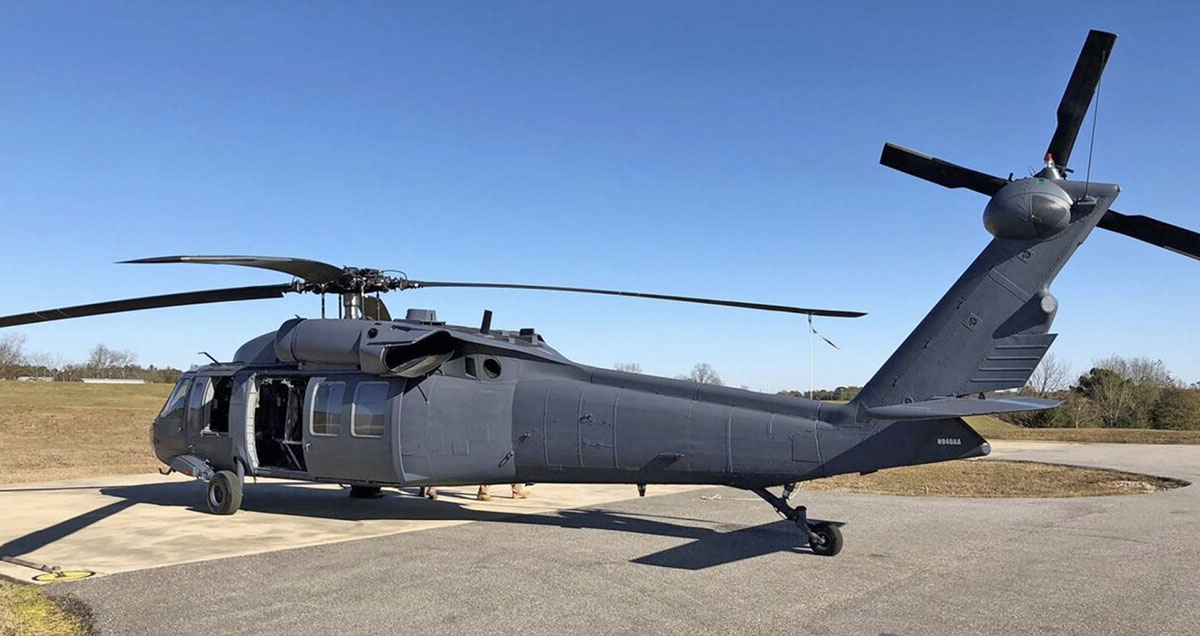
Portugal to purchase six firefighting-capable Blackhawk helicopters

Blackhawk helicopter
Blackhawk helicopter. Photo by Arista Aviation Services.

The Portuguese Air Force has signed an agreement to purchase six Blackhawk helicopters outfitted for fighting wildfires. The aircraft will be supplied by Arista Aviation Services, a US-based firm which specialises in modernising surplus US Army UH-60 Black Hawk helicopters.

Delivery of the first two is scheduled for the first quarter of 2023.

The contract includes the supply of material and tools, plus technical maintenance support until 2026 and training for six pilots and 21 mechanics. The UH-60 Black Hawk will allow transport of 12 firefighters and their equipment and has the capacity to carry up to 780 gallons of water.

The Expresso publication reported that the terms of the contract allow for the helicopters to be up to 35 years old. While age of the body of the ships may be measured in decades, it is possible that the helicopters have been modernized with recent technology.

In recent years a number of agencies in the United States have purchased new S-70i Blackhawks, which are given the “Firehawk” name after adding a 1,000-gallon (3,785-liter) water tank system, a raised landing gear (to accommodate the tank), and associated integrated avionics — a process that typically takes six months.

But some agencies go the UH-60 route, taking a former military helicopter and performing a similar conversion to a firefighting machine. Ventura County Fire Department in California is an example.

When I was in Portugal in 2012 working on a fire consulting project, the aerial firefighting capabilities of the country were very, very limited. There was no significant air tanker fleet or a system for providing aerial platforms for intelligence, surveillance, and reconnaissance. A problem that confronted firefighters on a large fire was not knowing exactly where the fire was or how far it had spread, which made ordering evacuations a challenge.

Ka-32 helicopter Portugal
Kamov Ka-32A on standby at Loulé heliport in Portugal. Photo by Bill Gabbert August 29, 2012.

In 2006 the government spent €348 million to buy six Kamov Ka-32A helicopters which could transport personnel and drop water, but over the last 10 years have had difficulty keeping them airworthy. In January none of the six were operational. The Helicopter Investor reported that in April the Portuguese government expelled a team of Russian mechanics working on three of the Kamovs, and shut down the hangar in Ponte de Sor where the maintenance crew was working.

Embraer C-390 equipped with MAFFS II
Embraer C-390 equipped with a MAFFS II. Embraer photo.

Portugal was Embraer’s first export customer for the C-390 fixed wing aircraft when it ordered five in 2019 for $930 million. Recently Embraer has successfully completed the flight test certification campaign for the Modular Airborne Fire Fighting System (MAFFS II), which provides the C-390 with the ability to drop up to 3,000 gallons water or retardant on wildfires.

Blackhawk helicopter flies for the first time without a pilot on board

UH-60 Blackhawk first autonomous flight
UH-60 Blackhawk in first autonomous flight. February 5, 2022. DARPA photo.

For at least two years Erickson Inc. has been working with Sikorsky and Lockheed Martin to develop a new pilot optional nighttime firefighting solution for helicopters, integrating Sikorsky’s MATRIX Technology into a wildfire suppression system. It would enable the S-64 Air-Crane, which was originally manufactured by Sikorsky, to fight wildland fires during the day or night. Fire Aviation first wrote about this project in February, 2020.

Sikorsky is not limiting this pilot optional capability to the Air-Crane, of course. On February 5 they completed the first of what they occasionally call “uninhabited flight” with a UH-60A Blackhawk. On the runway in Fort Campbell, Kentucky, one of Sikorsky’s pilots in a Blackhawk helicopter flipped the optionally piloted cockpit switch from two to zero, exited the aircraft, and walked across the runway.

Moments later the aircraft, identifiable by DARPA’s logo and tail number N600PV, completed a pre-flight check list, started its engines, spun up its rotors, and took off with no crew onboard. All of it happened fully autonomously.

Equipped with ALIAS (Aircrew Labor In-Cockpit Automation System), the Blackhawk began executing a 30-minute mission. To demonstrate its ability to adapt to a variety of mission environments, the uninhabited BLACK HAWK navigated at typical speed and altitude through a simulated cityscape, avoiding computer-generated buildings while route re-planning in real time.

The BLACK HAWK helicopter then autonomously executed a series of pedal turns, then maneuvered and completed a perfect landing. Once it shut itself down, the two pilots approached and reentered the aircraft. The OPV (optionally-piloted vehicle) switch was reversed from zero to two, and then the pilots taxied back down the runway.

This flight marks the first time that a Blackhawk has flown autonomously. It illustrates how ALIAS-enabled aircraft can help soldiers successfully execute complex missions with selectable levels of autonomy – and, said Lockheed, with increased safety and reliability.

We wrote last March that the helicopter which may be Erickson’s most well known Air-Crane, the one named Elvis, was being gutted down to the studs, so to speak. The company planed to rebuild N179AC as an S-64F+ that could operate without a pilot in the cockpit or autonomously.

"Elvis", an Erickson Air-Crane
“Elvis”, an Erickson Air-Crane. Credit: Erickson

Thanks and a tip of the hat go out to Tom, Rick, and Gerald.

A California Wine Country county hires a firefighting helicopter

Blue Sky Helicopters HH-60L, N51BH
File photo of Blue Sky Helicopters HH-60L, N51BH. Photo by Blue Sky Helicopters.

Napa County has joined the list of counties in California that own or contract for helicopters to assist firefighters on the ground by dropping water or transporting cargo.

The Napa Valley Register reported that the county awarded a contract to Blue Sky Helicopters for a Blackhawk. The Southern California based company operates HH-60L helicopters and has had contracts with the US Forest Service, Department of the Interior, Oregon Department of Forestry, Washington Department of Natural Resources, and CAL FIRE.

Napa County received several bids but selected Blue Sky and their $1.65 million offer.

CAL FIRE has been operating a CH-47D Chinook helicopter out of Napa County Airport, but it is subject to being assigned to fires in other parts of the state, as it was Tuesday. Napa wants the helicopter under the control of county Fire Chief Geoff Belyea to be sure it will primarily be available to protect property within the county.

In May the Napa Valley Register reported that a private organization’s offer to pay $1.5 million to help lease two single engine air tankers for the county was refused by CAL FIRE.

Other counties in California that have firefighting helicopters include Los Angeles, San Diego, Ventura, Orange, Kern, and Santa Barbara.

Napa County has had more than their fair share of very destructive fires over the last several years.

Thanks and a tip of the hat go out to Tom.