The Alaska Division of Forestry and Alaska Interagency Coordination Center’s early season wildfire outlook is now available, and normal fire potential is expected from March through June, except for the Yukon-Kuskokwim Delta, where above-normal potential exists beginning in April. AICC’s Fire Weather Program Manager Heidi Strader said that low snowpack could result in a busy early season out on the Yukon-Kuskokwim Delta.
“Keep in mind that we have few indicators to tell us how mid-summer will be at this point,” Strader said. “For some of the more populated corridors around South Central and parts of the Interior, it’s more about fuels, wind events, and human activity.”
A typical fire season in Alaska includes about 500 wildfires that burn an estimated 650,000 acres. Every year more than 80 percent of these fires are human-caused and result from careless or negligent use of fire, often in escapes from burn barrels, campfires, burn piles, or other sources.
Alaska has been enjoying significant sunshine in March, and April will probably bring the first early-season human fire starts to low-lying areas of the state as the snowpack retreats. The U.S. Drought Monitor shows no current drought in Alaska, while the Climate Prediction Center calls for a slightly warmer and wetter spring for western and northern Alaska. Fire activity the first week of March in Alaska was non-existent with a thick blanket of snow for most of the state. Additional details are available online at the akfireinfo.com website.
05/28/2023 UPDATE: On May 19 Montana Gov. Greg Gianforte signed Senate Bill 219. The law took effect immediately and made drone interference with aerial firefighting a misdemeanor crime publishable by a fine of up to $1,500, or jail time up to six months, or both. Unauthorized drone incursions over fires grounded aircraft on at least two Montana wildfires and two Idaho wildfires last year — part of over a dozen drone-related groundings nationwide. Drones flying around wildfires could collide with firefighting aircraft, distract pilots, or crash into vehicles or firefighters on the ground.
03/06/2023 — New legislation proposed to add criminal penalties for those who fly drones over wildfires and interfere with operations is making progress in Montana. Senate Bill 219 to “revise wildfire suppression laws,” with Democratic Sen. Willis Curdy as its primary sponsor, had its third reading on February 10. The vote was 37 YEA and 10 NAY with 3 other legislators excused.
Senate Bill 219 would designate flying a drone over a wildfire as a misdemeanor with a fine of up to $1,500 and six months in jail. Those charges could be made in addition to civil penalties, according to the Helena Independent Record.
Curdy described incidents near Helena last year in which drones interfered with firefighting operations and prosecutors said the drone pilots could not be prosecuted. The bill passed the Senate Natural Resources Committee unanimously after an amendment from Republican Sen. Barry Usher that would allow law enforcement to “use reasonable force” to disable a drone — including the authority to shoot down a drone.
Sen. Daniel Zolnikov of Billings cautioned that drone pilots unaware of the law and without the intent to interfere with operations might be unjustly punished, and the law wouldn’t stop all drone incursions into restricted airspace.
“We work really hard to fly safely,” Curdy told the Senate Natural Resources Committee. “We work really hard to keep our firefighters safe on the ground, and I think this bill’s intention is to move it in that direction.”
The Independent Record also noted that federal law prohibits interfering with firefighting aircraft, but this bill is specific to state and county jurisdiction. It has drawn universal support from firefighters and law enforcement personnel, who cited numerous incidents in which drones have required suspension of aviation operations, including incidents last year on both the Matt Staff Road fire east of Helena and the late summer fire on Mount Helena.
USFS graphic
Matthew Hall, fire protection bureau chief with the Montana Department of Natural Resources and Conservation, said that on the Mount Helena incident, six aircraft were working to keep the fire from residential areas when a drone was spotted.
“Because of the life-safety impacts drones pose to low-flying aircraft, the aerial initial attack operations were immediately suspended,” he said. “Not only was this a significant risk to aviators, but it severely limited our capabilities in fire suppression when they were needed most.”
Aerial Fire Magazine reported that Sen. Curdy is a former wildland firefighter and air attack supervisor; his facebook profile notes he spent 38 years as a wildland firefighter, 30 as a smokejumper — with additional creds as Former Pilot, Light Fixed Wing Manager, and Supervisory Pilot at U.S. Forest Service.
VOLUSIA COUNTY, FLORIDA — A large wildfire in Volusia County is putting up a lot of smoke, according to the Florida Highway Patrol, which cautioned drivers to exercise caution. A fire in the Tiger Bay State Forest, according to ClickOrlando.com news, is burning along Interstate 4 north of State Road 44 near DeLand. The Florida Forest Service said the fire had burned about 70 acres and was 60 percent contained.
A Florida Department of Transportation highway camera earlier today showed thick dark smoke from the fire, not far from I-4. State troopers issued a travel advisory because of the smoke for motorists in the area both for I-4 and for International Speedway Boulevard.
A 400-acre fire in Marion County, according to WCJB news, also closed roads. Florida Forest Service firefighters were dispatched to an escaped blaze near Gooski Prairie on Friday afternoon. Sheriff’s deputies said parts of County Road 316, from Northeast 175th Street to Fort McCoy, have been re-opened after a closure resulting from the fire and smoke.
Florida Forest Service officials said the fire was at 75 percent containment by 3:30 p.m. By 7 p.m., though, the winds had picked up and carried the fire from 200 acres to twice that size.
The fire started as a controlled burn ignited by a private landowner on Thursday afternoon.
WINK News reported yesterday that firefighters were working on several brush fires across southwest Florida pushed by high winds, including one in Collier County that the Florida Forest Service reported at 300 acres with about 25 percent containment. The Collier County Sheriff’s Office ordered evacuations, but they were soon lifted. The Greater Naples Fire Chief said three homes were burned and more were threatened.
ClickOrlando.com reported that temperatures are expected to climb into the upper 80s over the weekend before cooling down as a weak cold front moves closer to the region, but chances of rain are estimated at just 20 percent.
State fire officials are airing concerns about firefighter fatigue as southwest Queensland heads into an “unprecedented” prolonged fire season this autumn, and South West Rural Fire Service superintendent Wayne Waltisbuhl told ABC News that he could not remember the last time a fire season continued into March.
“It’s usually finished by late January, early February,” he said. “It’s just very dry conditions.”
Waltisbuhl said the season could continue for the next six weeks, and the Bureau of Meteorology is predicting higher than median average temperatures for the March-to-May period. “We’ll have some really peak days with high fire danger weather and some lulls.”
In Western Australia, the Department of Fire and Emergency Services (DFES) is disputing claims it doesn’t have the resources to handle the fires burning across the state. The West Australian reported that it took 200 firefighters to control a fire at Neergabby, near the popular tourist destination of Moore River. DFES deputy commissioner operations Craig Waters said that Western Australia is still “well-protected and well-resourced” and can provide a rapid response to such incidents.
Shadow Emergency Services Minister Martin Aldridge said that five trucks had been “mothballed” at city stations while the fires burned, but Waters disputed that. He said the five engines were crewed and available on Saturday and Sunday.
Those fires started the day after the United Professional Firefighters Union (UPFU) warned that the State could face a catastrophe over the weekend, after trucks were stripped and crews benched on Friday because of firefighter exhaustion. “DFES had sufficient resources over the weekend,” explained Waters, “to manage the effects of the industrial action initiated by the UPFU during the high-threat period.”
He said that in the metropolitan area, DFES has 139 vehicles across the career and volunteer brigades, with an additional 130 across local government bushfire brigades. He said that based on risk, together with the need to manage fatigue and staff rostering, DFES had decommissioned five firefighting vehicles in the metro area — for Friday only.
Waters said the state thus far had experienced only a moderate fire season, but he warned people not to be complacent. “There is still a long way to go, and Western Australia is incredibly hot and dry in summer, and the smallest flame can spark a devastating bushfire. Bushfires are burning for longer, and more intensely than we’ve seen in previous decades. Our firefighters do a tremendous job during bushfire season but we need people to take responsibility.”
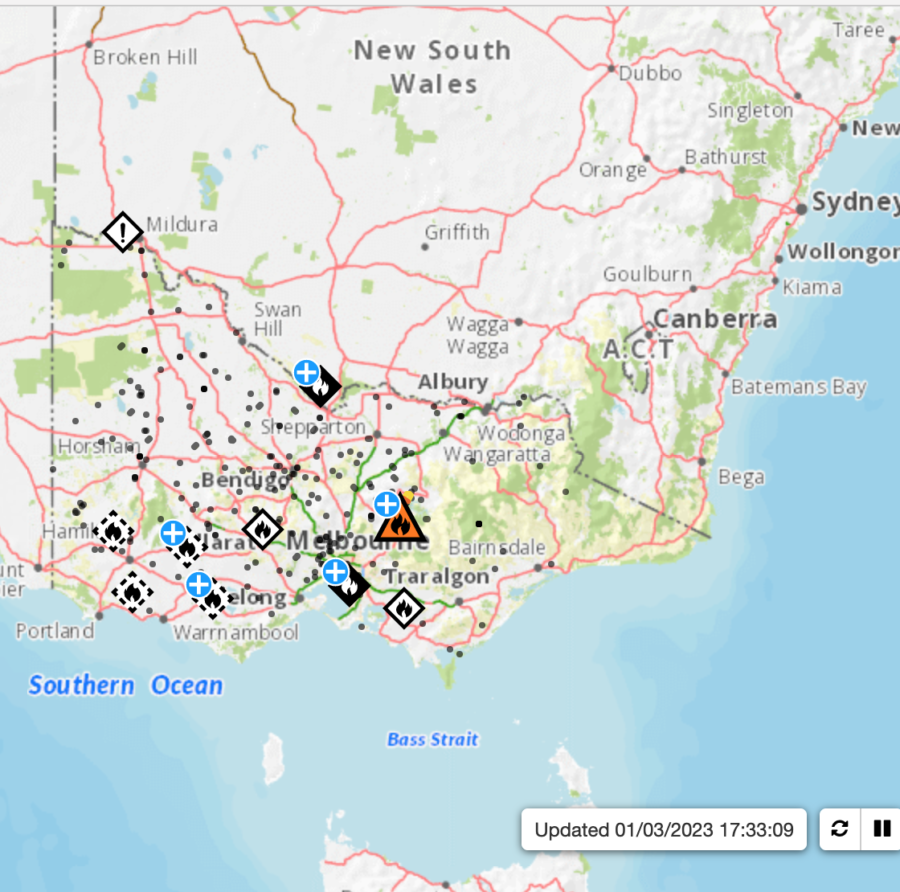
Bushfires are burning out of control northeast of Melbourne, the coastal capital of the Australian state of Victoria, and 9News reported that some residents have been told to leave immediately. Meanwhile, people in Maintongoon also have been issued a “leave immediately” warning. Updates will be posted at the VicEmergency website.
Map of Victoria bushfires
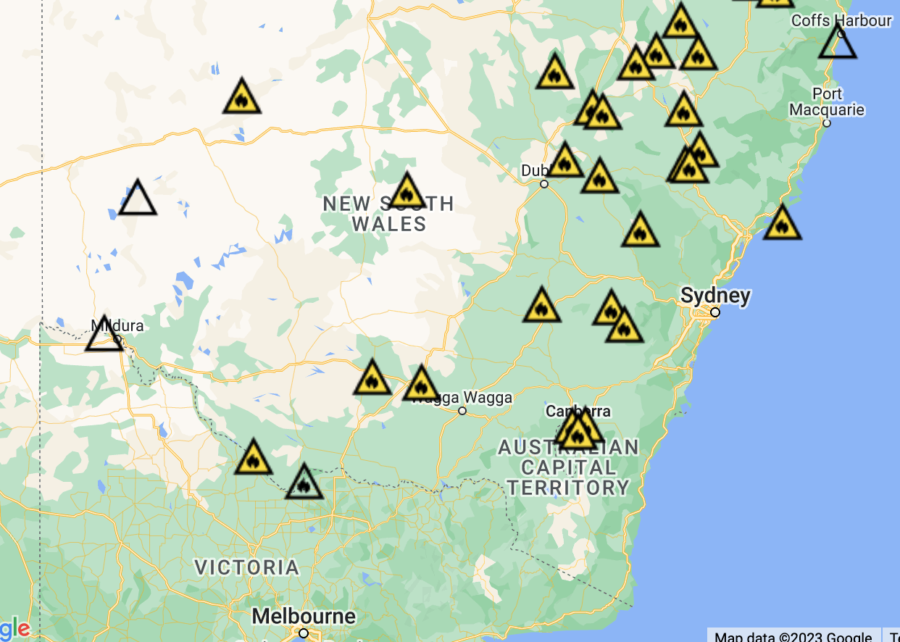
The Rural Fire Service (RFS) in New South Wales says some of the active bushfires are too dangerous to control, and that they may have been deliberately lit. The RFS has an interactive map online.
RFS map of New South Wales incidents
A firefighting aircraft has been called up to fight two large and out-of-control bushfires believed to have been deliberately lit near Moonie in Queensland’s Western Downs, according to ABC.net.au news.
On Tuesday night the RFS was called to two fires in the Waar Waar State Forest and Cattle Creek, and South West Region RFS Superintendent Wayne Waltisbuhl said that fire crews notified police.
“Some of the crew who arrived on scene last night observed some people in the area in a car and they took off very quickly,” he said. “That was suspicious at the time the fires were lit, so that information has been passed to police to follow up.”
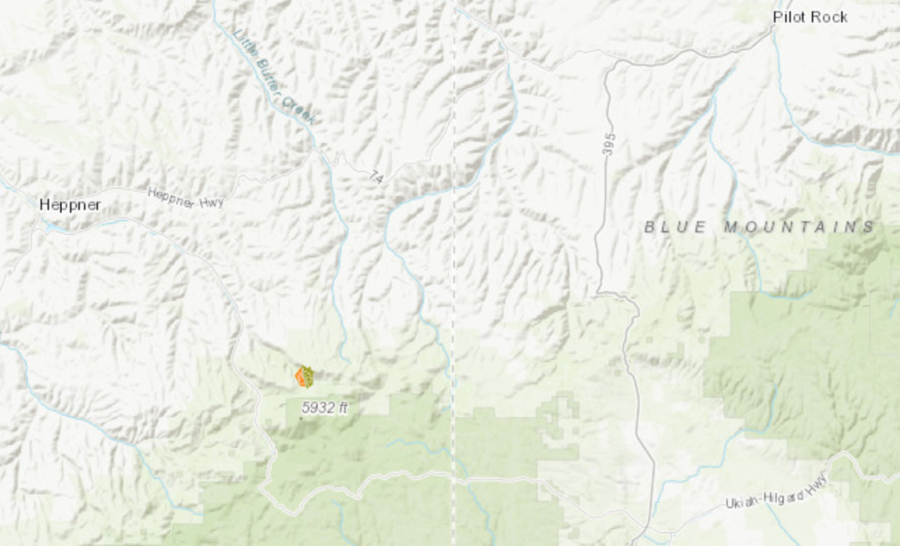
A bolt of lightning struck a tree just outside Bruce Wilcox’s home in Morrow County, Oregon last year, sending shards of wood flying 40 yards away. “It didn’t start a fire,” he said. “It just hit that tree and went to ground. But we were lucky.” Lightning-ignited fires are common in north-central Oregon, and Wilcox lives about 16 miles south of Heppner — home to the nearest fire department. Wilcox is helping his community, known locally as Blake Ranch, become the county’s first to join Firewise USA. He told Oregon Public Broadcasting that the Firewise program could be the key to protecting nearby homes from the next big wildfire.
Firewise is sponsored by the National Fire Protection Association (NFPA), and the Oregon Department of Forestry (ODF) manages the program at the state level. Through training and local fire prevention projects, Firewise encourages property owners to take proactive measures to prevent fires from destroying their homes and businesses. Many of Oregon’s small and isolated communities have achieved Firewise designation.
Jessica Prakke with ODF said these sparsely populated communities are among the target areas for the state. “We’re definitely trying to reach those smaller communities that are in the wildland/urban interface, because they can be the most susceptible to wildfire.”
In Blake Ranch, Wilcox contacted ODF after he read about a community in northeast Oregon’s Wallowa County that was participating. Since then, ODF has sent foresters to assess Blake Ranch properties for fire readiness, and some residents have taken a wildfire prevention class. Prakke said ODF doesn’t usually initiate the process of turning communities into Firewise sites, because the agency needs community buy-in to make the program work. Wilcox noted that some local residents are a little skeptical — they suspect the program might require them to remove trees they want to keep. But Wilcox thinks they’ll come around.
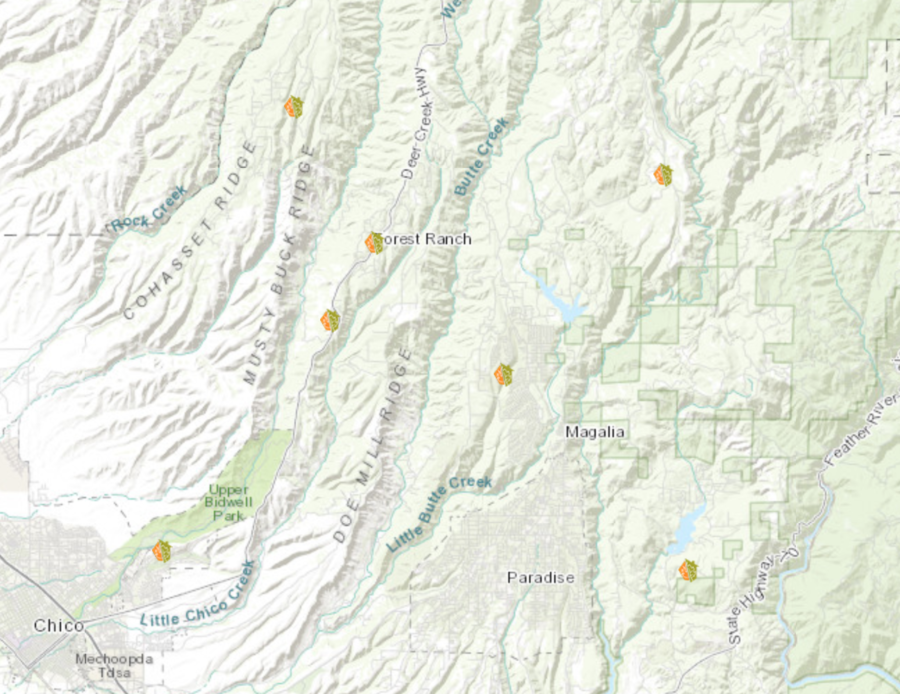
The Firewise program has an interactive map on the NFPA website with details about designated sites and their locations across the country, and it’s interesting to compare locations with known fire-danger areas. There’s a cluster of sites, for example, north of Paradise in northern California. One of the sites, Falcons Pointe Drive, is near Upper Bidwell Park in Chico. That community’s participation in the Firewise program began in September of 2022.
There are very few sites in Nevada and zero in North Dakota; about half of Colorado’s map is covered with little Firewise icons. While Oregon’s west side is not really known for severe wildfires, that side of the state surely proved the exception over the last few years, and it’s crowded with Firewise sites, while the east side of Oregon, no stranger to major fires, has only a few. Blake Ranch was just added to the list in December, and the numbers grow as people learn about neighborhoods and towns devastated by wildfires.
“The number of conversations I have had since Paradise has skyrocketed,” said Chris Chambers, Forest Division Chief in Ashland, Oregon. Residents and local officials in and around Ashland tend to be a little more fire-savvy than in many areas; they have a history with interface fires. Jefferson Public Radio reported, about a year after wildfire leveled the town of Paradise, that Chambers spoke to a throng of people at a sold-out screening of the documentary Fire In Paradise at a theater in downtown Ashland, just north of the California state line. Although the Camp Fire was more than 200 miles south, Chambers says it alarmed Ashland residents; it’s a small, woodsy town that, like Paradise, is tucked into forest.
“People have really become concerned,” Chambers said. “I just hope that translates into lasting awareness in the sense that people take responsibility for the condition of their property.”
James Taiclet, CEO of Lockheed Martin, says “21st Century Security” means that large defense contractors can quickly deliver mission-focused defense capabilities to complex problems outside the traditional defense sphere. Taiclet is focusing on wildland fire, addressing the tough challenges recently highlighted by the President’s Council of Advisors on Science and Technology.
Lockheed Martin has considerable expertise as an integrator of complex technologies, but the company is oriented toward selling big things to a small number of big federal customers. Lockheed’s now shifting to focus on developing systems for big markets like F-35 Lightning II fighter jets or naval combat systems, while firefighting represents the civil component of the 21st Century Security initiative. But as Forbes recently reported, the wildfire marketplace offers no simple route to a big sale.
“Wildfire is one of the toughest national challenges in America,” wrote Craig Hooper, senior contributor at Forbes. “Chronically underfunded, subjected to brutal operating conditions and operating under the constant specter of death, wildfire fighters have little time for gimmicks, ineffective gear, and wasted funds. It is a no-nonsense business, with buyers scattered throughout local, state, and federal governments. If something doesn’t work or is too costly, America’s wildland firefighters won’t buy it.”
On February 13 wildfiretoday.com detailed the federal Wildland Fire Commission’s first report to Congress, which focused on the aviation sector after the federal legislation creating the commission prioritized aerial firefighting as key.
San Diego Fire Rescue’s Firehawk at HAI 2020, January 2020 photo by Bill Gabbert.
“We’re sitting at a point now where we can actually predict where fires might start, and start moving assets there,” said Taiclet. In a joint project with NVIDIA, Lockheed is working with the USFS and the Colorado Division of Fire to use artificial intelligence (AI) to predict and simulate fire behavior. Lockheed’s Cognitive Mission Manager system will integrate a range of sensor- and AI-informed inputs to recommend courses of action. Ultimately, says Taiclet, these would feed into “things that we make that actually do fight fires today.” Those things include the Sikorsky FIREHAWK® helicopter and C-130 airtankers.
“The Department of Defense is only beginning to engage America’s wildfire fighting community,” wrote Hooper for Forbes. “Lockheed has sufficient access to Pentagon decision-makers that the company could, essentially, write up the Defense Department’s strategy for supporting civil authorities during wildfire season, setting the foundation for a national-level NORAD-like early wildfire detection and response capability.”
There’s yet another dumb hiker in the news for starting a wildfire to signal rescuers after he got lost. Philip Powers, a resident of Tempe, Arizona, argued in court that the fire he set in 2018 was necessary to save his life. But a federal court found that he was so unprepared that he created his own emergency.
Backpacker Magazine reported that the 37-year-old hiker in the rugged Sycamore Canyon Wilderness northwest of Sedona, in late May 2018, had barely slept and had muscle cramps in his legs. He’d also found a rattlesnake in the sheepherder shack where he’d overnighted. It was 14 miles back to his car, he was out of food and water, and he had no cell signal. Powers later told a USFS law enforcement officer that he feared he was “done.”
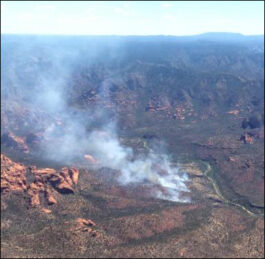
2018 Sycamore Fire in Arizona, looking north. USFS photo.
He’d tried the night before to start a signal fire, but it quickly burned out. He tried again, piling dry foliage around the base of a snag and firing it up with his Bic lighter. He hoped that the dead tree would go up in flames, and someone would see it and come to his rescue. But the fire got away, tripled in size in one day, and quickly grew to 230 acres; the Sycamore Fire took over a week to contain. A federal district court recently convicted him for his actions in 2018, and Powers now owes the feds almost $300,000 in restitution — and a year of probation.
Fronteras Desk reported that Judge Camille Bibles didn’t buy the hiker’s excuses. “Had Powers engaged in adequate preparation in planning and carried adequate water, food and gear, he would not have found himself in his circumstances,” she wrote. “Thus, the court finds that Powers’ necessity defense fails, as he created the conditions necessitating the commission of the fires, and his subsequent rescue.”
Powers faced 3½ years in prison for the seven misdemeanors he was charged with. Judge Bibles sentenced him to seven concurrent one-year probation periods instead. He also owes the Forest Service more than $293,000 in restitution, which he will make in $200 monthly payments.
In addition, the judge ordered Powers to complete a hiking safety course.
According to 12News in Arizona, he’s already filed an appeal of his conviction.
When Ed Pommerening died last Christmas Eve in Kellogg, Idaho he left a forestry legacy that is unmatched in Idaho history. I grew up in Kellogg and knew Ed mostly by reputation. We last talked by phone in 1996. I was in the middle manuscripts for an Evergreen edition featuring forests and forestry in Idaho and I wanted to include a short story about the miraculous rebirth of forests on the barren hills of my youth.
Ed is the reason Idaho’s Silver Valley between Smelterville and Big Creek is covered with countless thousands of conifers, many of them 50 feet tall. It is a stunning tribute to the dogged determination of a young man who once told me that the Kellogg he saw for the first time in 1972 reminded him of the godawful agent orange devastation he’d seen while serving with the 101st Airborne Rangers in South Vietnam.
That young man was Ed Pommerening. He was coming to Kellogg then to begin work as the Bunker Hill Company’s first forester. “Uncle Bunker” was by far Idaho’s largest industrial employer, the Union Pacific Railroad’s largest customer by tonnage, and the largest power consumer in the entire Washington Water Power system. At one time, Bunker Hill was the largest mining and smelting company in North America. It supplied most the lead we threw at the Germans and Japanese during the Second World War.
I worked my way through college in company stopes a mile beneath the streets of Kellogg. It was dangerous as hell — but great fun. I have no idea what convinced Ed that he could turn the Silver Valley’s barren hills green again — or how he convinced the company to invest in the crazy idea that he could grow countless thousands of seedlings 3,000 feet down in the mine, but in August 1975 company carpenters built Ed’s first 40-foot long underground greenhouse. One of my late father’s plumbing crews ran the water lines.
The scale of Ed’s thinking was breathtaking but the idea was not new. Many miners grew vegetables in pots in pitch black drifts with only the illumination of a single lightbulb. The air temperature was a constant 72 degrees, so all you had to add was some soil, water from a nearby drill line, a little light, and voila! It certainly helped that Ed had earned two forestry degrees from the University of Idaho. His connections would prove invaluable after his first seedlings died soon after they were transplanted on treeless hills by high school kids and civic groups.
The same thing had happened to seedlings my Cub Scout pack planted in Vergobbi Gulch in the 1950s. We never knew why, but soil scientists at the University of Idaho figured out that sulfur dioxide gas released from stacks at the Bunker smelter had polluted the soil. Acid was killing the seedlings. The solution: plant them deeper and add a dash of neutralizing potash for good measure. The beautiful result graces both sides of Interstate 90 between Smelterville and Big Creek: Ponderosa, Scotch and Austrian pine, Douglas-fir, western larch, western white pine, blue spruce, willow, and poplar.
The homesteader’s apple orchard behind our home on Mission Avenue has given way to a sea of green that turns to gold in the fall. Words seem inadequate.
A very good case can be made for the fact that the Silver Mountain Resort and Ski Area and its legendary gondola are prospering today because of Ed Pommerening’s modesty and quiet determination. Small wonder that his forestry consulting business, Riverview Timber Services, thrived for decades.
The Kellogg where I grew up is long gone: the smelter whistles that announced shift changes, the friends I made underground, Al Laramie at the piano on Friday nights at the old Sunshine Inn, and the vibrancy of Kellogg’s booming economy. We thought Bunker would go on forever. For better or worse, it didn’t. The end came in 1981. Labor strife and unattainable federal air and water quality standards were the main reasons. But Ed’s vision provided the catalyst for Kellogg’s rebirth.
The power of forestry turned the barren hills of my youth green again and my hometown has a future. There is a bronze statue of a miner at the corner of Main and McKinley Avenue in uptown Kellogg. There needs to be one of Ed standing beside him.
WATCH THE VIDEO: The Reforestation of Silver Valley is a fascinating story told by Ed Pommerening and others about an industry that took the initiative to solve a major environmental problem in northern Idaho. The video was funded by the Kootenai-Shoshone County Farm Bureau and Idaho Farm Bureau and was produced by Matthew Bane. Watch it [HERE].
The largest wildfires in the West — often called mega-fires — have increased in both size and number in recent years. The fire season — in both length and severity — increases nearly annually. Severe wildfire — classed in various ways but often as fire that kills most of the trees in its path — has by some reports increased eightfold in 30 years.
Fire science and experience over decades of research and field practice have settled on a major prevention tool: fuels reduction. This term includes both thinning (mechanical removal of shrubs and mostly small trees) and prescribed burning (intentional introduction of fire under favorable conditions).
A recent issue of High Country News features a report by Emily Shepherd, a freelance writer who worked in wildlife conservation for eight years, followed by two years as a U.S. Forest Service hotshot. She explains that wildfire ecologists almost universally support fuels reduction, especially in forests that had previously flourished under frequent ground fires — such as the ponderosa pine forests of Arizona and the Southwest.
While there’s no serious cohort of scientific dissent, forest managers still struggle to put their fuels reduction knowledge and goals into practice. “Forest thinning” is the target of prolific misinformation from groups ranging from the simply uninformed to the nationally well-funded (and well lawyered up), while locals in the area where prescribed fire is planned often see rxfires as just a nuisance or annoyance. To its opponents, thinning is a form of “silviculture by stealth,” as wildfire historian Stephen Pyne puts it; he says thinning is more like “woody weeding.” Logging harvests large, mature trees over large areas, he explains, while thinning mostly removes small trees. Logging makes money; thinning almost always costs money.
Thinning should be followed by prescribed fire. “If you don’t follow it up with the right fire, then it’s worthless,” says Pyne, “and in many cases may have made it worse.” Thinning and prescribed burning are the one-two punch that can knock out severe wildfires. Like everything, prescribed fires do have drawbacks: They are complicated to plan and execute, they dump unwanted smoke on nearby communities, they’re subject to litigation, and in rare instances they can ignite destructive burns or even get agency staff arrested.
“We conduct an average of 4,500 prescribed fire projects annually,” said USFS Chief Randy Moore in the spring of 2022, “and 99.84 percent go according to plan. That equals slightly more than one escape per every 1,000 prescribed fires, or about six escapes per year.”
As long as terms like “thinning” are used and abused by non-scientific groups with a bias, though, there will always be conflict. A report by Oregon Public Broadcasting not long ago was headlined “A southern Oregon conservationist’s wishlist for better collaboration with the BLM” in which Roman Battaglia, a reporter with Ashland-based Jefferson Public Radio, interviewed Luke Ruediger, executive director of Applegate Siskiyou Alliance, about the Medford area BLM’s latest forest management plan, known as the Integrated Vegetation Management Plan. “A lot of the problem that we see is that increasingly the federal government and federal land managers are not making that effort to communicate and collaborate or even to share basic information on federal land management projects with the public,” said Ruediger. “And that’s leading to a lot of issues surrounding trust.”
“It’s also creating a lot of situations where, essentially, the BLM is operating in secret and refusing to provide information on the projects that they’re designing on federal lands to the public that those projects would affect,” claimed Ruediger.
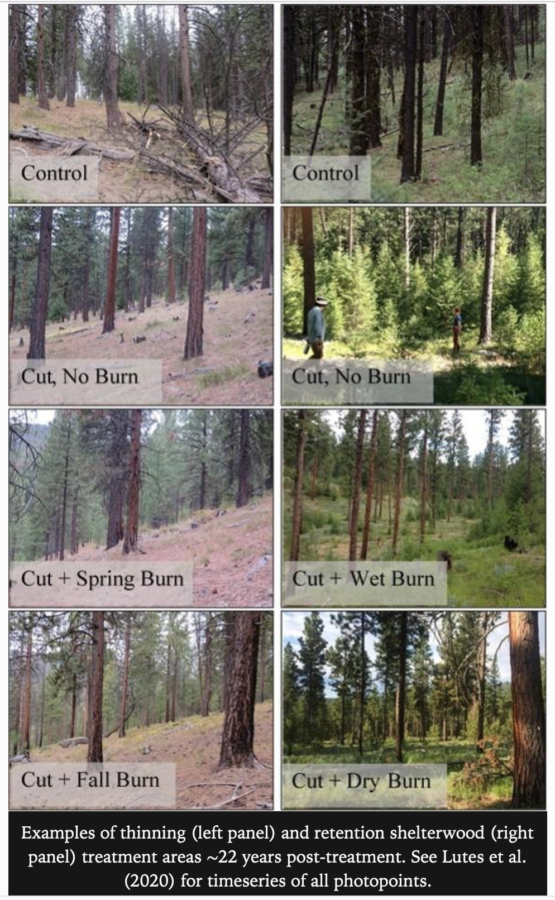
Opponents of thinning and other fuels treatment methods really need to take a look at the history of Lick Creek in Montana. The Lick Creek Demonstration – Research Forest studies were established back in 1991 in western Montana to evaluate tradeoffs among alternative cutting and burning strategies aimed at reducing fuels and moderating forest fire behavior while restoring historical stand structures and species compositions.
Firefighters and numerous studies over many years credit intensive forest thinning projects with helping save communities like those recently threatened near Lake Tahoe in California and Nevada, but dissent from some environmental advocacy groups still roils the scientific/environmental community. An Associated Press story out of Sacramento in October of 2021 noted that environmental advocates say data from recent gigantic wildfires support their long-running assertion that efforts to slow wildfires have instead accelerated their spread. “Not only did tens of thousands of acres of recent thinning, fuel breaks, and other forest management fail to stop or slow the fire’s rapid spread, but … the fire often moved fastest through such areas,” Los Padres ForestWatch, a California-based nonprofit, said in an analysis joined by the John Muir Project and Wild Heritage advocacy groups.
But James Johnston, a researcher with Oregon State University’s College of Forestry, called the groups’ conclusions “pretty misleading,” “irresponsible” and “self-contradicting.”
“Claims that modern fuel-reduction thinning makes fire worse are not credible,” Johnston said.
Chad Hanson is an ecologist with the John Muir Project and the author of Smokescreen: Debunking Wildfire Myths to Save Our Forests and Our Climate. “Wildfires can always turn tragic,” says Hanson, “but the greater tragedy in Greenville and Paradise, which was largely destroyed during the 2018 Camp Fire, and other towns is that they put their faith in logging operations miles away rather than proven, community-based fire prevention measures. Forest thinning is gaining more media attention and is heavily promoted by some land management agencies and logging interests, but science suggests the technique more often makes fires burn hotter and faster. The idea of felling trees and hauling them to lumber mills in the name of fire prevention has many deceptive names: fuel reduction, forest health, ecological restoration, thinning, and even reforestation.”
KGW-8 News reported on Johnston’s work with OSU, writing that the forestry sciences community forecasts massive wildfires like the ones that burned in Oregon last year will only get bigger and more severe. However, new research suggests that thinning the forests can go a long way toward preventing severe fires. [ related: video ]
“This study shows that fuel reduction thinning to moderate fire behavior … works,” said Johnston. His research focused on a ponderosa forest in northeast Oregon, where his team compared thinned stands of trees with un-thinned control stands and then used computer modeling to predict the behavior of future fires. “Most fuel reduction projects in eastern Oregon thin from below and cut down the smaller trees and leave the old large fire-resistant trees,” Johnston said. “That leaves behind a forest that’s less dense, and our studies show it has a less far less fuel to burn in future fires.”
Johnston said the result is even better when prescribed burning is added. “The only way to fight fire is with more fire,” he said.
It’s easy to see why the influenceable public can become confused, with a wide range of communications and opinions about complex forest and fire management topics. But two rural Josephine County communities are working with federal fire managers, according to a report by KDRV-TV, to improve wildfire resilience in southern Oregon. The BLM recently issued its “decision to promote safe wildfire response, develop fire-resilient lands, and create habitat for special status species” for a project near the communities of Murphy and Williams, both south of Grants Pass.
The BLM project is called Late Mungers Integrated Vegetation Management Project. It includes prescribed fire, fuels thinning and selective harvest phases; over the next 10 years the BLM expects fuels reduction work on about 7,500 acres under this project.
Fire managers plan to start at strategic locations where firefighters have the best chance to catch and contain wildfires. The project also includes 830 acres of proposed harvests split into two timber sales: Late Mungers and Penn Butte. “By using selection harvest methods, these treatments will increase the diversity of the forest stands,” according to the BLM. “This more complex habitat is important for the northern spotted owl, the marbled murrelet and Pacific marten (federally listed as threatened under the Endangered Species Act), as well as other special-status species.”
During the project’s public comment period, the BLM collected more than 100 comments, and the project team hosted a field trip to the project area and held a public webinar to collect further input about the project. The final document, including BLM’s response to comments, is online at eplanning.blm.gov/eplanning-ui/project/2018484/510 and there’s a detailed PDF map online [HERE].
“Forests in Southwest Oregon are in dire need of active management to maintain and improve forest health,” said BLM District Manager Elizabeth Burghard in Medford. “The Late Mungers project is an important step toward promoting and developing complex forest habitats for the northern spotted owl and other sensitive species. This project will make the landscape, including legacy trees, more resilient to wildfire by addressing hazardous wildfire fuels near local communities.”



 Firewise is sponsored by the National Fire Protection Association (