Kamov Ka-32A on standby at Loulé heliport in Portugal. Photo by Bill Gabbert August 29, 2012.
The government of Portugal will give their six Kamov Ka-32A helicopters to Ukraine to be used in Russia’s war, said Helena Carreiras, Portugal’s Minister of National Defence.
In 2006 the government spent €348 million to buy six Kamov Ka-32A helicopters which could transport personnel and drop water, but over the last 10 years have had difficulty keeping them airworthy. In January none of the six were operational. The Helicopter Investor reported that in April the Portuguese government expelled a team of Russian mechanics working on three of the Kamovs, and shut down the hangar in Ponte de Sor where the maintenance crew was working.
The sanctions imposed on Russia have made it impossible for Portugal to maintain the helicopters. At this time none of them hold airworthiness certificates, and one is inoperable due to a crash.
Carreiras said: “At the request of Ukraine and in conjunction with the Ministry of Internal Affairs, we will make available to Ukraine our fleet of Kamov helicopters which, due to the current scenario, the sanctions imposed on Russia, we are no longer able to operate.”
The condition of the helicopters is already known by the Ukrainians, and they will be “transferred as they are … as soon as possible”, said Carreiras.
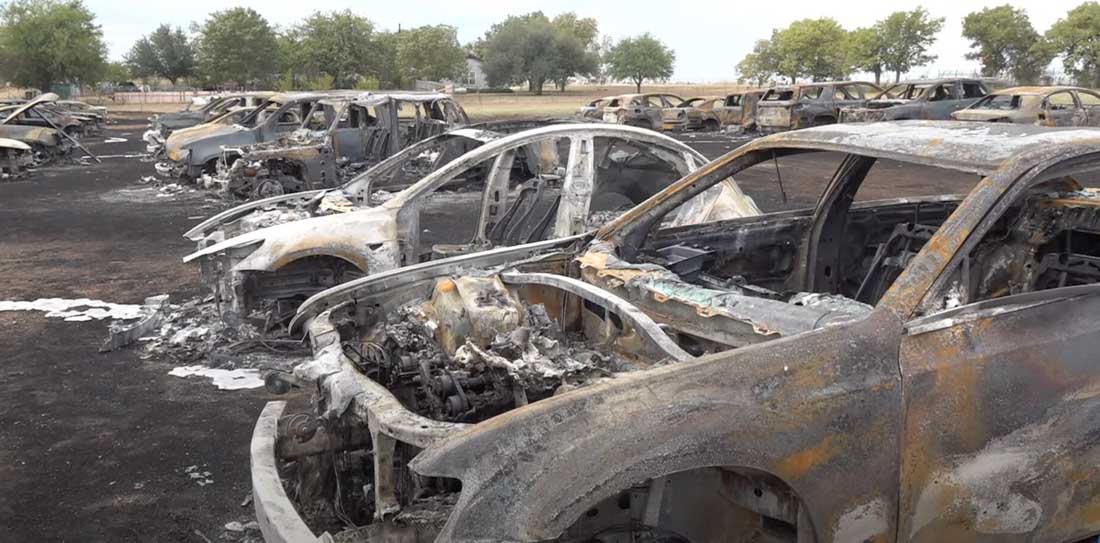
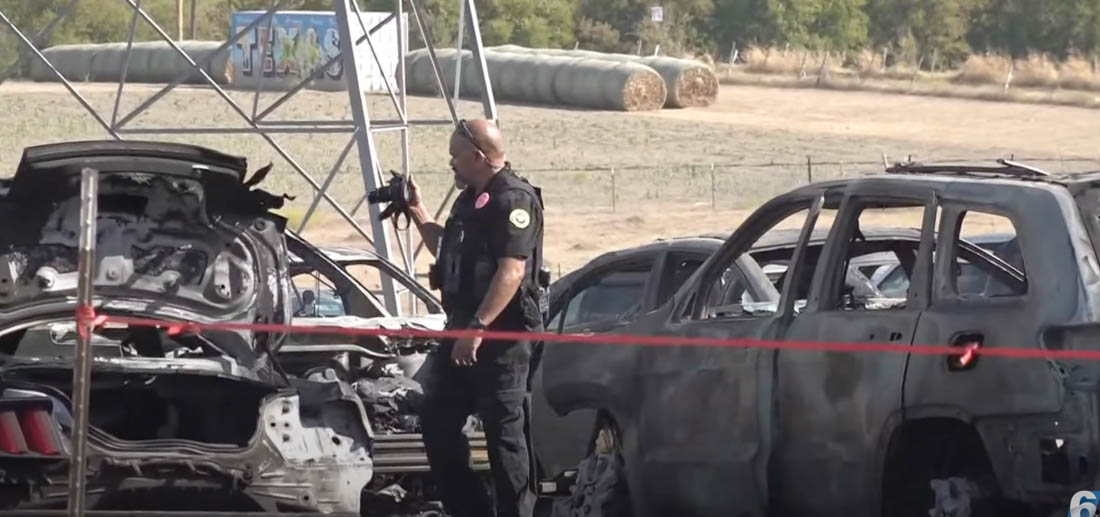
The parking lot at the Robinson Family Farm in Temple, Texas turned into an inferno Saturday afternoon during their annual pumpkin patch event. According to the owner of the farm no injuries were reported but approximately 73 vehicles were destroyed when a wind-driven fire spread rapidly through the mowed pasture used as a parking lot.
Robinson Family Farm. KCENN.
From KWTX:
The Temple Fire & Rescue Department responded to the blaze at around 1 p.m. Oct. 15. Multiple fire departments from Little River Academy, Troy, Rogers, Salado, Holland, Bartlett and Belton were called to assist.
The first units to arrive found approximately 10 cars on fire in the pasture area used for parking but due to the numbers of cars involved, the East Side Strike Team was called to bring in additional resources.
Fire crews were able to move some of the cars out of the way of the flames.
One attendee on Facebook wrote, “I have to say that is the most exciting and expensive pumpkin patch we’ve been to” after their family van “burned to a crisp.”
Cars burn at Robinson Family Farm in Texas. KCENN.
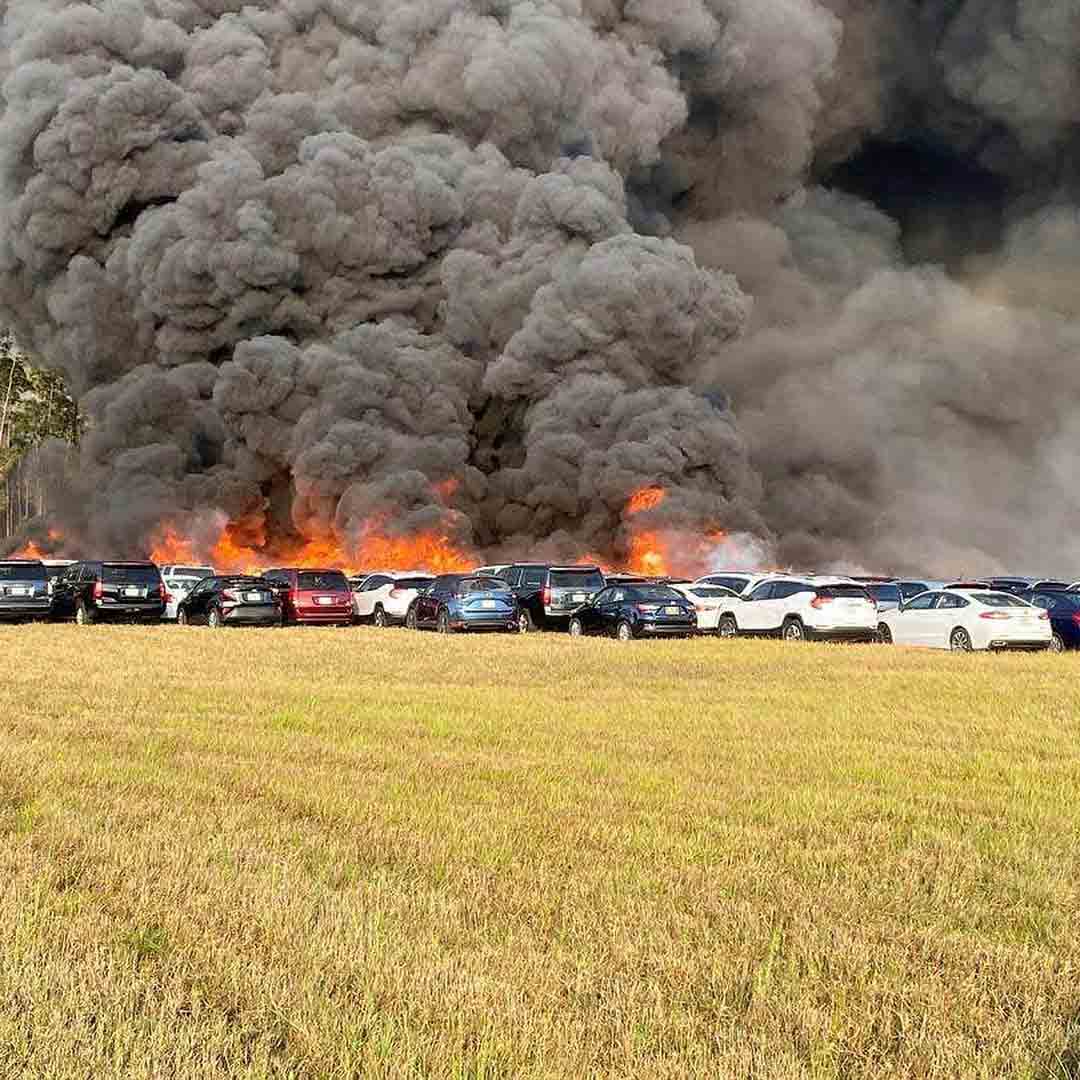
On April 3, 2020 3,516 rental cars parked in a mowed field near the Southwest Florida International Airport (RSW) near Fort Myers, Florida burned in a similar manner.
“The cars were stored in a location not ordinarily used for any specific purpose”, Victoria B. Moreland, Director of Communications and Marketing for the airport said at the time. “The large number was due to the car rental agencies serving RSW not renting inventory during the peak season due to the current COVID-19 crisis.”
More than 3,500 rental cars burn at Southwest Florida International Airport at Fort Myers, Florida April 3, 2020. Fort Myers Fire Department photo.
At one point firefighters in Florida used dozers to build fireline through the cars to stop the spread.
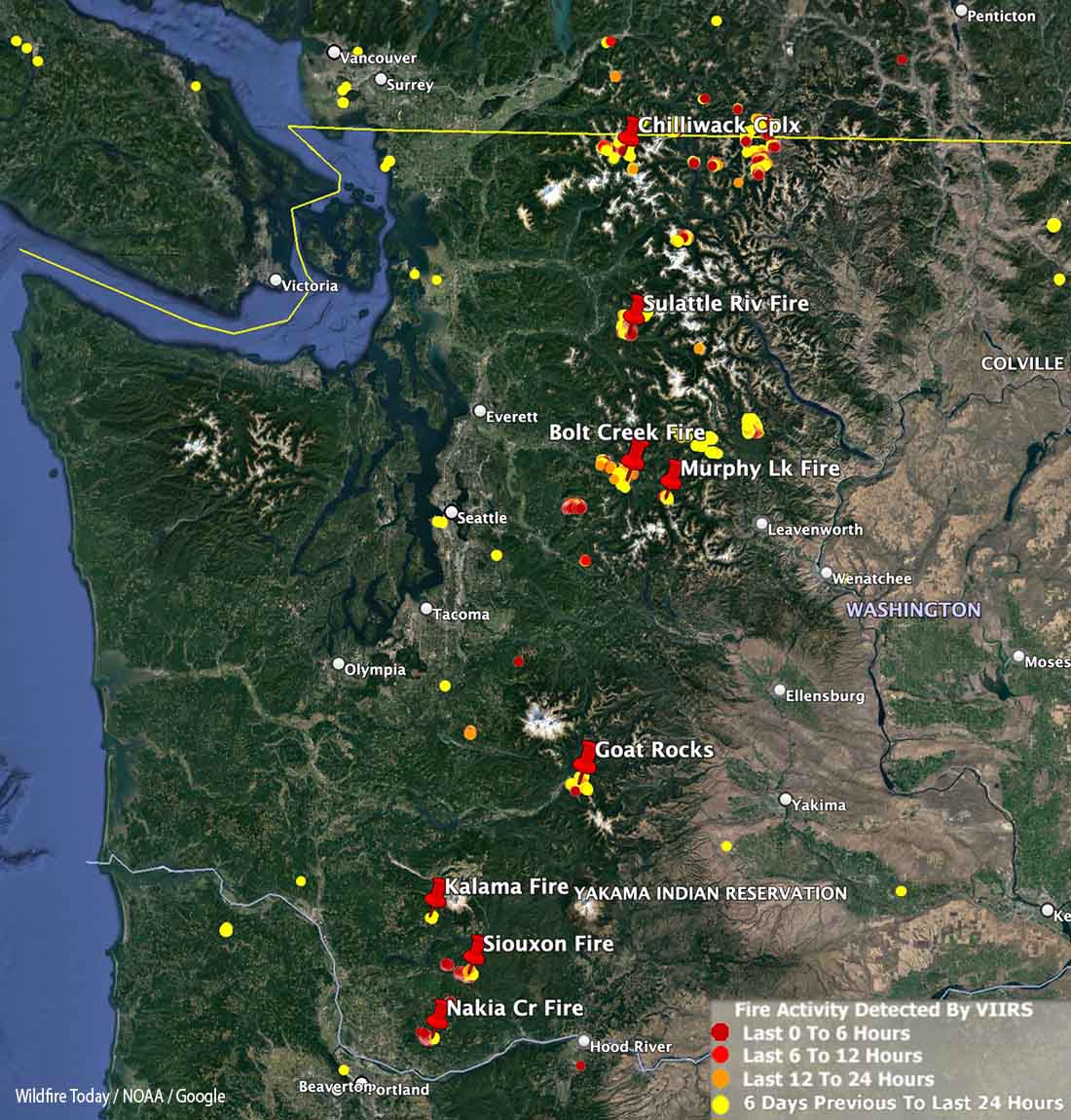
Map of wildfires in western Washington, 3 p.m. PDT Oct. 16, 2022
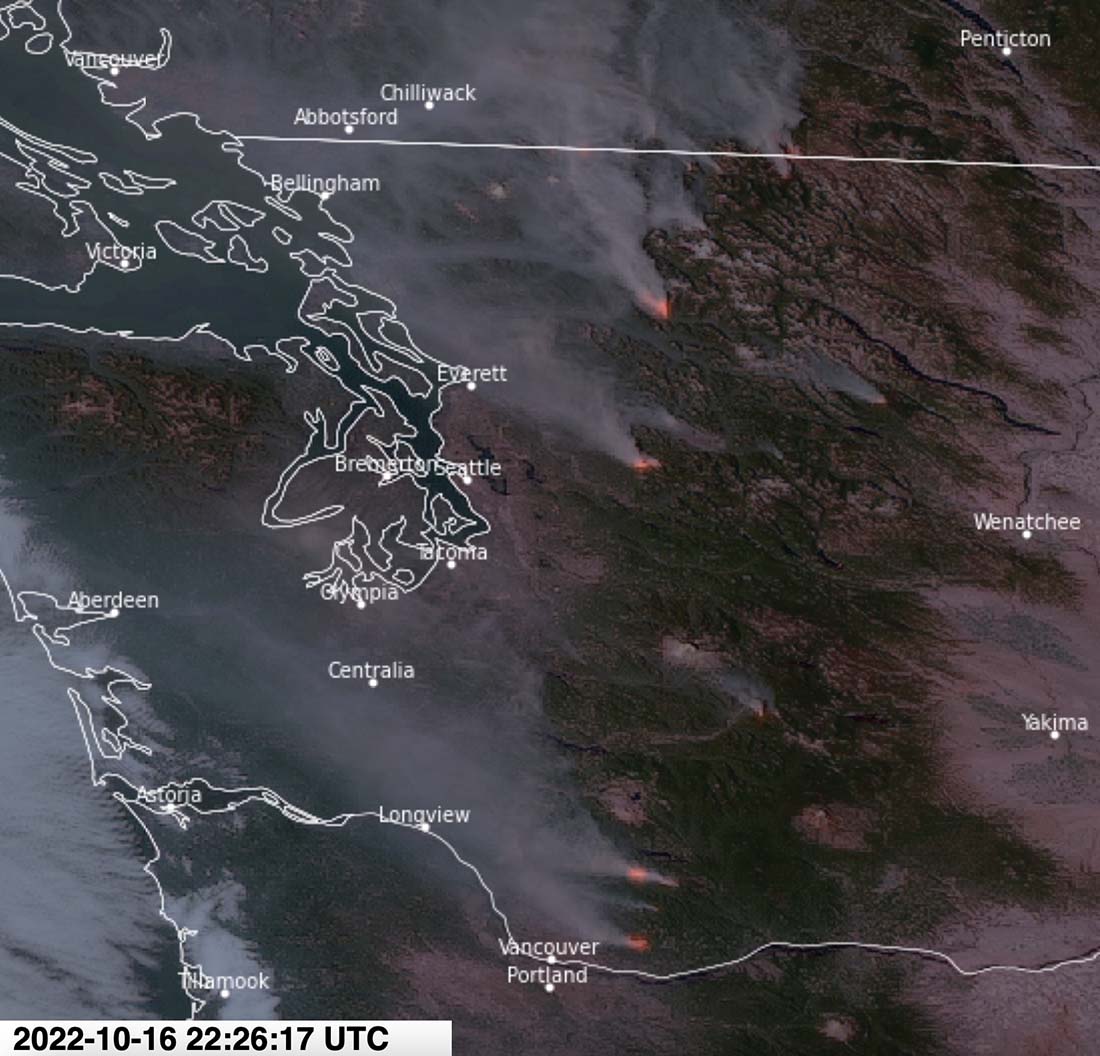
Strong winds out of the east and southeast are increasing the spread of wildfires in Western Washington. Red Flag Warnings Sunday afternoon predicted 10 to 20 mph winds out of the southeast gusting at 25 to 30 with relative humidity in the low 20s.
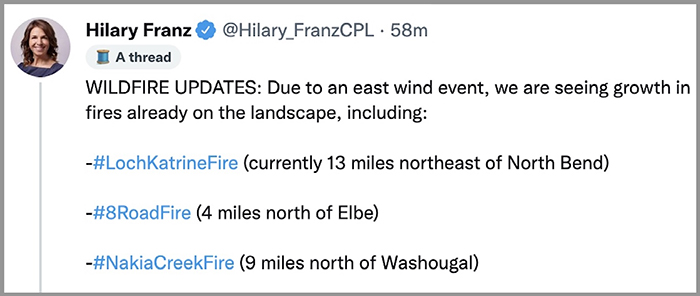
Hilary Franz, the state’s Commissioner of Public Lands gave an update at about 2:20 p.m. Sunday:
The Loch Katrine Fire on private land and the Mt. Baker-Snoqualmie National Forest 30 miles east of Seattle had burned about 2,000 acres at the last estimate Sunday afternoon. Aviation resources are being used where they can be effective. A Type 2 Incident Management Team will assume command on Monday.
Ooof we can see the plume of the new #LochKatrineFire from Mount Baker ridge.
Smoke from wildfires in western Washington, 3:26 p.m. PDT Oct. 16, 2022.
Evacuations for approximately 1,000 homes are in effect at the Nakia Creek Fire 9 miles north of Washougal, Washington 11 miles northeast of Portland, Oregon. At 2 p.m. Sunday it had burned about 400 acres.
Scott Lookout Tower — Nebraska National Forest, Sept. 15, 2022. Photo by Rick.
We received photos taken by Rick of the Scott Lookout on the Nebraska National Forest that were taken September 15 about two weeks before the tower was damaged in the Bovee Fire on October 2. Rick is a Forest Service employee from another state and is knowledgeable about wildland fire.
Scott Lookout Tower — Nebraska National Forest, Sept. 15, 2022. Photo by Rick.
“The road up to the lookout was lined with big, old (well cured) hand piles and the tower was surrounded by ponderosa pines with an excellent needle cast duff layer,” Rick wrote.
Scott Lookout Tower, Nebraska National Forest, Sept. 15, 2022. By Rick.
12:53 CDT October 15, 2022
Scott lookout tower burning during the Bovee Fire, October 2, 2022. USFS photo.
The Scott lookout tower that was damaged during the Bovee Fire in Nebraska on October 2 is going to be assessed next month by a structural engineer to determine the integrity of the structure that remains. The damage easily visible in photos includes wood steps and the cabin at the top. The steel framework still stands.
Scott lookout tower damaged during the Bovee Fire. USFS photo.
The fire burned nearly 19,000 acres of the Nebraska National Forest and private land on both sides of Highway 2 west of Halsey. When it started October 2 the relative humidity was in the 20s and the wind was gusting to 34 mph out of the south-southeast.
Scott lookout tower in the Bovee Fire. Photo by Nebraska State Patrol.
In addition to destroying most of the structures in a 4-H camp, several thousand acres of hand-planted forest burned. The forest was an experiment started in 1903 to provide timber for the railroad and early Sandhills residents. The first planting consisted of 35 acres of jack pine from Minnesota, 15 acres of yellow pine from the Black Hills, and 34 acres of mixed red cedar, blue spruce, jack, and yellow pine.
Fairview Fire southeast of Hemet, CA, Sept. 7, 2022. By Ryan Grothe.
The Washington Post has published an interesting article about wildland fire. It was written by Amanda Monthei who had several seasons experience on hotshot crews. In recent years she has been busy writing about wildfire and climate adaptation for national publications.
In this case Amanda tells us about six former and current wildland firefighters from federal, tribal and private crews.
The excerpt below from the long article is about Jordin Schramm, a former rappeller and now an assistant engine captain for the US Forest Service in Oregon. The full article is here (subscription).
…Schramm knows a lot of women who work in the field, including four others who worked with her on her helirappel crew before she left to take a position as an assistant engine captain for the 2022 fire season. But as she nears 11 years of working in fire, there is one experience that she has found very few people can relate to: wanting to have children and stay on the line as a woman.
“I want kids, but I really don’t want to get out of fire,” Schramm said, suggesting that in wildland fire, that decision can feel like one or the other. “But it’s not one of those things where I’m going to stay in fire and have kids and be like, ‘I’ll show everybody.’ I want to stay and keep my qualifications because this is what I really like to do. But I’m not so naive to think that plan won’t change.”
[…]
“There’s nothing to complain about, but at the same time, maybe your expectations of your life have to change a little. And it’s hard to talk about this kind of stuff because there are only a couple of women who I know that are trying to stay in fire and have been able to make it work [with a family], while all my other female friends are like, ‘I don’t want kids.’ So I’m, like, ‘Okay, I can’t talk to you about this.’ Nobody ever really talks about this, which is understandable, because a lot of women [in fire] don’t want kids or don’t have kids. But at the same time, there’s a very small percentage of us that would like to have kids. And not having anybody to talk to in that situation is really difficult.”
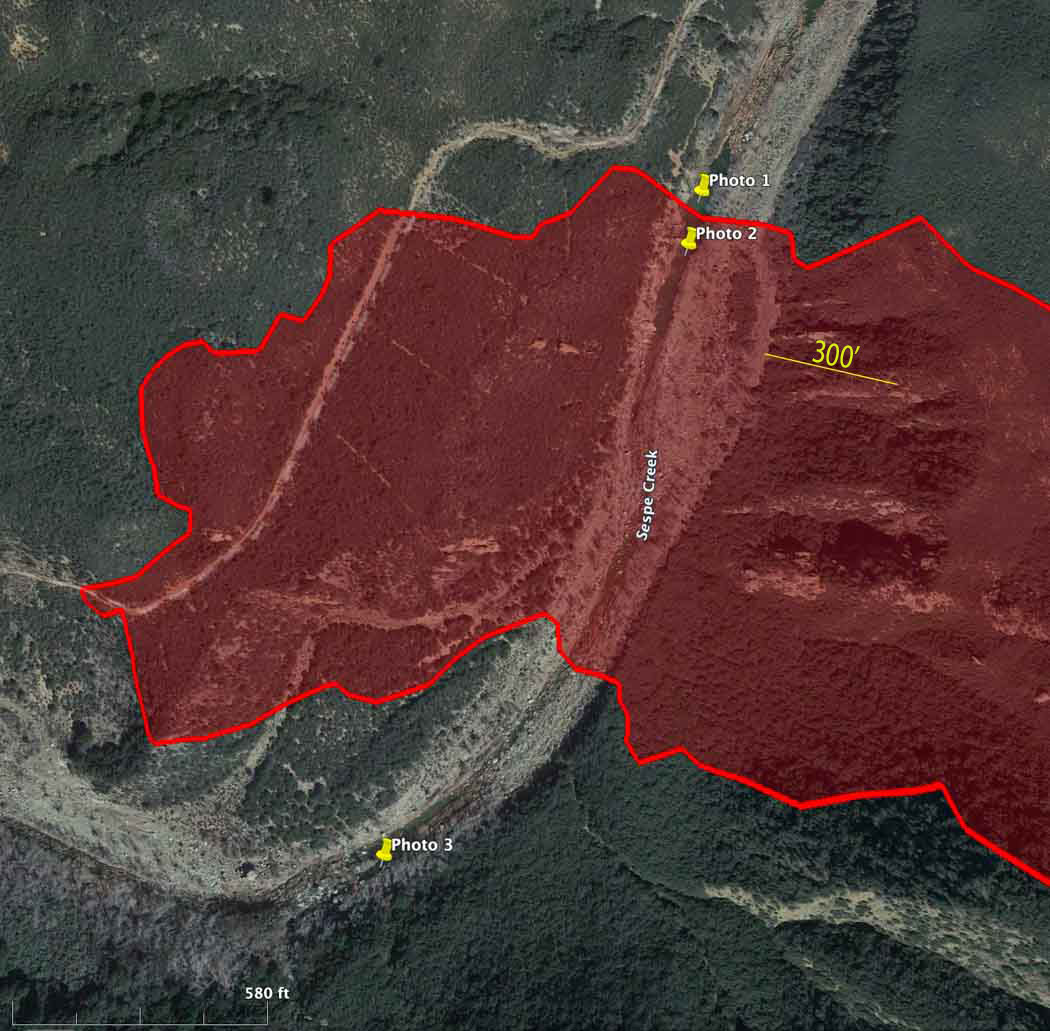
Map showing location of photos of retardant near Sespe Creek at the Howard Fire. The red area is the western side of the fire Oct. 12, 2022. The photo locations were obtained from the metadata in the iPhone photos.
A lawsuit filed Tuesday alleged that the US Forest Service has polluted waterways by firefighting air tankers inadvertently dropping fire retardant in or near waterways in violation of the Clean Water Act and a policy adopted by the Forest Service and other federal agencies in 2011. The policy requires that retardant not be dropped within 300 feet of a waterway on federal land.
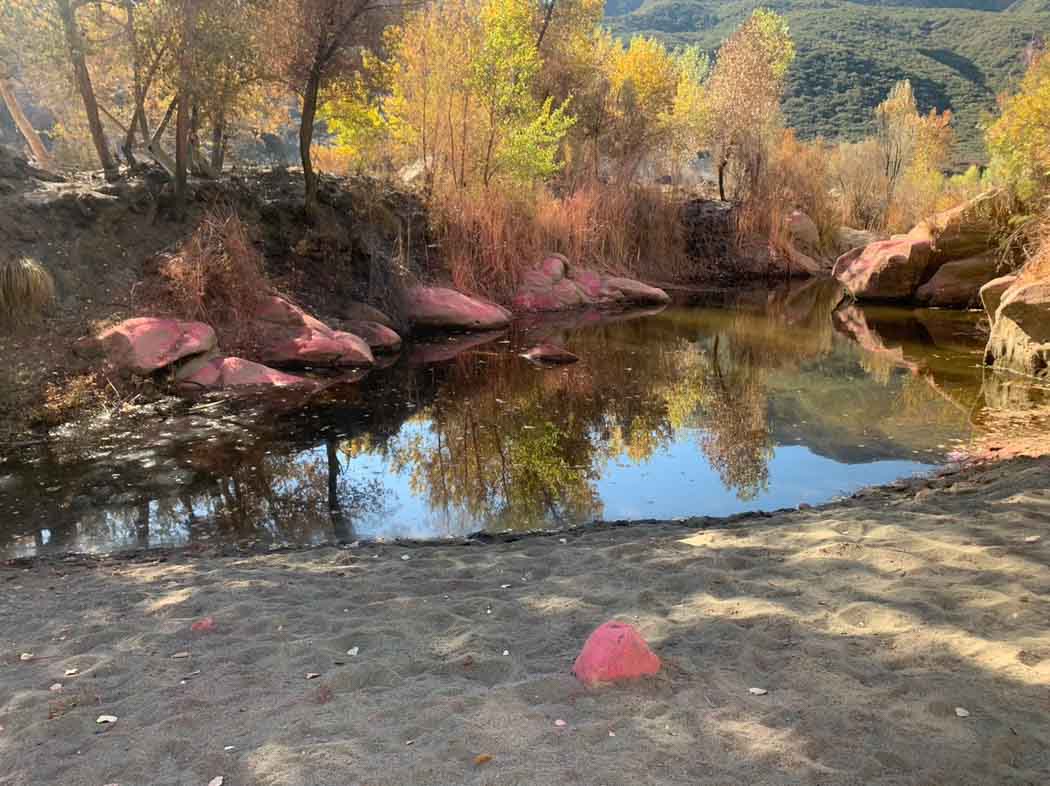
Photo 1. Retardant near Sespe Creek at the Howard Fire. Oct. 12, 2022. Peter Deneen.
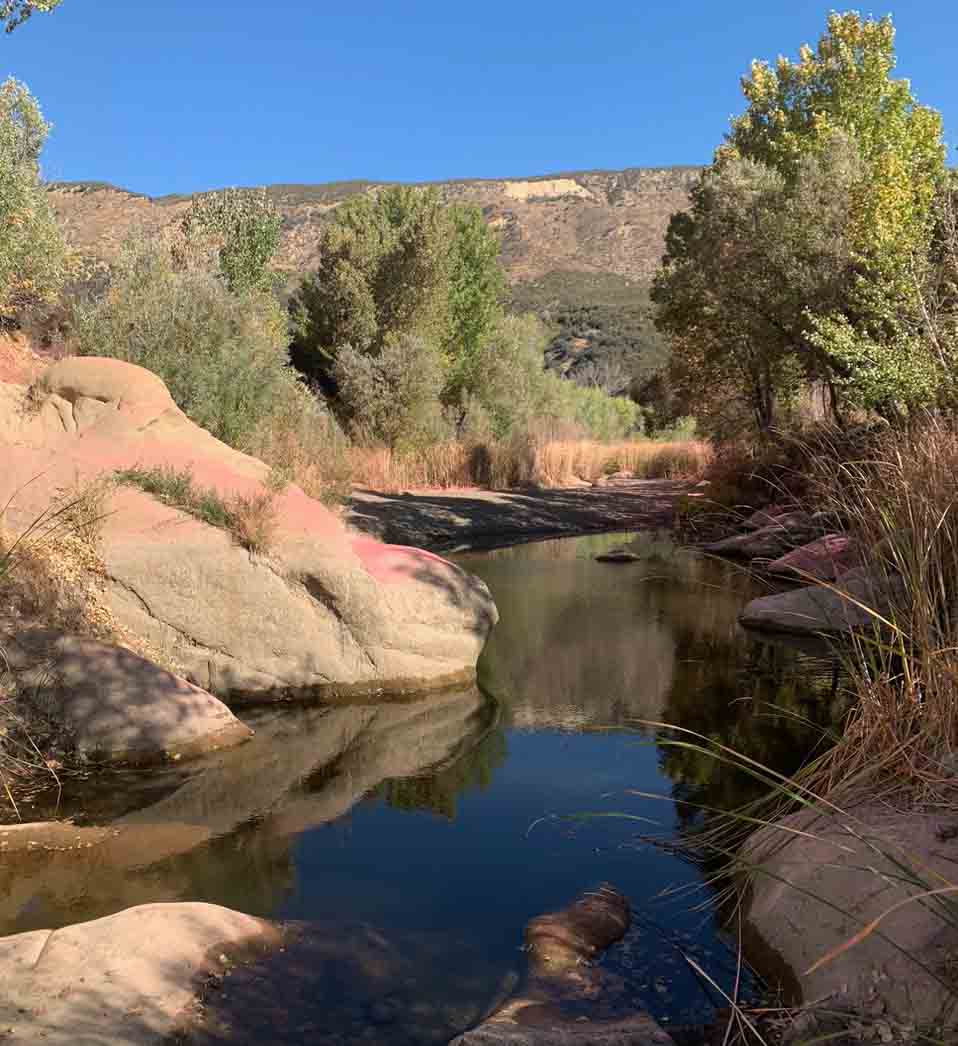
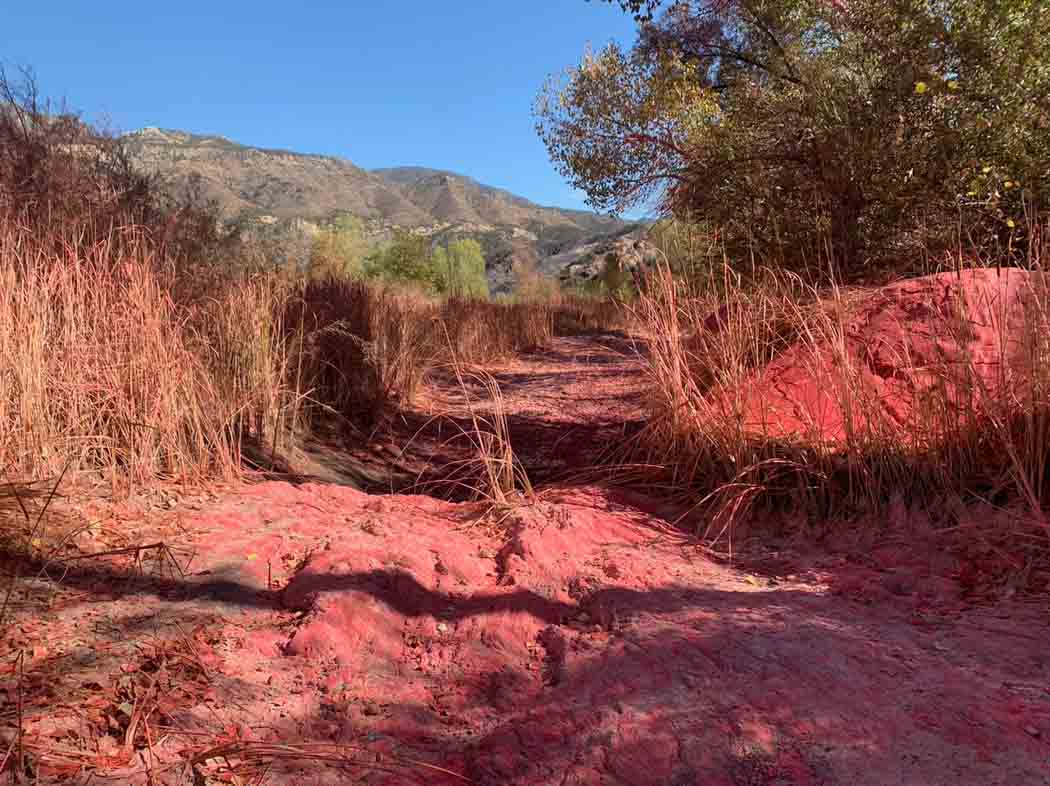
Fire Aviation has acquired photos and a video that reportedly show signs of retardant being dropped into Sespe Creek on the Los Padres National Forest 8 miles northeast of Ojai, California October 8, 2022. The photos were shot by Pete Deneen on October 12, 2022 at the 85-acre Howard Fire. The creek is designated a “wild and scenic river” and is in a wilderness area.
Photo 2. Retardant near Sespe Creek at the Howard Fire. Oct. 12, 2022. Peter Deneen.
The photos show retardant on rocks and other objects very close to water in Sespe Creek.
Photo 3. Retardant in a dry area of Sespe Creek at the Howard Fire. Oct. 12, 2022. Peter Deneen.
Some organisms, including aquatic threatened and endangered species or their habitats, can be adversely affected by retardants. In addition, retardant in water is a pollutant.
According to US Forest Service data, between 2012 and 2019, the Forest Service discharged retardant on at least 376 occasions totaling 761,282 gallons from aircraft directly into national forest waterways.
In the video below Mr. Deneen explains that there were two locations where retardant was dropped very close to the creek. In one case the aircraft may have turned as it was dropping to follow the creek for several hundred yards, or a second drop accounted for the retardant in the waterway.
The lawsuit was filed Oct. 11 by the Forest Service Employees for Environmental Ethics, FSEEE. In the group’s complaint they are seeking:
A declaration that the Forest Service’s placement of retardant in waterways is a violation of the Clean Water Act.
An injunction “to compel the Forest Service to comply with applicable environmental statutes, prevent irreparable harm, and satisfy the public interest.”
Reimbursement for FSEEE’s costs, expenses, expert witness fees, and attorney fees.
“Such further relief as may be just, proper, and equitable.”
More about FSEEE’s history of protesting retardant, and the federal government’s policy of retardant avoidance areas established in 2011.
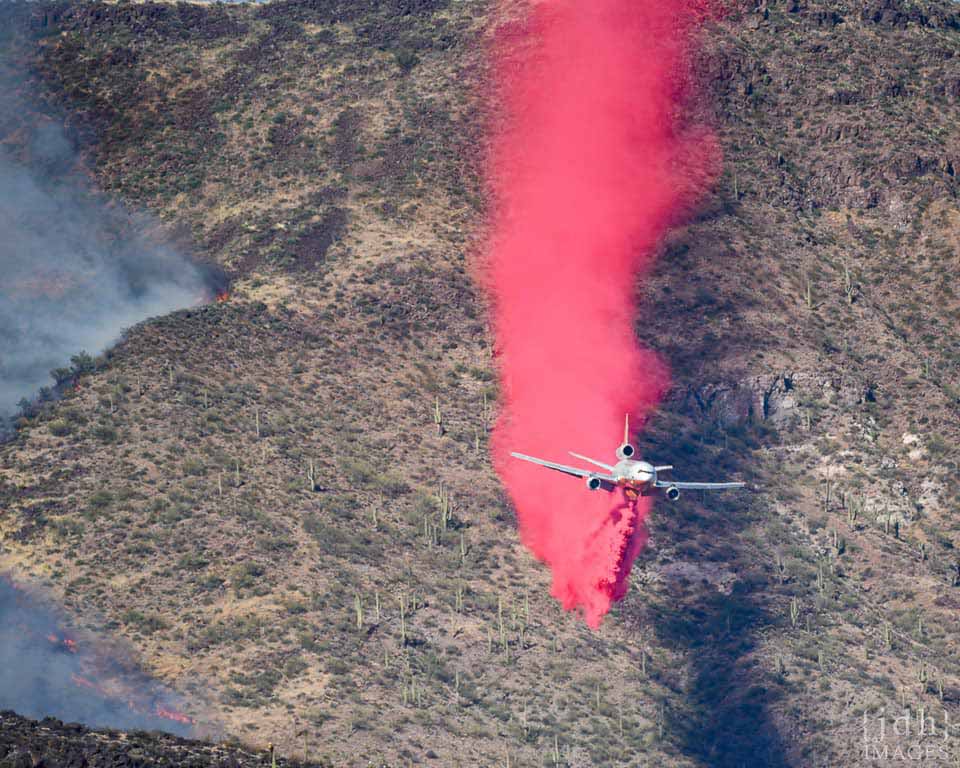
Air Tanker 914, a DC-10, drops retardant on the Central Fire, June 20, 2020. Photo by JDH Images.
This article was first published at Wildfire Today.
An environmental group filed a lawsuit in a Montana federal court Tuesday alleging that the US Forest Service has polluted waterways by inadvertently dropping fire retardant in or near waterways. The retardant was dropped by aircraft under contract with the Forest Service while assisting wildland firefighters on the ground.
The suit says government data released earlier this year showed more than 760,000 gallons of fire retardant was dropped into waterways between 2012 and 2019. The lawsuit alleges the continued use of retardant from aircraft violates the Clean Water Act and requests a judge to declare the pollution illegal.
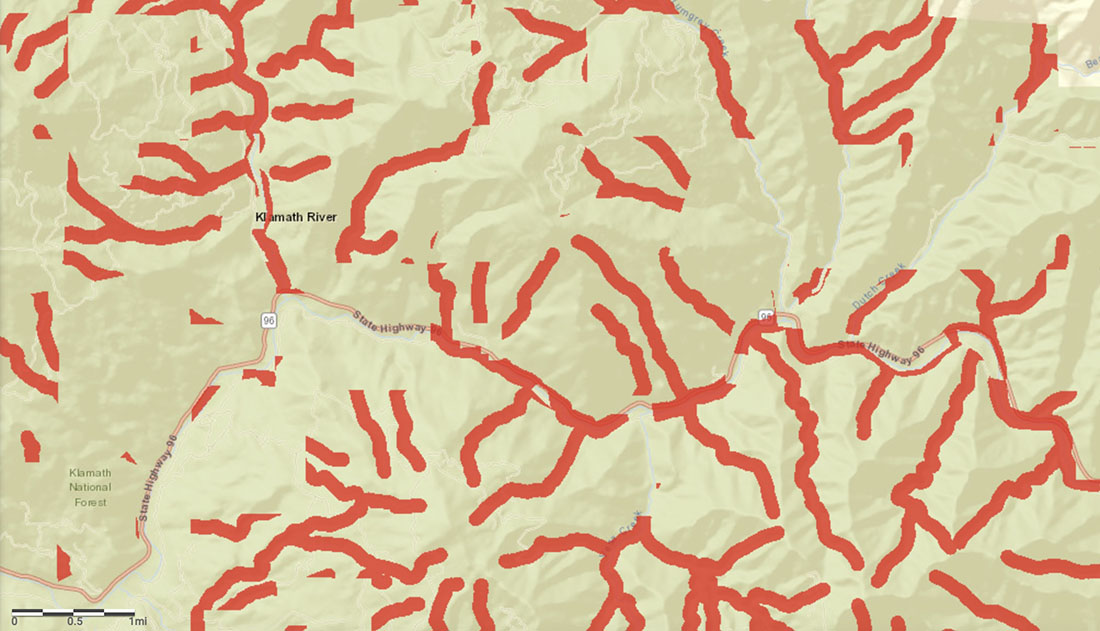
Example of retardant avoidance areas (red) in Northern California along Hwy. 96 near Klamath River.
The Forest Service has established retardant avoidance areas along waterways where the liquid is not supposed to be applied. This puts buffer zones around waterways and habitat for some threatened, endangered, and sensitive species in order to avoid applying retardant in those areas. When they were first established in 2011 it resulted in approximately 30 percent of USFS lands being off limits for retardant while fighting fire. There is an exception if human life or public safety is threatened. The policy was the result of an Environmental Impact Statement (EIS) that studied the use of retardant and how it affects water resources and certain plant and wildlife species. The EIS was written in response to a July, 2010 decision by U. S. District Court Judge Donald Molloy in a lawsuit filed in 2008 by the Forest Service Employees for Environmental Ethics.
The same organization, FSEEE, filed the new case yesterday. An attorney in Missoula, MT who specializes in environmental law, Tim Bechtold, will be representing FSEEE. Presiding over the case will be District Court Judge Dana Christensen. He joined the court in 2011 after a nomination from President Barack Obama. Before, he was a partner in the firm of Christensen, Moore, Cockrell, Cummings, and Axelberg, in Kalispell, Montana. One of the 15 practice areas the firm deals with today is environment and natural resources.
In 2012 FSEEE issued a statement criticizing the use of air tankers on fires, claiming it is “immoral”. The group argued that aerial firefighting is too dangerous and ineffective and that “retardant doesn’t save homes; proper construction and landscaping save homes.”
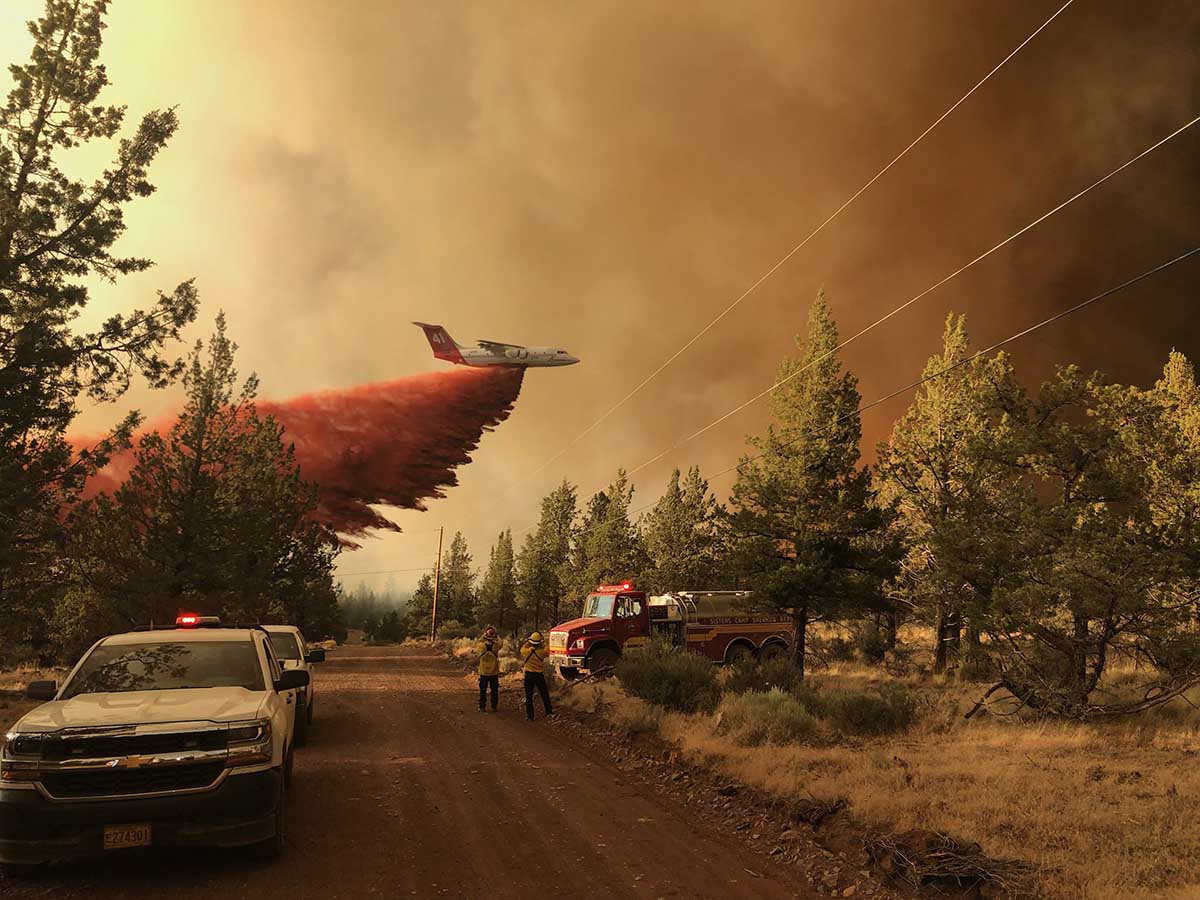
Air Tanker 41, a BAe-146, drops retardant. BLM photo.
An environmental group filed a lawsuit in a Montana federal court Tuesday alleging that the US Forest Service has polluted waterways by inadvertently dropping fire retardant in or near waterways. The retardant was dropped by aircraft under contract with the Forest Service while assisting wildland firefighters on the ground.
The suit says government data released earlier this year showed more than 760,000 gallons of fire retardant was dropped into waterways between 2012 and 2019. The lawsuit alleges the continued use of retardant from aircraft violates the Clean Water Act and requests a judge to declare the pollution illegal.
Example of retardant avoidance areas (red) in Northern California along Hwy. 96 near Klamath River.
The Forest Service has established retardant avoidance areas along waterways where the liquid is not supposed to be applied. This puts buffer zones around waterways and habitat for some threatened, endangered, and sensitive species in order to avoid applying retardant in those areas. When they were first established in 2011 it resulted in approximately 30 percent of USFS lands being off limits for retardant while fighting fire. There is an exception if human life or public safety is threatened. The policy was the result of an Environmental Impact Statement (EIS) that studied the use of retardant and how it affects water resources and certain plant and wildlife species. The EIS was written in response to a July, 2010 decision by U. S. District Court Judge Donald Molloy in a lawsuit filed in 2008 by the Forest Service Employees for Environmental Ethics.
The same organization, FSEEE, filed the new case yesterday. An attorney in Missoula, MT who specializes in environmental law, Tim Bechtold, will be representing FSEEE. Presiding over the case will be District Court Judge Dana Christensen. He joined the court in 2011 after a nomination from President Barack Obama. Before, he was a partner in the firm of Christensen, Moore, Cockrell, Cummings, and Axelberg, in Kalispell, Montana. One of the 15 practice areas the firm deals with today is environment and natural resources.
In 2012 FSEEE issued a statement criticizing the use of air tankers on fires, claiming it is “immoral”. The group argued that aerial firefighting is too dangerous and ineffective and that “retardant doesn’t save homes; proper construction and landscaping save homes.”
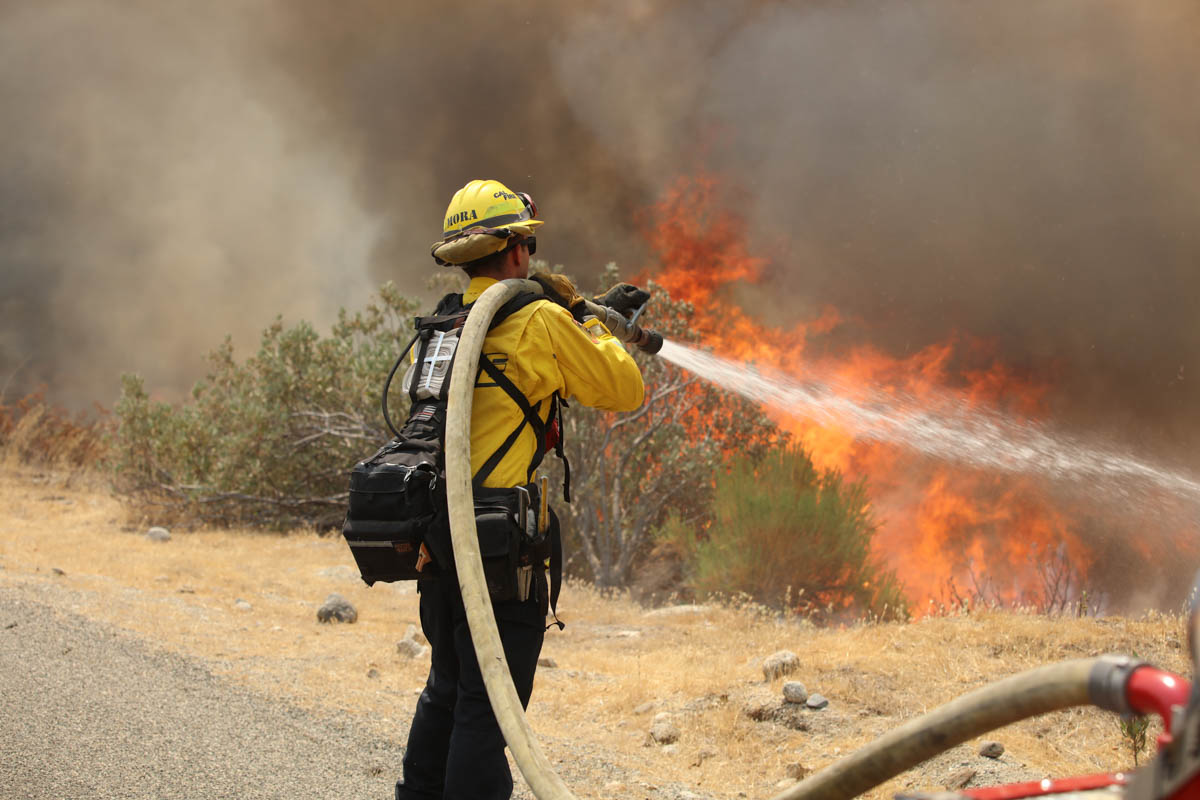
Firefighters on the North Complex, Plumas NF, Sept. 9, 2020. USFS photo by Kari Greer.
Today President Biden made remarks at the Summit on Fire Prevention and Control addressing the nation’s fire service leaders, commemorating Fire Prevention Week, honoring the bravery and heroism of our nation’s Firefighters, and discussing efforts to protect our communities and ensure Firefighter health and safety amidst the ongoing climate crisis. The summit happened during Fire Prevention Week, which began on Sunday. It is the 100th year of the week’s observance.
You can read the full text of his speech and see the video. Below are excerpts.
…And when the impacts of climate change are becoming increasingly evident, we’re calling on you more and more and more.
Extreme heat and prolonged drought have turned wildfire season into wildfire years. And local firefighters are being called in more to respond to the fires in the wildland urban interface where we’re moving out into the forest areas to develop and it becomes local and federal.
So I want you to know that my administration is doing everything we can to make sure you have the resources you need to do your job as safely and effectively and efficiently as possible.
You know, we invested $350 billion in the American Rescue Plan to help states and local — states and cities keep first responders on the job, including firefighters on the job when — during COVID-19.
And between the American Rescue Plan and my 2023 budget request, we’ve increased federal firefighting grants by $320 million, which includes money to fund 1,200 more local firefighters in the field, hundreds more emergency response vehicles, and thousands — thousands of sets of turnout gear. A pioneer in research on issues from — including like cancer prevention.
You know, it’s close to my heart. Cancer is a leading killer of firefighters. Toxic substances you’ve been exposed to as part of your job are almost certainly — certainly connected to those cancer diagnoses. And we’re doing — we’re going to do something about it.
We created a special claims unit at the Department of Labor to ensure that they’re processing federal firefighters’ cancer claims quickly.
And I’m urging Congress to send to my desk the Federal Firefighters Fairness Act — let me say it again: the Federal Firefighters Fairness Act — which are going to help federal firefighters and their families assess critical worker compensation resources, including making sure that several forms of cancer are presumed to be caused — presumed to be caused by the firefighter’s job. [Note from Bill: the legislation passed overwhelmingly in the House, but it is bogged down in the Senate.]
And I’m also — I’m also proud that last November, I signed into law Protecting America’s First Responders Act, which extends the benefits under the Public Safety Officers’ Death Benefits Program to the families of firefighters killed in training and made it easier to qualify for permanent disability.
The final point — I’m sorry to go on so long, but I feel passionately about this. The final point I’d like to make today is that we’re doing everything we can to ease the burden on our firefighters by preventing fires. This is the 100th — hard to believe — it’s the 100th anniversary of Fire Prevention Week. And the landmark legislation I’ve signed into law includes historic investments to reduce the risk of fire.
The Bipar- — the Bipartisan Infrastructure Law includes significant forest management, increases community resilience and — to wildfires, and harnesses new technologies to keep communities safe. It’s also repairing vital infrastructure and — firefighters and other first responders rely on to quickly get to the — to those — those in need.
You know, the Inflation Reduction Act enables us to take unprecedented steps to confront climate crisis, which is going to protect forest health, reduce fire risk, and supercharge our clean energy future.
We’re also maximizing protections for people when fires do break out, through a national initiative to help states, local, and Tribal and territorial governments adapt and adopt the most up-to-date building codes that reflect the threats from the climate — from climate change.
Look, on behalf of my own family and every American, I just want to close by saying again: Thank you, thank you, thank you. Fires will always be a fact of human life. And when the worst happens, when those alarms go off, when everything and everybody you love is in danger, there’s no better sight in the world than that firefighter who’s ready to go to work.
So, thank you for being who you are. Thank you for all the heroes you represent. You are — you are on the alert and on call in communities all across this country right now as I speak.
So God bless you all. And may God protect our firefighters. Thank you for letting me have a chance to talk to you. I wish our — I literally do wish I were there with you. Thank you. And thank you, Lori.