
Pollution from fossil burel-burning sources is decreasing but the air is getting dirtier during the wildland fire season.
Continue reading
Pollution from fossil burel-burning sources is decreasing but the air is getting dirtier during the wildland fire season.
Continue reading
Following the Witch Creek, Guejito, and Rice Canyon fires that destroyed more than 1,300 homes and killed two people in Southern California in 2007, state officials began attempting to force the utility companies to produce maps designating areas where their power lines present the highest risk for starting wildfires. The three large fires in 2007 were sparked by issues with lines operated by San Diego Gas and Electric.
CAL FIRE has not released the causes of the huge fires that started in Northern California October 8 during very strong winds, but at about the same time firefighters were first responding to numerous fires, they also received multiple calls about fallen power lines and electrical transformers exploding. In the next week, the stock price of the company that provides electrical service for large areas of Northern California, Pacific Gas and Electric, dropped 22 percent.
According to the Mercury News, PG&E has been fighting the efforts to map powerline risk areas since 2007. Below is an excerpt from their article:
A review of the mapping project by the Bay Area News Group shows that utilities have repeatedly asked to slow down the effort and argued as recently as July that, as PG&E put it, certain proposed regulations would “add unnecessary costs to construction and maintenance projects in rural areas.”
On Oct. 6, two days before the start of the deadliest outbreak of wildfires in California history, two administrative law judges assigned to oversee the project granted yet another delay at the request of PG&E and other utilities.
[…]
[PG&E] claimed there was no evidence that wildfires had been caused by poles not being able to withstand high winds.
The Northern California fires killed at least 43 people and destroyed about 8,900 structures.
Dr. Janice Coen, a Project Scientist at the National Center for Atmospheric Research in Boulder, Colorado ran fine-scale simulations (horizontal grid spacing of 370 meters) analyzing the wind during the time the fires started. Her research showed significantly higher surface wind speeds than previously thought — 75 to 90 mph just upwind of the major fires.
California law dictates that power lines are supposed to be able to withstand 56 mph.

He deployed a fire shelter on the Pleasant Fire in California.
Continue reading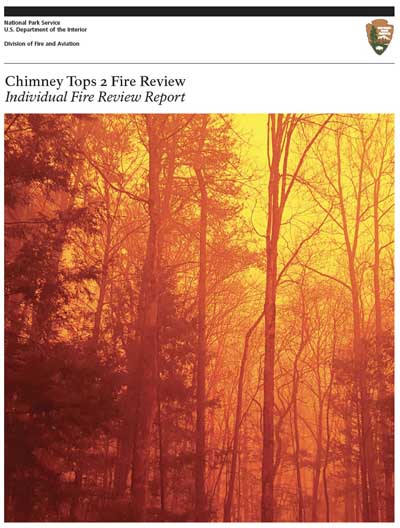 On August 31 the National Park Service released the long anticipated report (12 Mb file) about the wildfire that burned from Great Smoky Mountains National Park into the city of Gatlinburg, Tennessee. Five days after it started on November 23, 2016, the Chimney Tops 2 Fire spread into the eastern Tennessee city killing 14 people, forcing 14,000 to evacuate, destroying or damaging 2,400 structures, and blackening 17,000 acres.
The strategy used to manage the fire was controversial because very little direct action was taken to suppress the fire during those first five days until a predicted wind event caused it to spread very rapidly out of the park and into the city.
The report was presented to the public during a live Facebook feed which you can see below.
One of the first speakers was Secretary of the Interior Ryan Zinke who reminded the audience that he served in combat and then mentioned some recommendations:
Joe Stutler, qualified as a Type 1 Incident Commander and Area Commander, positions at the pinnacle of the incident management structure, read a lengthy statement that included what he and his team of investigators deemed to be the pertinent facts of the fire and the investigation.
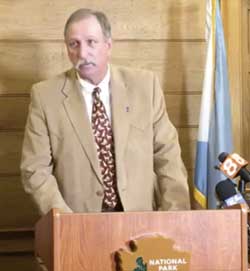
Describing the actions taken or not taken on the fire, he said, “the review team found no evidence of negligence of anyone at the park. They did the very best they could when it came to their duty. They did the very best they could based on what was loaded in their hard drive”, he said as he pointed to his head.
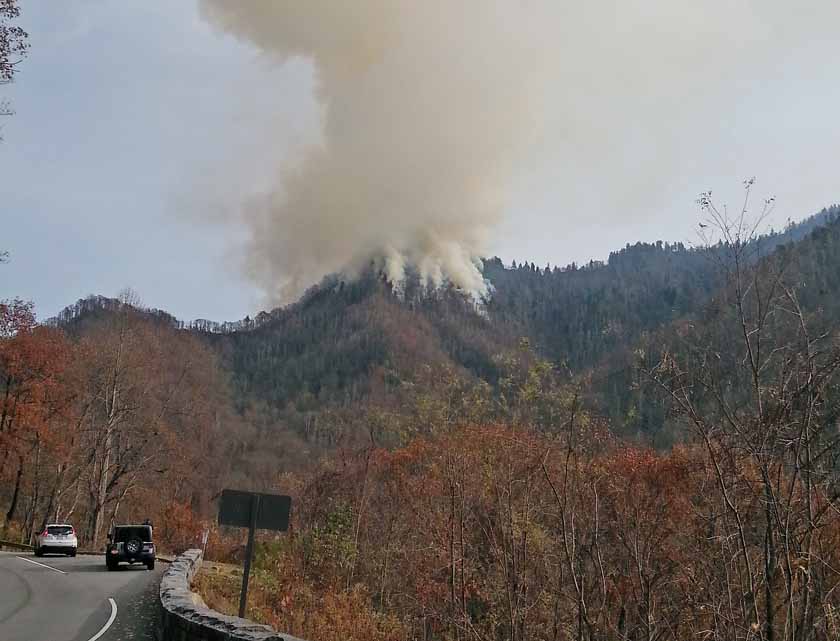
Combined with a wildland/urban interface, it was the “perfect storm”, he explained. The review team concluded that the fire management officials did not see the potential for the low-frequency, high-risk event.
The report made recommendations, including:
This video by KEYT was streamed live on YouTube, showing and explaining the activities at a facility set up at the Whittier Fire for mixing retardant for helicopters that could draft to refill their tanks. The 11-minute video did not show any ships with buckets — just Type 1 helicopters with internal or external tanks.
Here is an interesting video report about the use of helicopters on the 27,238-acre “>Burro Fire northeast of Tucson, Arizona.
Thanks and a tip of the hat go out to Mark.
Typos or errors, report them HERE.
The new Secretary of Agriculture, Sonny Perdue, has selected a new Acting Under Secretary for National Resources and Environment, Dan Jiron. The U.S. Forest Service will be the only agency to report to Mr. Jiron.
He has a wealth of experience with the the U.S. Forest Service and other government organizations, including serving as the Information Officer for the South Canyon Fire Investigation Team in 1994.
In a message he recently distributed, Secretary Perdue described Mr. Jiron’s employment history:
“Dan Jiron will fill the role of Acting Deputy Under Secretary for Natural Resources and Environment. With more than 29 years of public service and natural resources management, Jiron was appointed Associate Chief of the Forest Service in July 2016.
“Prior to this appointment, Jiron served in many leadership positions, including Regional Forester of the Rocky Mountain Region; Deputy Regional Forester in the Pacific Southwest Region; Forest Supervisor of the Santa Fe National Forest; District Ranger on the Salt Lake Ranger District of the Uinta-Wasatch-Cache National Forest; District Ranger on the South Park Ranger District of the Pike and San Isabel National Forest, Comanche, and Cimarron National Grasslands; Director of Communications and Legislative Affairs of the Intermountain Region, National Press Officer in Washington, D.C.; and aide to United States Senator Ben Nighthorse Campbell of Colorado.
“Jiron earned a bachelor’s degree from Colorado State University and a Master’s degree from Regis University of Denver.”
Thanks and a tip of the hat go out to Dick.
Typos or errors, report them HERE.
(Published at 4:55 p.m MDT June 20, 2017)
Reports from numerous media outlets that an air tanker crashed in Portugal on Tuesday appear to be false.
A spokesman for Portugal’s Civil Protection Agency says none of the aircraft fighting the wildfires in the country are missing, in spite of the fact that Portugal’s Air Accident Office said it had received a call from the Civil Protection Agency notifying it of a plane crash.
The origin of the erroneous information may have come from a reporter for Antena 1 radio who said he heard an explosion about 10 miles away from the Pedrogao Grande area which has been hit by devastating wildfires in recent days. He said a local woman told him she saw a plane crash in a fireball on Tuesday. There have also been reports of propane tanks exploding in the fires.
It is possible that the lady saw an aircraft and the unrelated explosion, which appeared to be associated with the plane.
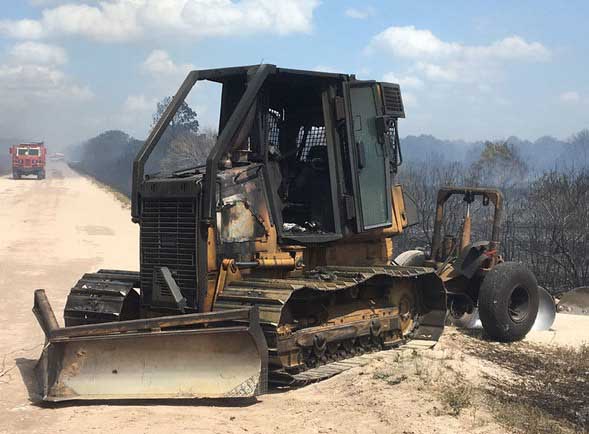
The Florida Forest Service has released a report on the burnover of a dozer that occurred April 16, 2017 in Okeechobee County. As you may remember from our April 17 article, the operator, who was not injured, became entrapped while constructing fire line with the tractor plow and was overrun by the fast-moving fire.
You can read the entire report HERE, but below are some excerpts:
****
Contributing Factors:
Lessons to Share:
Thanks and a tip of the hat go out to Rob.
Typos or errors, report them HERE.

Above: Engine 337 of the Tonto National Forest monitors the Juniper Fire, which started by a lighting strike on May 20, 2016 approximately 10 miles south of Young, Arizona. Photo courtesy of USDA Forest Service, Tonto National Forest.
Wildfires burned nearly 600,000 acres last year in a three-state region of the Southwest U.S., more than double the number of acres burned in each of the previous two years, according to a new report published this week detailing the 2016 fire season.
The report is the fourth in a series of annual overviews made available from the Southwest Fire Science Consortium and the Ecological Restoration Institute intended to serve as a summary for past years and allow for a comparison with previous fires.
Specifically, the report describes effects from the 12 largest fires — each larger than 8,000 acres — in Arizona, New Mexico and western Texas.
Twelve fires are examined in detail. Four occurred in New Mexico: the North, Dog Head, McKenna and Clavel fires; seven in Arizona: Cedar, Jack, Juniper, Brown, Fuller, Rim and Mule Ridge; and one in Texas: the Coyote Fire.
These 12 largest fires represent nearly half of the acres burned by wildfire in 2016.