Tanker 60, a DC-7B, retires from firefighting. Photo by Tim Crippin October 14, 2020.
Last week Air Tanker 60, a DC-7B (N838D), completed its last season as an aerial firefighting machine. On October 14 it departed from Medford, Oregon when the contract with the state of Oregon ended. Tim Crippen, who took these photos as it left, said it gave a wing wave to the tanker base as it passed by en route to Madras, Oregon.
Tanker 60, a DC-7B, retires from firefighting. Photo by Tim Crippin October 14, 2020.
The aircraft, serial number 45347, was manufactured in 1958. It is powered by four 18-cylinder Wright TC18EA radial engines, each weighing 3,700 pounds with a displacement of 3,350 cubic inches. A lot of people will miss the sound of those huge engines over a fire.
A Wright Cyclone GR 3350 radial engine, similar to the ones on Tanker 60. Tanker 60, a DC-7B, retires from firefighting. Photo by Tim Crippin October 14, 2020.
Archie Creek Fire map, 2:35 p.m. PDT Sept. 22, 2020.
A heavy equipment operator passed away on the Archie Creek Fire in Western Oregon. The Incident Management Team announced September 23 the death of Walter (Wally) Samuel Elsbury, Jr., who was found unresponsive in his vehicle at a staging area September 18, 2020 before he began his shift.
The Douglas County Sheriff’s Office responded and notified Mr. Elsbury’s family. No foul play is suspected.
Mr. Elsbury, of Elsbury Logging Company in Burns/Hines, Oregon, had been working on the fire for about a week as skidgeon operator. He was helping to protect structures along Little River Road south of Glide on the west flank of the fire.
“The Bureau of Land Management, Umpqua National Forest, and Douglas Forest Protective Association are deeply saddened over Mr. Elsbury’s death,” said Incident Commander Mike Dueitt. “We want the Elsbury family to know our Incident Management Team, the firefighting community as a whole, and the residents along Little River Road are forever grateful for the work Wally did to protect homes from the Archie Creek Fire. Our condolences to you for the loss of your loved one.”
The fire has burned 131,000 acres since it started on September 8.
Michael Bakkela. Photo: Jackson County Sheriff office.
A grand jury has indicted a 41-year old man for setting a fire in Phoenix, Oregon on September 8, the day the Almeda Drive Fire started near Ashland. Michael Jarrod Bakkela was arraigned on 2 counts of Arson in the First Degree, 15 counts of Criminal Mischief in the First Degree, 14 counts of Recklessly Endangering Another Person, and one count for Unlawful Possession of Methamphetamine.
Mr. Bakkela, who is being held on bail of $5 million, is accused of starting a fire that damaged 15 properties between Phoenix and Medford that contributed to the Almeda Drive Fire.
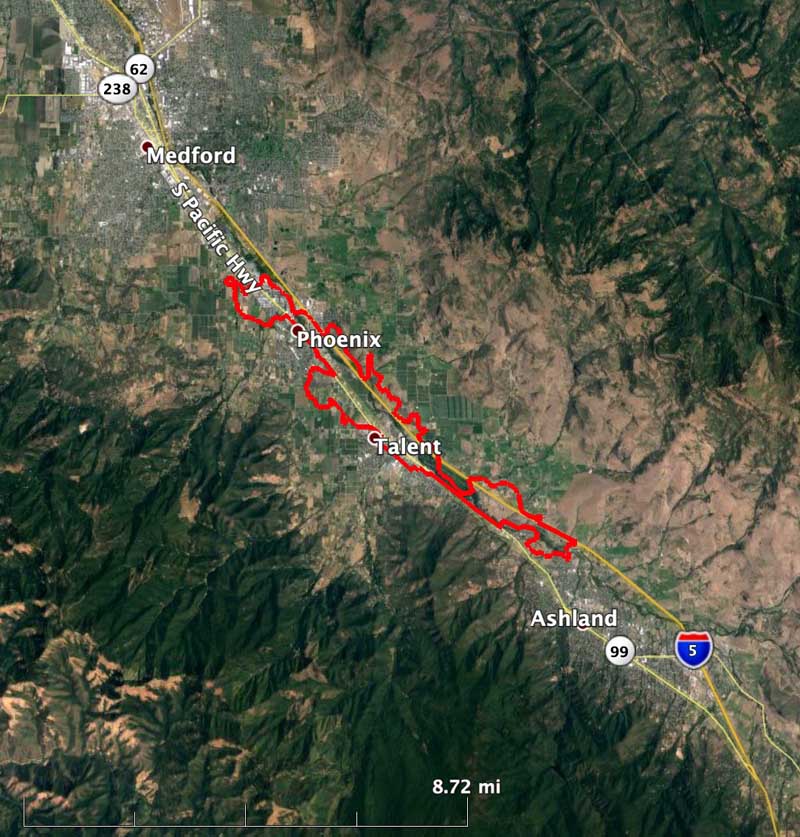
The Jackson County Sheriff’s Office announced September 15 that at least 2,357 structures were destroyed in the Almeda Drive Fire, which started north of Ashland and rapidly spread northwest through Talent, then Phoenix, and was finally stopped south of Medford.
Map of the Almeda Drive Fire in Southern Oregon, September 10, 2020. Google/Wildfire Today/NIFC
The wording of the indictment implies that the fire allegedly started by Mr. Bakkela merged with the Almeda Drive Fire.
From Oregon Live:
According to the county Sheriff’s Office, residents in the 1100 block of Quail Lane called 911 at 5:09 p.m. Sept. 8 to report that a man, later identified as Bakkela, was lighting a fire near the railroad tracks behind their home. A deputy took Bakkela into custody a short time later.
Detectives suspect Bakkela drove into a gated area, parked a vehicle, started a fire and then fled north before he was stopped, according to the Sheriff’s Office.
Darron Williams welcomes Canadian firefighters from the Merritt Fire Zone, B.C. L to R: Edge, John Noel, Darron Williams, Kendra Finch, and Steffens Hunt. NWCC photo.
Approximately 300 firefighters from Canada are in Washington and Oregon assisting with the Siege of ’20.
Canadian firefighters arrive in Redmond, Oregon. US Forest Service photo by Andre’ Ruoti.
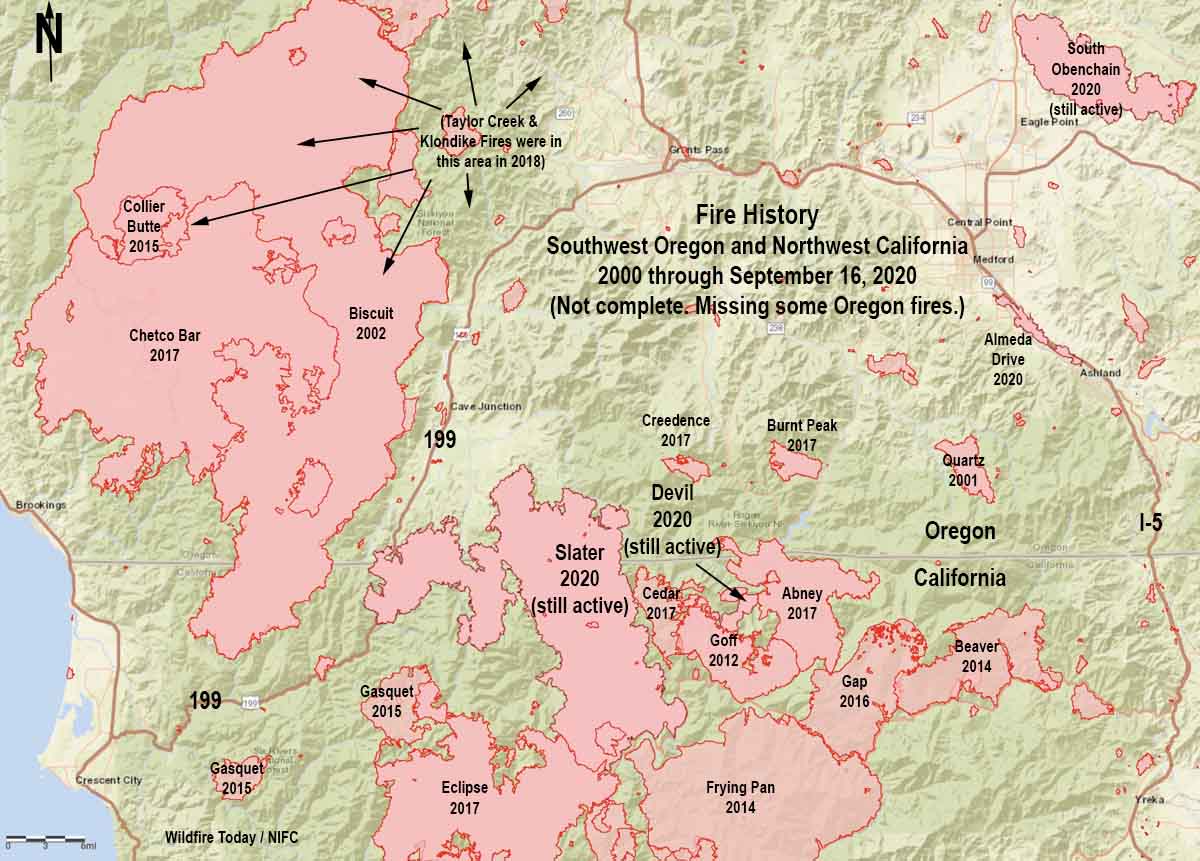
A partial history of fires in Northwest California and Southwest Oregon, 2000 through Sept 17, 2020.
The Northwest California/Southwest Oregon area has kept firefighters very busy at times during the last 20 years, as you can see on the map above.
A new fire is rapidly putting itself into that history. The Slater Fire reported September 8 grew to 89,000 acres by September 9 and has now spread to 150,000 acres. That growth, however, has slowed in the last several days.
It started northeast of Happy Camp, California and ran north into Oregon then took a left and crossed Highway 199. It has come to within about four miles of the 2002 Biscuit Fire.
If recent fire history is any indication, the Slater Fire may not even slow down when and if it reaches the Biscuit burn, and of course it depends on the weather, which has moderated this week. The 2017 Chetco Bar Fire and the 2018 Klondike Fire burned for miles into the then 17 or 18-year old fire scar. The entire eastern two-thirds of the Chetco Bar Fire was in the footprint.
Strong winds that drove the dozens of fires September 8 in Oregon are not super rare. The Klondike Fire west of Grants Pass started July 15, 2018. In early October it had become virtually dormant, but a few hot spots were revitalized by an east wind event on the 14th. According to an article in the Mail Tribune the suddenly vigorous fire was transporting burning embers that started spot fires six miles out ahead of the flaming front:
“Extreme spotting” propelled fine embers up to six miles ahead of the main fire, dropping the live ash right between firefighters’ tents and close to people’s homes.
“We even had to move our own fire camp,” [information officer Kale] Casey said.
So if the weather this year is anything like it was two years ago, firefighters could be busy in the area for at least another month.
DC-10 dropping on the Almeda Fire, September 8, 2020. Screenshot from the Loren Julien video.
Update September 18, 2020: The video was shot during the Almeda Fire in Southern Oregon September 8, 2020 by Loren Julien. It was just after he put sprinklers on his sister Annette Julien’s house and left the area — the house seen with the wet roof. Ms. Julien told me her house did not survive.
Elkhorn Fire. Shasta-Trinity National Forest in northern California. September 3, 2020. Sanford Ridge Off of Winter Trail in Wilderness Area. Photo by Mike McMillan.
Lives lost
The tally of the number of lives lost in the California and Oregon blazes will undoubtedly climb as teams search through the footprints of residences. It took weeks in 2018 to document every fatality at the Camp Fire at Paradise, California. Here are the numbers collected so far by the San Francisco Chronicle:
19, at least — California
10, at least — Oregon
Structures destroyed
It is difficult to get good consistent numbers about structures that have burned. CAL FIRE usually includes damaged buildings as well as those that have been destroyed. The Incident Status Summary, ICS-209, that incident management teams on a fire submit every day asks for the number that were destroyed. And it is likely that many teams on fires have not had the time to count all of the affected structures.
Here are the numbers of destroyed structures from the September 14, 2020 National Incident Management Situation Report compiled at the National Interagency Coordination Center, broken down by Geographic Areas. It uses data from the ICS-209:
4,258 — California
2,077 –Northwest (Washington & Oregon)
168 — Northern Rockies
46 — Great Basin
64 — Rocky Mountain
Acres burned
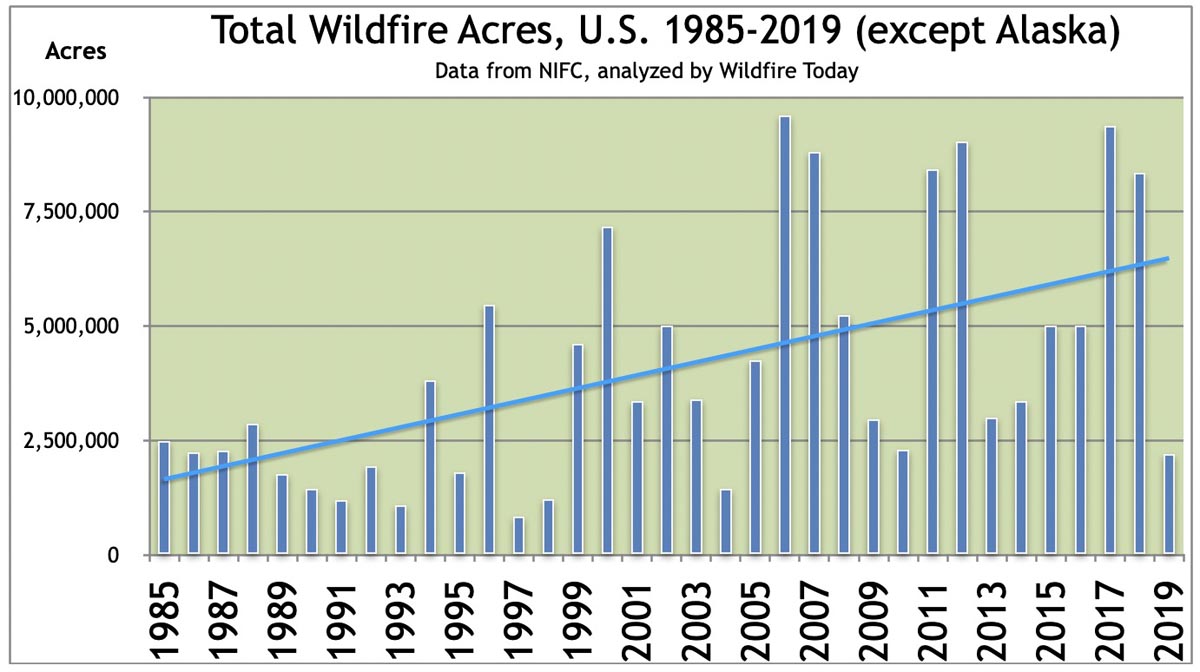
The fire season is not over in all areas, but the number of acres burned to date has exceeded the 10-year average number burned in a year. But the figure varies greatly from year to year. 2019 had the least number since 2004, when considering only the states outside of Alaska.
5,887,136 — The total number of acres burned to date in the U.S., not counting Alaska
5,608,376 — 10-year annual average number of acres burned in the U.S., not counting Alaska
Acres burned annually in the U.S., 1985-2019, except Alaska.
There have been many large fires in the last one to two months in Arizona, California, Oregon, Colorado, and Washington, but it has been quieter than usual in Idaho, Montana, Wyoming, and New Mexico.
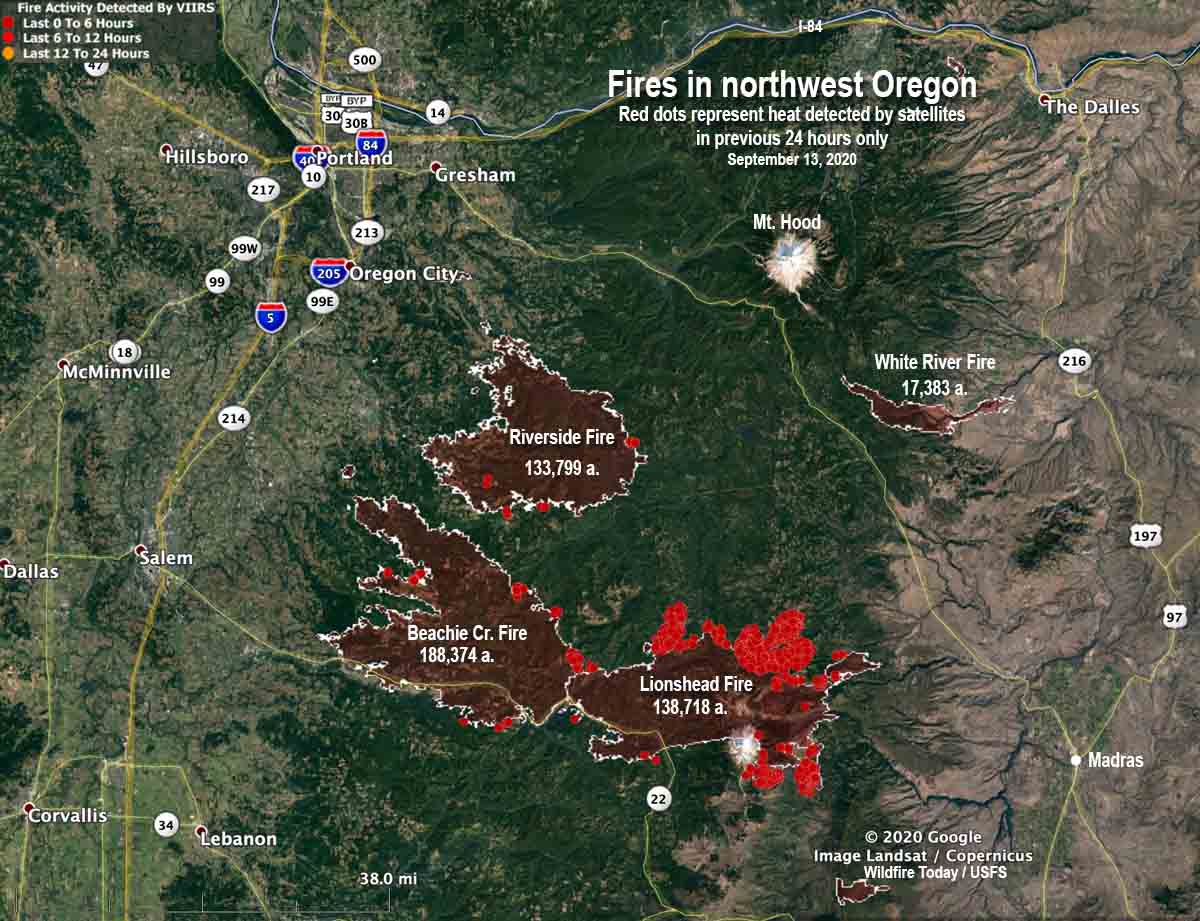
Map of fires in northwest Oregon, September 13, 2020.
Lionshead Fire
Of the three very large fires south of Portland, Oregon the 138,718-acre Lionshead has been the most active in the last 24 hours, with most of the growth occurring on the northeast and southeast sides. Crews continue to secure and protect property and conduct damage assessments as fire activity, smoke, and other hazards allow. Wildfires have not burned in the area for many decades, which has resulted in heavy layers of fuel on the ground that firefighters must work through to construct fireline and mop up, a very laborious and time-consuming process.
Resources assigned to the fire include 51 hand crews, 62 engines, and 10 helicopters for a total of 1,482 personnel.
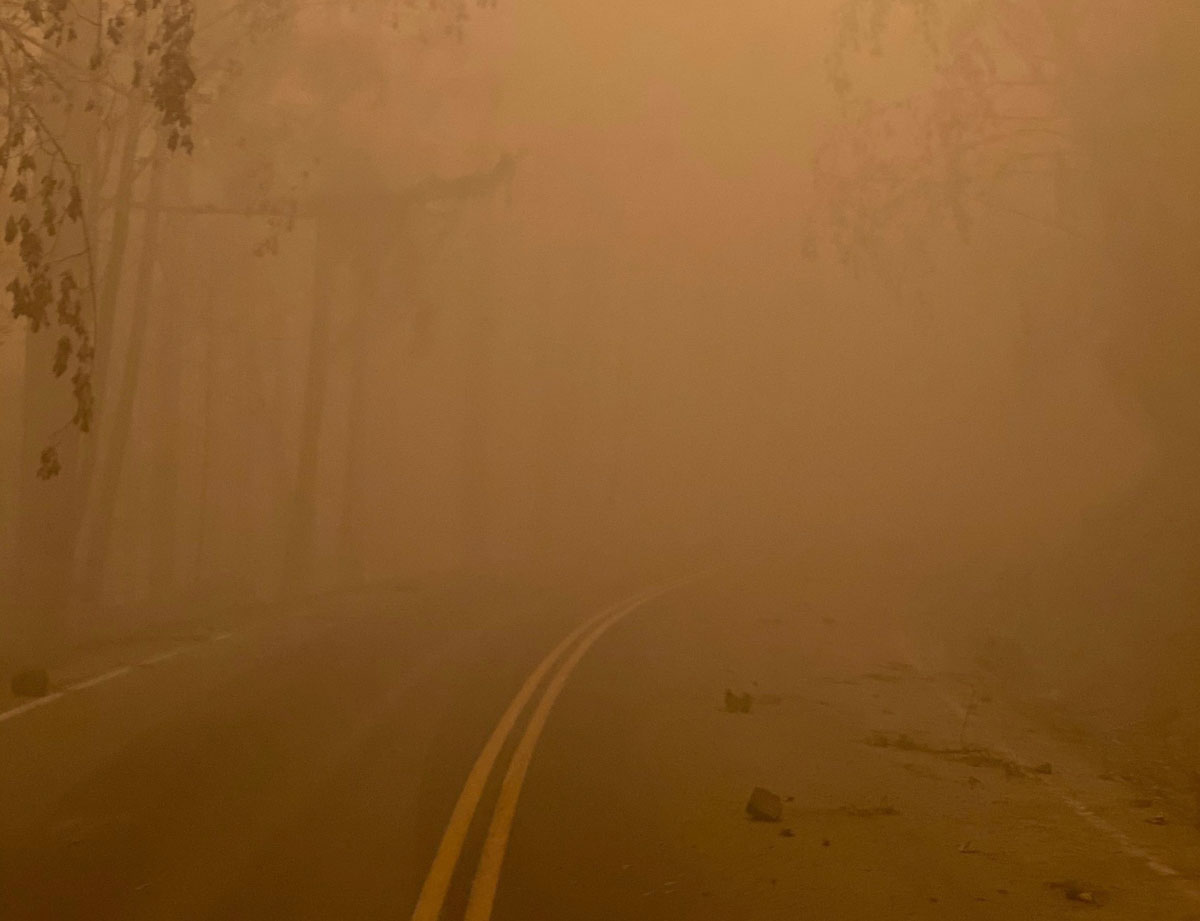
Air quality on the Lionshead Fire, Sept 11, 2020. InciWeb photo.
Riverside Fire
On the Riverside Fire dozers completed a line around spot fires on the west side to help secure the areas closest to the communities of Estacada and Molalla. On Sunday crews were working on the north side above the North Fork Reservoir, looking at opportunities to move towards the east. Firefighters are using two unmanned aerial systems (UAS, or drones) to assess fire conditions from the air. Helicopters are flying when visibility allows. The blaze has burned 53 structures at last count, and 133,799 acres, and is still a mile away from the Beachie Creek Fire. Resources assigned to the fire include 8 hand crews, 11 engines, and 3 helicopters for a total of 315 personnel.
“You’ll start in the coming days to see some lines showing containment” on the Riverside fire said Alan Sinclair, incident commander for the Type 1 incident management team. “We’re having a little bit more favorable weather and things are coming together.”
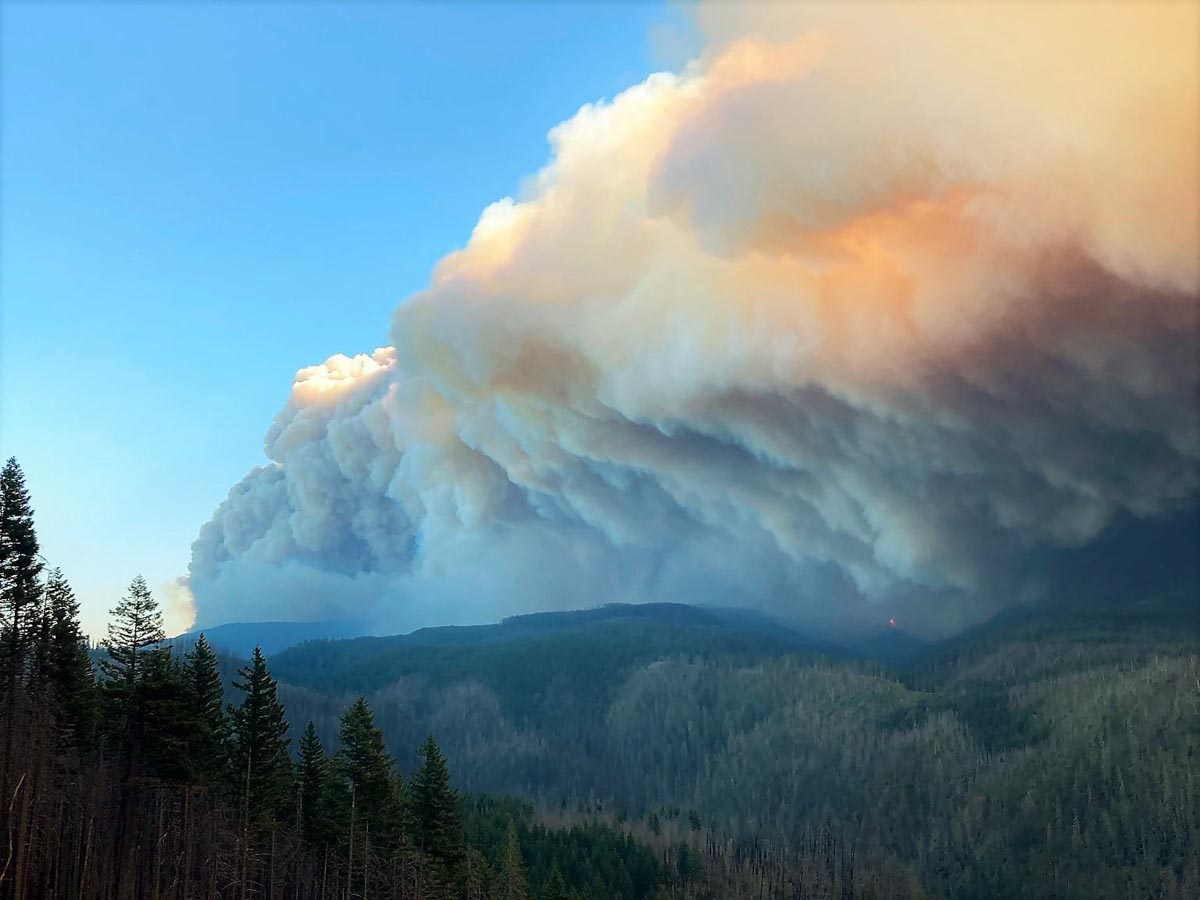
Riverside Fire, from La Dee Flats September 9, 2020. InciWeb photo.
Beachie Creek Fire
Fog slowed activity of the fire and firefighters on the 188,374-acre Beachie Creek Fire Sunday. After it dissipated firefighters resumed work on the perimeter and accessing damage to structures. Crews and heavy equipment are tying in the control lines on the west and northwest sides. The Beachie Creek and the Riverside Fires remain about one mile apart. Resources assigned to the fire include 11 hand crews, 45 engines, and 7 helicopters for a total of 563 personnel.
Three Area Command Teams (ACT) were mobilized Thursday to assist local units in suppressing the fires in the western states. One of them, led by Area Commander Joe Stutler, will be coordinating the efforts in northwest Oregon. The other two will be California.
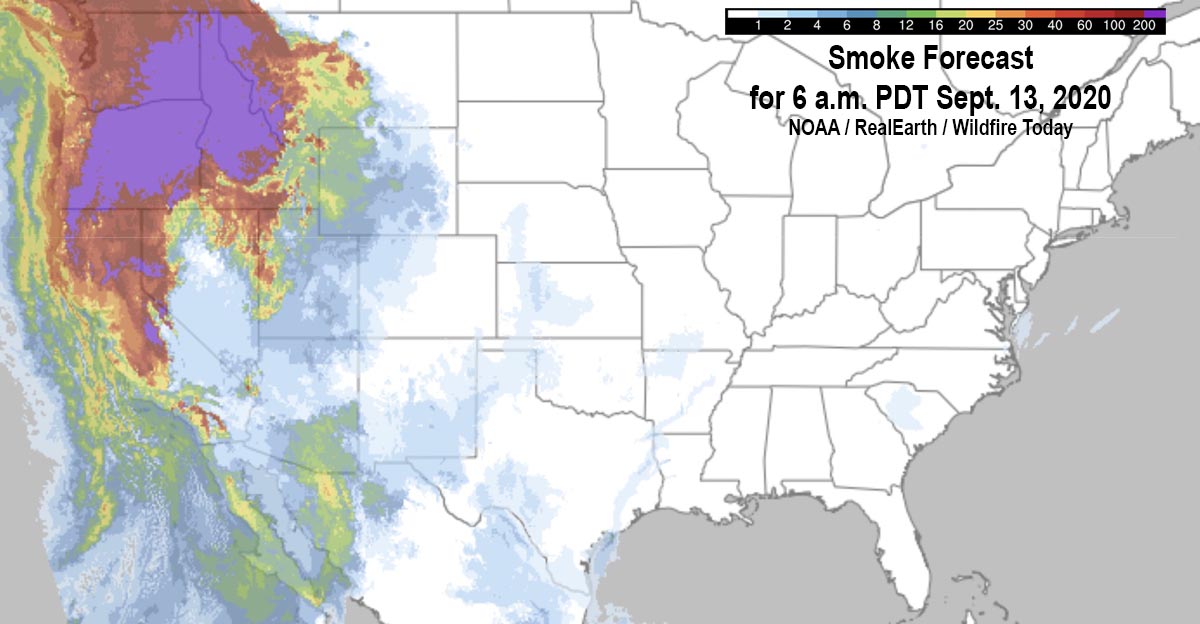
The map above shows the forecast for the distribution of near-surface smoke at 6 a.m. PDT September, 13, 2020.
It appears that severe impacts will occur in areas of Washington, Oregon, Idaho, and Montana.
(UPDATED smoke and air quality maps for September 13 can be found HERE)
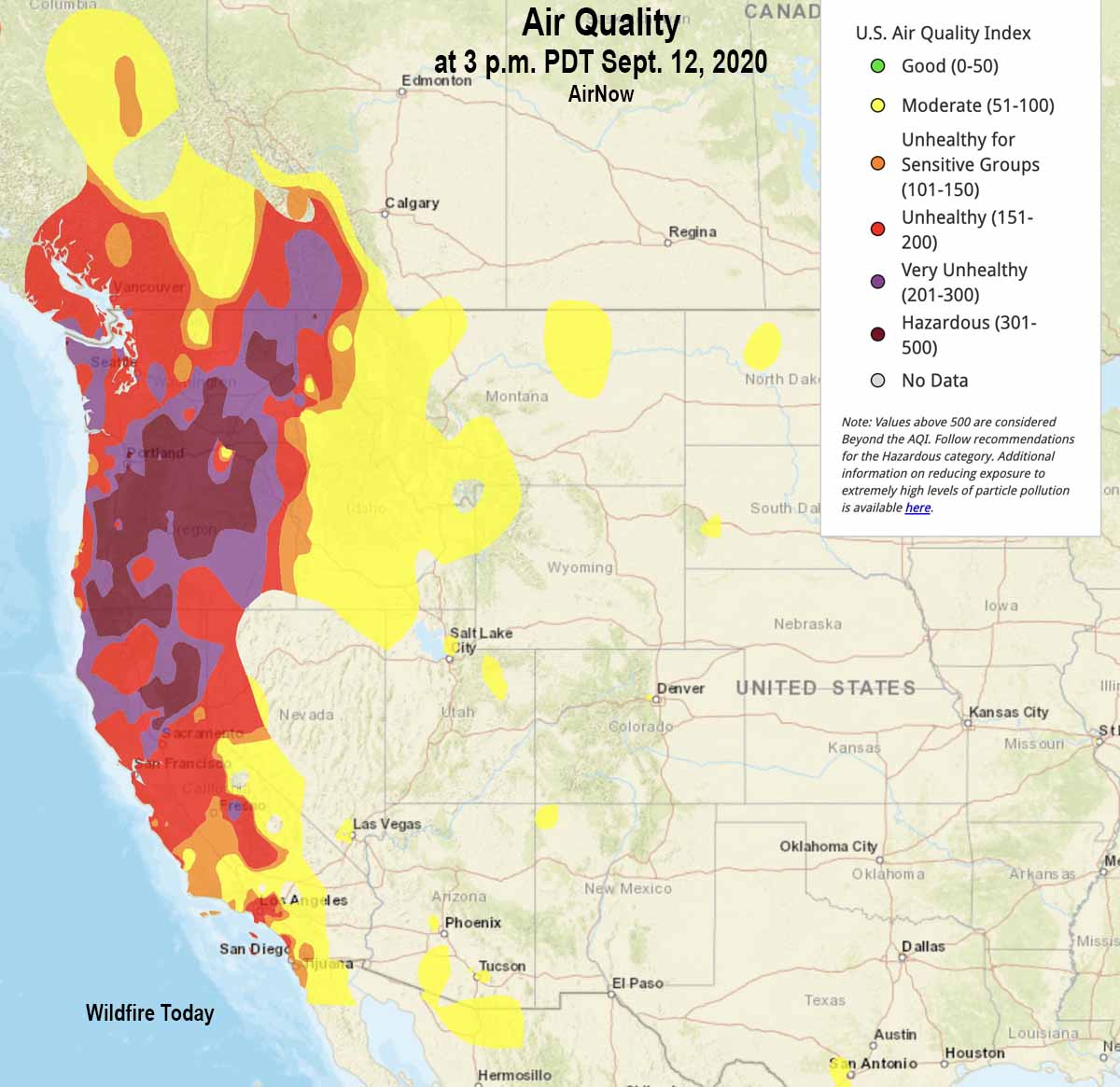
Air quality from AirNow at 3 p.m. PDT September 12, 2020 is below. Most of Oregon, Washington, and northern California are in the categories of Unhealthy, Very Unhealthy, or Hazardous. If you’re in those areas and are lucky enough to have an N95 mask, this is a good time to use it. Being indoors does not help much unless you are aggressively filtering the air with a HEPA category filter. (Information about how to reduce your exposure to smoke.)
Air quality at 3 p.m. PDT Sept. 12, 2020. AirNow.
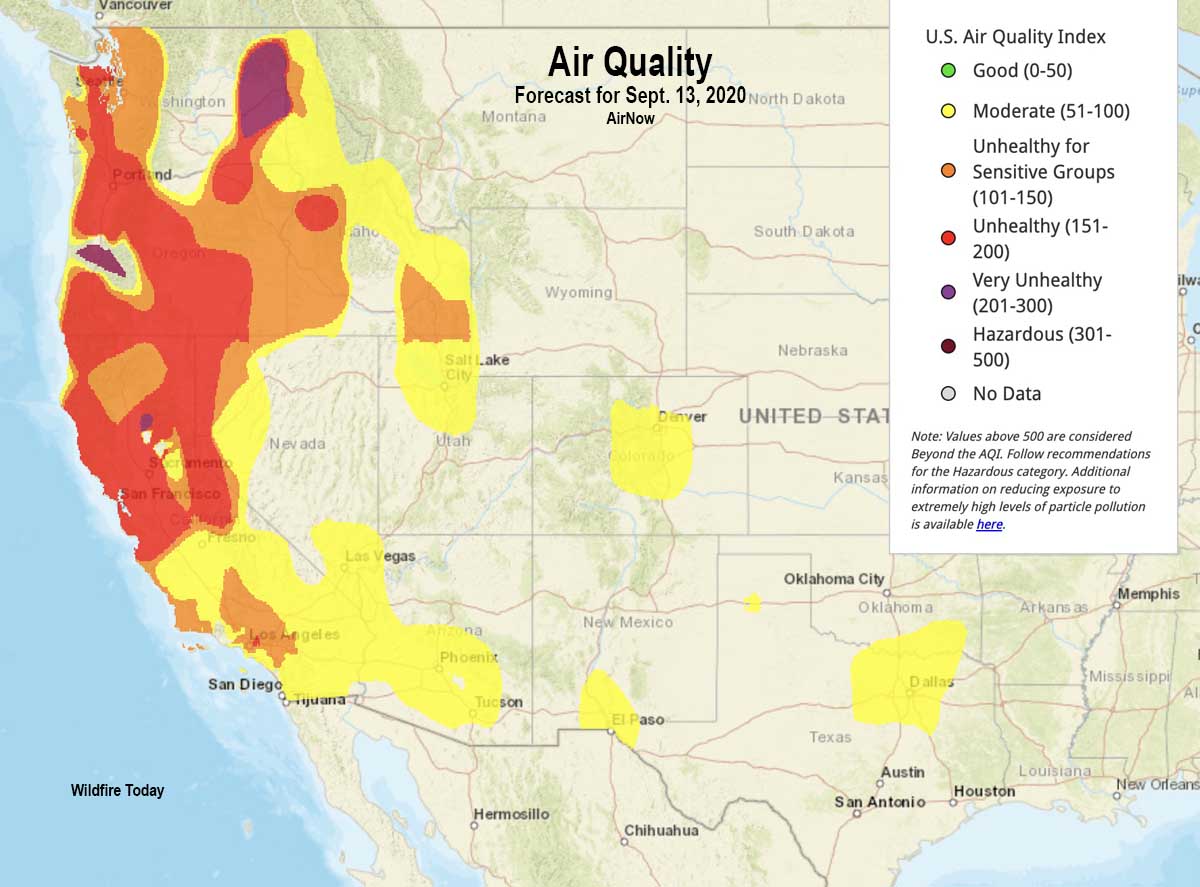
Below is the air quality forecast for Sunday September 13, 2020.
Air Quality forecast for September 13, 2020. AirNow.
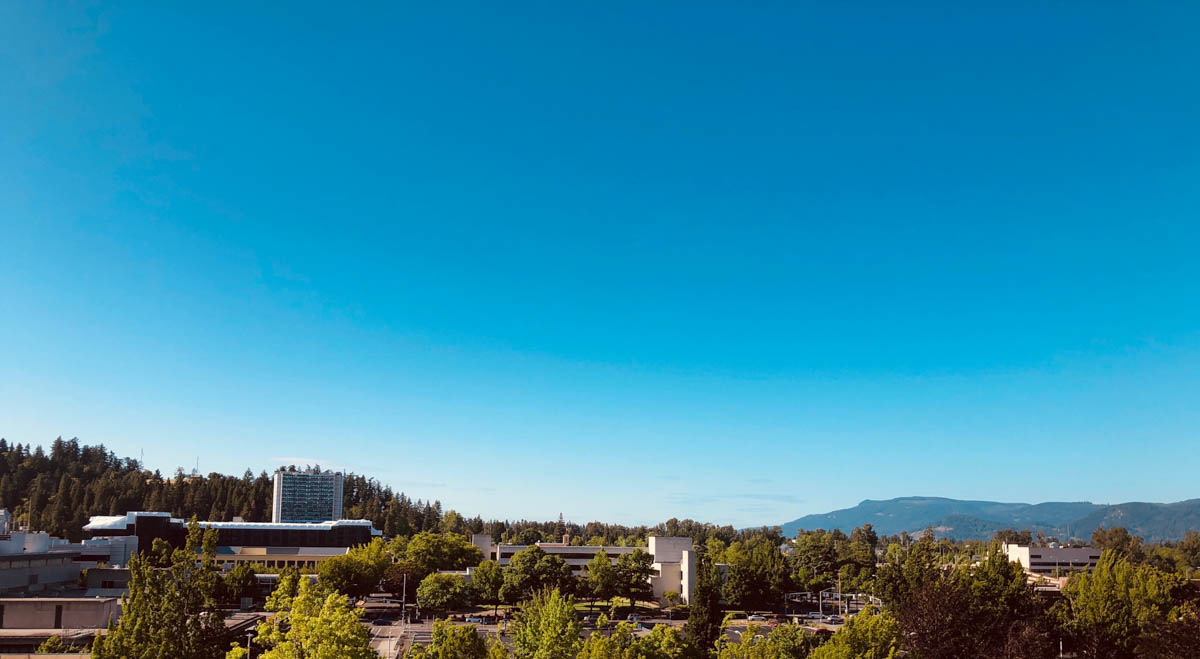
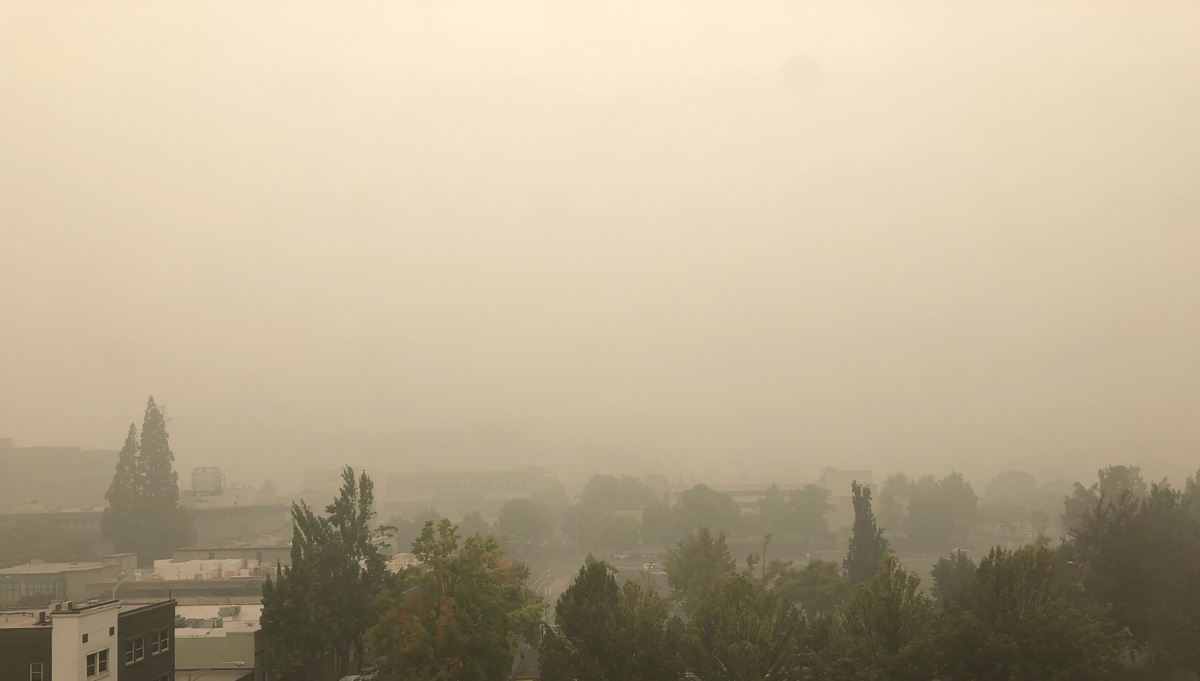
The photos below compare visibility in Eugene, Oregon on a clear day and today, September 12, 2020.
Visibility in Eugene, Oregon on a clear day. Visibility in Eugene, Oregon today, September 12, 2020.