Manufactured housing units being built in Oregon as temporary housing for fire victims

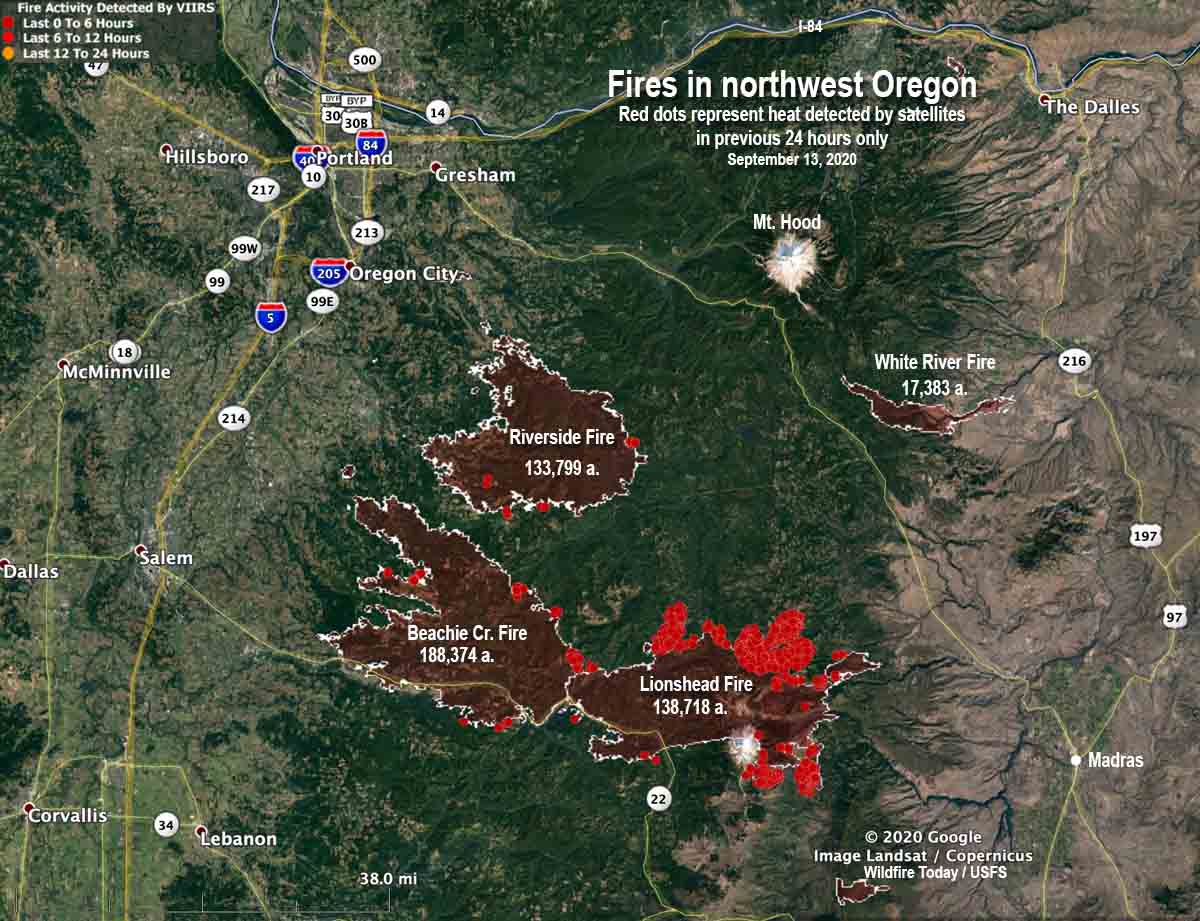
Map of fires in northwest Oregon, September 13, 2020 Riverside Beachie Creek Lionshead
Map of fires in northwest Oregon, September 13, 2020, while the fires were still spreading.

FEMA has begun moving Manufactured Housing Units (MHUs) onto a newly constructed site in Mill City, Oregon that will provide temporary housing for qualified wildfire survivors and their families.

Several communities southeast of Salem along Highway 22 suffered severe impacts from the Beachie Creek and Lionshead Fires which grew large during the wind event of September 7 and 8, 2020. Some of the worst hit towns were Mill City and Gates.

Construction on the new Mill City site began earlier this month, with work completed ahead of schedule. The site is currently scheduled to receive 13 manufactured housing units (MHUs) and can accommodate up to 16 MHUs, providing necessary temporary housing for the qualified residents of both Linn and Marion counties.

As soon as all MHU are delivered and placed on site, each unit will be given a final inspection ensuring they are ready for occupancy, and families will be scheduled to move into their temporary homes.

To date, 85 families whose homes were severely damaged or destroyed by this year’s wildfires have been approved for temporary housing units. These units are placed in established RV parks or in FEMA constructed group sites.

In addition to Linn and Marion counties, FEMA’s Direct Housing mission is establishing temporary housing for qualified disaster survivors in Jackson and Lincoln counties in sites like the one in Mill City. Housing units are chosen by FEMA based on the survivor family composition and needs, as well as to ensure that requirements for access or functional needs are met.

Currently, 240 qualified families are scheduled to receive FEMA Direct Temporary Housing in the four counties. The current number of qualified families has fallen as many households that qualified for this assistance have located alternate temporary or permanent housing on their own.

Other programs for fire victims such as rental assistance may be available. Apply online at DisasterAssistance.gov, by downloading the FEMA app, or by calling the disaster assistance helpline at 800-621-3362 from 7 a.m. to 10 p.m. PDT, seven days a week.
Now that the extreme weather has moderated, firefighters beginning to make progress on fires in northwest Oregon

Map of fires in northwest Oregon, September 13, 2020 Riverside Beachie Creek Lionshead
Map of fires in northwest Oregon, September 13, 2020.

Lionshead Fire

Of the three very large fires south of Portland, Oregon the 138,718-acre Lionshead has been the most active in the last 24 hours, with most of the growth occurring on the northeast and southeast sides. Crews continue to secure and protect property and conduct damage assessments as fire activity, smoke, and other hazards allow. Wildfires have not burned in the area for many decades, which has resulted in heavy layers of fuel on the ground that firefighters must work through to construct fireline and mop up, a very laborious and time-consuming process.

Resources assigned to the fire include 51 hand crews, 62 engines, and 10 helicopters for a total of 1,482 personnel.

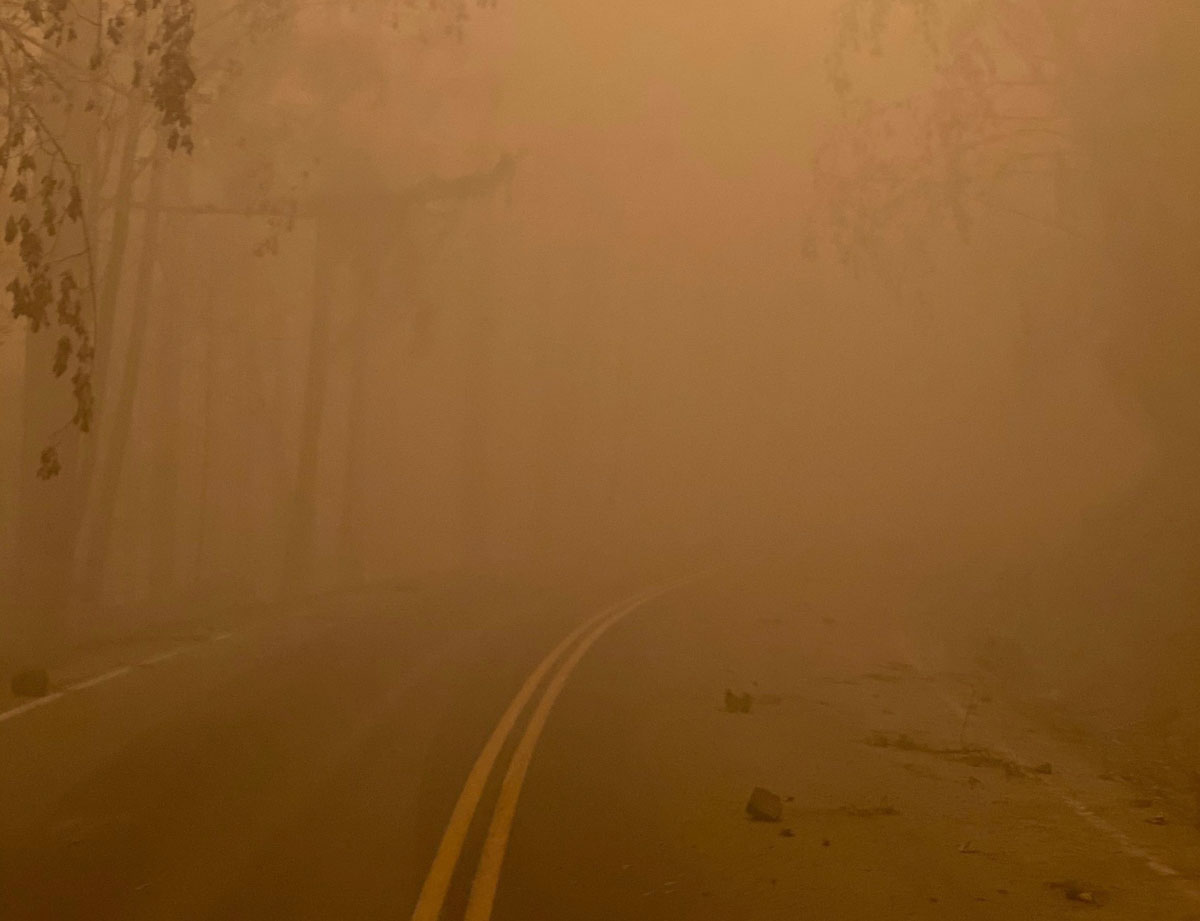
Air quality on the Lionshead Fire
Air quality on the Lionshead Fire, Sept 11, 2020. InciWeb photo.

Riverside Fire

On the Riverside Fire dozers completed a line around spot fires on the west side to help secure the areas closest to the communities of Estacada and Molalla. On Sunday crews were working on the north side above the North Fork Reservoir, looking at opportunities to move towards the east. Firefighters are using two unmanned aerial systems (UAS, or drones) to assess fire conditions from the air. Helicopters are flying when visibility allows.  The blaze has burned 53 structures at last count, and 133,799 acres, and is still a mile away from the Beachie Creek Fire. Resources assigned to the fire include 8 hand crews, 11 engines, and 3 helicopters for a total of 315 personnel.

“You’ll start in the coming days to see some lines showing containment” on the Riverside fire said Alan Sinclair, incident commander for the Type 1 incident management team. “We’re having a little bit more favorable weather and things are coming together.”

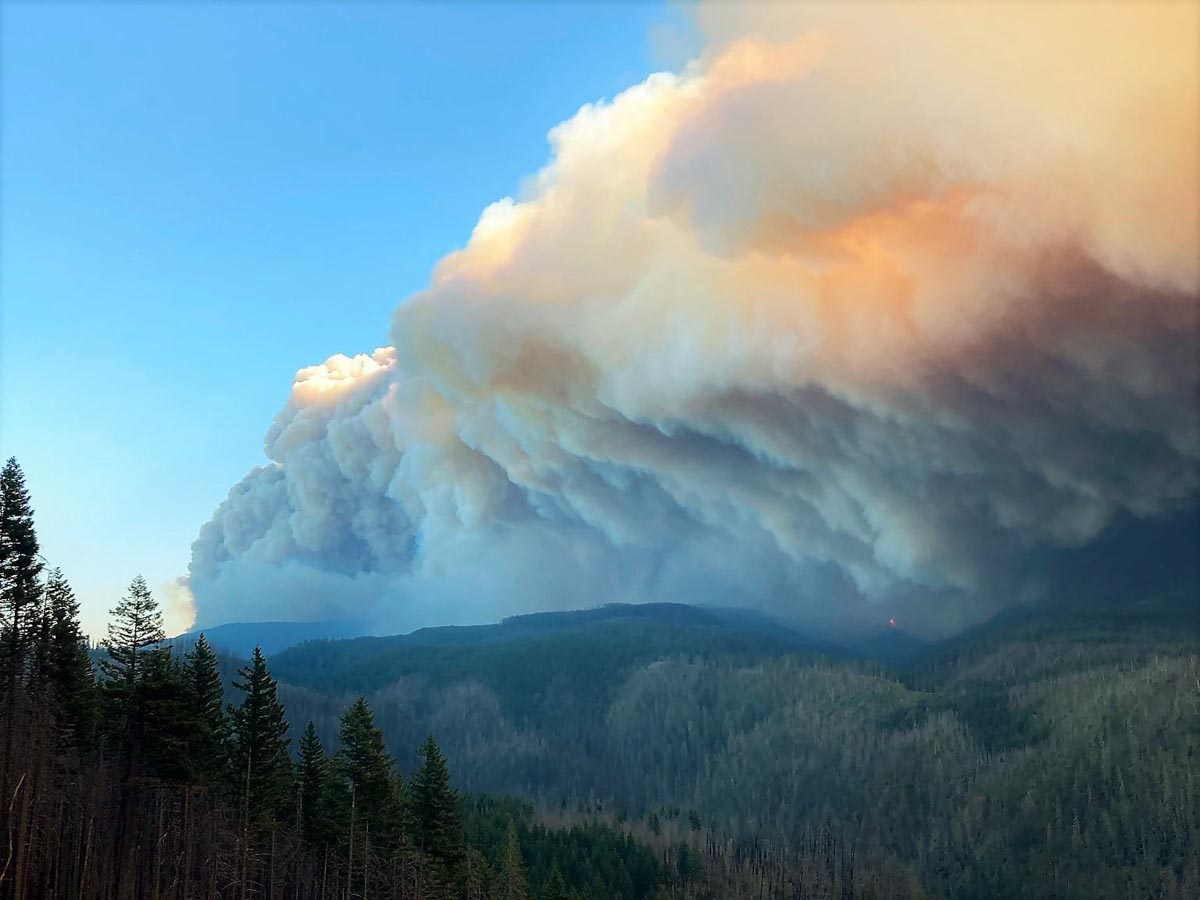
Riverside Fire
Riverside Fire, from La Dee Flats September 9, 2020. InciWeb photo.

Beachie Creek Fire

Fog slowed activity of the fire and firefighters on the 188,374-acre Beachie Creek Fire Sunday. After it dissipated firefighters resumed work on the perimeter and accessing damage to structures. Crews and heavy equipment are tying in the control lines on the west and northwest sides. The Beachie Creek and the Riverside Fires remain about one mile apart. Resources assigned to the fire include 11 hand crews, 45 engines, and 7 helicopters for a total of 563 personnel.

Three Area Command Teams (ACT) were mobilized Thursday to assist local units in suppressing the fires in the western states. One of them, led by Area Commander Joe Stutler, will be coordinating the efforts in northwest Oregon. The other two will be California.