The fire burned over 48,000 acres in Columbia River Gorge in September, 2017
Continue reading
The fire burned over 48,000 acres in Columbia River Gorge in September, 2017
Continue readingThe Fox TV station in Los Angeles honored the Los Angeles County Fire Department Air Operations Section in this video clip.
Say good morning to the crew of Los Angeles County Fire Department Air Operations Section (@LACoFireAirOps)! We salute you on this #FirehouseFriday (w/ @RICKatFOX ). pic.twitter.com/vnTeJv18RW
— Good Day LA (@GDLA) February 9, 2018

Last year the U.S. Forest Service reduced the number of Type 1 ships by 18%.
Continue readingThe firefighter was killed while working on a wildfire in the Simonsberg Mountain area
Continue reading
Depending on the type of work performed and the number of years of exposure, the increased risk can be 22 to 39 percent.
Continue readingThe fire burned 18,430 acres northwest of Santa Barbara, California in July, 2017
Continue reading
The third of six that have been ordered was delivered in December
Continue reading
The jobs of some wildland firefighters change dramatically during the winter
Continue readingAnticipating a wind change, 19 household along the Waitangi Wharf – Owhenga Road have been evacuated
Continue reading
Above: wildfire potential for February, 2018, issued February 1, 2018.
(Originally published at 1:41 p.m. MDT February 1, 2018)
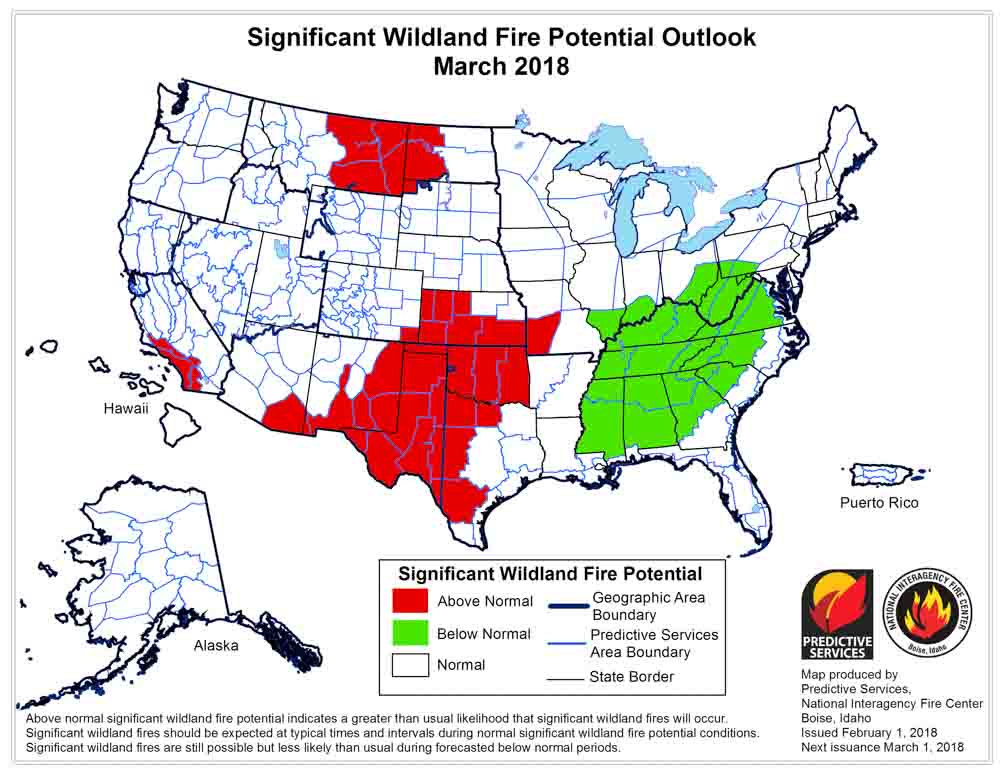
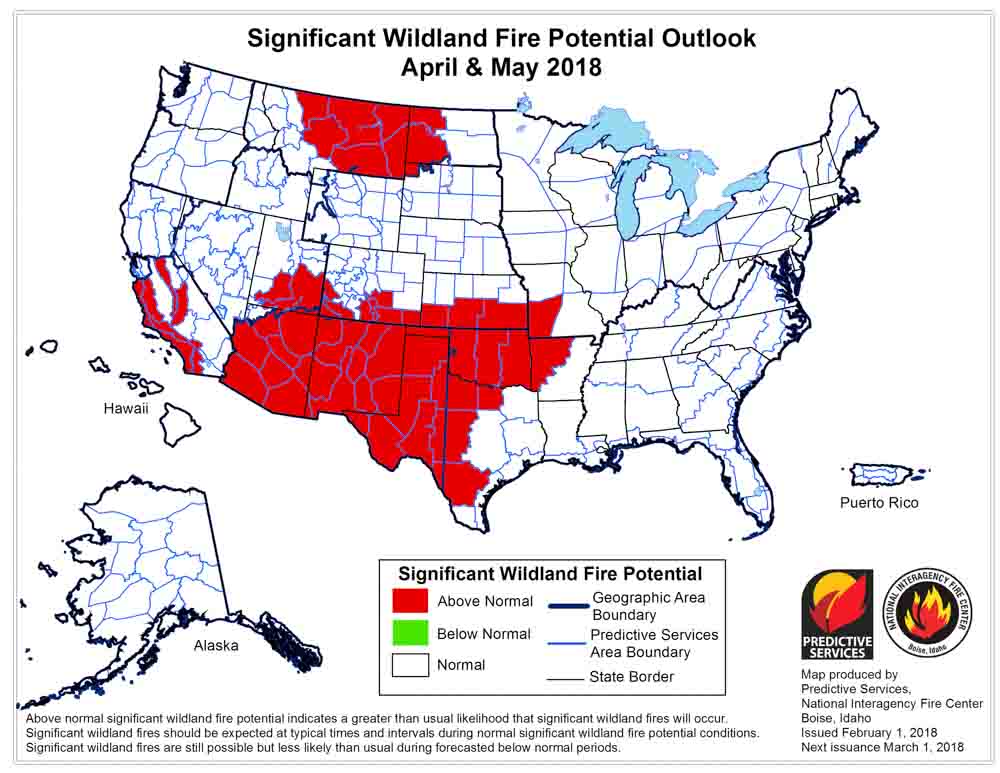
On February 1 the Predictive Services section at the National Interagency Fire Center issued their Wildland Fire Potential Outlook for February through May. The data represents the cumulative forecasts of the ten Geographic Area Predictive Services Units and the National Predictive Services Unit.
If the prediction is accurate, the wildfire potential in Southern California and the Southern Plains will remain above normal for the entire four-month period and will increase in the Southwest and Northwestern Great Plains in Montana and North Dakota. The Eastern U.S. should expect normal or below normal potential.
Below are:
“The significant wildland fire potential forecasts included in this outlook represent the cumulative forecasts of the ten Geographic Area Predictive Services units and the National Predictive Services unit.
“Wildfire activity is likely to begin to increase in February as would be seasonally expected. During the early portions of the year it is typical for significant fires to begin to occur across the southern tier of the U.S. Currently it appears the highest likelihood for above normal significant wildland fire potential will be in place across portion of the southern plains and Florida and Georgia. Across the southern plains the last years precipitation totals have brought about a somewhat robust fine fuel crop, which will provide an elevated baseline of fire activity. When this elevated fuel condition is exacerbated by a period of dry and windy conditions it will provide opportunities for any ignitions to become significant fires.
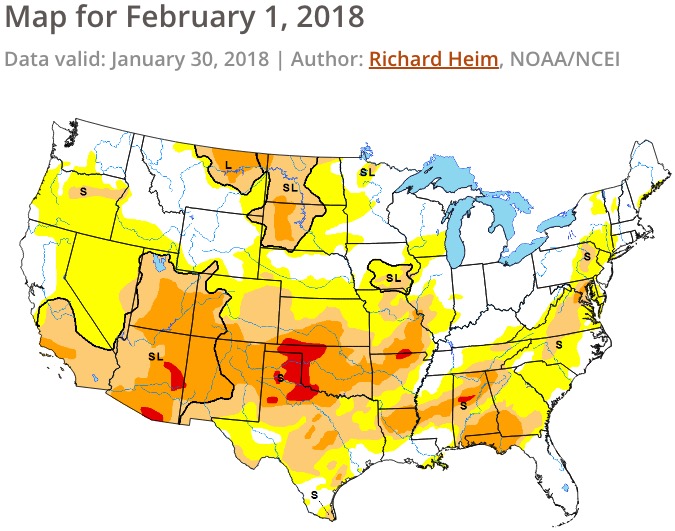
“These incidents will be difficult to predict, but extra attention should be paid to this area when dry and windy conditions are forecasted. In Florida and Georgia the significant drought that led to amplified fire activity in the fall across the south has not improved. Moisture deficits in these fuel types are significant because they not only make ignition significantly more likely but they also make fires much more difficult to fight. Both conditions make the need for fire suppression resources higher. Both of these significant areas of above normal potential are likely continue through March and probably return to normal in April or May.
“At the end of the Outlook period significant fire potential across portions of Alaska will being to increase. This is also generally seasonally anticipated, however, the potential for above normal significant fire activity in the south central portion of the state is likely. Drought conditions indicate that some unusual dryness will be in place in this area as fire season begins. This will likely lead to earlier than usual ignitions and the potential for worse than usual fires. In the shorter term Hawaii is likely to see some elevated activity thanks to some unusual dryness, but this condition is expected to be short lived.
“Additionally, fire activity is expected to be below normal across western portions of Tennessee and Kentucky throughout the Outlook period.”