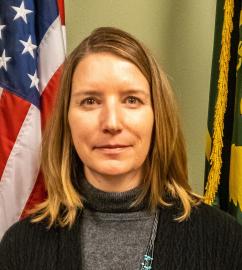
While the Forest Supervisor of the Santa Fe National Forest, Debbie Cress, is temporarily assigned to the acting Deputy Chief of Staff position for the U.S. Forest Service in Washington, James Duran will serve as acting Supervisor for the next four months. This is occurring while the largest fire in the recorded history of New Mexico, the Hermits Peak / Calf Canyon Fire, is still not officially contained.
From the Associated Press:
Some have questioned the timing given that the wildfire has yet to be declared contained and recovery work has just begun.Forest officials have dismissed criticism, saying the opportunity for Cress to work at headquarters initially came up in January and was the culmination of her work over the past year with the agency’s leadership.
Cress acknowledged in a statement Friday that it was difficult timing as her home state deals with the aftermath of the massive wildfire.
Debbie Cress. USFS photo.
The 341,735-acre fire is the result of two prescribed fires on the Santa Fe National Forest that escaped control. One was a broadcast burn that crossed control lines during a strong wind. The other originated from slash piles that were ignited in late January that continued burning for months. In mid-April one or more of the piles became very active and began spreading and merged with the other escaped fire on April 22.
In 2018 another pile burning project on the Santa Fe escaped months after it was ignited and had to be converted to a wildfire. A Facilitated Learning Analysis found that “communication” and “prescribed fire preparation and risk” were common themes.
Ms. Cress began as the Forest Supervisor in April of 2021. Three months before, the Santa Fe New Mexican reported, she had transferred from a District Ranger position in Arizona to be the Deputy Forest Supervisor on the Santa Fe National Forest.
Thanks and a tip of the hat go out to Jim and Gerald.
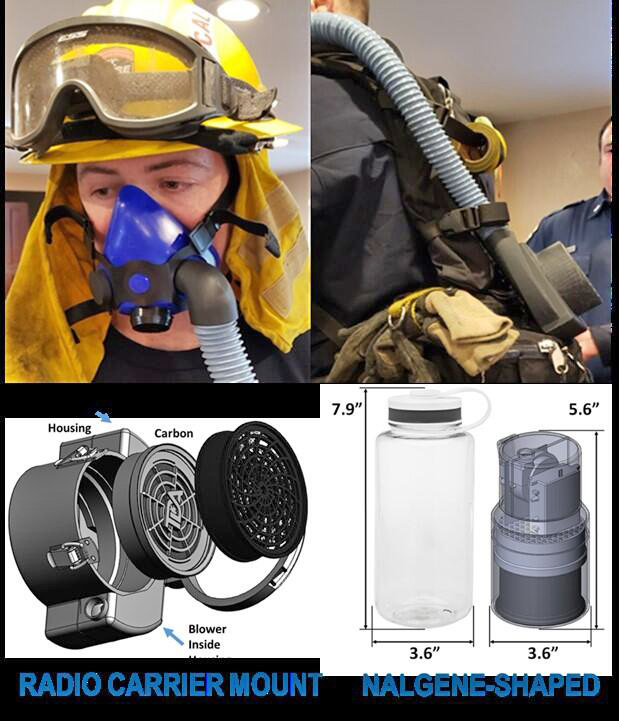
Development of a wildland fire respirator. Two versions are being tested, with the filter being carried on the chest hip. Department of Homeland Security photo.
A working group for the International Agency for Research on Cancer, the cancer agency of the World Health Organization, has just “classified occupational exposure as a firefighter as carcinogenic to humans.” Part of the reason is the toxic gasses firefighters are exposed to.
Wildland firefighters working on a vegetation fire can’t wear the conventional self contained breathing apparatus used by structural firefighters. It is too bulky, heavy, and only lasts 10 to 30 minutes.
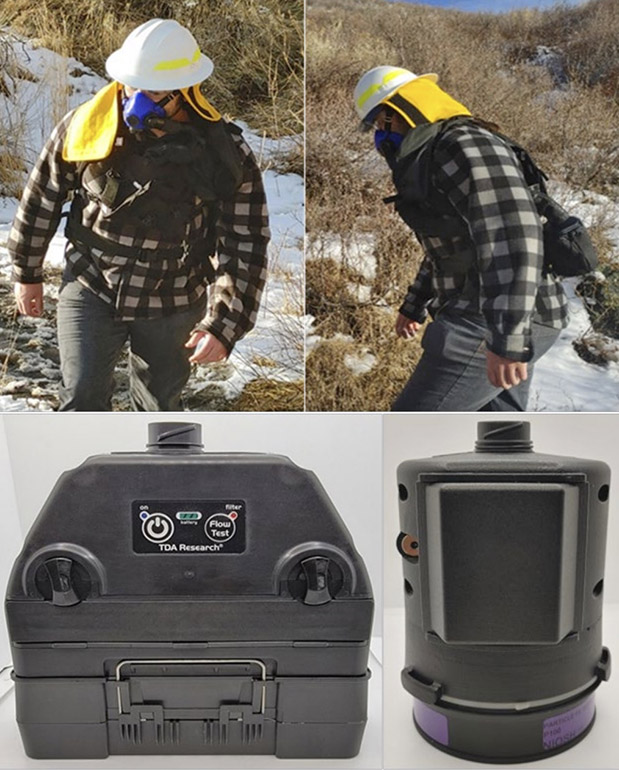
In an effort to provide less carcinogenic air to wildland firefighters, the Department of Homeland Security’s Science and Technology Directorate is developing a respirator capable of removing airborne hazards present in the wildland firefighting operating environment. They are working with the International Association of Firefighters, National Fire Protection Association, International Association of Fire Chiefs, U.S. Forest Service, and local Colorado fire departments to develop and test the Directorate’s Wildland Firefighter Respirator (WFR). It contains a HEPA filter module that will remove very fine particulates, and a carbon sorbent to remove toxic gases. The team is investigating wildland firefighter-approved designs like the Radio Carrier and Hip-Mounted units shown in the photo below.
Development of a wildland fire respirator. Two versions are being tested, with the filter being carried on the chest hip. Department of Homeland Security photo.
The WFR was designed around a lightweight mask covering just the mouth and nose. It relies on filtration, designed to go a whole shift before needing to be changed.
“Our system pushes clean air to firefighters using a powered blower with HEPA and carbon filters,” said S&T Program Manager Kimberli Jones-Holt. The system connects to the half-mask through a lightweight, flexible breathing hose to provide clean air and draws in air from the bottom of the unit to prevent rain or water infiltration.
“The filters were also designed to be inexpensive and easily replaced at $5 to $10 each,” Jones-Holt continued.
It uses an electric blower to force filtered air to the mask, relying on AA batteries for power.
The DHS says if wildland firefighters use respiratory protection, their careers could be significantly extended, leading to a more educated and experienced workforce capable of more efficient operations, with lower medical bills and training costs.
CAL FIRE’s first night-flying helicopter mission was on the Electra Fire southeast of Jackson, CA July 6, 2022. Photo by CAL FIRE Battalion Chief Brian Ham.
Last night on the Electra Fire southeast of Jackson, California a California Department of Forestry and Fire Protection helicopter conducted the first ever night-flying mission for the agency.
It happened with one of CAL FIRE’s new S70i Firehawk helicopters, and was confirmed in a tweet today by @CAL_FIRE:
CAL FIRE’s S70i Fire Hawk helicopter completed the first ever night flying operation last night on the #ElectraFire in Amador County. Flying at night provides further air time & allows CAL FIRE to continue to set new heights in serving the communities of CA.
@CAFireScanner was one of the first to notice the activity at about 10 p.m. on July 6. He noted that radar tracking showed Copter 101 was making repeated trips to Lake Tabeaud, and that it was up twice for a total of about three to four hours.
#ElectraFire (Amador & Calaveras Co) – It would appear that Copter 101 from CAL FIRE is up for night time water drops – which would be a first for the agency’s new hawks? I’ve watched them on radar go back to Lake Tabeaud several times. pic.twitter.com/ITH919x7mK
File photo of CAL FIRE Helicopter 101 after it went through flight tests at United Rotorcraft in Colorado. Its home base was slated to be Howard Forest in Mendocino County, California. Photo by James Wattenburger, June 30, 2021.
Since wildfire activity typically slows during the night, any suppression activity by ground or air-based equipment and personnel can pay larger dividends than comparable efforts in the afternoon when fires are burning hotter and faster with more resistance to control.
Los Angeles County Fire Department has been fighting fires at night with helicopters for decades, and the US Forest Service has dabbled in the practice off and on. Several other firefighting agencies in the state also have night-flying capabilities. The four helicopters in Southern California’s Quick Reaction Force are staffed 24 hours a day and travel with a mobile fire retardant base to enable the ships to drop water or retardant day and night.
In January we wrote, “California is already two-thirds of the way toward replacing CAL FIRE’s 12 Vietnam War-era Huey helicopters with new Sikorsky S70i Firehawks. Eight of the new ships are already in the state, but some may not have been officially accepted yet by the contracting officers. Four more are still being built by Sikorsky or outfitted for firefighting by a company in Colorado.”
CAL FIRE is progressive in their firefighting capabilities in some ways, but their aviation program has been very slow to evolve. In addition to sticking with their their limited capacity Hueys for years, their fixed wing fleet of air tankers still consists of S-2Ts that drop up to 1,200 gallons, while large air tankers under contract with the US Forest Service carry three to eight times the amount of retardant. By 2023 they may begin to see the first of the seven former Coast Guard HC-130H planes beginning to complete the 10-year conversion to air tankers, with a 3,000-gallon capacity.
GOES-17 photo of smoke from wildfires in Washington, Oregon, and California at 5:56 p.m. PDT Sept. 8, 2020. The photo was taken during a very strong wind event.
By U.S. Forest Service
When the 2020 Labor Day Fires torched more than 300,000 hectares over the span of two weeks in parts of western Oregon and Washington, they devastated communities and put the threat of west-side fires squarely into focus. A new study led by the USDA Forest Service’s Pacific Northwest Research Station examines the context surrounding the fires and offers insight into the historical role of large, high-severity fires—and the future of wildfires—west of the Cascades.
“Without a doubt, the 2020 Labor Day Fires were a significant fire event on many levels, and one that was a wake-up call for the region,” said Matthew Reilly, research forester and lead author of the study, which is published in the journal Ecosphere. “The goal of our study was to help understand how this event compared to past west-side fires so that we can help inform adaptation strategies aimed at preventing or mitigating similar events in the future.”
Drawing from a literature review, extensive historical data, and new analysis, Reilly and his co-authors explored five questions surrounding the 2020 Labor Day Fires: how the 2020 fires compared with historical fires in the region, the role of weather and climate, the effects of forest management and pre-fire forest structure on burn severity, the impacts of these fires on west-side landscapes, and what can be done to adapt to similar fires in the future. Ultimately, they found that the 2020 fires were remarkably consistent with historical fires on the west side, both in terms of their timing and size and the cause of their rapid spread—dry conditions combined with strong east winds.
“Our findings suggest that these severe fires are normal for west-side landscapes when you look at historical fire regimes at longer time scales,” Reilly said. In fact, the researchers identified similarly large historical fires in the early 20th century under similar weather conditions—some even burning right around Labor Day—in some of the same locations that burned in 2020.
Because of the abundant and productive forests characteristic of the west side and the driving role of extreme winds, conventional fire management tools used in dry forests, like prescribed burning and fuels management, will likely be less effective in west-side forests than they are on the east side. This is particularly the case, their study found, when fire weather conditions are as extreme as those witnessed during the 2020 fires.
“Our study indicates we need very different approaches and adaptation strategies in west-side forests compared to those we use in dry forests,” Reilly said.
The study was conducted as part of the Pacific Northwest Research Station’s ongoing West-side Fire Research Initiative, which was launched in 2019 to develop science-based tools to help resource managers respond to wildfire risk in west-side forests. The study’s coauthors are from the Washington State Department of Natural Resources, University of Washington, Oregon State University, and USDA Forest Service’s Pacific Northwest Region.
Highlights
The 2020 Labor Day Fires were much larger and more severe than others in the recent record, but they were remarkably consistent with many historical fires. Strong east winds and dry conditions are the common denominators in both large historical fires of the past and the 2020 fires.
Forest management and fuel treatments are unlikely to influence fire severity in the most extreme wind-driven fires, like the 2020 Labor Day Fires. Pre-fire forest structure, largely the result of previous forest management activities, had little effect on burn severity when east winds were strong during the 2020 fires.
Fuel treatments around homes and infrastructure may still be beneficial under low and moderate fire-weather conditions.
Adaptation strategies for similar fires in the future in west-side communities might, instead, focus on ignition prevention, fire suppression, and community preparedness.
More information:
Matthew J. Reilly et al, Cascadia Burning: The historic, but not historically unprecedented, 2020 wildfires in the Pacific Northwest, USA, Ecosphere (2022). DOI: 10.1002/ecs2.4070
Wildfire Today, articles posted in September, 2020 tagged Oregon, or Washington.
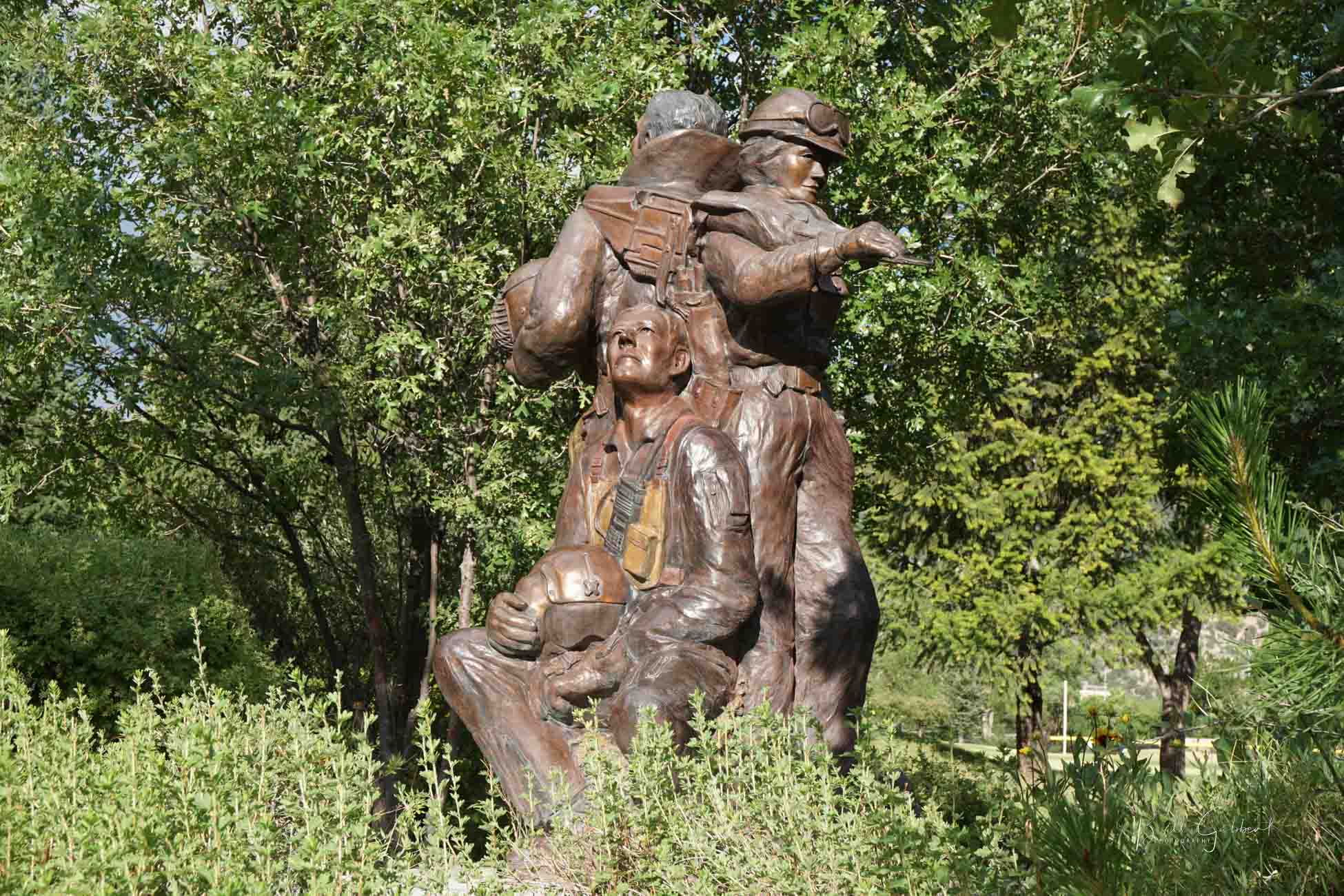
South Canyon Fire memorial in Two Rivers Park, Glenwood Springs, Colorado.
Today marks the 28th anniversary of the entrapment and death of 14 firefighters on the South Canyon Fire who were overrun by the fire on Storm King Mountain near Glenwood Springs, Colorado. Those firefighters were Kathi Beck, Tamera Bickett, Scott Blecha, Levi Brinkley, Robert Browning, Doug Dunbar, Terri Hagen, Bonnie Holtby, Rob Johnson, Jon Kelso, Don Mackey, Roger Roth, Jim Thrash, and Richard Tyler.
Barry Stevenson of Outside Adventure Media produced the short video below that looks at an often overlooked part of the event — the eight smokejumpers further uphill who took refuge in their fire shelters for two hours as the fire burned around them.
If you have not seen it already, be sure and watch the excellent lessons learned video about the South Canyon Fire titled Everyone Goes Home. It includes numerous interviews of wildland firefighters who were involved with, or were on scene during the entrapment and deaths of the 14 firefighters.