First Wildland Fire Commission report focuses on aviation

(UPDATE February 14, 2023: To clarify — the rationale for releasing a report on Aerial Equipment first was a component of the guiding legislation that specified, in the “Duties of Commission,” that a “Report on Aerial Wildland Firefighting Equipment Strategy and Inventory Assessment” would be submitted per a prioritized schedule – an initial surplus inventory within 45 days of the commission’s first meeting, and a report to Congress 90 days after the inventory. See the statute at https://www.usda.gov/sites/default/files/documents/title-two-wildfire-mitigation.pdf. Thanks to a commission member for the helpful reminder to always confirm with the guiding legislation.)

To choose aviation for the first report from the Wildland Fire Mitigation and Management Commission might be seen as harvesting the lowest hanging fruit, or cornering the largest elephant in the room. In actuality, the guiding legislation created specific timelines that prioritized fire aviation as a key and initial priority. Whatever the colloquial phrase, the Commission’s swift creation of the Aerial Equipment Strategy Report offers a challenging and potentially quite fruitful focus.

The report, released on February 13, 2023, frames the status of fire and aviation today in eight findings, which in turn aims us to 19 recommendations. Both the framing and the aiming may raise familiar notes — but in this case there is a universal urgency that reflects the accelerating fire challenge as well as the timeframe for the Commission, which has a year from their first meeting on September 14-15, 2022 to submit recommendations to Congress.
Wildland Fire Mitigation and Management Commission header 2023-Feb

The Commission’s mandate and 50-person membership resulted from the 2021 Bipartisan Infrastructure Law (BIL) (https://www.whitehouse.gov/build/), which features a focused timeline and inclusion of a wide range of wildland fire experts and stakeholders – more than half representing non-federal entities (and more than 2/3rds, if you include alternates). The BIL included $8.7 billion for wildfire management under the umbrella of resilience, with the greatest proportion of funding tagged to “the Department of Agriculture’s Forest Service ($3.37 billion) and the Department of the Interior ($1.46 billion) for wildfire risk reduction.”

As the report notes, the time for this strategy is overdue when considering the commission’s legislative charge to develop “a strategy for meeting aerial equipment needs through the year 2030” (a mere seven years from now) – which may be why the recommendations aim a trajectory into future decades for aviation and fire management in general.

The Commission’s first report operates within a framework that places aviation as a component of an overall strategy for a changing fire environment:

“In developing these recommendations, the Commission also sought to address several key themes: the need to develop an overarching, forward-looking aviation strategy that drives procurement, rather than letting aviation approaches become constrained by current practices; the need to invest in both technology and people to build an aviation fleet that meets long-term demand; and the need to take an inclusive approach to the range of functions aerial resources can serve and the range of entities that must be included in development of a truly national – rather than federal – aviation strategy.”

The topics, as organized by the commission, are grouped by aviation strategy, military-sharing opportunities and challenges, contracting, staffing, aviation use for beneficial fire (beyond suppression), and uncrewed aerial systems.

This first report of recommendations merits a full read – but in support of its urgency, consider this summary of Findings and Recommendations as a streamlined tally sheet for tracking the tasks ahead.

FINDING RECOMMENDATION
Aviation Strategy
1) Fire Year
2) Aviation not sole solution
3) National strategy to define needs
R 1: Regional Standards of Cover.
R 2: Include contractor perspectives.
R 3: Consider national strategy for all ownership models of aviation.
R 4: Compare costs of Dept .of Defense (DoD), government and private aviation assets.
Contracting and Appropriations
4) Budgets favor short-term over long-term R 5: Improve effectiveness, efficiency of contracting.
R 6: Contracts meet national strategy.
R 7: Funding for increased fire seasons.
Staffing
5) Lack of qualified personnel a bottleneck R 8: Congressional funding for aviation training, staffing at all levels.
R 9: Explore private contractors as NWCG staff.
R 10: Explore technology to increase effectiveness, reduce staff.
Military Interoperability
R 11: Uniform training for DoD and land management for interoperability.
R 12: National aviation strategy to consider needs outside continental U.S.
R  13: Continue DoD for surge after other aviation assets utilized.
Military Surplus
6) Surplus adoption has risks, costs

7) Benefit to surplus parts

R 14: DoD surplus for all wildland fire community.
R 15: Wildland fire community to develop annual list of surplus needs.
R 16: Evaluate purpose-built or modified aircraft for wildland fire.
Aerial Resources and Beneficial Fire
8) Beneficial fire use limited by aviation capacity R 17: Aviation resources for risk mitigation, prescribed fire.
Uncrewed Aerial Systems
R 18: Improve UAS technology in wildland fire.
R 19: Develop national UAS strategy for wildland fire.

Topics still open for comments include …

Comments due by February 22:
Science, Data, and Technology
Public Health and Infrastructure

Comments accepted March 1-22:
Appropriations
Workforce

*

For background on the Commission’s focus topics, see https://www.usda.gov/topics/disaster-resource-center/wildland-fire/commission/engagement

For a direct link to comment: https://forms.office.com/Pages/ResponsePage.aspx?id=4F2CSwVwPUuaFHhBHyhmA6FEjg4OKPpHhH5JnoyGJB9UMEEwUllETzRNWVAyOUUyWFM0UE5QS09YTCQlQCN0PWcu

And read the complete Aviation Equipment Strategy Report at the Commission’s website and below:

[pdf-embedder url=”https://wildfiretoday.com/wp-content/uploads/2023/02/Wildfire-Commission-Aviation-Report-01.2023-508.pdf”]
New study report says states do not adequately budget for wildfire

Increased spending on wildland fire suppression risks states’ fiscal stability, according to a recent report from The Pew Charitable Trusts. Over the last ten years, the five major federal fire agencies within the Department of the Interior and the Department of Agriculture have nearly doubled combined spending on wildland fire.

State governments, particularly those in the West, operate under differing budgetary constraints and organizational approaches to wildfire management, according to the report, but unlike the federal agencies, states are required to balance spending and revenue every budget cycle. After their extensive review of existing research and available data, the Pew researchers completed 18 semi-structured interviews between December 2021 and July 2022 with wildfire and budgeting experts in six states — Alaska, California, Florida, Nevada, Texas, and Washington. They also interviewed key fire officials with the DOI, the USFS and FEMA, and the National Association of State Foresters — which has information on all states’ wildfire management online.

Oregon Public Broadcasting reported that the Pew study looked at how states budget for wildfire costs, the challenges with those budgets, and what might be done for improvement. Each of the analyzed states primarily uses general fund appropriations to pay for wildfire costs upfront; revenue for the general fund comes from state taxes and fees and is used for general state operations.

“To the extent that more expensive and unpredictable wildfires are being pulled from that same pool of money, it’s a problem for state fiscal stability moving forward,” Colin Foard with the Pew Trusts told OPB. “As fires have grown, so has government spending on the costs associated with them.”

The report and other related studies are available online from  PewTrusts.org.

Forest Service examines 10 years of incidents and fatalities to develop Metareview

Forest Service Metareview 2022

After a fire or other incident occurs that had an unfavorable outcome, Wildland fire organizations typically conduct an investigation or review to cipher out lessons that can be learned. That of course can be extremely helpful and can reduce the number of similar accidents down the road. But looking at multiple incidents can uncover trends or themes that could be even more valuable.

The US Forest Service recently completed a “Metareview” of accidents and incidents, including fatality incidents in the agency over a 10-year period (2007-2016).

Five themes emerged:

  • Fatalities and injuries: Why are they continuing to occur?
  • Fiscal incentives: How does the current pay structure affect operational strategies and risk management?
  • Society: How do social and political pressures play into the wildland fire system?
  • Ecological soundness: How do ecological health and land management factors currently play into wildland fire decision making and strategy planning processes?
  • Communication/work environment: What do current successes and failures look like in the context of communication and the wildland fire work environment?

The seven-minute video below is an introduction to the effort.

The entire Metareview document can be downloaded as a .pdf, or you can peruse the individual chapters below.

One person who has reviewed much of the document described their impressions to Wildfire Today:

Basically the USFS is actually identifying a lot of their shortfalls and explains the policy issues they are having with conducting prescribed fires; describes that employee pay structures are unethical; describes why the current system by design is causing bad outcomes for employees both mentally and physically, and a lot more. Perhaps the most interesting part about this report is that there aren’t really any solutions offered.

The Forest Service views this metareview as one important step in their learning journey. This tool should be viewed in combination with other interagency wildfire safety products, such as the annual interagency National Wildfire Coordinating Group’s safety gram and the Lessons Learned Center’s annual “Incident Review Summary.”

This fall and winter, the Forest Service’s learning team will host webinars for the fire community to introduce the content and demonstrate how this learning tool can be used to transition from singular incident learning to ongoing, multi-format, iterative, shared learning.

GAO reports on barriers to recruitment and retention of federal wildland firefighters

Silver City Hotshots
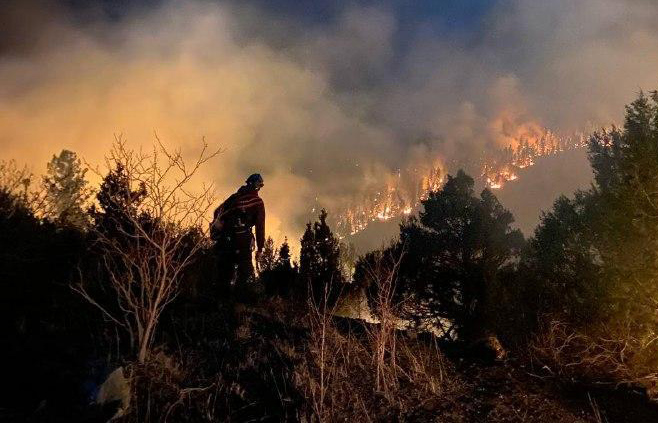
Silver City Hotshots conduct firing operations along Hwy 518 west of Holman during night shift for the Calf Canyon Fire in New Mexico, 2022. Photo by Santa Fe National Forest.

Today the Government Accountability Office released a report about the difficulties the federal agencies are having recruiting and retaining wildland firefighters.

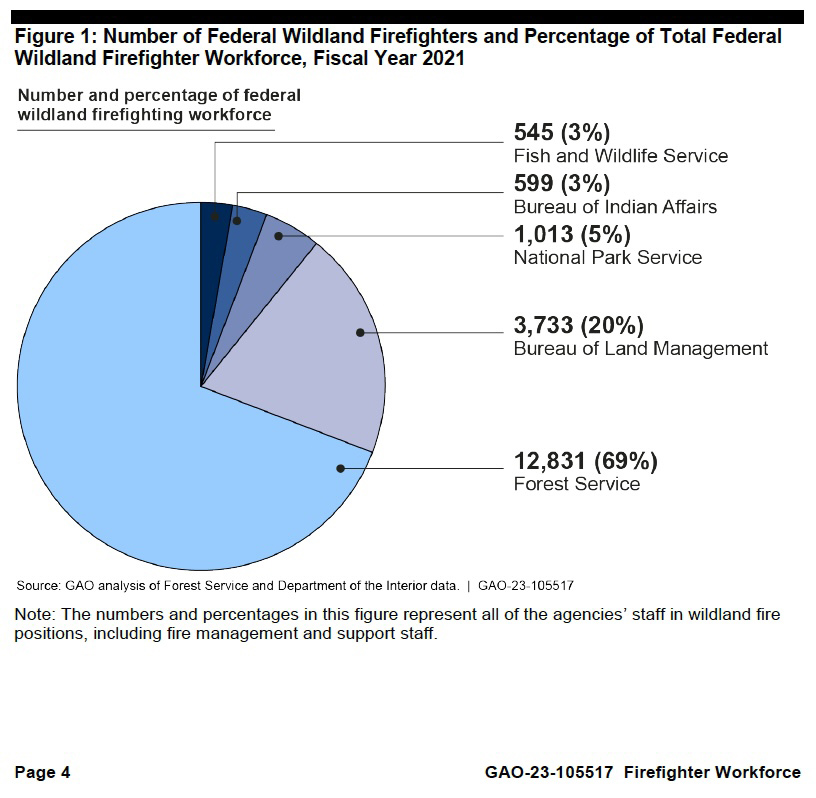
Congress requested the report, but apparently did not ask for recommendations. The 41-page document identifies numerous issues that adversely affect recruitment and retention, most of which are already well known to the five agencies that employ wildland firefighters — Forest Service, Bureau of Land Management, National Park Service,  Fish and Wildlife Service, and Bureau of Indian Affairs.

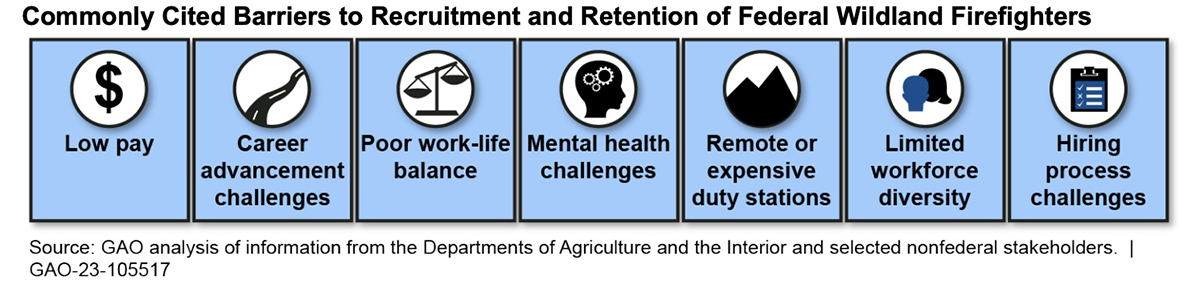
Barriers To firefighter R&R OPM
From the November 17, 2022 GAO report.

The report goes into detail about each of the major challenges, after receiving input from officials in the five agencies and a sample of 16 nonfederal stakeholders—including nongovernmental organizations representing active and retired federal firefighters and other organizations involved in firefighting issues, such as the National Association of State Foresters and the Western Governors’ Association.

Low pay was the most commonly cited barrier to recruiting and retaining federal wildland firefighters. Officials and all 16 stakeholders stated that the pay, which starts at $15 per hour for entry-level positions, is low. Officials and eight stakeholders also noted that the pay does not reflect the risk or physical demands of the work. Moreover, officials and stakeholders said that in some cases, firefighters can earn more at nonfederal firefighting entities or for less dangerous work in other fields, such as food service.

Some of the efforts being taken to improve hiring and retention are mentioned, including addressing pay, and offering slightly more time at home between fire assignments.

But much remains to be done, especially towards pay and a new Wildland Firefighter job series, which the five agencies have made very little progress developing.

Number of federal wildland firefighters by agency
Number of federal wildland firefighters by agency, from Nov. 17, 2022 GAO report.

Download the 41-page GAO report.

Report released for the Marshall Fire which destroyed 1,056 structures southeast of Boulder, Colorado

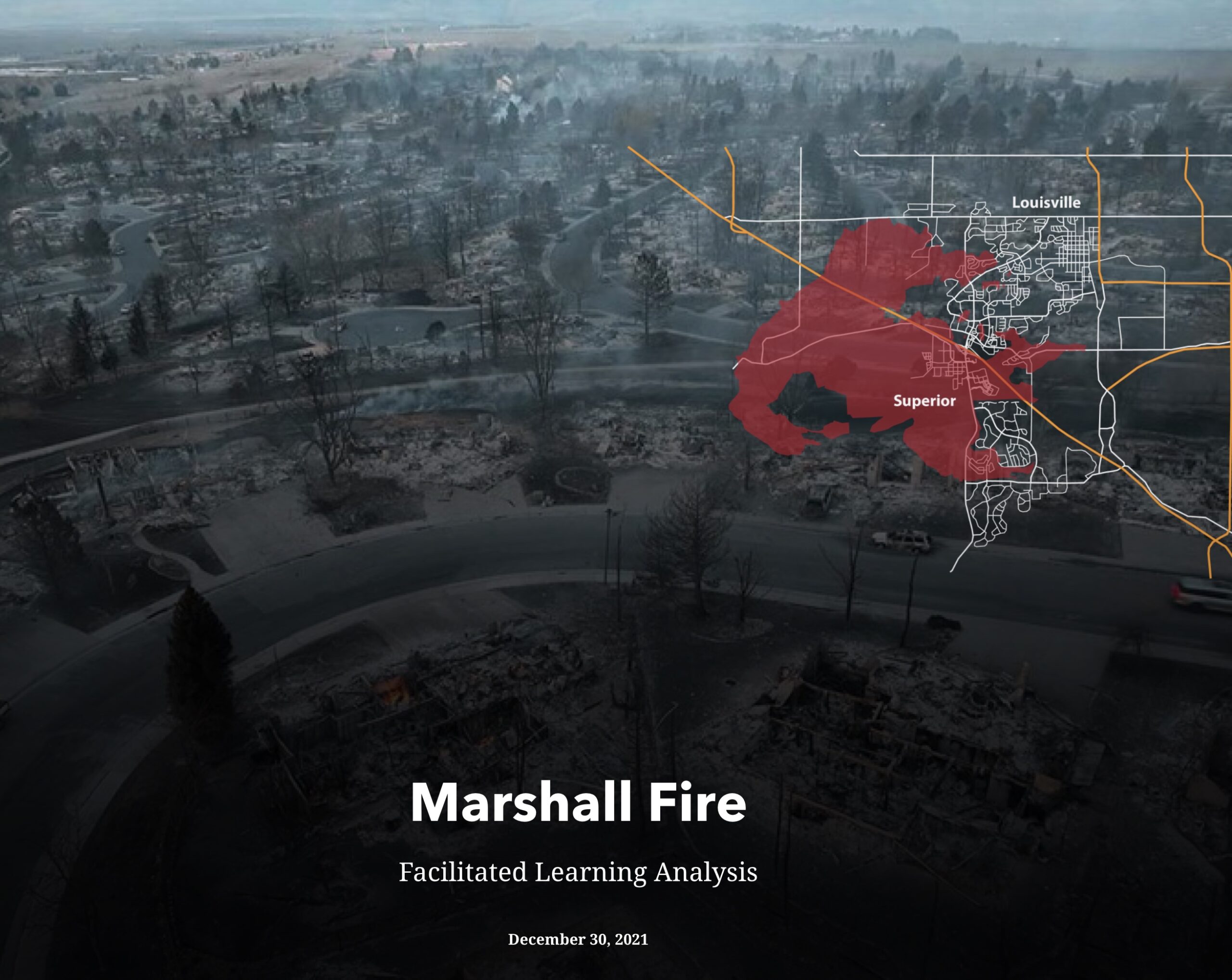
Marshall Fire FLA

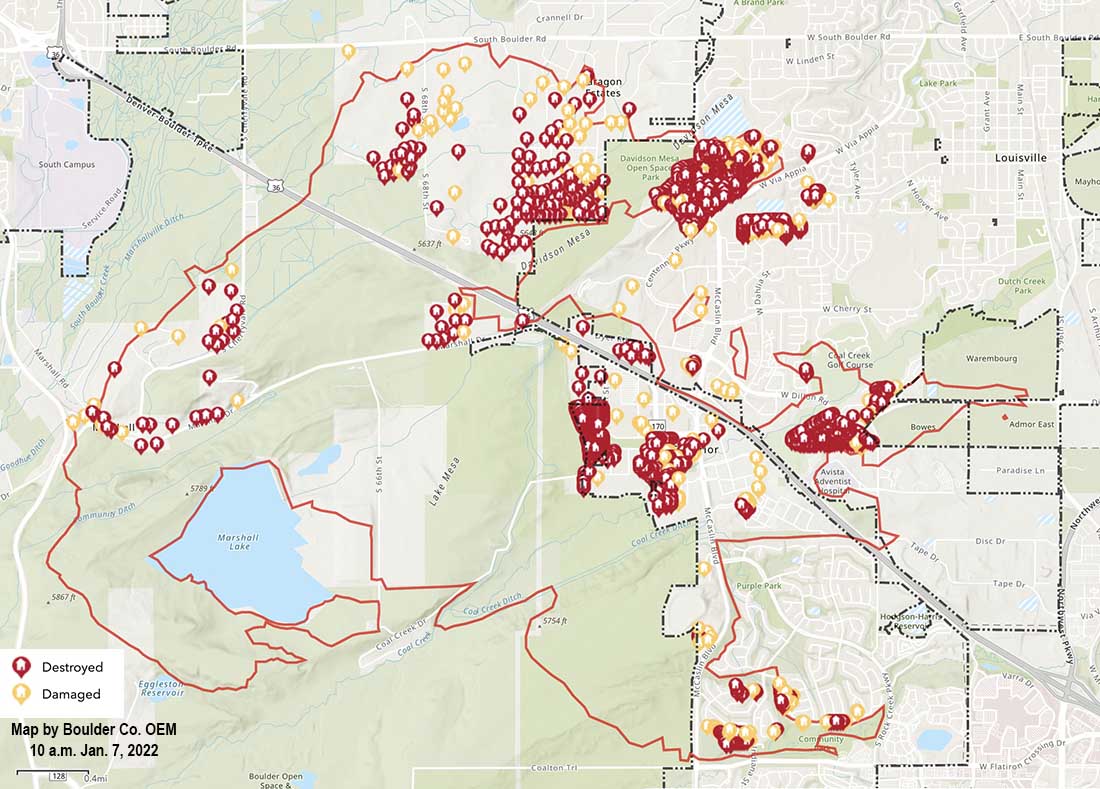
On the morning of December 30, 2021 the Marshal Fire ignited south of Boulder, Colorado. Pushed by winds gusting well over 40 mph, hurricane strength in some areas, it burned through subdivisions destroying 1,056 structures. By late the next day the winds had decreased and it was snowing on the 6,080-acre blaze.

At the request of the Colorado Division of Fire Prevention & Control a Facilitated Learning Analysis has been completed. The very lengthy and detailed document is in the Storymap format, which in this case includes many illustrations, photos, and maps.

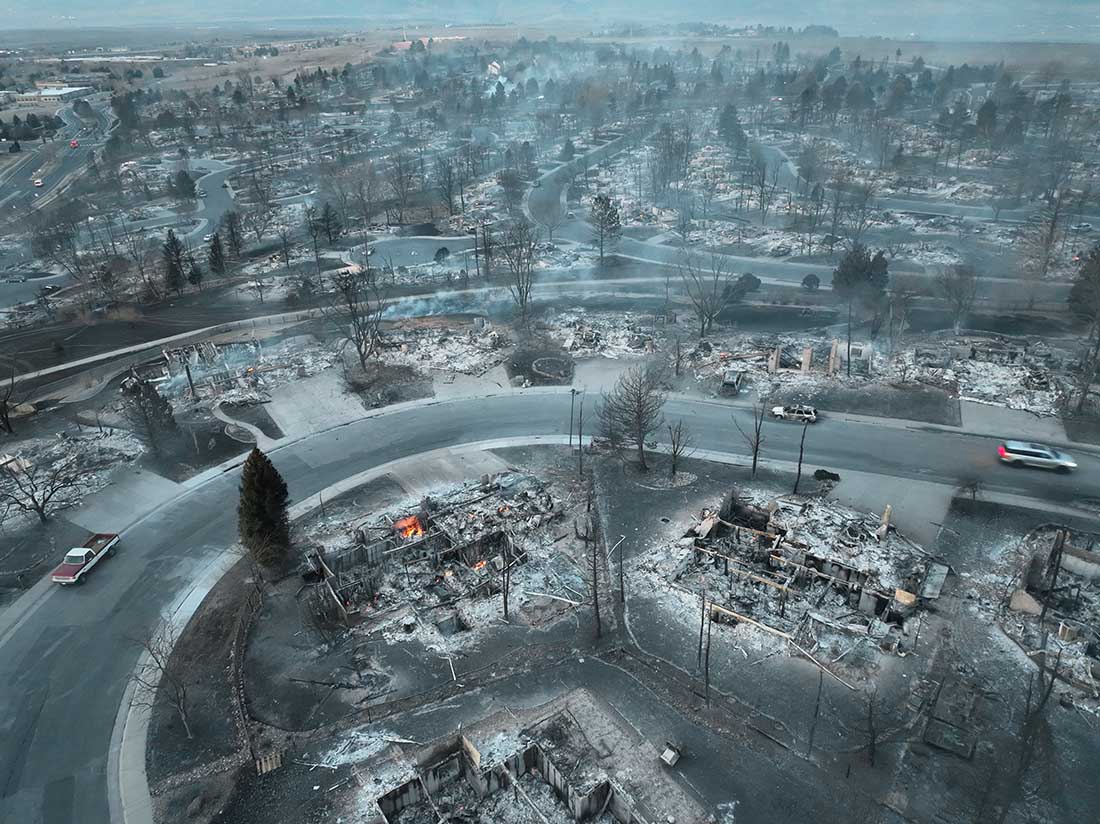
Marshall Fire, Louisville, Colorado, by WxChasing/Brandon Clement
Marshall Fire, Louisville, Colorado. Photo by WxChasing/Brandon Clement, Dec. 31, 2021.

Topics covered are weather, fuels, fire behavior, communication, ordering, evacuations, utilities, animal rescue, and hospital evacuation. It contains a wealth of information that could aid communities planning to prevent similar damage from inevitable wildfires, and manage them after they start.

Marshall Fire structures
Map of structures damaged or destroyed during the Marshall Fire which started December 30, 2021 near Boulder, Colorado. Map accessed 10 a.m. MST January 7, 2021.

Report released for engine rollover on Anderson Butte Fire

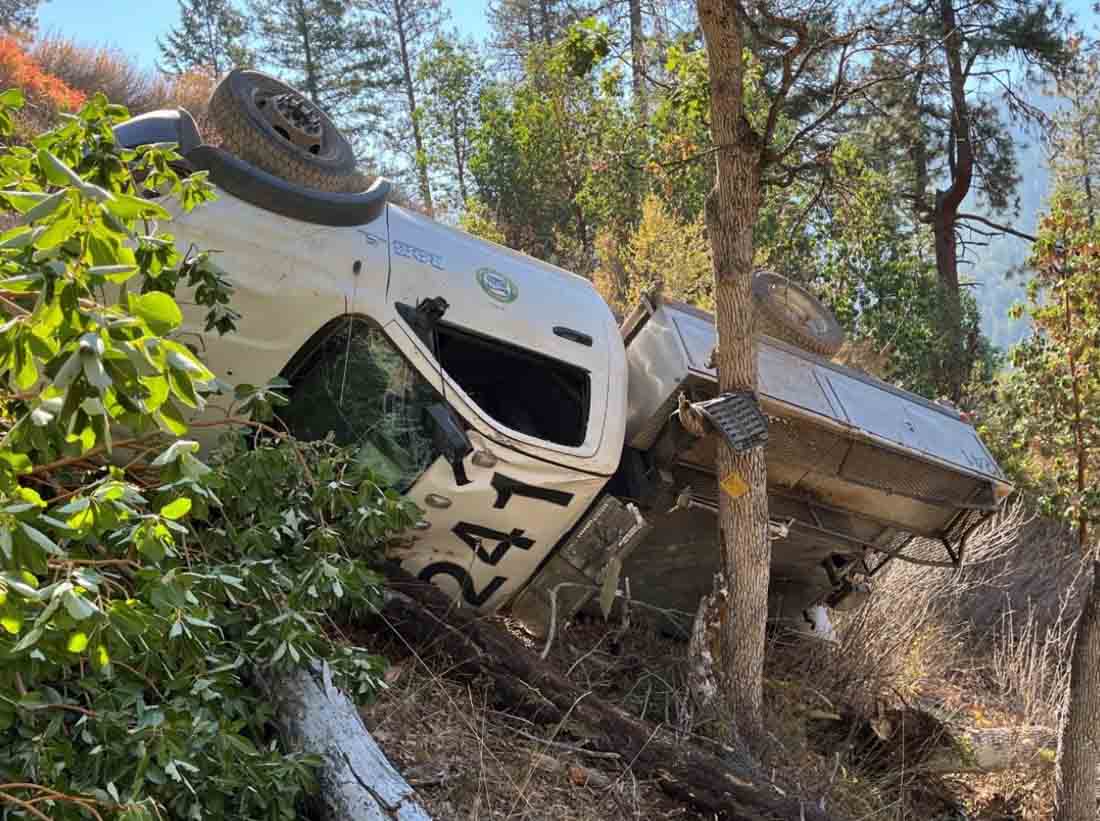
Engine rollover Anderson Butte Fire
Engine rollover on Anderson Butte Fire. Photo from the Wildland Fire Lessons Learned Center report.

On October 2 one of three responding Type 6 engines rolled over while responding to the Anderson Butte Fire in Oregon. On the gravel road much dust was being kicked up compromising the visibility of the drivers. They were heading into the sun and the driver of the rollover engine said he was relying on the emergency lightbars of the engines ahead of him to find his way.

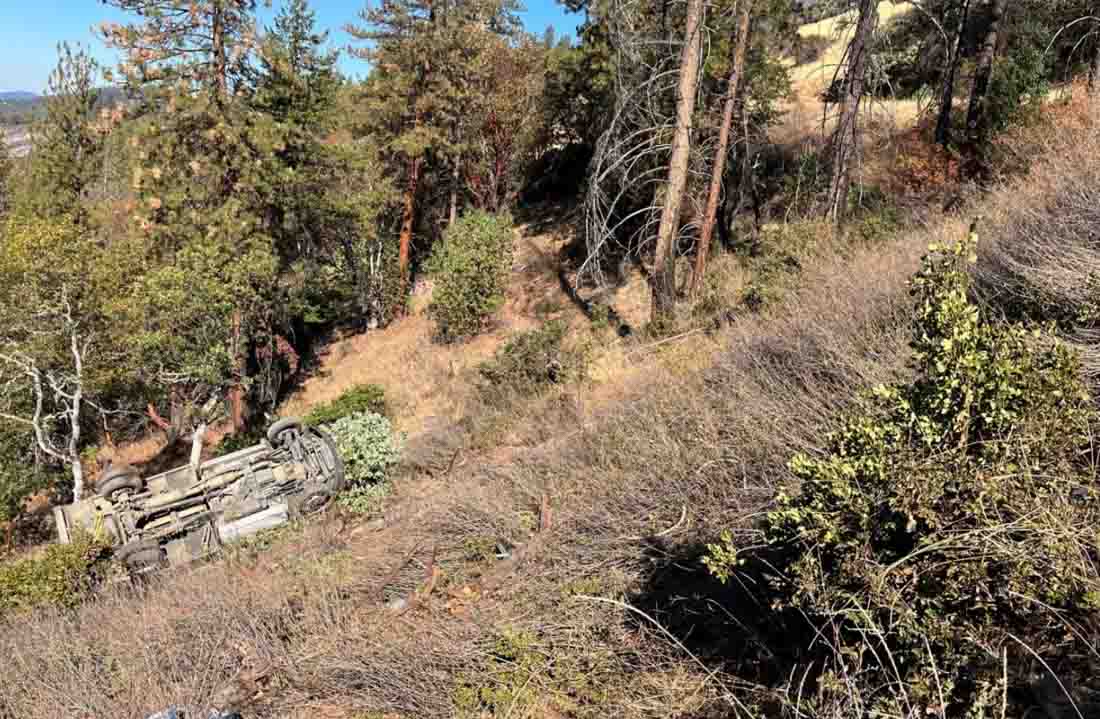
As he rounded a shaded corner, the sun hit the engine windshield and severely impacted his vision. He did not notice the curve in the road. Soon after, the Engine 241 driver—who was the vehicle’s sole occupant—noticed that the passenger side front tire was no longer contacting the ground. He attempted to steer back toward the road, but momentum caused the engine to tip. The engine then rolled more than two times before being stopped by a small grove of oak trees, finally coming to rest on the driver’s side, approximately 100 feet below the road.

The driver was able to climb out through the passenger window, walk up to the road, and radio for help.

Engine rollover Anderson Butte Fire
Engine rollover on Anderson Butte Fire. Photo from the Wildland Fire Lessons Learned Center report.

The driver indicated that he basically just had a laceration on his leg. He initially requested to continue to the fire, but was held back for further evaluation. A local ambulance crew arrived around 30 minutes later. The driver was evaluated for head trauma and his lacerated leg was treated. The ambulance was released, the driver was instructed to return to his home unit, and was driven there by his supervisor.

The engine, which was totaled beyond repair, was retrieved by a wrecker the following day.

Two of the lessons pointed out in the report were:

  • Continuously evaluate conditions, as dust and sun angle make for less visibility, travel at slower speeds, and allow for more space in between yourself and the vehicle in front of you.
  • If you can’t clearly see the road: STOP.

Report: US Forest Service is sometimes overstating fuel management accomplishments

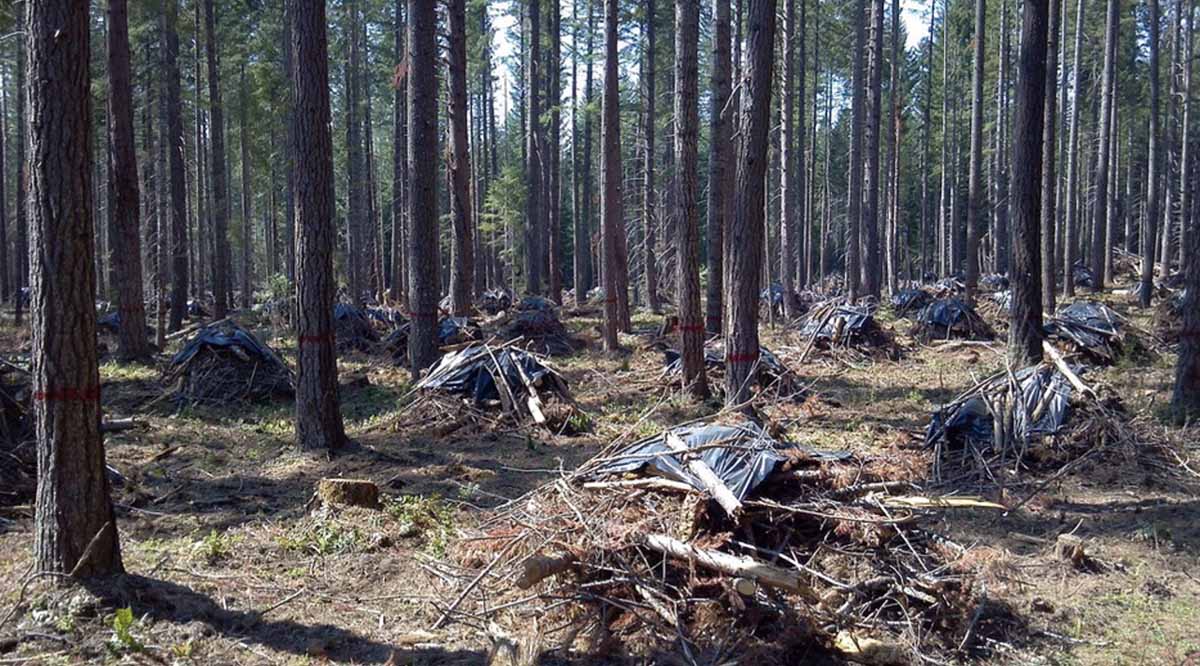
Forest thinning in the Umpqua National Forest
Forest thinning project in the Umpqua National Forest. Credit, Oregon State University.

NBC News conducted an investigation into some of the claims and statistics about vegetation management projects that are designed to improve forest health and/or and reduce the threat of wildfires. The emphasis of the very lengthy article about their findings was not so much to question the need or effectiveness of the hazardous fuel reduction projects, but to examine their claims of accomplishments, which are sometimes misleading.

Many fuel management projects on National Forests include multiple treatments of a single area. There can be some combination of thinning, pruning, piling, chipping, or prescribed burning, all considered independently and occurring at different times. In an extreme scenario, if the project was 100 acres and five different treatments occurred, each might be reported as accomplishing 100 acres of fuel treatment. They then tell Congress they treated 500 acres.

The NBC article gave an actual example of a project on the San Bernardino National Forest in Southern California near Big Bear Lake. The 173-acre project had multiple treatments. From the article:

They first [step] appeared in 2016, when the Forest Service assigned workers to cut trees to reduce the area’s density. The agency came back two years later, pruning the remaining trees and piling the cut wood across the full 173 acres, then chipping 52 acres of it. A few months later, workers burned 18 acres of the piles.

The pruning, piling, chipping and burning were entered as separate items in the database and the agency reported them as 416 acres of treated land in its 2019 fiscal year totals to Congress. In summer 2021, it burned the remaining 155 acres of piles, reporting them in that year’s totals.

The Forest Service’s efforts ultimately reduced fire risk on 173 acres of land, but they were reported to Congress as 744 acres over four fiscal years.

“These acres are reported six times because we must request funding to accomplish the full suite of activities on the same 173 acres,” said [Wade] Muehlhof, the service’s spokesperson. “Each of these activities needs to be planned and budgeted for annually.”

The Forest Service tells Congress that it reduces wildfire risk on more than 2.5 million acres of its land every year. But this process of recounting the same acres any time more than one type of work is completed means that far less land is protected from damaging fire than is being reported.

NBC estimates that nationwide the FS has overstated accomplishments by 2.5 million acres, or 17 percent. In California the numbers are higher, 27 percent in the past five years, and by roughly 35 percent in the places near the most people, the state’s wildland urban interface areas.

The NBC article was written by Adiel Kaplan, with assistance from Monica Hersher and Joe Murphy.