Wing box replacements in the USFS C-130s

Coast Guard C-130H No 1714
Coast Guard C-130H No 1714, October, 2008. This is one of the seven C-130s being transferred to the U.S. Forest Service. Photo by PhantomPhan1974

The legislation that enabled the transfer of seven C-130H aircraft from the Coast Guard to the U.S. Forest Service to serve as air tankers required that the wing boxes be replaced and other maintenance be performed.

C-130H wing box, diagramA wing box is the core or backbone of an aircraft. In a C-130 it sits atop the fuselage and forms the attachment point for both wings. A failure of the wing box during flight could be catastrophic.

In the mid-2000s, center wing boxes (CWB) on C-130s began showing cracks earlier than expected. Many of the aircraft were grounded or placed on restricted flight status, including some that were flying in Iraq and Afghanistan. In 2006 the Air Force began a program to replace them on all C-130 models except the C-130J which entered the inventory in February, 1999. By 2020, 155 C-130s will have new CWBs that are the same ones being manufactured today for the C-130J.

Removing C-130H wing box at Robins AFB
Removing a C-130H wing box at Robins AFB. USAF photo by Sue Sapp.

The total cost of a CWB kit in 2011 was $6.7 million, including installation which takes about 10 months.

C-130 1706 wing box replacement
A Coast Guard C-130, #1706, receiving a CWB replacement at Robins AFB. It was completed August 12, 2012. This aircraft is one of seven being transferred to the U.S. Forest Service. (U. S. Air Force photo by Sue Sapp)

A couple of years ago the Coast Guard identified six C-130Hs to undergo CWB replacements. The first, #1706 seen in the photo above, was completed August 12, 2012. A second C-130 began the process in November, 2012 and should have been complete by September, 2013. The other six aircraft numbers that are being transferred to the USFS are 1708, 1709, 1713, 1714, 1719, and 1721. Many of the CWB replacements for the Air Force and Coast Guard aircraft are being done at Robins Air Force Base in Georgia.

The Coast Guard expected that the CWB and other upgrades would allow the C-130Hs to serve until 2027, after which they would be replaced by new aircraft. They have already started ordering C-130Js, tagging on to Air Force procurement programs..

Wildfire Today has found information which indicates the seven C-130s being given away by the Coast Guard were manufactured between 1983 and 1987, but this is not yet confirmed. If the data is accurate, they are 27 to 31 years old now, and will be 40 to 44 years old in 2017. A person might wonder why the Coast Guard can buy new C-130Js while the U.S. Forest Service has to make do with hand-me-down aircraft being discarded by another agency.

A C-130H of Israel Air Force receives a new wing box
A C-130H of Israel Air Force receives a new wing box. Photo by IAI.

In addition to replacing the CWBs, the legislation requires “progressive fuselage structural inspections” for the seven Coast Guard C-130s being transferred to the USFS. If they receive the standard primary structure inspection — known as programmed depot maintenance — that process will take between 180 and 200 days. In February, 2013, the Ogden Air Logistic Complex at Hill Air Force Base in Utah began performing some of the programmed depot maintenance on the Coast Guard C-130s, aircraft which are similar to the C-130s flown by the Air Force, but they have more avionics for radios and radar.

The legislation directed that no more than $130 million be spent by the Department of Defense to modify and maintain the seven C-130s before the transfer; any additional funds would have to come from the USFS. Doing a little math here, if the CWB replacement costs $7 million each, the programmed depot maintenance runs $3 million per aircraft (to pick a number out of the air), and the installation of the retardant tank system is $4 million (Coulson’s preliminary estimate is $3.5 million each for their Aero Union/Coulson RADS tank), we are looking at a total of about $98 million — within the $130 maximum allowed by Congress. If $14 million is subtracted for CWB replacements that have already occurred on two aircraft, that total is brought down to $84 million.

However, there will no doubt be other work that will have to be done to the aircraft, such as installation of radios, a real time location tracking system, and perhaps other avionics and a stress monitoring system. It is also possible that unneeded equipment such as a cargo handling system and armor will have to be removed, all of which could require more USFS dollars unless these items are included in the total conversion project funded by the military, rather than done later by the USFS. These additional tasks would push the price closer to the $130 million threshold.

Robins Air Force Base supports MAFFS aircraft

MAFFS Cheyenne


MAFFS Cheyenne
A MAFFS unit inside a MAFFS 8, a Charlotte, North Carolina Air National Guard C-130 at Cheyenne, Wyoming, May 5, 2013. Photo by Bill Gabbert.

We ran across the following article in an Air Force newsletter published June 21, 2013 at Robins Air Force Base in Georgia.

****

Robins supports fire suppression capabilities

BY JENNY GORDON
jenny.gordon at robins.af.mil

While the Black Forest, Colo., fire was small when it started June 11, it eventually scorched more than 14,000 acres and took the work of more than 600 people to get it under control.

The Air Force was among those listed to help.

It’s efforts included the use of the U.S. Forest Service-owned program known as MAFFS, or Modular Airborne Fire Fighting System.

MAFFS is a self-contained aerial firefighting system that fits inside special C-130 aircraft without requiring structural modification, which allows them to be loaded quickly.

At the Warner Robins Air Logistics Complex, one of its missions is programmed depot maintenance of C-130s. In all, four Air Force units have aircraft equipped with the firefighting system, including the 302nd Airlift Wing, Peterson Air Force Base, Colo.

The MAFFS program is supported in another way at Robins by way of engineering support and troubleshooting.

“Our responsibility is to ensure the air-worthiness and safety of the C-130s using the MAFFS system,” said Barry Bunn, Tactical Airlift Division chief engineer.

That responsibility includes making sure the equipment is safe and in proper working condition, including its tubing and tanks.

A small team of engineers here can go out to an aircraft to test the equipment, but most of the oversight is done through up-front design reviews and testing which ensures the system can operate safely and is properly secured within the plane.

A recent example of a project was the addition of grounding wires to the MAFFS-equipped C-130s. When fire retardant is discharged out of the system, a nozzle extends. To err on the safe side, previous restrictions had been placed on how close a plane could fly to a thunderstorm. This is important because there are times when a plane may have to fly near a storm in order to quickly get to a fire.

The new grounding wires now provide additional safety measures which allow the aircraft to safely fly closer to storms as needed.

Robins also successfully performed a permanent modification to radios that are used on the aircraft when communicating with emergency personnel and Forest Service.

The project involves 32 aircraft, and provides a standardized installation, according to Robert Siperko, C-130 Modification program manager.

Aircraft that use MAFFS will soon be equipped with the same layout for all radios; all the wiring will be the same and radios will be installed in the same location.

Two Air Force Reserve Command C-130s and air crews from the 302nd Airlift Wing supported the Colorado firefighting efforts out of Peterson Air Force Base, Colo., earlier this month.

Report: two Coast Guard C-130s to be transferred to USFS will not need major maintenance

Coast Guard C-130H No 1719
A Coast Guard C-130H, No. 1719, one of the aircraft to be transferred from the Coast Guard to the U.S. Forest Service. Photo taken October, 2008 by Rico Leffanta.

A reporter for Gannett newspapers in D.C. interviewed me yesterday for an article he later wrote about the transfer of the seven C-130Hs and up to 15 C-23B Sherpas from the Coast Guard and the military to the U.S. Forest Service’s firefighting division. To the regular readers of Fire Aviation there is little new information in the piece. However, he told me that a spokesperson for Senator John McCain, who wrote the amendment that requires the transfer, said two of the seven C-130Hs will not require major maintenance and could be available as air tankers this year after they are converted to air tankers.

The reporter also interviewed Florida State Forester Jim Karels, who led the 54-person team that investigated the June 30 deaths of 19 members of the Granite Mountain Hotshots on the Yarnell Hill Fire.

The article looks to be pretty factual, except that he misquoted me saying the C-130H maintenance at the Depot “may be placed ahead of the line”. I told him there was no indication, in spite of the fact that the maintenance is required to be promptly scheduled, that they would be placed at the head of the line. Scheduling the work and performing it are two different things. The reporter also said the Pfeiffer Fire continues to burn, however according to InciWeb 100 percent containment was expected on December 20, 2013.

More information about the transfer of Coast Guard and military aircraft to the U.S. Forest Service.

Link to the legislation authorizing the transfer.

Coulson demonstrates their C-130 tank system

Coulson Aviation USA has produced a video that demonstrates some of the capabilities of their 3,500-gallon Coulson RADS-XL Tank and the C-130Q which began flying under contract this fall, designated as Tanker 131. They shot the video at and near the San Bernardino air tanker base using cameras in their Sikorsky S76 helicopter, Firewatch 76. It shows the air tanker making down hill drops, which not every modern air tanker can accomplish very well.

The company bought the intellectual property for the RADS tank from Aero Union and in the last few months has been asked for price quotes for the tank system from a number of potential customers.

Britt Coulson told us:

Our plan is to manufacture and assemble the upper hopper and sell lower hopper subassembly kits where either we can complete the airframe install or another Lockheed Service Center can do the work.

Mr. Coulson said they have not finalized a price yet but it will be somewhere around $3.5 million installed. It would not surprise us if the U.S. Air Force will be calling for a quote, since they will be putting gravity tanks in the seven C-130Hs which will be transferred to the U.S. Forest Service after new wing boxes and fire retardant tanks are installed. The tank’s previous approval by the Interagency AirTanker Board will eliminate one very costly and time-consuming step in the process of converting an aircraft into an air tanker.

Defense bill passes, clearing way for C-130H transfers to the USFS

Late Thursday night the Senate passed the 2014 National Defense Authorization Act by a vote of 84-15, which passed the House last week. President Obama has already said he will sign it which clears the way for the aircraft transfers we have written about previously. (UPDATE, December 27, 2013: the President signed the bill December 26, 2013.)

The bill contained provisions for the U.S. Forest Service to receive seven C-130H Coast Guard aircraft which will be converted to air tankers, in lieu of the C-27Js they had been expecting. It requires the Air Force to “promptly schedule” the “center and outer wing-box replacement modifications, programmed depot-level maintenance, and modifications necessary to procure and integrate a gravity-drop aerial fire retardant dispersal system in each such HC–130H aircraft”.

The Air Force will spend a maximum of $130 million of for all of the maintenance and modification work on the seven aircraft. The bill also specifies that no more than $5 million shall be spent on each HC–130H aircraft for the “gravity-drop aerial fire retardant dispersal system”. If the modifications exceed these limits, the additional funds will have to be provided by the U.S. Forest Service.

The Forest Service will also receive up to 15 C-23B+ S Sherpa aircraft which are expected to be used as smokejumper platforms. Earlier this week representatives from the USFS were in Oklahoma evaluating the Sherpas they were expecting to receive.

If C-130s are transferred to the USFS, they will have gravity retardant tanks

We were able to find documentation that if the seven Coast Guard C-130H aircraft are transferred to the U.S. Forest Service as required in the National Defense Authorization Act for Fiscal Year 2014 (NDAA), they WILL have gravity assisted retardant tanks, rather than a Modular Airborne FireFighting System (MAFFS) pressurized tank like is used on the military MAFFS C-130s.

The NDAA passed in the House on December 12 with a vote of 350 to 69. Its next stop will be the Senate, which is expected to take up the bill this week before they adjourn on December 20.

We found the retardant tank requirement in the 1,106-page NDAA bill along with some other interesting details. There are time elements mentioned, such as allowing 45 days after the act passes to begin the transfer of the C-130Hs. And “at the first available opportunity, promptly schedule” the “center and outer wing- box replacement modifications, programmed depot-level maintenance, and modifications necessary to procure and integrate a gravity-drop aerial fire retardant dispersal system in each such HC–130H aircraft”.

A maximum cost of $130 million of Air Force funds was established for all of the maintenance and modification work on the seven aircraft. The bill also specifies that no more than $5 million shall be spent on each HC–130H aircraft for the “gravity-drop aerial fire retardant dispersal system”. If the modifications exceed these limits, the additional funds will have to be provided by the U.S. Forest Service.

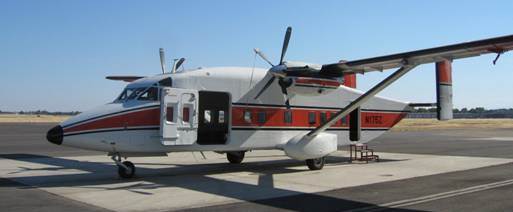
Redding smokejumpers' Shorts 330 Sherpa
Redding smokejumpers’ Shorts 330 Sherpa. USFS photo.

The transfer of “not more than” 15 C-23B+ S Sherpa aircraft” is required to begin within 45 days of the passage of the bill. If they receive them, the USFS could use the Sherpas for smokejumping and for hauling cargo. In 1991 the agency acquired six Shorts 330 Sherpas and has used them as smokejumper platforms. The 330s are similar to the C-23B+ Sherpas but have smaller engines and a lower cruising speed. The military C-23B+ S Sherpas also have a rear drop-down cargo door which could be used by smokejumpers. The transfer of the Sherpas would allow the USFS to stop contracting for jumper aircraft such as the Twin Otters and have an all-Sherpa jumper fleet that is Government-Owned/Contractor Operated, bringing some standardization to the jumper fleet. The acquisition of 15 Sherpas might even make the retirement of the DC-3 more palatable.

House passes bill to transfer C-27J aircraft to Coast Guard; USFS would receive C-130Hs

C-27J

On Thursday the House passed the National Defense Authorization Act for 2014 that contains provisions for the Forest Service to receive seven C-130H aircraft in lieu of the C-27Js they had been expecting. The bill passed with a vote of 350 to 69. Its next stop will be the Senate, which is tied up debating executive nominations, but they are expected to take up the bill next week before they adjourn on December 20.

The last time we reported on the possible transfer of excess C-27J aircraft from the Air Force to the Forest Service, there had been a proposal to instead, give all 14 of the remaining C-27Js to the Coast Guard if the Coast Guard would transfer seven C-130Hs to the Forest Service to be used as air tankers. With an agreement reached on December 9 regarding the National Defense Authorization Act for Fiscal Year 2014 between Sen. Carl Levin, D-Mich., and Sen. James M. Inhofe, R-Okla., chairman and ranking member of the Senate Armed Services Committee, that proposal remained alive.

The bill passed by the House today:

  • Requires the Coast Guard to transfer seven HC-130H aircraft to the Air Force.
  • Requires the Secretary of the Air Force to spend up to $130 million to upgrade those seven aircraft to make them suitable for Forest Service use a firefighting aircraft.
  • Requires the Forest Service to accept the upgraded HC-130H aircraft in lieu of exercising their right to take seven excess C-27J aircraft.
  • Transfers 14 excess C-27J aircraft from DOD to the Coast Guard.
  • Transfers up to 15 C-23 Sherpa aircraft from DOD to the Forest Service.

Before transferring the C-130Hs to the Forest Service, the Air Force would:

…perform center and outer wingbox replacement modifications, progressive fuselage structural inspections, and configuration modifications necessary to convert each HC-130H aircraft as large air tanker wildfire suppression aircraft.


Thanks go out to Ross

Legislation introduced to transfer 7 C-130Hs to US Forest Service

The U.S. Coast Guard’s idea to give some C-130s to the U.S. Forest Service if the Coast Guard can get at least 14 of the Air Force’s C-27Js is gaining some traction.

Of the 507 amendments that have been introduced to modify the National Defense Authorization Act for Fiscal Year 2014 (Senate Bill 1197), 8 of them are sponsored by Senator John McCain. All of the Senator’s lengthy amendments, covering many topics, have nearly identical language requiring the Department of Homeland Security, referring to the Coast Guard in this case, to transfer seven C-130H aircraft to the Air Force without reimbursement. Then the Air Force will be required to :

…perform center and outer wingbox replacement modifications, progressive fuselage structural inspections, and configuration modifications necessary to convert each HC-130H aircraft as large air tanker wildfire suppression aircraft.

The aircraft will then be transferred to the Forest Service to be used as air tankers, again without reimbursement.

If the bill passes and Senator McCain’s amendment remains intact, two big IFs, we assume that the USFS would use the C-130H air tankers as Government-Owned/Contractor-Operated assets, a new type of venture for the agency. CAL FIRE has been using this model for years with their fleet of 23 S-2T air tankers and it seems to work well for them.

(UPDATE 1-7-2014: The bill passed. Here is a link to the text.)

In addition, the McCain amendments require the Army to transfer, in FY 2014 without reimbursement, up to 15 Short C-23B+ Sherpa aircraft to the Forest Service to be used in fire management.

Apparently Senator McCain has given up on his previous proposal. In July of 2012, with Senator Bill Nelson (D-FL) and Senator Diane Feinstein (D-CA) he introduced legislation known as the Wildfire Suppression Aircraft Transfer Act of 2012 (S. 3441) ”to help replenish the agency’s aging airtanker fleet”. It would have required the transfer of 14 C-27Js to the Forest Service. The bill died, and since then the USFS has said they want 7 of the aircraft.

The Coast Guard would like to have all 21 of the C-27Js that the Air Force is giving away, but since Deputy Defense Secretary Ashton Carter made the October 28 decision to give seven of them to the U.S. Special Operations Command (SOCOM), that left the USFS and the Coast Guard to fight over the remaining 14. In an interview we posted November 13, Coast Guard Commandant Admiral Robert J. Papp said they wanted all 21, but  ”…we are going to press ahead and get as many of those [remaining 14] as we can.” Then he floated the idea of trading their old C-130Hs for the seven C-27Js that appeared to be heading to the USFS.

The upgraded C-130H with the wingbox replacement and an Aero Union RADS 3,500-gallon constant-flow GPS-regulated retardant tank could be an excellent air tanker for the USFS. This is basically what Coulson has done with their Tanker 131, a C-130Q which is nearly identical to the C-130H.

Redding smokejumpers' Shorts 330 Sherpa
Redding smokejumpers’ Shorts 330 Sherpa. USFS photo.

If they receive them, the USFS could use the Short C-23B+ Sherpa aircraft for smokejumping and for hauling cargo. In 1991 the agency acquired six Shorts 330 Sherpa’s and has used them as smokejumper platforms. The 330s are similar to the C-23B+ Sherpa but have smaller engines and a lower cruising speed.

Coast Guard wants to trade with the USFS, C-130s for C-27s

(video no longer available)

The fate of the 21 almost new C-27J Spartan aircraft that the Air Force wants to get rid of is still not clear. On October 28 Deputy Defense Secretary Ashton Carter made the decision to give seven of them to the U.S. Special Operations Command (SOCOM), but he has not determined the fate of the remaining 14 according to Pentagon spokeswoman Ann Stefanek. The U.S. Forest Service wants 7 of them for firefighting operations.

In the video above, Coast Guard Commandant Admiral Robert J. Papp said they wanted all 21, but  “…we are going to press ahead and get as many of those [remaining 14] as we can.” The portion of the interview in which the C-27J is discussed begins at 4:25.

Adm. Papp also broke the news that the Coast Guard is negotiating with the U. S. Forest Service to give them some old C-130s if the Coast Guard can get all 14 C-27Js after SOCOM takes the first 7.

Of course this throws a large monkey wrench into the Forest Service plans. But, the C-27J would not qualify as a next-generation air tanker since it could only carry 1,850 gallons of retardant according to a study that cost the agency $54,000. They want large air tankers that can carry at least 3,000 gallons, however there is something to be said about a mix of aircraft with their individual niche capabilities. A C-27J might be better used as a smokejumper platform, to haul cargo to fires, and transport two or three 20-person fire crews.

The Admiral did not say what model of C-130s the Coast Guard wants to get rid of, although he did mention C-130Js at one point. Nor did he say WHY the Coast Guard wants to get rid of the old C-130s (and get almost brand new replacement aircraft!). If they are low-usage C-130Js in good shape with lots of life left in them, the USFS could create a government-owned, contractor-operated large air tanker program. But Coast Guard aircraft are used in a maritime environment, much like the old P2Vs which were converted to air tankers, which could accelerate aging issues.

The text below is a transcript of a portion of Adm. Papp’s statement in the interview:

We were interested in getting our hands on all 21 of them. Special Operations Command I believe is going to get 7 of them and some number of aircraft were promised or at least directed to the Forest Service for firefighting.

It’s difficult for me to talk about the details of the negotiations right now but we’re working with the Forest Service to make sure that that is the particular aircaft that would suit their needs. We have C-130s that we can convert and turn over to them that might be better for them but we have staff that are working right now. Ideally out of the remaining aircraft we would like to get 14, that allows us to fully outfit 3 air stations and anything less than that, we would have to go back and really reevaluate the project… We are going to press ahead and get as many of those as we can.

In July of 2012 Senators John McCain (R-AZ), Senator Bill Nelson (D-FL), and Senator Diane Feinstein (D-CA) introduced legislation known as the Wildfire Suppression Aircraft Transfer Act of 2012 (S. 3441) ”to help replenish the agency’s aging airtanker fleet”. It would have required the transfer of 14 C-27Js to the Forest Service. The bill died, and since then the USFS has said they want 7 of the aircraft.

C-27Js at Mansfield, Ohio Feb. 13, 2013. US Air Force photo by Staff Sgt. Joseph Harwood
Air National Guard C-27Js at Mansfield, Ohio Feb. 13, 2013. US Air Force photo by Staff Sgt. Joseph Harwood.

The report the USFS commissioned concluded the C-27J could carry 1,850 gallons of retardant if 3,200 pounds of unneeded equipment were removed, including flight deck armor (approximately 1,100 lbs), miscellaneous mission equipment such as litter stanchions, tie-down chains, ladders etc. (approximately 1,000 lbs), and the cargo loading system (approximately 1,200 lbs).

Smokejumpers could exit the C-27J through the two side doors or the aft ramp. Depending on how the aircraft was configured, it could transport between 24 and 46 jumpers. According to the report, the aircraft configuration can be changed and fitted with standard outer and center seating to accommodate 68 passengers with limited personal equipment plus 2 loadmasters. The maximum allowable flying weight for a hotshot crew is 5,300 pounds.

The study said the aircraft could carry between 12,222 and 25,353 pounds of cargo.


Thanks go out to Dave

Tanker 131 drops on its first fire

Air Tanker 131, Coulson’s C-130Q, made its first drop on a wildfire Friday, September 20. It split one load, dropping on both flanks of the Sanctuary Fire on the Los Padres National Forest near the Hopper Mountain Condor Sanctuary where the U.S. Fish and Wildlife Service raises the Condors.

The video above is the first drop for T-131 ever on a wildfire. The second video, below, is the second drop on the other flank.

Tanker 131 and T-44, a P2V, worked the fire with lead plane Bravo-52. The fire was contained at 27 acres.

A big thanks go out to Gary Monday of Ventura County Fire Department who shot the video.