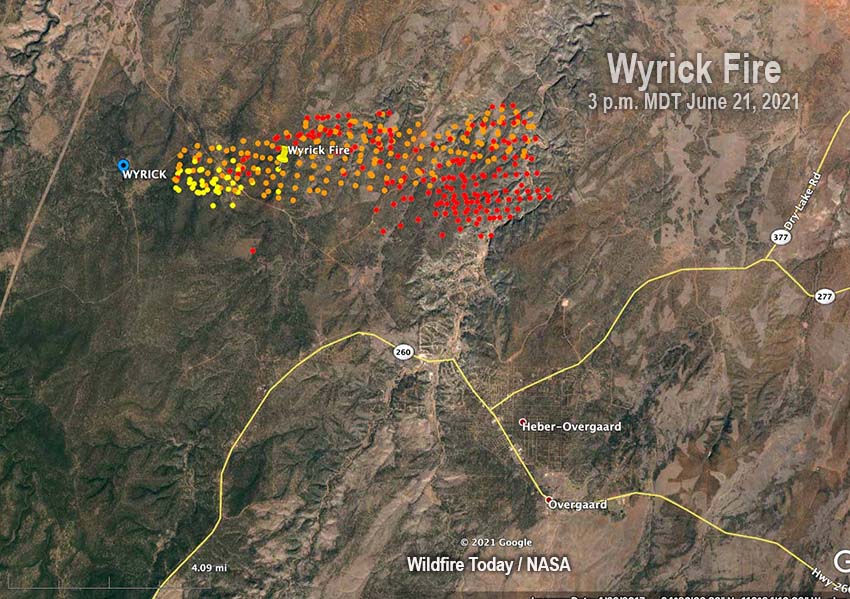
The red dots on the map represent heat detected on the Wyrick Fire by satellites at 3 p.m. MDT June 21, 2021. The other colors were detected earlier.
On Monday during a 3 p.m. satellite overflight the Wyrick Fire was about 2 miles north of Highways 260 and 277 at the closest points, and was three miles from the intersection of the two highways. Most of the spread of the fire on Monday was on the southeast side toward Heber.
To see all articles on Wildfire Today about the Wyrick Fire, including the most recent, click HERE.
From the Incident Management team at about 6 p.m. Monday:
“The Wyrick Fire has advanced toward Heber, and reached a starting point for setting evacuations into motion in Heber and Overgaard. Current status as of 3 pm:
“Areas in READY Status: Overgaard south of Highway 260 High Country Pines in Heber Kendall Ranch / Camp Ponderosa.
“Areas in SET Status: Areas in Heber not identified as Ready or Go status Chevelon Ranches and Retreat Communities in Overgaard south of Highway 277 and North of Highway 260.
“Areas in GO Status (leave now): Antelope Valley Despain Ranch Heber and Overgaard North of 260 AND 277.”
Originally published at 9:56 p.m. MDT June 20, 2021.
Wyrick Fire by Jeff Zimmerman, 7 p.m. June 20, 2021.
During the first four hours after it was reported at 2 p.m. Saturday June 19, the Wyrick Fire in east-central Arizona was mapped at 173 acres. But Sunday the lightning-caused fire grew substantially while being pushed by outflow winds from thunderstorms. Based on heat detected by satellites, by 3:18 p.m. MDT it had grown to at least 450 acres.
An advisory from the Incident Management Team Sunday afternoon said it was 1.5 miles from 95A and was spreading in all directions.
Late in the afternoon it was producing a very large smoke column topped by a pyrocumulus cloud and causing spot fires up to one-quarter mile ahead. It is burning in pinyon-juniper and grass.
At 3:18 p.m. Sunday the fire was in the Apache Sitgreaves National Forest 5 miles northwest of Heber, 3 miles north of Highway 260, and 48 miles east of the Backbone Fire. (See the map below.)
The red dots represent heat detected by satellites on the Wyrick Fire at 3:18 p.m. MDT June 20, 2020.
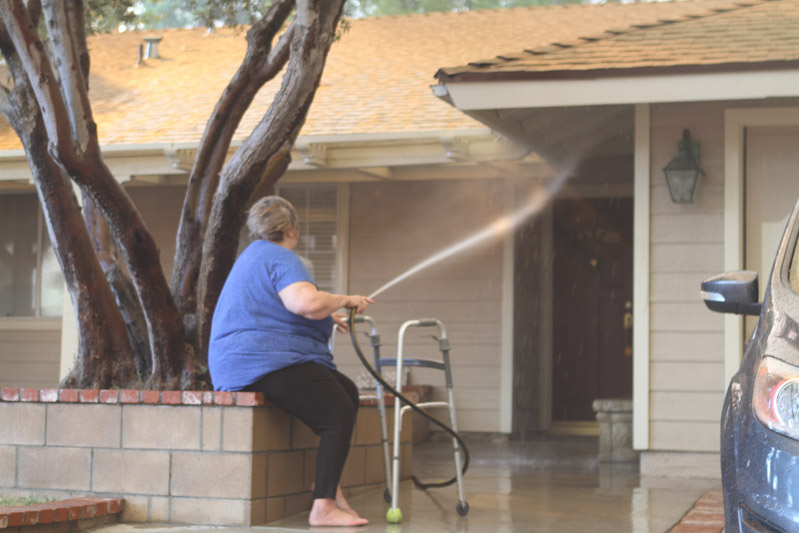
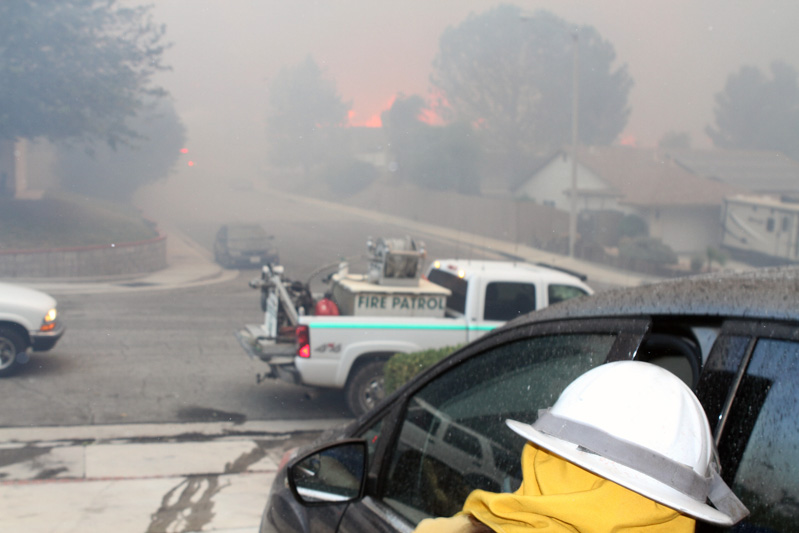
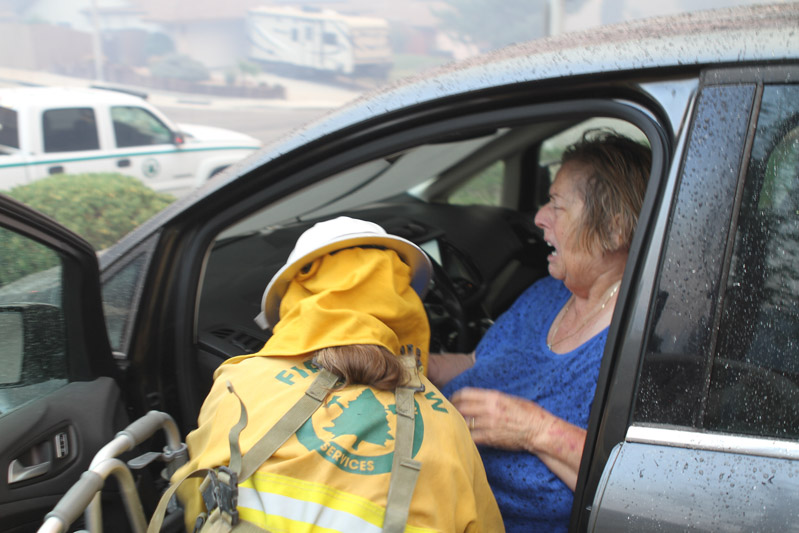
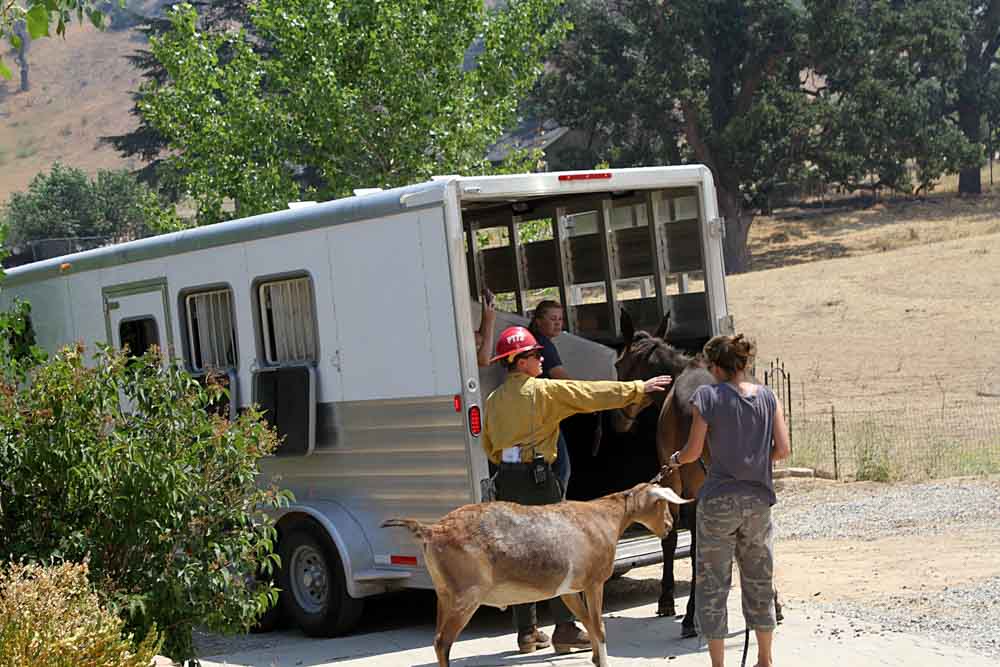
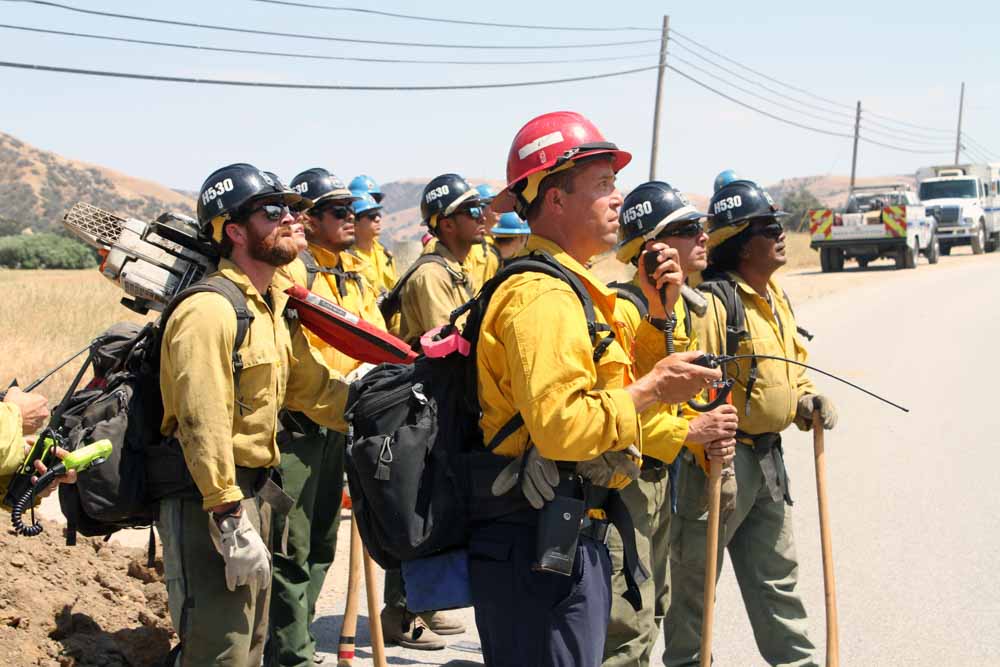
Long time fire photographer Jeff Zimmerman sent us these photos he shot Thursday at the Tick Fire near Santa Clarita in southern California.
Here is his description:
“As flames swept out of Tick Canyon into the Shadow Pines neighborhood in Los Angeles County, it became a race against time to evacuate a disabled woman who was trying to save her home. Barefoot and with a walker, we found this woman frantically trying to save her home with a garden hose. We pulled out our booster line from our volunteer fire patrol to stop spot fires on neighboring property as ash and soot were raining down on her vehicle. We had just minutes to get her shoes, her dog and get her loaded into her vehicle. She was crying hysterically but we were able to get her to safety as fire swept down the street.
“At great personal risk Volunteer Denise Shippy went inside her home to retrieve car keys, shoes and the family dog as I was able to hold back spot fires. Flames erupted across the street in Italian Cypress trees as this woman left to safety. Helping a neighbor in distress is what volunteering is all about.”
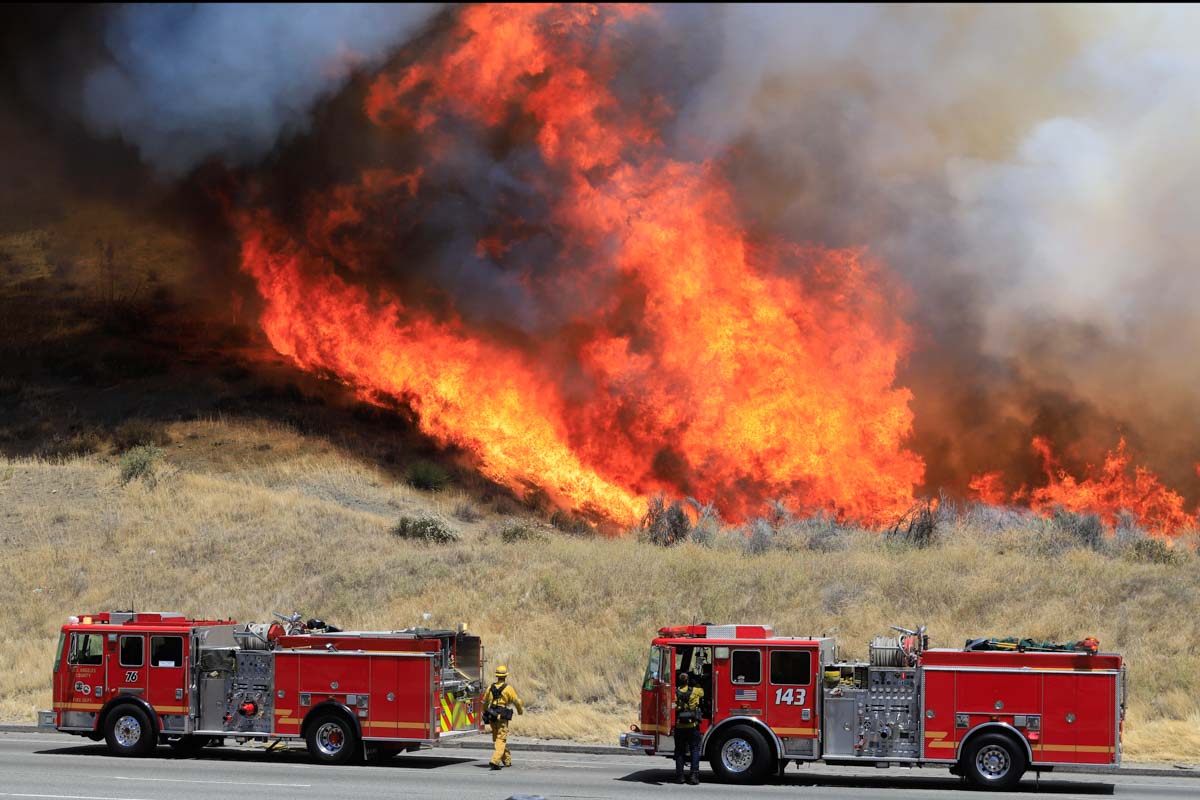
Wildfire along Interstate 5 in Southern California August 3, 2019, 10 miles north of Castaic. Photo by Jeff Zimmerman.
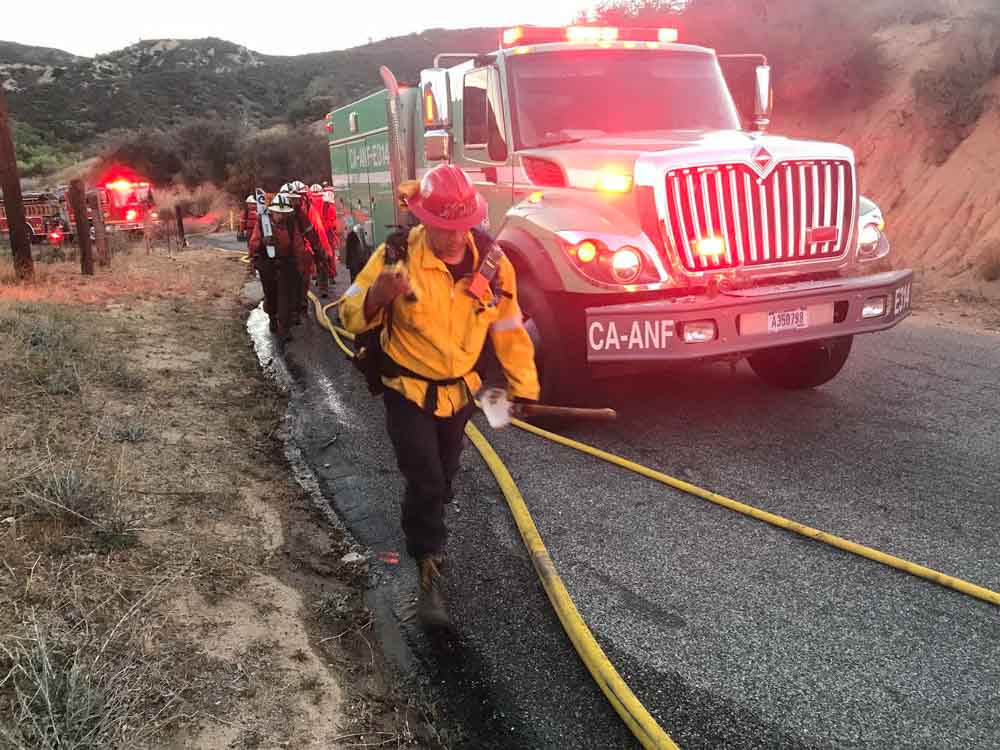
Jeff Zimmerman got this shot of engine crews from Los Angeles County FD arriving at an intensely burning wildfire along Interstate 5 yesterday, August 3. It was on the east side of Interstate 5 in Southern California 10 miles north of Castaic.
Here is what Jeff said about the fire:
With hot dry weather and lower humidity we saw more energy release than previous wildfires last month. 100 acres along Interstate 5 north of Templin Highway burned with good fuel consumption. Increased fire behavior and increased energy release components are predicted through early next week.
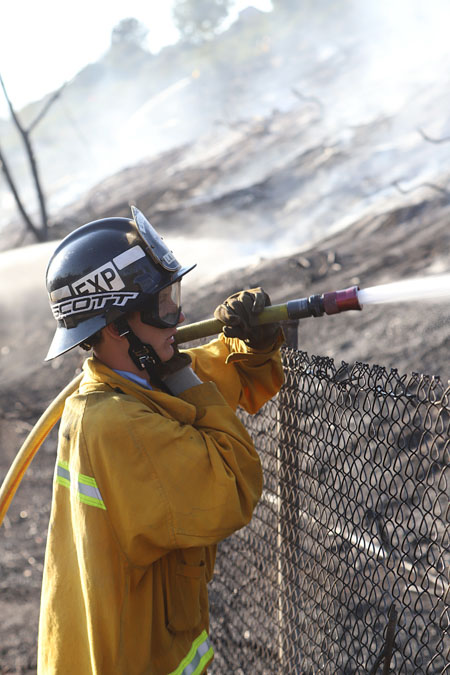
Above: A Los Angeles County Fire Department Captain collects hose so that he can move it further up the hill.
Fire photographer Jeff Zimmerman shot these photos July 30 at a vegetation fire in Newhall, California. Here is what he wrote in an email:
A 10-acre brush fire damaged two apartment buildings yesterday in Newhall along Valle Del Oro and Alder that were above a steep canyon. In sweltering heat firefighters knocked down the blaze in just over an hour. Trying to battle traffic in 100-degree heat, the fire was contained on my arrival so I decided to take to the burnt hillside and grab some portraits of people at the fire. My favorite is a young girl trying to stay cool near the fire hydrant along Valle Del Oro.
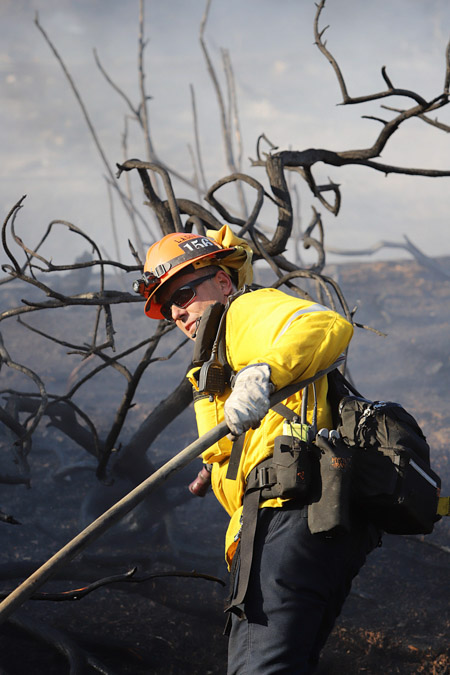
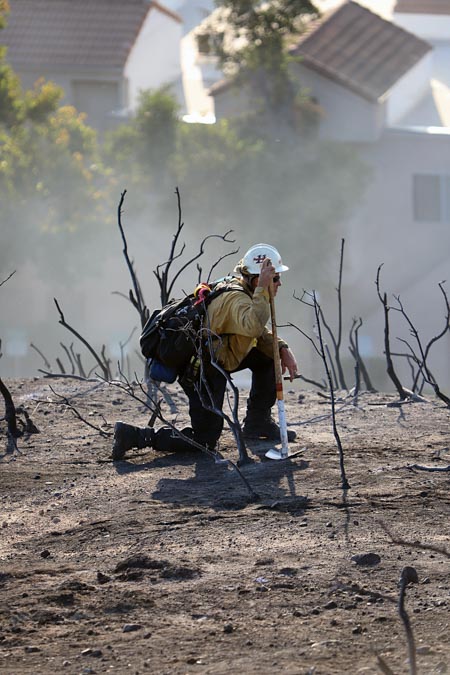
Jeff Rankin Superintendent of fire camp 11 takes a knee for a quick break while watching his crew put in fire line.
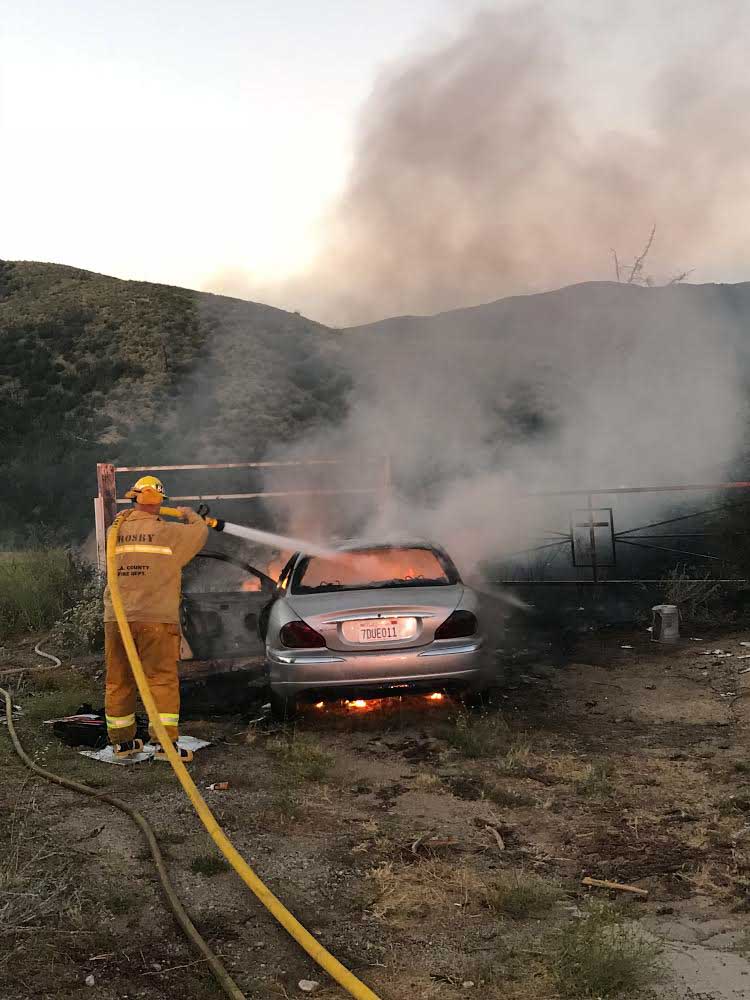
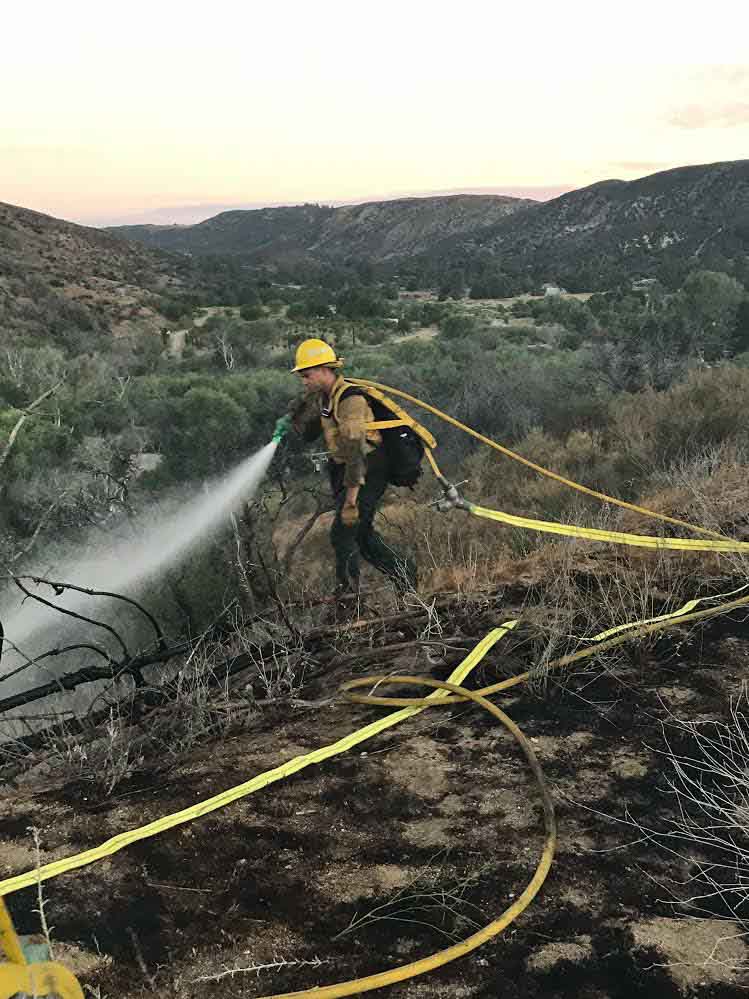
Long time fire photographer Jeff Zimmerman sent us these photos he shot at two recent Southern California fires that you did not hear about. Like many, many others, they were successfully attacked by firefighters and contained before growing into major conflagrations.
The photo above as well as the next three, were from the July 6 Hunter Fire off Sylvan road near Lake Hughes. Jeff got some quick shots with a camera phone of U.S. Forest Service and Los Angeles County personnel working at a vehicle fire that got into the brush at 5:20 a.m. during Red Flag Warning conditions. It burned one acre in addition to the vehicle.
Hunter Fire at Lake Hughes. Photo by Jeff Zimmerman. Hunter Fire at Lake Hughes. Photo by Jeff Zimmerman. Hunter Fire at Lake Hughes. Photo by Jeff Zimmerman.
On July 8 Jeff was at a fire in Lebec, California as firefighters from Kern County, BLM, USFS and LA County battled a stubborn vegetation fire. It was reported at 1:35 p.m. along Lebec and Lebec Oaks Road which brought a large response including fixed wing aircraft. No structures were damaged but several rural homes had to have structure protection put in place and large animals were evacuated. Firefighters stopped it at 62 acres. Jeff said extremely high temperatures and very low relative humidity have been a big factor in spawning wildfires across the State this week.
The next four photos are of the fire in Lebec:
Fire at Lebec, California. Photo by Jeff Zimmerman. Fire at Lebec, California. Photo by Jeff Zimmerman. Fire at Lebec, California. Photo by Jeff Zimmerman. Fire at Lebec, California. Photo by Jeff Zimmerman.
Jeff Zimmerman photographs fires and writes about them, usually from Southern California.
On October 14 fire photographer Jeff Zimmerman wrote about what he had seen after spending time on the wildfires in Northern and Southern California. These photos were taken by him.
By Jeff Zimmerman
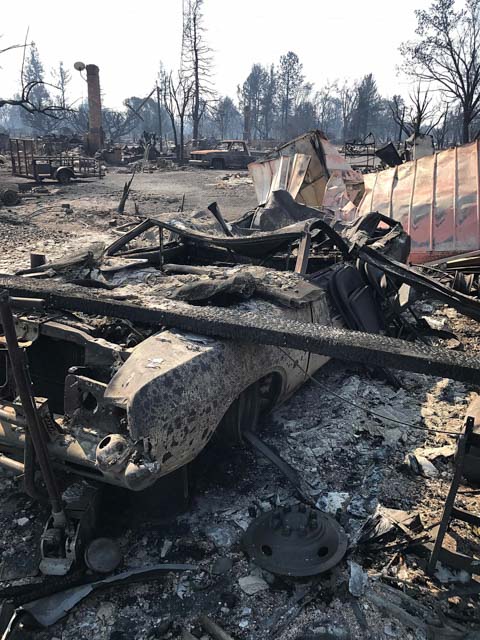
I would not have believed it if I had not seen it for myself, nearly 5,700 homes destroyed, 34 fatalities, dozens of commercial buildings destroyed in a multi-day wind driven inferno pushed by hot dry diablo winds in the scenic Northern California bay area. Dry offshore winds compressed by the narrow canyons rushed down into Santa Rosa at well over 60 mph, sending swirling fire brands for great distances into residential areas, not normally prone to wildfires, just two miles north of town center. In the upper canyon along Tubbs Road in the timber and brush I could clearly see that a downed power line may have sparked a wildfire fire at night in the winds, but in the City of Santa Rosa which sustained massive structural loss to this intensity it was hard to believe.The Tubbs Fire raced down Potter Creek Road with alarming rates of spread, within a few hours firefighters estimated the fire at 20,000 acres.
Photo by Jeff Zimmerman
The Coffey Park area just east of the 101 freeway in the City of Santa Rosa, a homey housing tract of single family dwellings is wiped off the map; the Journeys End Mobile Home Park destroyed, Santa Rosa seemingly to take the direct brunt of the LNU fire complex. To the north, Mendocino was hard hit with a family losing their teenage son in the driveway as the mother had to have her legs amputated from running through the fire to escape. How do you ever survive something that horrible? It will be singed in the survivor’s minds forever.
People have underestimated the power of wildfires for years, it won’t happen to me is the mindset of many.They argue about prescribed burning and air pollution, brush removal destroys habitat, logging is unsightly, the list goes on and on. It takes a massive disaster to get things done unfortunately, better building codes, better water systems, wider roads, fire sprinkler ordinances, better brush clearance is needed; the blue – ribbon panels reports have already explained this after other massive fires in California foothill communities.
Northern California is still in flames, Calistoga, Geyserville, Napa, Sonoma, Mendocino, Nevada and Butte Counties all have fires, over 160,000 acres, with fatality lists growing by the day, possibly as many 5,700 homes destroyed, 75 cell towers destroyed, and scores upon scores of cars on scores of incinerated streets.Loved ones missing, their dreams, property and many souls never to return; all destroyed in minutes. It is hard to wrap your mind around it; to examine it is difficult at best, to live through it, terrifying.
Photo by Jeff Zimmerman
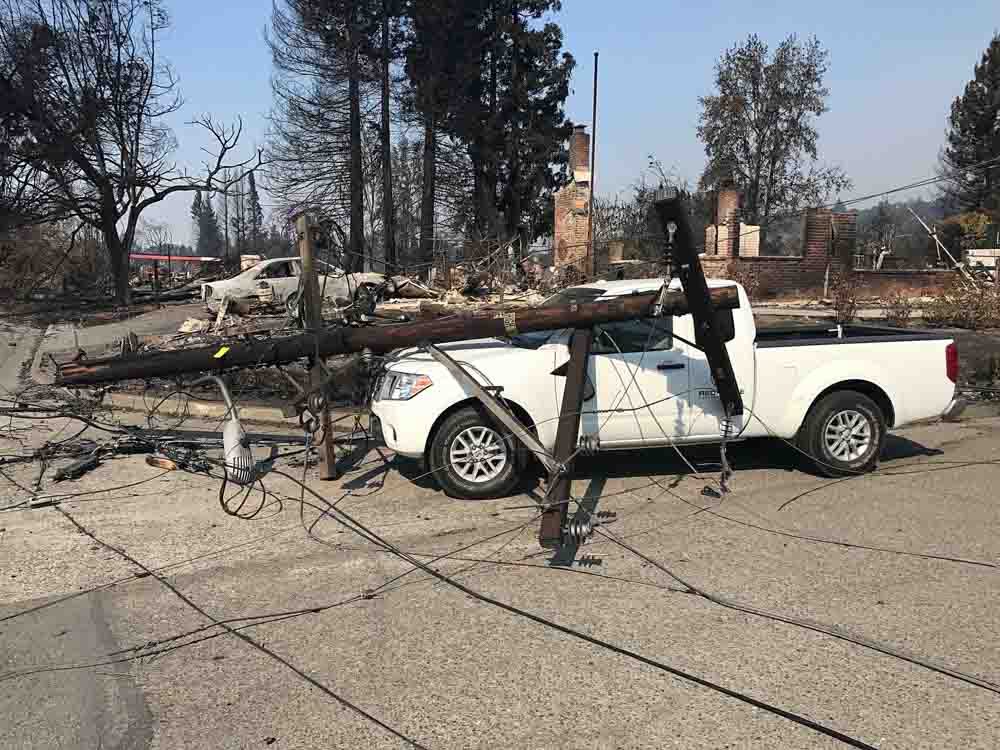
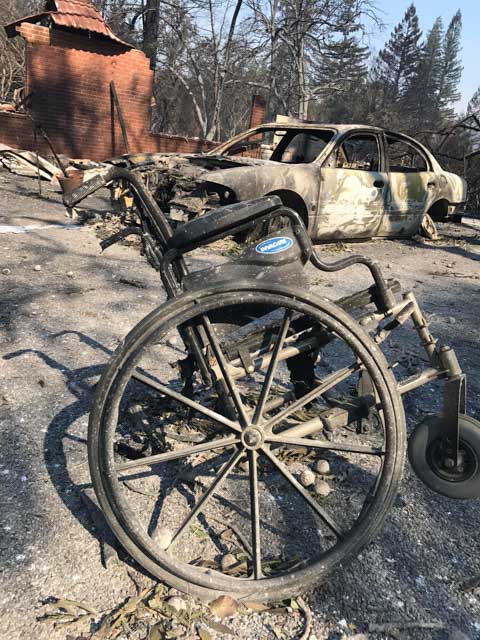
A burning wheel chair curb-side set the tragic tone, burnt cars trapped behind downed power poles with car doors flung in the open position still smoldering, roofs on top of hillside homes still burning several days after the main blaze roared through town. A disaster for learning most certainly, but the lessons will come hard. It will take years for families to negotiate with insurance adjusters, to get architectural drawings, negotiate with contractors, get water, sewer and power lines back, some may never try to rebuild at all. For those families who lost everything it will be hard to sift through the debris before having their lots cleared. Many lessons can be learned from the Oakland Hills fire, they will need to have extreme patience. The scars in their minds will never go away, even once their homes are rebuilt, you just don’t forget a fire like this. It will be hard to rise like the phoenix amidst the ash pits of total destruction.
Nighttime fires under sinister diablo winds, very short notification if any to evacuate.People burned alive in their driveways and furiously burning homes as fires with explosive rates of spread devoured everything in their path.At least 12 large wind driven urban interface fires have caused 20,000 people to flee in the dark of night as scores of homes were razed to the ground. Live- stock, pets, wildlife all killed in the flames. Wineries in the foothills destroyed, hospitals with critical patients evacuated in amongst the flames. All too much for the mind to fathom at one time in just a few days.
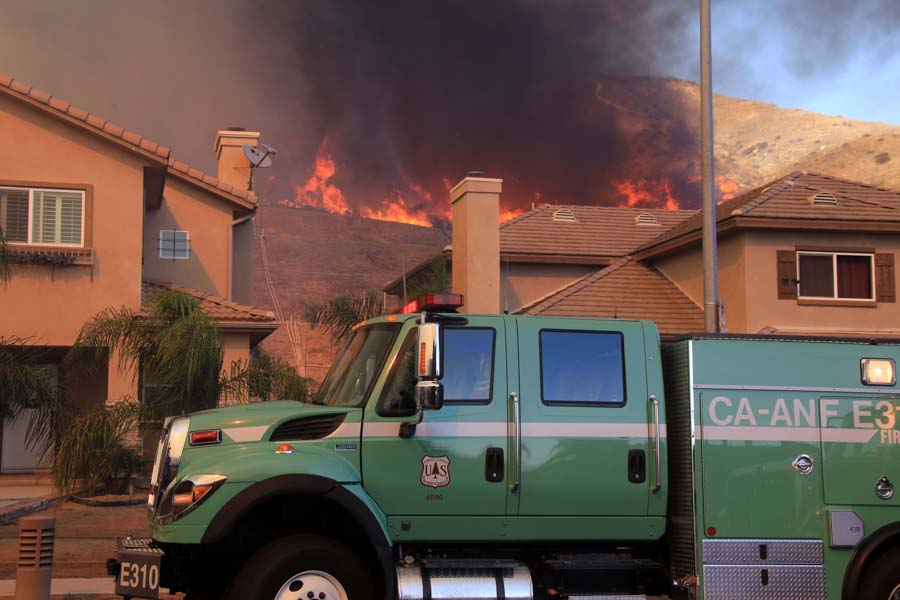
To the south, Santa Ana winds pushed fires into Orange County neighborhoods on October 9-10 along the 91 and 241 freeways. The fire jumped the 241 Toll Road and ran directly into hillside homes on the bluffs that overlook the valley.A fire that destroyed 24 homes in an hour right before my very eyes. By nightfall the winds subside and the Canyon 2 Fire slowed to a crawl.Swirling smoke, fire whirls, ember cast, with fire leap frogging from canyon to canyon. Unbelievable rates of spread and long range spotting, just another day covering spot news.
Setting down the camera on several occasions and picking up garden hoses to extinguish hundreds of spot fires, training police officers on site how to tackle incipient blazes to keep homes from burning, a day to remember.
The fire weather forecast as of this quick writing calls for more Santa Ana winds in Southern California, and diablo winds in Northern California putting the entire State into Red Flag Warning.I thought I would share some of my thoughts and images from Santa Rosa with you all. We are not out of the woods by any stretch of the imagination. Strikes teams of fire equipment are moving up and down the State in order to prepare for the worst. Get ready, Get set, Go! Words to live by today.
Photo by Jeff Zimmerman
Jeff Zimmerman photographs fires and writes about them, usually from Southern California.
(Originally published at 1:33 p.m. MDT September 11, 2017)
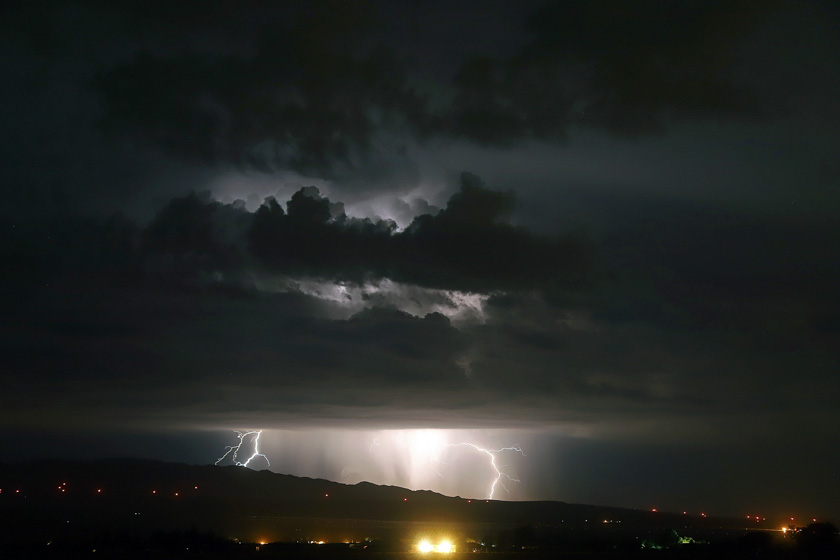
Jeff Zimmerman took these photos September 10 and sent them to us today. Here is how he described the event.
From the deserts to the sea, a wonderful display of lightning. Off the coast near Avalon where hundreds of strikes were recorded with numerous strikes all the way to Tehachapi Mountains. Tejon Ranch and Highway 58 area was bathed in lightning too. A new fire was reported on the Los Padres National Forest, lightning strike near Chuchapate (Sawmill). Possibly a few more isolated storms today, followed by gusty NW winds later this week. The first Santa Ana may set up when snow comes to Montana and offshore flow begins later this week bringing critical fire weather with it. Attached are a few shots from the desert in Neenach, CA (map).
Above: A firefighter on the Rose Fire near Lake Elsinore, CA, July 31, 2017. Photo by Jeff Zimmerman.
(Originally published at 8:20 p.m. MDT August 5, 2017)
On July 31 firefighters were able to prevent structures from burning as a wildfire burned about 200 acres just northwest of Lake Elsinore in Riverside County, California.
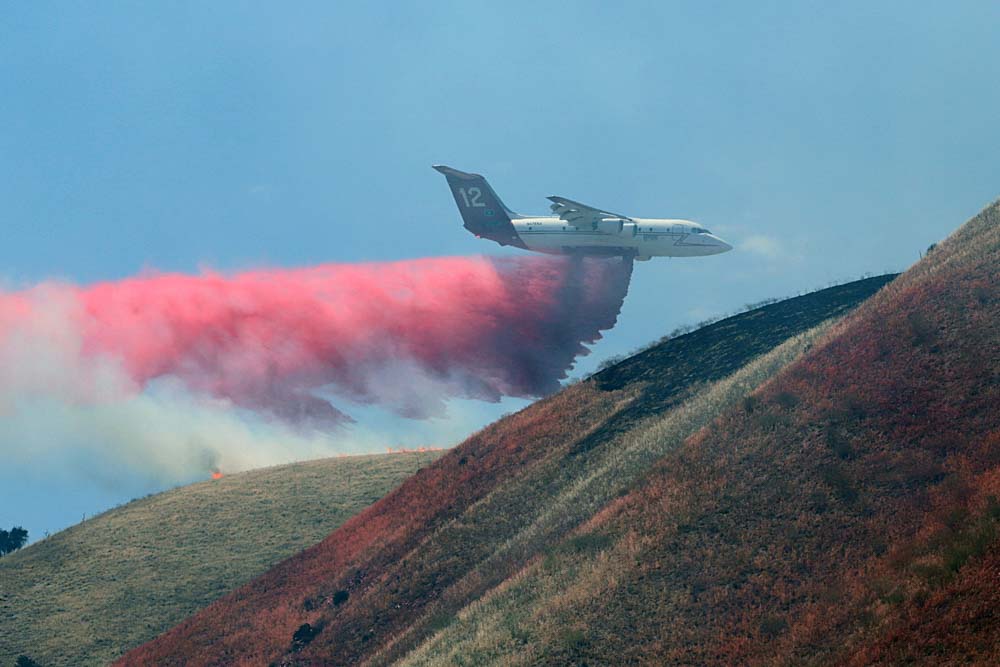
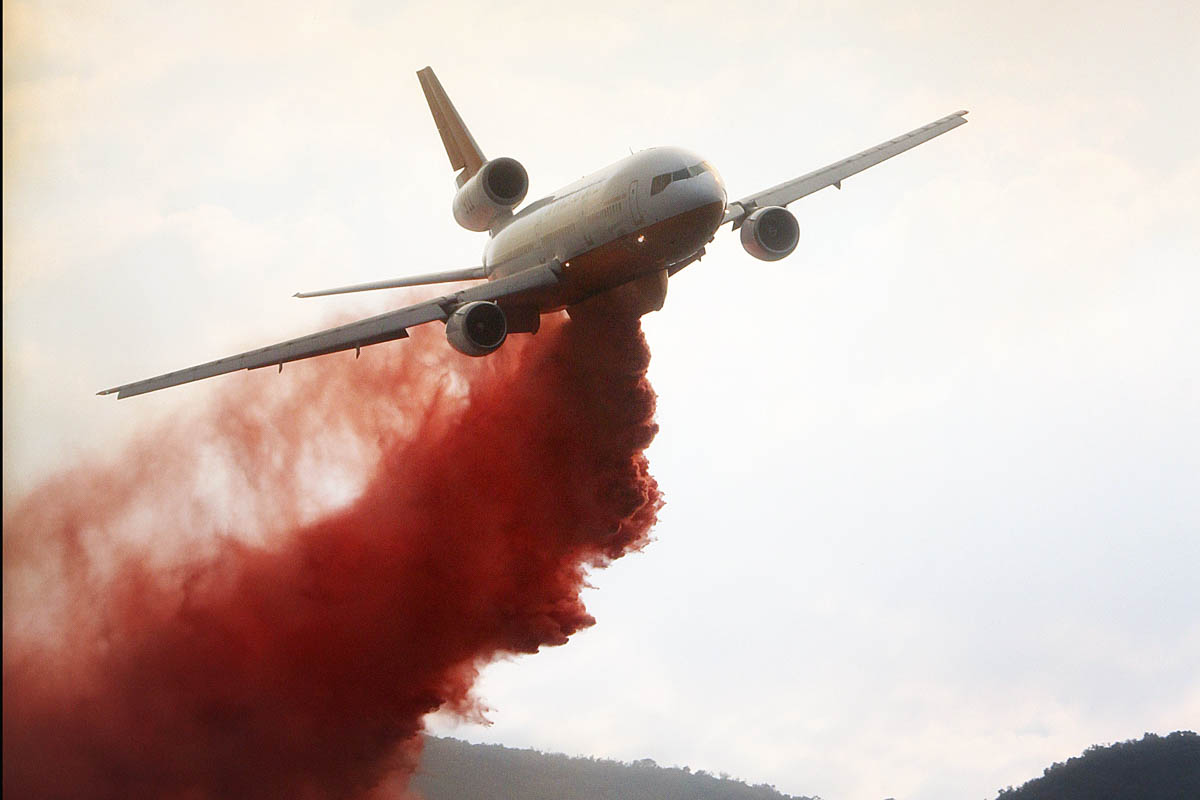
Jeff Zimmerman, who took these photos, said the fire was reportedly started by the use of equipment behind homes in the 100-degree heat. Jeff said heavy air tankers were brought in to help firefighters stop the spread of the fire as it moved up-canyon through heavy chaparral.
For a while homes along several streets in Lake Elsinore were evacuated as well as locations up the hill to the west in the Cleveland National Forest, including the North Main Divide road, El Cariso Campground, and Los Pinos Conservation Camp above El Cariso Village.
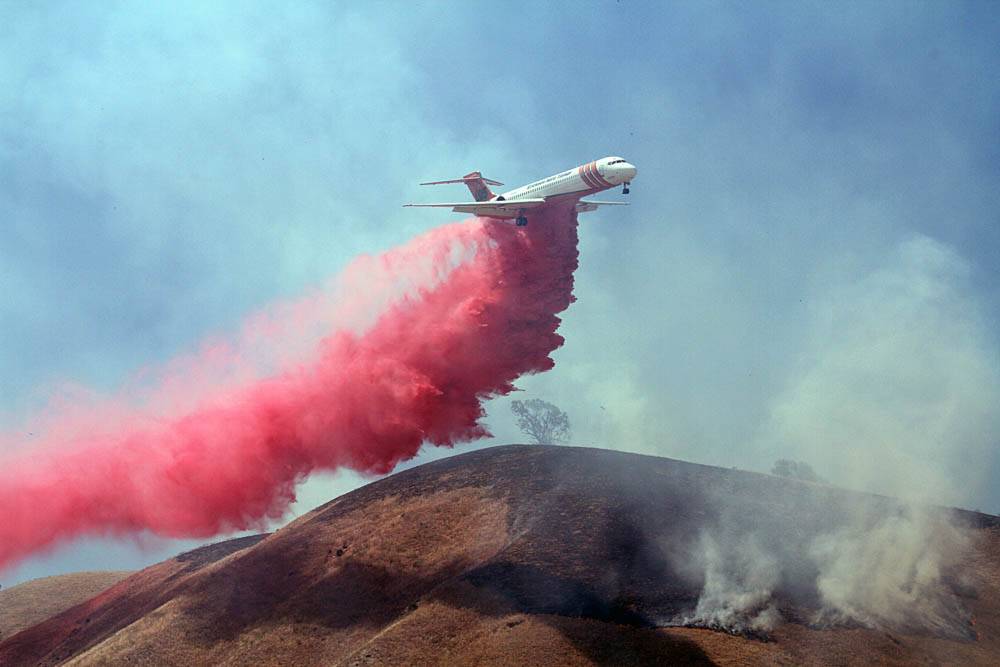
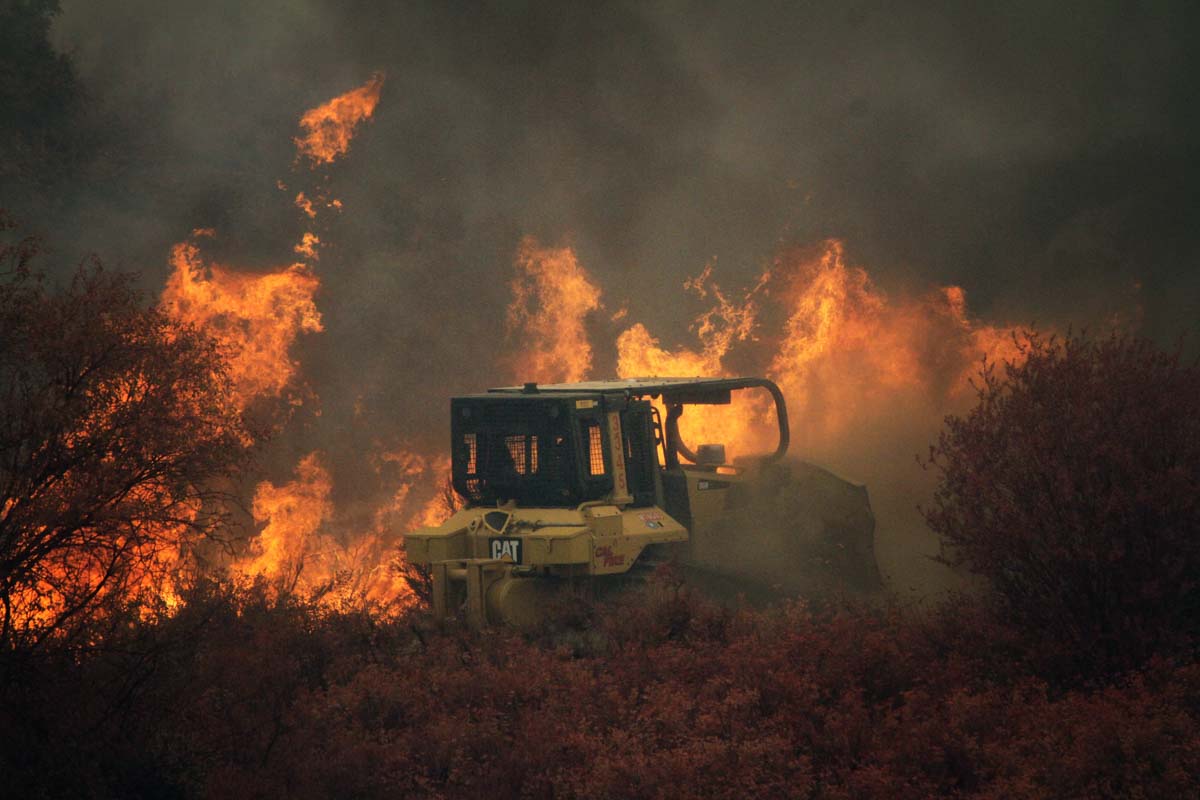
A dozer constructs fireline on the Rose Fire near Lake Elsinore, CA, July 31, 2017 Photo by Jeff Zimmerman. A DC-10 drops on the Rose Fire near Lake Elsinore, CA, July 31, 2017 Photo by Jeff Zimmerman.
Jeff Zimmerman of Zimmerman Media took some excellent photos at a fire in Lake View Terrace north of Los Angeles last week. The fire spread quickly during Santa Ana wind conditions and burned about 60 acres before several hundred firefighters from Los Angeles County and the U.S. Forest Service contained it after a two-hour battle.
Thankfully for Jeff, California has a different, some would say more enlightened, way of handling the media at emergencies and disasters than some other areas. There are few restrictions as long as the reporters do not interfere with incident operations. Their rights are protected by California Penal Code 409.5d.