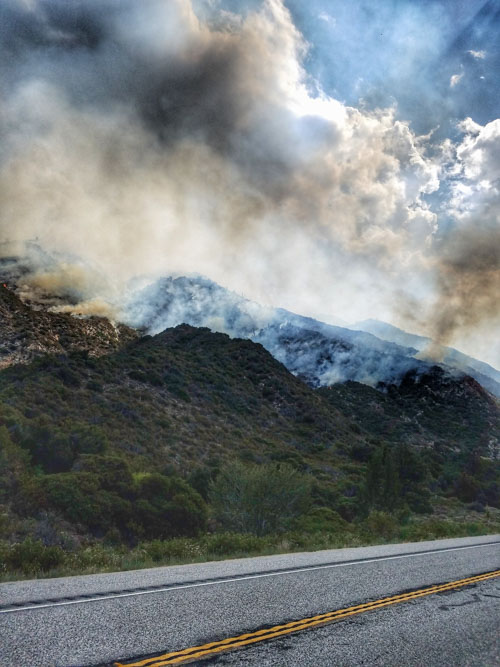
Firefighters attacking the Valley Fire north of Pine Valley, California

UPDATED at 2:27 p.m. PDT August 23, 2022

Firefighters have stopped the spread of the Valley Fire north of Pine Valley, California. It was not active overnight and is being held at 188 acres. Pine Creek Road is still closed and there never were any evacuations.

On Tuesday crews are working on constructing fire line along the perimeter.

The cause is under investigation.


Updated at 5:45 p.m. PDT August 22 2022

The cameras are showing very little smoke at the Valley Fire north of Pine Valley, CA. The latest size estimate is 127 acres. All air tankers have returned to their bases but a couple of helicopters and Air Attack are still on scene.

There is very little radio traffic, which reminds me of the old saying, “When the radio traffic stops, the fire goes out.”


UPDATED at 3:21 p.m. PDT August 22, 2022
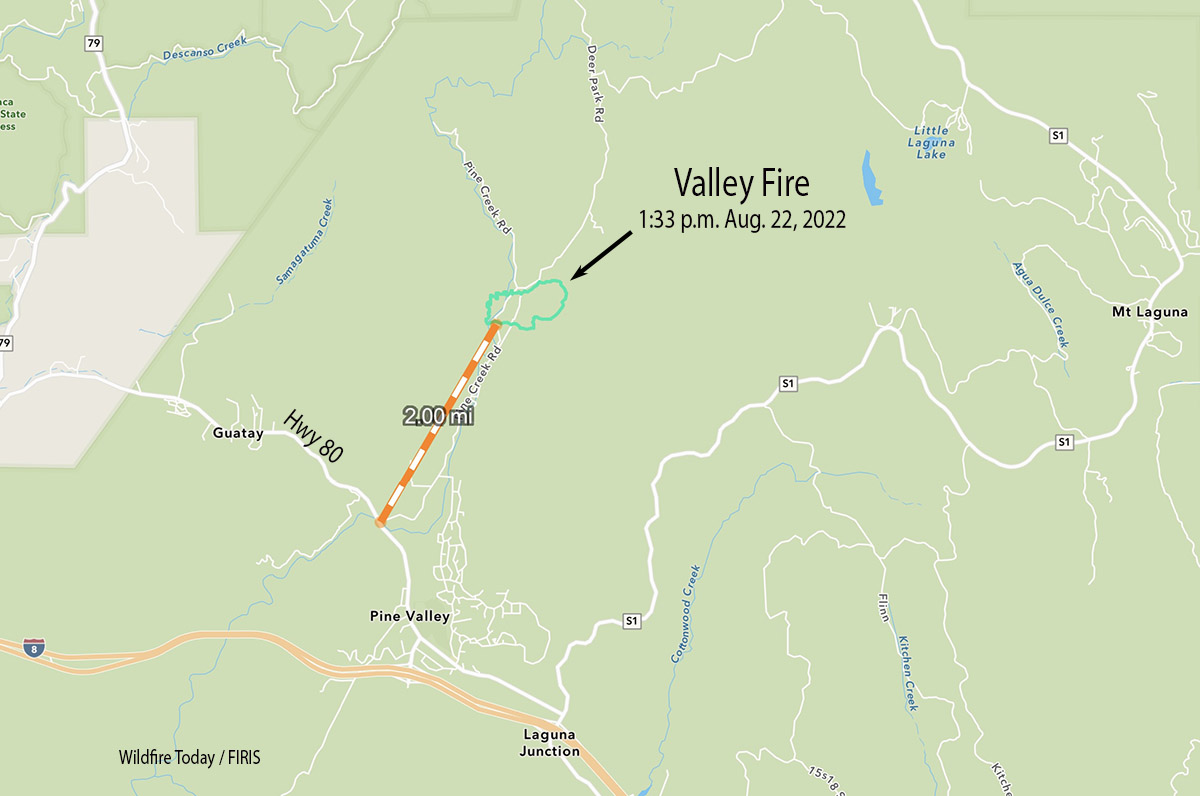
Valley Fire map, 1:33 p.m. PDT Aug. 22, 2022
Valley Fire map, 1:33 p.m. PDT Aug. 22, 2022.

The Valley Fire north of Pine Valley, California was mapped by an aircraft at 1:33 p.m. August 22 at 120 acres. About an hour later the size was estimated at 175 to 200 acres.

It is burning on both sides of Pine Creek Road at the intersection of Deer Park Road near Noble Canyon two air miles north of Old Highway 80.


UPDATE at 2:53 p.m. PDT August 22, 2022

At 2:29 p.m. the Incident Commander on the Valley Fire reported that it had grown to 175 to 200 acres, with a moderate to rapid rate of spread.
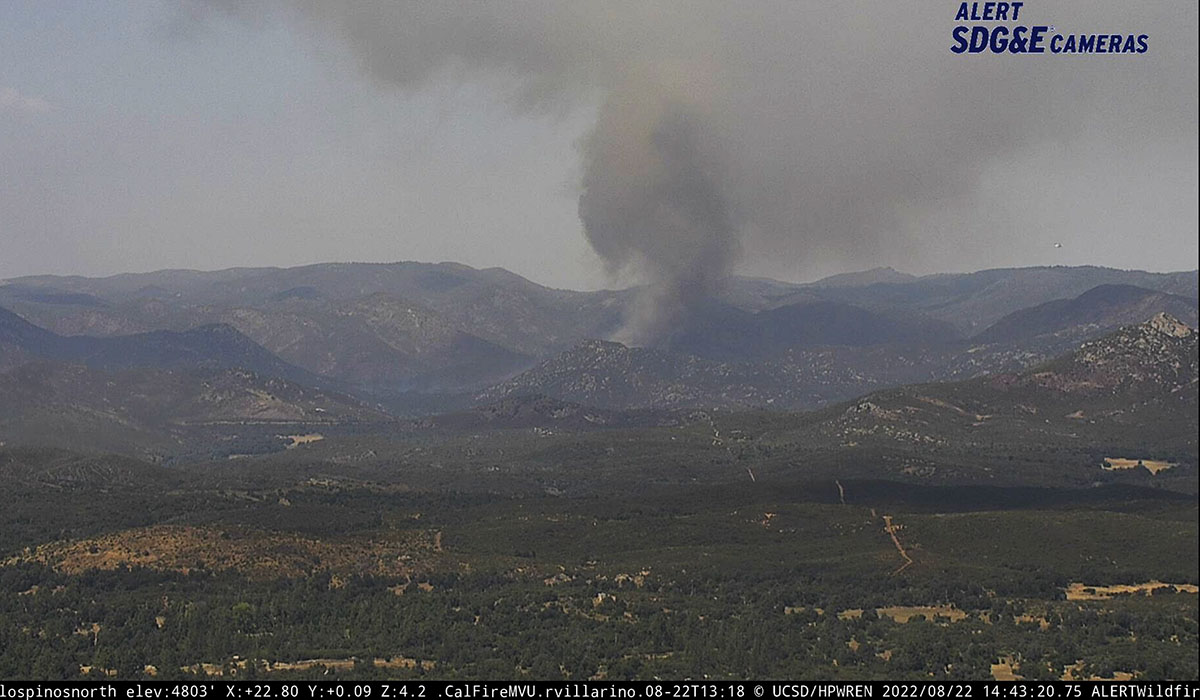
Valley Fire
Valley Fire looking NNE from Los Pinos at 2:43 p.m.
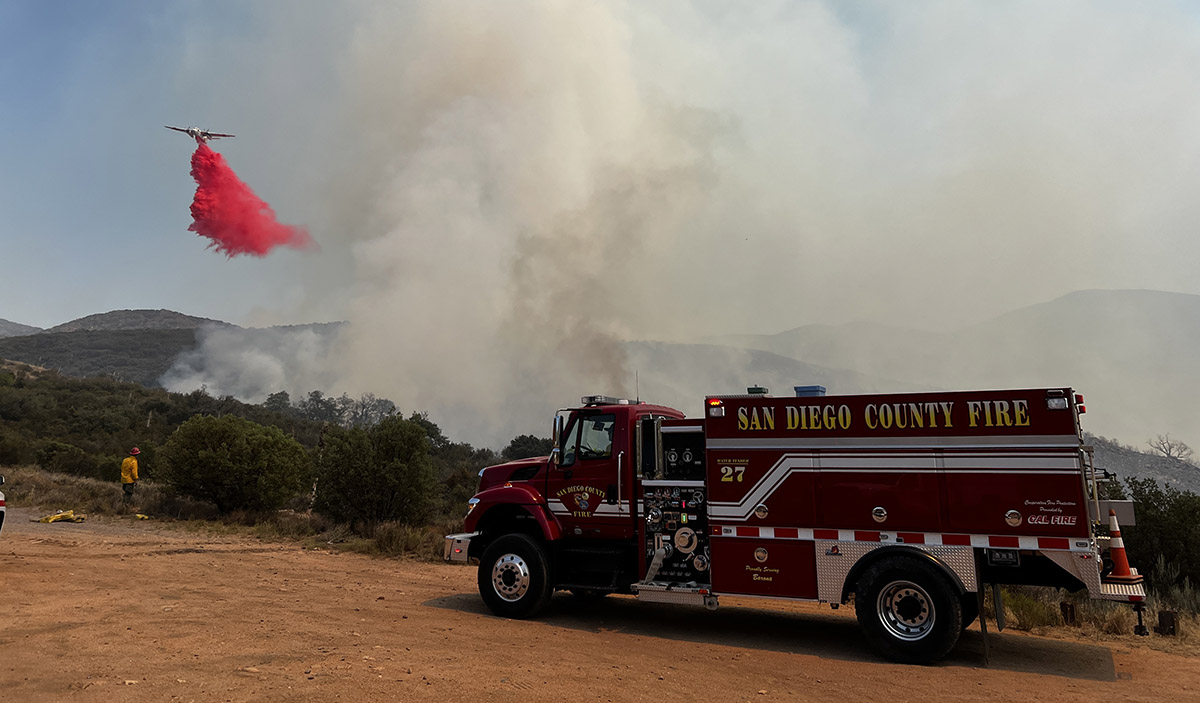
Valley Fire
Valley Fire north of Pine Valley, CA, August 22, 2022. CAL FIRE photo.

No evacuations are in effect and it is spreading away from structures in the Pine Valley area.


UPDATE at 1:10 p.m. PDT August 22, 2022
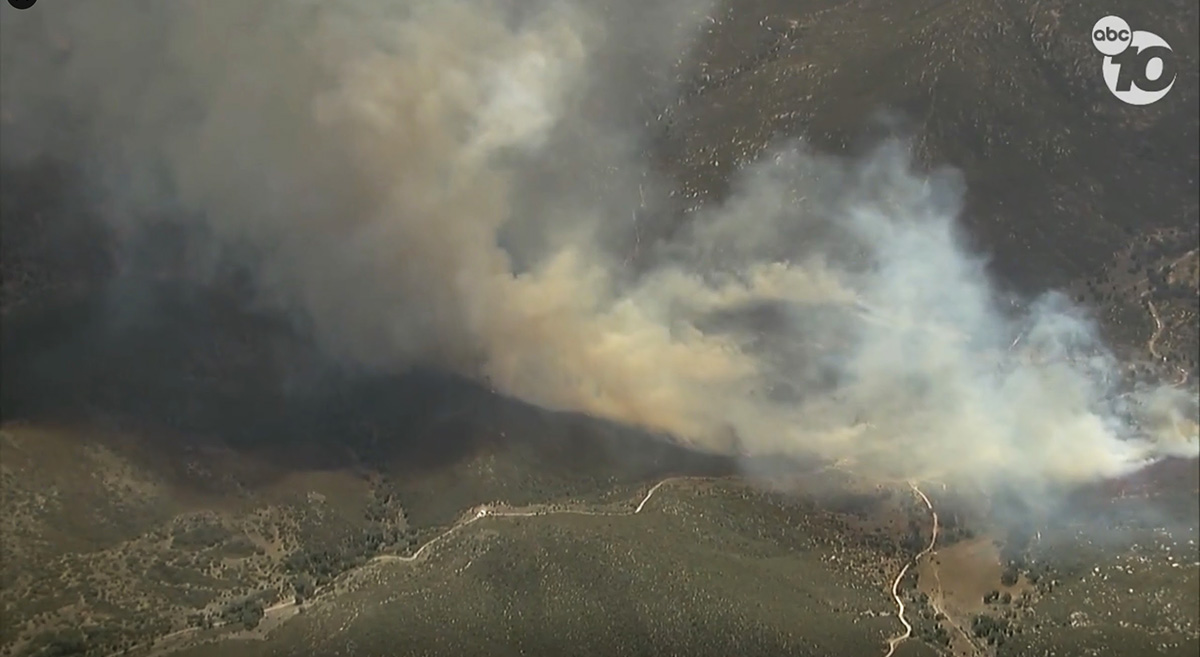
Valley Fire, 1:10 p.m. PDT Aug. 22, 2022
Valley Fire, 1:10 p.m. PDT Aug. 22, 2022. ABC10.

Firefighters from the Cleveland National Forest and CAL FIRE are attacking the Valley Fire which was reported Monday at about 11:37 a.m. a few miles north of Pine Valley, California near Pine Creek Road and Noble Canyon.

At 1:36 p.m. the size was estimated at 120 acres with a moderate rate of spread.
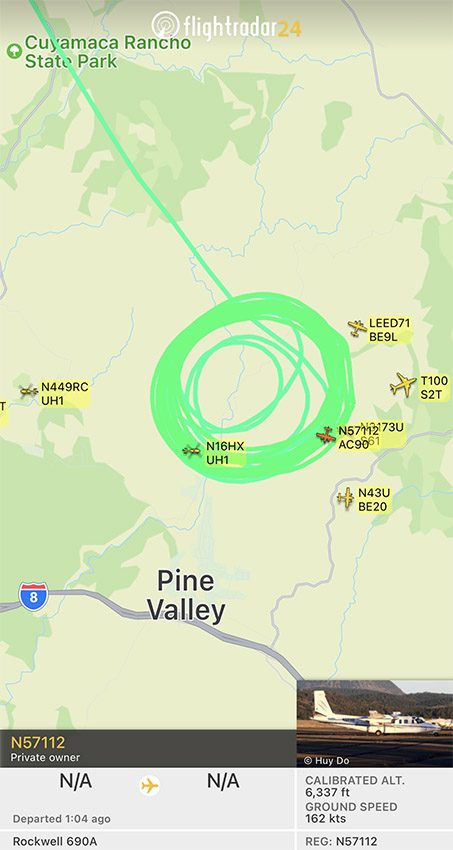
Aircraft over the Valley Fire at 1:27 p.m. PDT Aug. 22, 2022.

In addition to numerous engines, aircraft dispatched include several helicopters plus approximately nine air tankers, one of which is a DC-10.
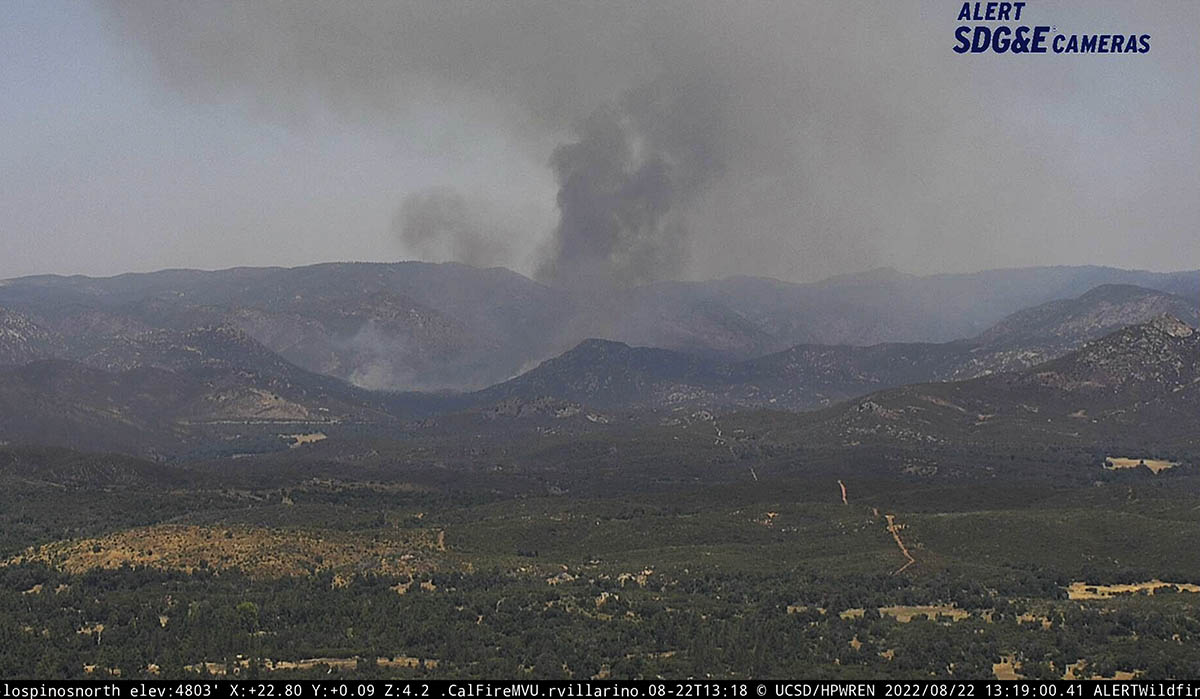
Valley Fire
Valley Fire looking NNE from Los Pinos at 1:19 p.m.

At 2:02 p.m. the weather at Cuyamaca Peak northwest of the fire was wind out of the west at 12 mph, 70 degrees, with 44 percent relative humidity. The fire is in the large valley that runs north from the community of Pine Valley, so until the fire spreads up onto higher slopes it may be partially sheltered from the 12 mph wind measured at the top of Cuyamaca Peak. Brush fires rarely spread rapidly when the humidity is above 40 percent, but the fuel moisture, depending on what it is during this drought, may also be a major factor.

The Valley Fire is about 36 air miles east of San Diego, north of Interstate 8.

Valley Fire — from one extreme to another

Arrowhead hotshots Valley Fire weather

Firefighters on the 1,000-acre Valley Fire on the San Bernardino National Forest in Southern California are experiencing unusual weather. Extreme heat was on the agenda Friday, and Saturday brought several thunderstorms through the area, resulting in some flooding and debris flows along Valley of The Falls Drive and Highway 38.

The Arrowhead Hotshots, the National Park Service crew that posted these photos on Twitter, wrote Saturday night about conditions on the fire:

From one extreme to the next. Hot, fire, thunderstorms, lots of rain, hail, flash flood.

Arrowhead hotshots Valley Fire weather

Arrowhead hotshots Valley Fire weather

The Incident Management Team reports that the fire is far from being out:

The higher elevations of the fire have not seen significant rainfall, and continue to burn. The fire is moving north and east, higher into the San Gorgonio Wilderness Area.

Pawnee Fire in Lake County, California continues to spread east and south.

3-D Map perimeterPawnee Fire

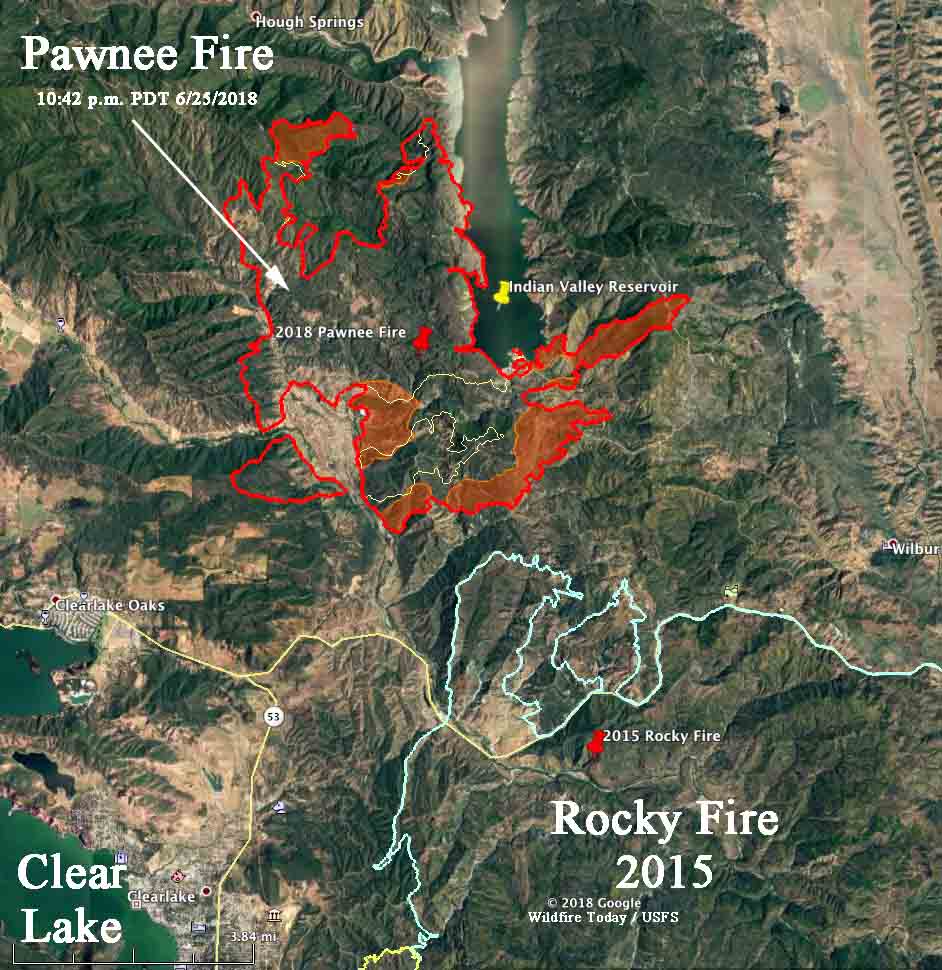
Above: 3-D Map of the Pawnee Fire looking north at 10:43 p.m. PDT June 25, 2018. The shaded areas indicate where the fire was very active.

(Originally published at 8:52 a.m. PDT June 26, 2018
(UPDATED at 1:27 p.m. PDT June 26, 2018)

The Pawnee Fire in Lake County, California continued to spread actively south and east Monday. It has not spotted across Indian Valley Reservoir, but burned around the south end of it in a long finger that ran uphill for 2.5 miles and kept going when it crossed Bartlett Springs Road at the top of a ridge. Additional spread to the east beyond that point should be slower on the downhill slope to the valley below.

The Governor’s office has declared a state of emergency for Lake County. According to CAL FIRE the Pawnee Fire has destroyed 22 structures and 600 others remained threatened. Mandatory evacuation orders are in effect for the entire Spring Valley community which is now virtually surrounded by blackened hills. The Lake County Sheriff’s Office has more information about evacuations.

Monday afternoon CAL FIRE reported that the fire had burned 10,500 acres, and Tuesday morning updated it to 11,500 — which is a very conservative number.

The weather forecast for the rest of this week for the fire area does not predict any extreme fire weather, with highs around 90, wind less than 10 mph, and relative humidity in the teens or low 20s. However, these conditions will not cause the fire to lie down. Firefighters will still have their hands full.

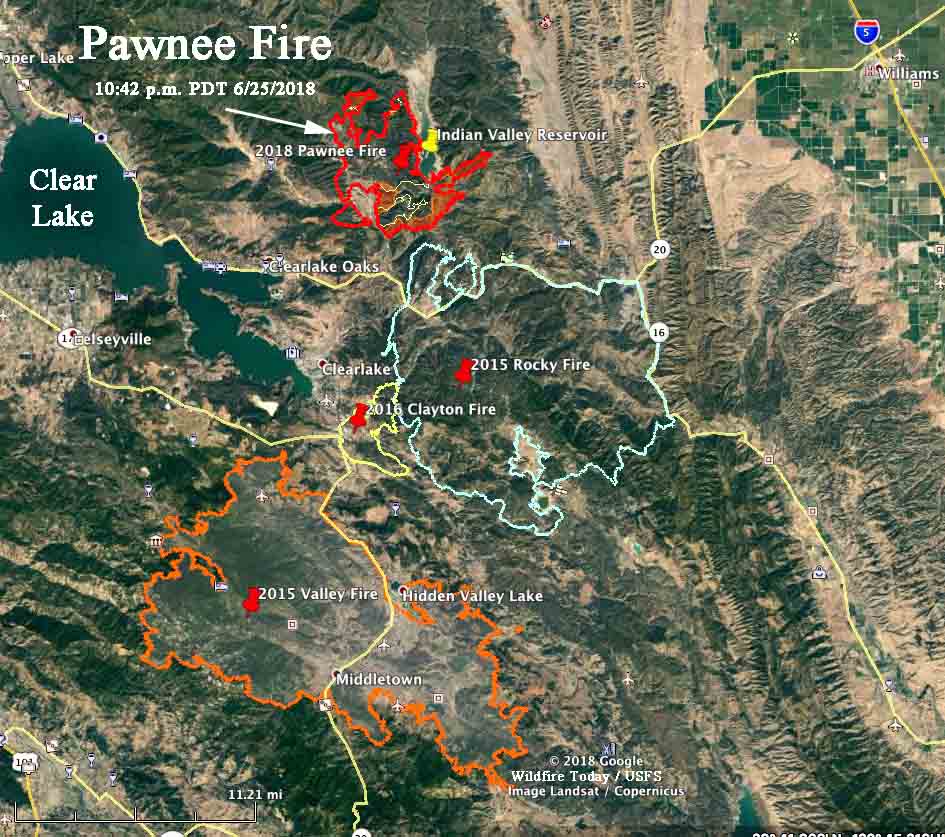
During the previous three years residents of Lake County have been seriously threatened by three other fires, the Rocky and Valley Fires of 2015 and the Clayton Fire of 2016. It is possible that the Pawnee Fire could burn into the footprint of the Rocky Fire, slowing its spread to the southeast.

rocky fire valley fire clayton fire pawnee fire
Map of the perimeter of the Pawnee Fire at 10:43 p.m. PDT June 25, 2018. Also shown are the perimeters of the Rocky (2015), Valley (2015), and Clayton (2016) Fires.

Resources assigned to the fire include:

  • 110 Engines
  • 35 Hand crews
  • 15 Helicopters
  • 58 Dozers
  • 10 Water tenders
  • 1,422 personnel, total
Map perimeterPawnee Fire
Map of the perimeter of the Pawnee Fire at 10:43 p.m. PDT June 25, 2018. The shaded areas indicate where the fire was very active.

Fire shelter packaging has failed on two recent firefighter entrapments

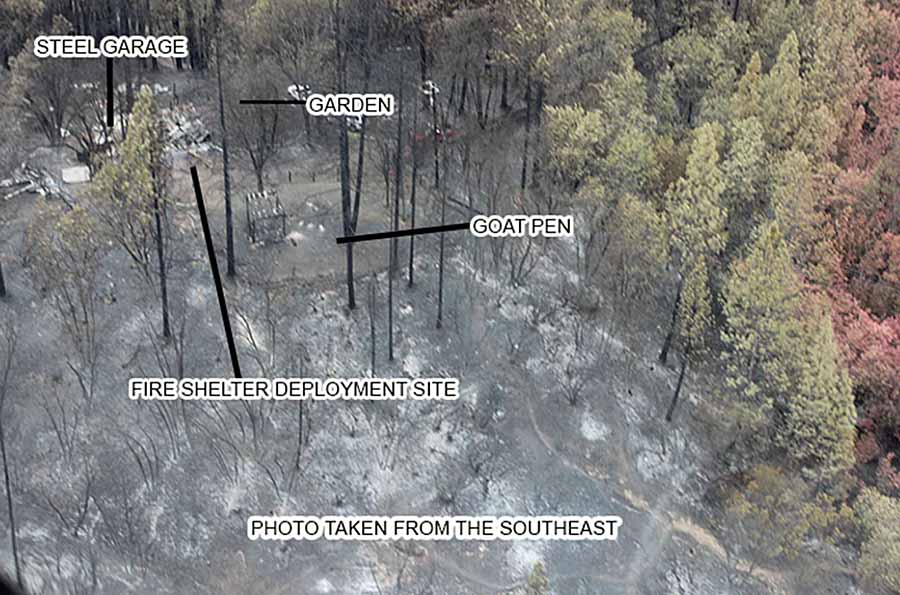
Valley fire entrapment site
Entrapment site of firefighters on the Valley Fire. Photo from the CAL FIRE report. (click to enlarge)

When two firefighters in California being overrun by flames on the Valley Fire in September of this year found that the plastic bag around their fire shelters had partially melted making it very difficult to deploy the life-saving device, it was not the first time this has happened.

A year earlier on the Beaver Fire in northern California two other firefighters experienced the same issue. The plastic became soft making it impossible for the tear strip to function. One of them used a knife to cut through the soft material that acted like “Saran Wrap”, and later said, “It wasn’t like the practice shelter at all”.

Four firefighters on the Valley Fire suffered significant burns to their heads, faces, arms, and hands before they were able to get into the shelters. The injuries on the Beaver Fire were less serious.

The Beaver Fire report addressed the failure of the fire shelter packaging:

Two of the firefighters who deployed reported that their shelter’s PVC bag became hot, which made it soft and pliable. This affected the ability of the red tear strip to pull apart.

But there was no recommendation that the design be modified.

The report on the 2015 Valley Fire entrapment describes a similar problem:

…FF4 had difficulty opening the fire shelter case from the Chainsaw Pack; the clear plastic covering of the fire shelter was soft and melted. FF4 had to remove the gloves to tear the plastic away from the aluminum shell of the fire shelter. FF3 couldn’t get the fire shelter out of the case because the clear plastic cover was melted to the white plastic protective sleeve…

One of the first times shelters were used was in 1964 when 36 members of the El Cariso Hotshots deployed them on a fire near Cajon Pass in southern California. Two years later 12 men on the crew were killed when they were entrapped on the Loop Fire on the Angeles National Forest — they were not carrying shelters at the time. In the hours before they began their fatal downhill fireline construction assignment the fire in that area had not been very active.

The U.S. Forest Service has modified the design of fire shelters several times since they were introduced in the 1960s. After 19 members of the Granite Mountain Hotshots were killed on the Yarnell Hill Fire in 2013 in spite of using the devices, the USFS began an effort to redesign them and has been testing numerous materials and configurations, including insulation that has been supplied by NASA.

The Press Democrat has a lengthy article about the recent deployments and the design of fire shelters.

…Firefighters across Sonoma County said they had been anxious to see the official preliminary Cal Fire “green sheet,” a summary of the incident released Oct. 3 detailing how the firefighters became injured [on the Valley Fire]. Many said they were stunned to learn about the plastic melting and the equipment failure on the survival tents they will all carry in the next wildland blaze even as the effectiveness of that equipment is under review.

Firefighters, especially those who jump into the thick of it, deal with extreme situations and the equipment must be able to withstand those situations, they said.

Ernie Loveless, who ran Cal Fire’s Sonoma-Lake-Napa unit for 20 years until he retired five years ago, said he was concerned about the durability of the bags after they were introduced in 2004.

“It seemed strange to have safety stuff like that made out of plastic that will melt in extreme heat,” said Loveless, who is now Schell-Vista fire board president. “I asked: ‘Why do we put stuff in plastic?’ The answer I received from our academy at the time is it was the best material they knew of at the time.”…

Thanks and a tip of the hat go out to Chris.

Dash cam video shot during the Valley Fire released

The Lake County Sheriff’s Office has released dash cam video shot during the early hours of the Valley Fire. Deputies struggled while the fire was spreading very rapidly to notify and evacuate residents. Four homeowners were killed and four CAL FIRE firefighters were entrapped and seriously burned in the fire that burned 76,000 acres and 1,200 homes in three counties 62 miles north of San Francisco.

At one point in the video you see deputies Rob Rumfelt and Kalen Brockwalder race toward a burning car, but had to turn back due to the intensity of the flames.

Report released for entrapment of firefighters on the Valley Fire

Valley fire entrapment site
Entrapment site of firefighters on the Valley Fire. Photo from the CAL FIRE report. (click to enlarge)

The California Department of Forestry and Fire Protection (CAL FIRE) has released a report for an entrapment with injuries that occurred on the Valley Fire September 12, 2015. The fire burned 76,000 acres 62 miles north of San Francisco.

Four firefighters from a helitack crew that had arrived at the fire via helicopter were on the ground fighting the fire with hand tools when they were surrounded by the fire during initial attack operations and suffered serious burn injuries. Below is an excerpt from the report.

****

“…FC1 directed FF3, FF4 and FF5 to get into the goat pen, which was clear to bare mineral soil. While in the goat pen they observed the fire behavior changing. There was an increase in the wind speed, and an increased number of spot fires in the pine needle duff and leaf litter surrounding them. FF3 saw fire sheeting and swirling across the dirt driveway on the northwest side of the goat pen; several pines torched on the west side of the steel garage.

From the location of RES2, FF2 observed increased fire behavior advancing toward Helitack A’s location. FF2 communicated the increased fire behavior using the radio; FC1 acknowledged FF2’s observation.

At approximately 1402 hours, the brush covered slope to their east completely torched into a wall of flame. The wall of flame sent a significant wave of radiant heat through the goat pen and onto the firefighters. They could feel their faces burning from the radiant heat and all four firefighters ran to the fence, climbed over, and ran towards the steel garage. At the steel garage Helitack A started to deploy their fire shelters.

“May-Day” was transmitted from FC1 and was heard over the radio. From the location of a third residence (RES3), FC2 could hear FC1 say over the radio, “Four have deployed their shelters, near a barn on the right flank.” FF4 had difficulty opening the fire shelter case from the Chainsaw Pack; the clear plastic covering of the fire shelter was soft and melted. FF4 had to remove the gloves to tear the plastic away from the aluminum shell of the fire shelter. FF3 couldn’t get the fire shelter out of the case because the clear plastic cover was melted to the white plastic protective sleeve. FF3 looked up and saw FF4 at the north side (D) of the steel garage. FF3 dropped the fire shelter on the ground and ran to FF4’s location. FF3 and FF4 shared FF4’s fire shelter and stayed together in a crouched position. FC1 and FF5 deployed their fire shelters on the east side (A) of the steel garage. The heat in front of the steel garage was too intense so they moved to the north side (D) of the steel garage with FF3 and FF4 where the atmosphere seemed to be cooler.

Helitack A huddled together shielding the heat away from their already burned faces and hands; each of them could see the visible burns to one another’s faces and hands. FC1 continued to use the radio requesting bucket drops from C1 on their deployment location to cool the atmosphere. FF5 attempted to drink the water from the hydration pack but the water from the mouth piece was too hot to drink. While crouched in their fire shelters next to the steel garage, Helitack A suddenly heard explosions coming from inside the now burning structure. As a group, Helitack A moved a safe distance from the structure. Helitack A eventually crouched along the dirt driveway, separating the dirt garden and the goat pen.

From the driveways of RES3 and a fourth residence (RES4), FC2 directed C1 to make bucket drops into Helitack A’s location at the top of the ridge. C1 orbiting above and was unable to get near their location at the top of the ridge due to the thick column of smoke convecting straight up into the atmosphere…”

****

“Injuries:

  • FC1 suffered second and third degree burns to the head, face, ears, neck, back, arms, hands, legs and feet and has had several surgeries. FC1 remains in critical condition and is under the continued care of UCD Burn Center.
  • FF4 suffered first and second degree burns to the face, head, ears, arms and hands and is under the continued care of UCD Medical Center.
  • FF5 suffered first and second degree burns to the face, head, ears, arms, foot and hands and is under the continued care of UCD Medical Center.
  • FF3 suffered first and second degree burns to the face, head, ears, arms and hands and is under the continued care of UCD Medical Center.”

The report lists 13 “Safety issues for review and lessons learned”. Here are the first five:

  • “Crews must utilize L.C.E.S [lookouts, communications, escape routes, safety zones] when engaged in firefighting operations.
  • ALL Ten Standard Fire Orders MUST be obeyed at ALL TIMES.
  • Personnel MUST wear ALL CAL FIRE APPROVED PPE when engaged in firefighting operation.
  • Modifying Personal Protective Equipment can alter the protective properties.
  • Practice and prepare for shelter deployment in adverse and extreme conditions.”

Thanks and a tip of the hat go out to John.