Weather slows fire activity in Western United States

precipitation last seven days colorado utah new mexico

Above: Accumulated precipitation over the last seven days, June 12-18, 2018. 

Moderating weather over the last seven days has helped firefighters make progress on some of the fires in Colorado, Wyoming, New Mexico, and Utah. Today’s national Situation Report showed little or no increase in the size of wildfires in those four states. The 416 Fire in southwest Colorado and the Badger Creek Fire in southern Wyoming released a total of 345 personnel over the last 24 hours.

Todd Pechota’s Type 1 Incident Management Team is currently assigned to the 416 Fire, but Joe Reinarz’s NIMO team has been mobilized for the fire, which could be an indication that they expect it to be a long term incident. The west side of the fire has spread into steep, remote terrain above 8,000 feet as it grows closer to an 11,000 to 12,000-foot ridge five miles away. Much of the ridge is above the timber line and may eventually, with patience over time, serve as a barrier. Mr. Reinarz’s team team will transition on Friday.

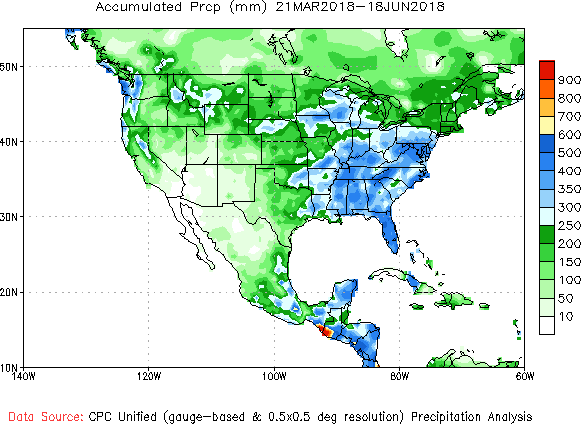
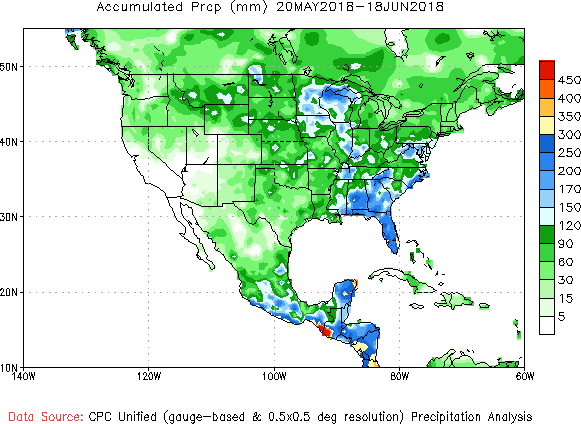
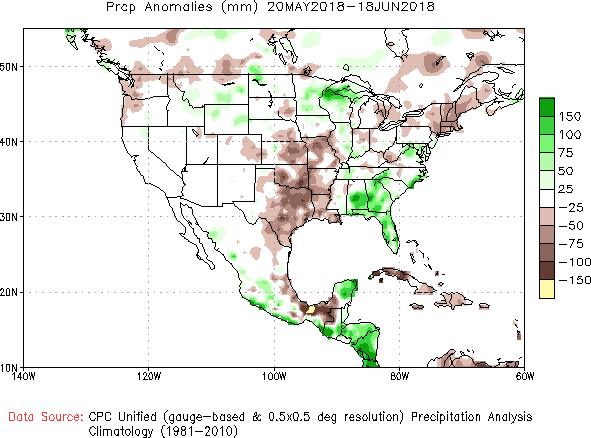
Below, National Weather Service graphics show the observed precipitation and the departure from normal for the last 30 and 90 days.
precipitation 30 days
Accumulated precipitation, May 20 through June 18, 2018. NWS.
precipitation 30 days
Precipitation departure from average, May 20 through June 18, 2018. NWS.
precipitation 90 days
Accumulated precipitation March 21 through June 18, 2018. NWS.
precipitation 90 days
Precipitation departure from average, March 21 through June 18, 2018. NWS.

More moderate weather affects Trail Mountain Fire in Utah

Redding Hotshots Trail Mountain Fire

Above:  The Redding Hotshots conduct a safety briefing before beginning their assignment on the Trail Mountain Fire. U.S. Forest Service photo.

Below is information about the Trail Mountain Fire in central Utah, provided by the Incident Management Team Saturday morning, June 16, 2018.


“[Friday], at approximately 12:00 p.m., Emery County Sheriff’s Office and the Utah Highway Patrol closed Highway 31 through Huntington Canyon but it remained open up to Bear Creek Canyon. Increased fire activity had created thick smoke and poor visibility on the highway. Additionally, firefighters and equipment were working directly along the highway. Despite this increased fire activity, evacuations were lifted for the Trail Canyon community. Highway 31 will be constantly monitored today and reopened as soon as conditions allow.

“Firefighters contained a large portion of the fire perimeter Friday on the southern portion near Trail Mountain and Whetstone Creek. The overall percentage of containment does not reflect this containment yet due to fire growth of about 3,000 acres yesterday into Little Bear Canyon and up Mill Fork Canyon. The fire also reached the ridge just south of Crandall Canyon. Firefighters thinned vegetation and installed sprinkler systems around the Crandall Canyon Mine Memorial and adjacent areas.

“Saturday’s cloudy weather, cooler temperatures, and higher relative humidity should reduce fire activity but will have little effect on the dead and dry vegetation that has allowed the fire spread. Possible thunderstorms could bring gusty winds that would also help the fire spread.”

South Monroe prescribed fire

South Monroe prescribed fire

These photos were taken yesterday at the South Monroe Mountain Aspen Prescribed Fire on the Fishlake National Forest in central Utah.

Here is the official Forest Service description of the project:

“The purpose of this prescribed fire project is to restore aspen ecosystems on Monroe Mountain by reintroducing fire to the aspen ecosystems through prescribed burning to reduce hazardous fuel accumulations thus reducing the risk to life, property and natural resources, while promoting aspen regeneration. Prescribed fire treatments will be implemented utilizing aerial and/or hand ignition techniques targeting spruce/mixed conifer and seral aspen with mosaic burn patterns and mixed burn severities as an objective. Prescribed fire will occur when 60 percent of the area will be expected to burn leaving 40 percent of the area unburned. The prescribed fire plan also includes burning of slash piled activity fuels.”

The photos were provided by Utah Fire Information.

South Monroe prescribed fire
South Monroe prescribed fire, Fish Lake National Forest, Utah, November 12, 2017. Photo provided by @UtahWildfire.

Man killed during mulch operation in Utah identified; headed charter helicopter company

The man killed during a mulching operation in Utah over the weekend has been identified as the brother-in-law of a state Senator and the owner of Provo-area helicopter company.

Bryan Burr, 58, was killed Saturday October 7 during Burned Area Emergency Response (BAER) operations on the Brian Head Fire in southwest Utah. Mr. Burr, from Alpine, Utah, was giving directions to a helicopter dropping straw mulch when he was struck on the head.

Mr. Burr is listed as the president and co-owner of Mountain West Helicopters LLC, according to his Linkedin page. A call to the telephone number listed for the helicopter charter service directed to the voicemail of Mr. Burr.

“Bryan was a good man, a religious person who valued his family very much, and those around him,” wrote Facebook user Thierry Richards, who said in a post he used to work for Mr. Burr. “He treated me kindly and straight forwardly. May he rest in peace.”

The Salt Lake Tribune newspaper reported Mr. Burr was the brother-in-law of Sen. Mike Lee, R-Utah.

Additional details were not immediately available.

The Brian Head Fire burned over 63,000 acres in late June.  On August 25 BAER teams began dropping 3,200 tons of wheat straw from helicopter nets to cover the soil surface. The additional ground cover increases the germination of seeds dropped earlier and helps absorb raindrop impact lessening water runoff potential.

During runoff mitigation work on Saturday, the pilot saw the injured man and contacted others who called 911. Brian Head Marshall Jeff Morgan was flown to the remote site off State Route 143 about 1:45 p.m. and determined that the man had died.

“It was determined he likely died as a result of blunt force trauma from falling debris during the airdrop,” the Iron County Sheriff’s Office said, though it is unclear whether he was hit by straw mulch or debris from a nearby tree as the straw fell.

Since an aircraft was involved in the fatality the National Transportation Safety Board will be investigating the accident.

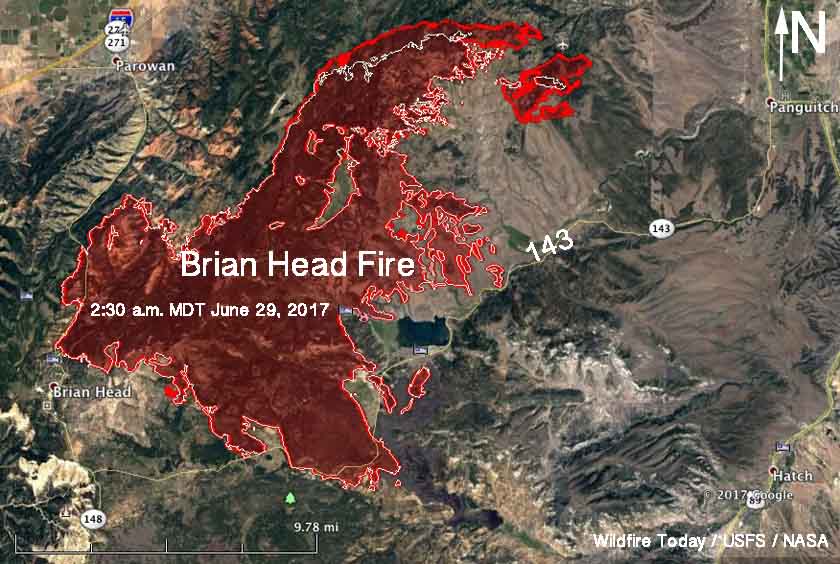
Map of the Brian Head Fire in southwest Utah. The red line was the perimeter at 2:30 a.m. MDT June 29, 2017. The white line was the perimeter 24 hours earlier.

Utah man killed during helicopter mulch operation at Brian Head Fire

(This article was first published on WildfireToday.com, October 8, 2017.)

A man was killed Saturday October 7 during Burned Area Emergency Response (BAER) operations on the Brian Head Fire in southwest Utah. The 58-year old crew member on the ground from Alpine, Utah was giving directions to a helicopter dropping straw mulch when he was struck on the head. The pilot saw the injured man and contacted others who called 911.

Brian Head Marshall Jeff Morgan was flown to the remote site off State Route 143 about 1:45 p.m. and determined that the man had died.

Brian Head Fire map
Map showing planned BAER treatments on the Brian Head Fire.

A statement from the Iron County Sheriff’s Office read:

It was determined he likely died as a result of blunt force trauma from falling debris during the airdrop.

It was not clear from the statement if the man was hit by straw mulch or debris from a nearby tree as the straw fell.

The identity of the person killed has not been released.

Since an aircraft was involved in the fatality the National Transportation Safety Board will be investigating the accident.

Map Brian Head Fire Utah
Map of the Brian Head Fire in southwest Utah. The red line was the perimeter at 2:30 a.m. MDT June 29, 2017. The white line was the perimeter 24 hours earlier.

The Brian Head Fire burned over 63,000 acres in late June.  On August 25 BAER teams began dropping 3,200 tons of wheat straw from helicopter nets to cover the soil surface. The additional ground cover increases the germination of seeds dropped earlier and helps absorb raindrop impact lessening water runoff potential.

BAER treatments Brian Head Fire
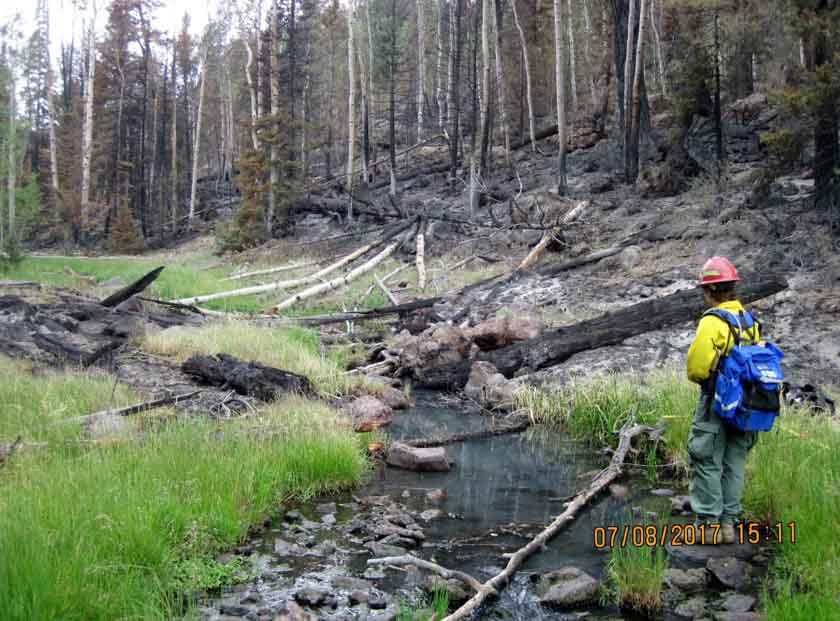
File photo of a BAER team member on the Brian Head Fire, July 8, 2017. BAER team photo.

Our sincere condolences go out to the family, friends, and coworkers.
Thanks and a tip of the hat go out to Charlie.
Typos or errors, report them HERE.

Man killed during helicopter mulch operation at Brian Head Fire

Monday, Oct. 9 UPDATE: Officials identified the victim as 58-year-old Bryan Burr, of Alpine, Utah. The Salk Lake Tribune newspaper reported Burr was the brother-in-law of Sen. Mike Lee, R-Utah.

We have also learned he was the co-owner and president of a charter helicopter service. Visit FireAviation.com to learn more.

*****

Original story: A man was killed Saturday October 7 during Burned Area Emergency Response (BAER) operations on the Brian Head Fire in southwest Utah. The 58-year old crew member on the ground from Alpine, Utah was giving directions to a helicopter dropping straw mulch when he was struck on the head. The pilot saw the injured man and contacted others who called 911.

Brian Head Marshall Jeff Morgan was flown to the remote site off State Route 143 about 1:45 p.m. and determined that the man had died.

Brian Head Fire map
Map showing planned BAER treatments on the Brian Head Fire.

A statement from the Iron County Sheriff’s Office read:

It was determined he likely died as a result of blunt force trauma from falling debris during the airdrop.

It was not clear from the statement if the man was hit by straw mulch or debris from a nearby tree as the straw fell.

The identity of the person killed has not been released.

Since an aircraft was involved in the fatality the National Transportation Safety Board will be investigating the accident.

Map Brian Head Fire Utah
Map of the Brian Head Fire in southwest Utah. The red line was the perimeter at 2:30 a.m. MDT June 29, 2017. The white line was the perimeter 24 hours earlier.

The Brian Head Fire burned over 63,000 acres in late June.  On August 25 BAER teams began dropping 3,200 tons of wheat straw from helicopter nets to cover the soil surface. The additional ground cover increases the germination of seeds dropped earlier and helps absorb raindrop impact lessening water runoff potential.

BAER treatments Brian Head Fire
File photo of a BAER team member on the Brian Head Fire, July 8, 2017. BAER team photo.

Our sincere condolences go out to the family, friends, and coworkers.
Thanks and a tip of the hat go out to Charlie.
Typos or errors, report them HERE.