Firefighters had an 870-acre wildfire burning south of Wickenburg, Arizona about 60 percent contained today; the Cloud Fire near Vulture Mine and Whispering Ranch roads started Thursday, according to the BLM.
State Forestry was responding with aircraft, engines, and hand crews. KJZZ reported that 75 firefighters from the BLM, Wickenburg, and Buckeye Valley were also working the fire.
12NEWS had video. Forestry officials said airtankers slowed the progress of the fire, which was burning in short, dense grass.
The fire started Thursday about 16 miles from Wickenburg.
Aero-Flite announced earlier this month that the Federal Aviation Administration (FAA) has issued a Supplemental Type Certificate (STC) on the Dash 8-400AT airtanker. Based in Spokane, Aero-Flite has shown an ongoing interest in the U.S. certification of the airtanker version of the Dash-8 airliner.
Currently operating AVRO RJ-85 and Canadair CL-415 airtankers, Aero-Flite plans to expand their fleet. scramble.nl reported that with the new STC, Aero-Flite hopes to add two Dash 8-400ATs to its fleet before the end of the year. This FAA approval will allow U.S.-registered Dash 8-400ATs to fly aerial firefighting missions across all states.
The Aero-Flite airtankers will be operating under a long-term, multiyear contract with the State of Washington.
Aero-Flite photo
“Two of Aero-Flite’s Dash 8-Q400AT airtankers are currently on an exclusive use contract with Washington State,” said Brock Hindman, chief pilot of the Dash 8-400AT program at Aero-Flite. He said they’re operating with a cooperator agreement with the USFS and offering the airtanker to the Forest Service and to other states as the fleet grows.
Hindman said Canadian firefighting company Conair and the French Securité Civile have for years used firefighting versions of the Dash-8. “Conair has been converting the Dash 8-400 into an airtanker since 2005,” he said, “and has been operating them in Australia since 2020 — and in Canada and Alaska since 2022. With this recent FAA approval, Aero-Flite can now register our own airtankers in the U.S. and operate them under contract with government agencies.” He said Aero-Flite provides crews, maintenance, and insurance for the Dash 8 operations, working out of its Spokane hangars.
“Each Q400AT has a captain and a first officer operating the aircraft, supported by two aircraft mechanics on the ground, plus partner fuelers and loaders at each tanker base.” Hindman said the crews travel between tanker bases as needed. In 2022 the Q400AT operated in Washington and assisted in Oregon and Idaho.
Aero-Flite photo
Chris Niemann, general manager at Aero-Flite, told AirMed&Rescue, “The Dash offers greater flexibility and responsiveness than larger airtankers, while still providing a comparable payload capacity. It can operate from shorter runways at higher elevations, positioned in smaller airtanker bases located closer to where wildfires occur — meaning a fast response to the fire and back. Plus, they burn significantly less fuel than a Type 1larger airtanker, resulting in much lower operational costs while delivering a similar punch to the fire.”
The Alaska Division of Forestry and Fire Protection (DOF) has sent resources to the Canadian province of Alberta, where agency information officer Lily Coyle says they’re dealing with an unusually intense early wildfire season.
“They declared a state of emergency over this past weekend,” Coyle told Alaska Public Media (PBS). “On Saturday they had over 100 wildfires spreading out of control. Their Premier Danielle Smith deemed it an unprecedented crisis.”
Aerial Fire Magazine reported that at least 29,000 Albertans have been forced from their homes in the north and central regions of the province. Fire managers in Alberta have made large resource requests for outside assistance, including the airtanker and hotshot crew from Alaska. The strong intergovernmental agreement known as the Northwest Compact allows Alaska and other states and provinces to request or share resurces internationally.
Considering Alaska’s delayed snowmelt, late spring, and recent widespread moisture, the DOF made available Airtanker 544 — a Conair Dash 8 – 400
AT Airtanker — and the Pioneer Peak Hotshots, both based in Palmer. Tanker 544 departed for Alberta on May 9. Pioneer Peak IHC has extensive experience in managing fires, and the crew has completed their required 80 hours of pre-season training. The 23-person crew left Tuesday, May 9 in a smokejumper aircraft.
“Alberta was a significant contributor to the Alaska response effort last season,” said DOF Chief of Fire and Aviation Norm McDonald. “Supporting their efforts this spring is an excellent example of not only national but the international cooperation it takes to manage fires during extreme conditions. As we are just beginning the Alaska fire season with our late breakup, we will continue to monitor fire behavior and our own fire protection needs.”
Pioneer Peak Hotshot Crew after completing their annual 80-hour spring training in front of Pioneer Peak in Palmer, Alaska. Photo courtesy of Pioneer Peak Hotshots
Coyle said Alaska fire agencies often send resources outside the state in the fall, but she said the spring deployment is very unusual. “This is the first time we’ve sent a crew to Canada in May,” she said. “Our late fire season, coupled with the early drought conditions that Alberta is facing — that just set us up for this pretty unprecedented situation.”
On the federal side, Alaska Fire Service public affairs specialist Beth Ipsen said no resources have yet been sent to Alberta, but the agency has two hotshot crews that will be finishing training this week and may be available for deployment.
National Park Service (NPS) Division of Fire and Aviation Management has a new chief. Chris Wilcox, former chief for Fire Management with the U.S. Fish and Wildlife Service (FWS), was named May 7 as the new chief for the position, previously held by Bill Kaage, who retired last summer. Chris is the first to hold the position as a member of the Senior Executive Service (SES).
Chris started in 1993 as a seasonal with the USFS Heber Hotshots in east-central Arizona. His qualifications included squad boss, saw boss, sawyer, and engine crewmember. Chris earned a BS in biology from Northern Arizona University in 1997 while still working seasonally for the USFS. In 1999 he detailed to the National Forests of North Carolina as a hotshot squad boss. In 2001, returning to Arizona, he hired on as the superintendent of the Heber IHC.
His first position with Fish and Wildlife began in 2003 when he was named assistant zone FMO for the state of Arizona. In that position, he coordinated with refuge managers to integrate fire management into the refuges’ goals and objectives. He next was hired as zone FMO in New Mexico, where he established a statewide FWS youth education and hunt program — with an emphasis on children with disabilities and terminal illnesses. He conducted the first prescribed fire in the White Sands Missile Range under the Department of Defense and served as developer and facilitator of the Dude Fire staff ride. Chris also was selected to participate in the Australia / New Zealand Fire Management Study Tour.
In 2009 Chris moved to NIFC in Boise and served in several FWS positions, including national fire operations program leader, the deputy branch chief for Operations, and then as chief for the Branch of Fire Management. As chief, he has served on various leadership groups, including the Interior Fire Executive Council, the Fire Management Board, the National Multi-Agency Coordinating Group, and the NWCG Executive Board. He received the DOI Distinguished Service Award in recognition of his leadership of the wildland firefighting community during the global pandemic; he also coordinated an agreement with the Department of Labor that resulted in hiring 40 permanent apprentices to promote diversity within the next generation of FWS fire leadership. Chris also established a mental health and wellness position within the FWS Branch of Fire Management.
Chris lives in Boise with his wife Triniti and two daughters, Alyssa and Tristin. Chris and his family spend their free time rafting, camping, and enjoying other outdoor pursuits.
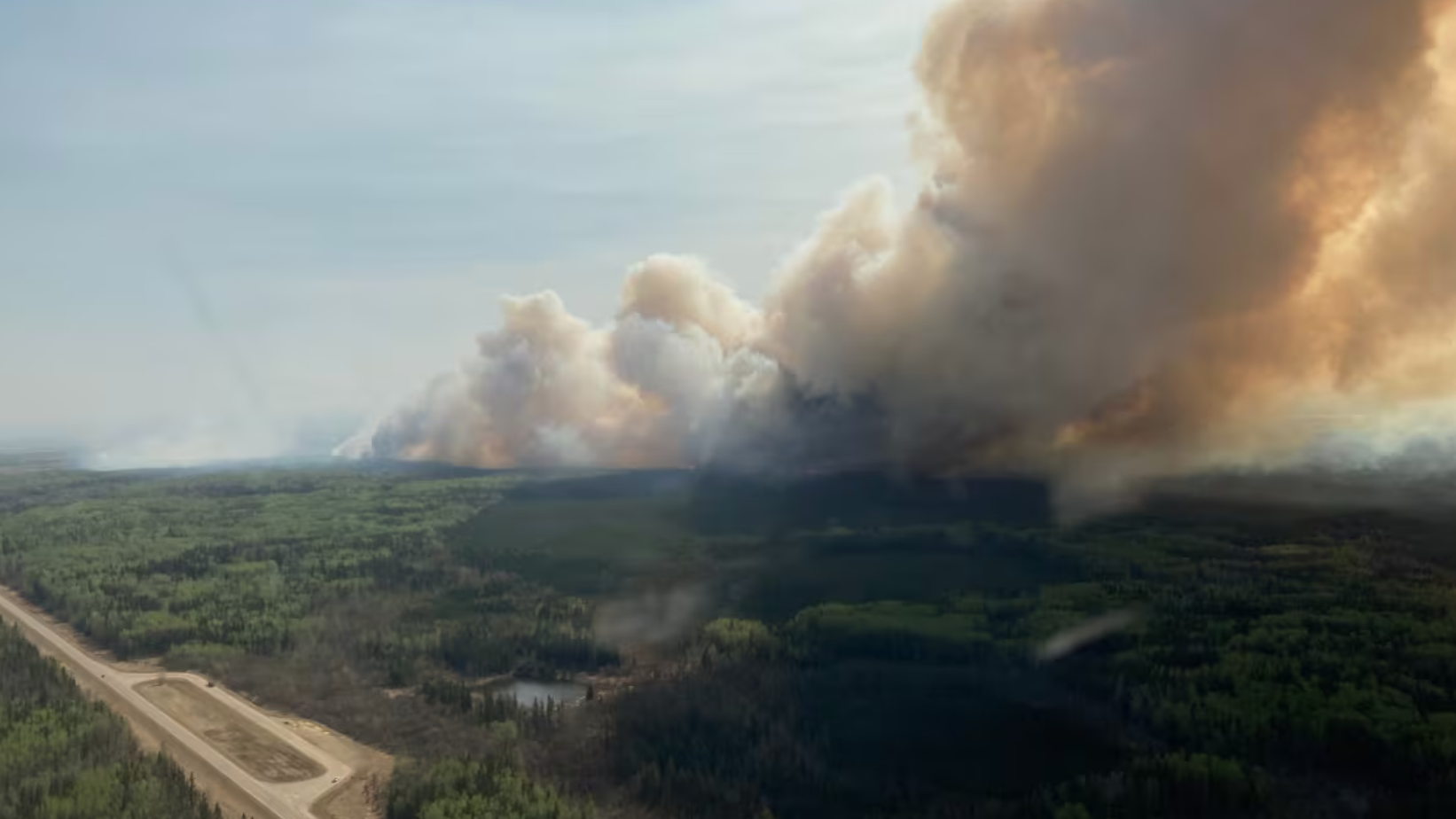
Nearly 30,000 people have been asked to evacuate their homes under siege of dozens of wildfires across the western Canadian province; officials declared a state of emergency on Saturday with more than 110 active wildfires, according to a report today by the BBC.
More than 50 schools were closed on Monday morning, affecting over
2023 Alberta fires
10,000 students, said Mike Ellis, Alberta’s minister of public safety and emergency services. Some areas had evacuation orders lifted after scattered showers and light winds tempered the fires. About 964,000 acres have burnt since wildfires began over a week ago.
In northern Alberta, more than 80 homes were destroyed in rural areas including Fox Lake, John D’Or Prairie, and Garden River, and more than 3,700 residents in that area were evacuated. “It was pretty far from us, from where we live, but we could see all the smoke coming up and it was just getting worse by the minute,” said resident Johnette Blesse.
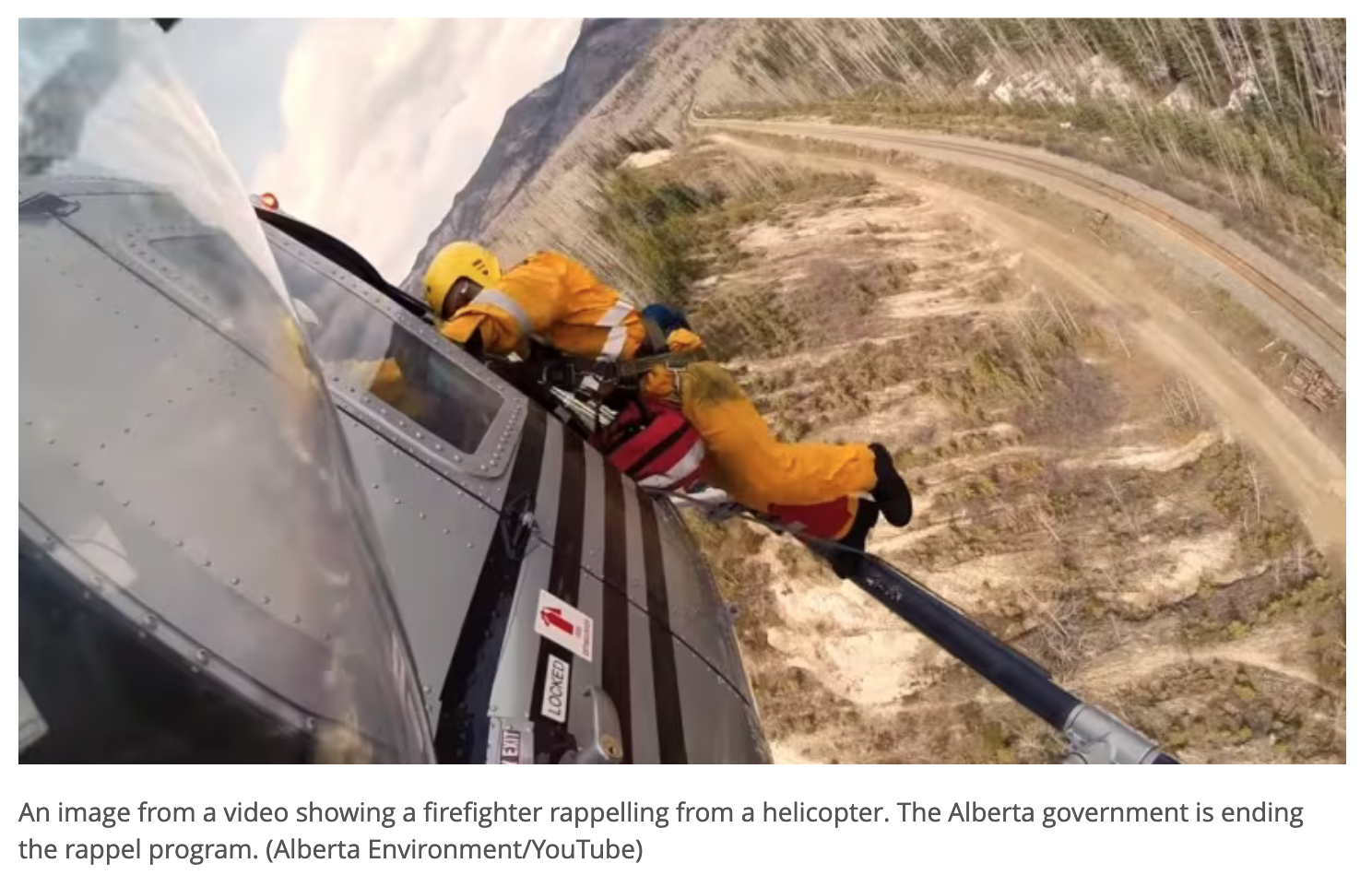
Meanwhile, according to the CBC, firefighters criticized cuts to Alberta’s aerial attack teams as the fires burn; a former rappeller says that rappel teams could have made the difference in the ongoing firefight.
Government budget cuts have left the province short-handed in wildfire suppression. “We could have been difference-makers,” said Jordan Erlandson, a former member of Alberta’s Rapattack team.
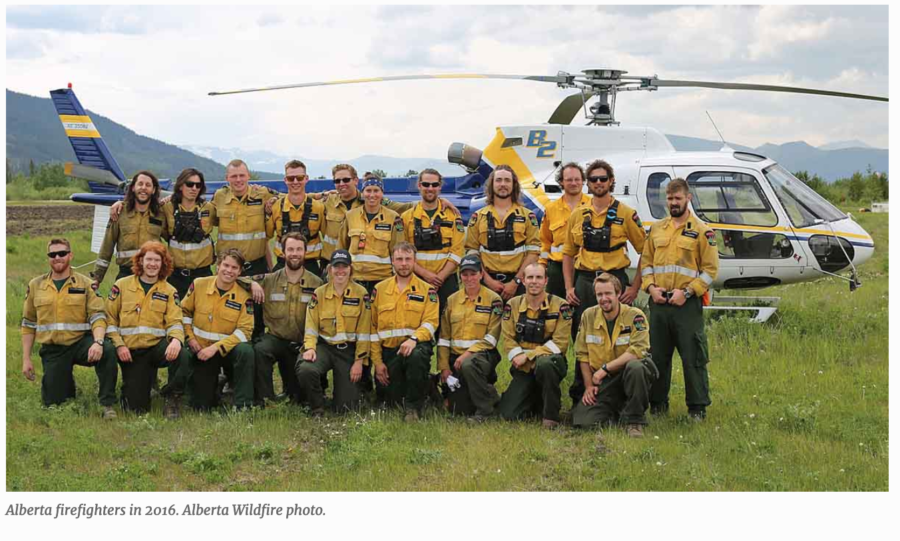
The program once had 63 firefighters stationed around the province — including at Edson, Fox Creek, and Lac La Biche — and these are communities now threatened by one of the busiest early fire seasons in provincial history.
The rappelling program was cut in 2019 by the United Conservative government.
“They told us the program had been eliminated,” said former member Adam Clyne. “They just said budget.” A 2019 op-ed in the CBC News said, “As wildfire threat grows, UCP cuts to remote rappel team are a risky gamble,” and explained they saw the province’s plan as shortsighted.
“Against this backdrop of increasing wildfire risk and management concerns, the UCP government has announced cuts to its wildfire suppression program,” wrote author Mathieu Bourbonnais. “The proposed cuts and the rationale presented by the UCP government are short-sighted. Without doubt, these cuts will directly impact the safety and livelihoods of rural communities in Alberta. Among the immediate casualties is the Alberta Wildland Firefighter Rappel Program, which since 1983 has been the main line of defence for rural communities against wildfires that start in remote areas. Deployed provincially as nine crews of seven, the men and women in the program are trained to rappel from helicopters and aggressively contain fires while they still are small.”
The New York Times reported that about 24,000 people were out of their homes in the sparsely populated, largely northern areas of Alberta, with dozens of fires burning across nearly 1 million acres. The fire season, typically from March 1 to early October, already has tallied over 400 fires — an unusually high number. People have not forgotten the season of 2016, when fires burned from the forestland into the oil sands capital of Fort McMurray, Alberta.
That fire forced the evacuation of more than 90,000 people, destroyed more than 2,400 homes and businesses, and disrupted production at the United States’ largest source of imported oil. At more than 4 billion Canadian dollars, it remains Canada’s most costly disaster.
As was the case during the Fort McMurray fires, many of the current evacuees, a group that includes thousands of members of First Nations communities, have sought refuge in Edmonton, the province’s capital and second-largest city. This year’s fires are fueled by the same weather phenomena that caused the 2019 bushfires in Australia: GRIST Magazine reported that oil production was forced to halt after a state of emergency was declared this weekend.
The province, Canada’s largest producer of crude oil and natural gas, has discontinued production of the equivalent of 145,000 barrels of oil amidst the fires. And though recent rain showers have slowed the progression of some fires, storms could also bring lightning, according to Marc-André Parisien, a research scientist at the Canadian Forest Service.
Businessman and volunteer firefighter Bill Garrison arrived Tuesday evening at Hutchinson Regional Airport, according to KSN-TV, with Tanker 154, a Grumman S-2 airtanker that he purchased at a Marsh Aviation auction at Falcon Field in Mesa, Arizona in December. He spent several months getting the tanker ready to fly back to Kansas.
Garrison has been a pilot for 44 years and is a full-time commercial and agriculture pilot with his company Ag Air Service, first enlisted to help fight Kansas wildfires in 2017. He started with his cropdusting AirTractor aircraft but then went on to purchase Tanker 95, another S-2 tanker that was previously flown by CAL FIRE
VIDEO: Bill Garrison flew in Tanker 154 from Arizona to the Hutchinson Regional Airport.
Tanker 154 — screenshot from video
KAKE-ABC reported that in 2017 when the Highland Fire in Reno County burned thousands of acres and destroyed 10 homes, Garrison decided he was going to need something a lot bigger than his cropdusters. That’s when he bought Tanker 95, and this week he welcomed Tanker 154 to the fleet.
“We ought to be doubly effective, be able to send aircraft on multiple fires,” Garrison said. “Whereas before I’d have to work one fire and then get dispatched to another one, now we can send an aircraft to each fire.”
Ag Air ground crew with one of the AirTractor tankers – AgAirServiceInc.com
Tanker 95 is currently contracted through the Kansas Forest Service. Garrison’s firefighting aircraft have worked on large wildfires in Reno County since 2017 using cropdusters, according to Adam Weishaar, director of Reno County Emergency Management. “This second airtanker will be a valuable asset to Reno County and the state of Kansas to assist with aerial firefighting. We are very fortunate to have an airtanker stationed and available in Reno County.”
Garrison’s planes are used on a contracted as-needed basis by the Kansas Forest Service, and it’s hoped that the airport can make retardant available.
A pilot walked away with minor injuries when his helicopter made a hard landing and rolled at the Edson Airport in western Alberta Thursday evening. Royal Canadian Mounted Police (RCMP) said officers responded just after 8 p.m. to the town’s airport, located about 180 kilometres (112 miles) west of Edmonton in Yellowhead County. According to Global News Canada, police said the helicopter was helping fight fires. RCMP said forestry officials responded to the crash, in addition to emergency crews.
Alberta helicopter incident, screenshot from video clip.
An Alberta Wildfire officer said the province doesn’t own its own helicopters and instead contracts with private outfits to help as needed. It’s not yet known what company owned the helicopter that crashed.
Video sent to Global News shows the helicopter coming in to land and setting down hard, causing the aircraft to flip over. The pilot, who was alone in the aircraft, sustained only minor injuries. He was taken to hospital as a precaution, RCMP added.
The Transportation Safety Board of Canada said it has been notified of the crash in Edson.
UPDATE05/06/2023: Three wildfires burning near the boundary between British Columbia and Alberta have forced evacuation orders and an alert. Two of the fires are in the Peace River region, including the Red Creek Fire, covering 1,550 hectares (3,830 acres) northwest of Fort St. John, B.C., about 1,200 kilometres (745 miles) northeast of Vancouver.
CBC Canada reported that the evacuation order covers 61 homes in the area; Goodlow, B.C., and the surrounding region are also under evacuation orders ahead of the Boundary Lake Fire, which covers an area of 19 square kilometres (~4700 acres).
Boundary Lake Fire in the Prince George Fire Centre. (B.C. Wildfire Service)
Dozens of new wildfires were discovered across Alberta on Thursday amid high temperatures, dangerously dry conditions, and high winds. More than 10,000 people across Alberta are now affected by mandatory evacuation orders, according to a Global News Canada report.
Fire officials updated many Alberta Emergency Alerts throughout the day as the fires grew and threatened more properties.
An evening update from Alberta Wildfire said there were 72 active wildfires across the province — but in the hours after that bulletin, even more fires showed up on the government agency’s live dashboard. As of 11 p.m, it showed 79 fires, with 19 out of control; 25 were caused by humans, five by lightning — and the rest were still under investigation.
CBC Canada reported that one out-of-control fire has forced the evacuation of thousands of people from Drayton Valley and Brazeau County in west-central Alberta.
“Bring important documents, medication, food, water and supplies for at least three days,” town officials told 7,200 residents on its Facebook page late Thursday. “Take pets with you.”
The City of Edmonton has set up a reception centre for evacuees at the Expo
B.C. Wildfire Service mobile app — find it on the App Store or Google Play.
Centre in Edmonton. Bart Guyon of Brazeau County has been coordinating with the area’s fire chief to ensure county residents have the latest information and are able to evacuate swiftly. “It’s kind of like waking up in the middle of a nightmare,” Guyon said.
“Tactical evacuations are being done. This wildfire primarily affects oil and gas industry, but anyone within the area must evacuate,” the emergency alert said.
The evacuations in Brazeau County and Drayton Valley are the latest developments in a week that has seen a series of wildfires across central and northern Alberta. Many are burning out of control in hot, dry and windy conditions.
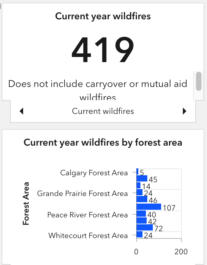
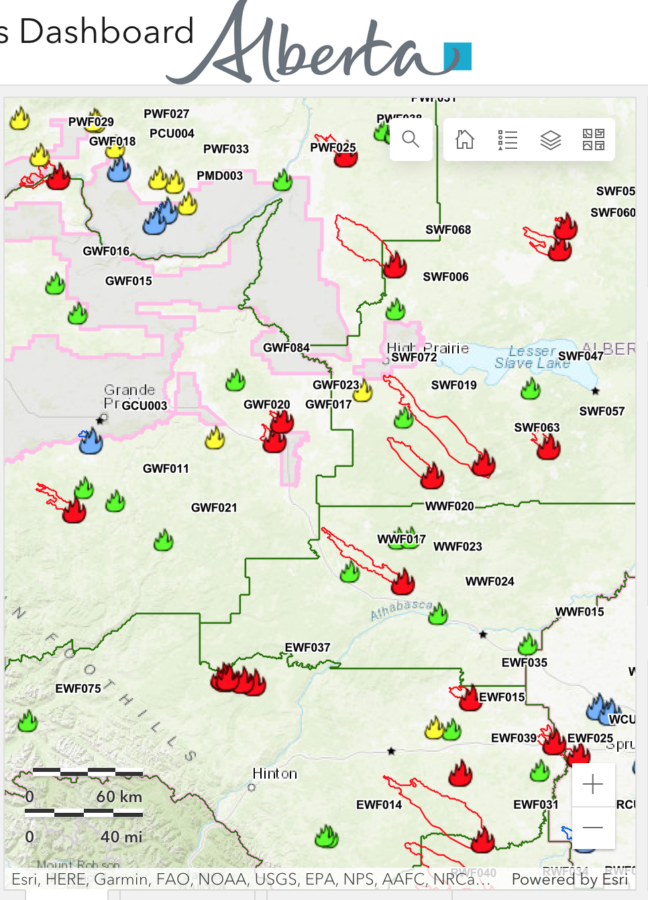
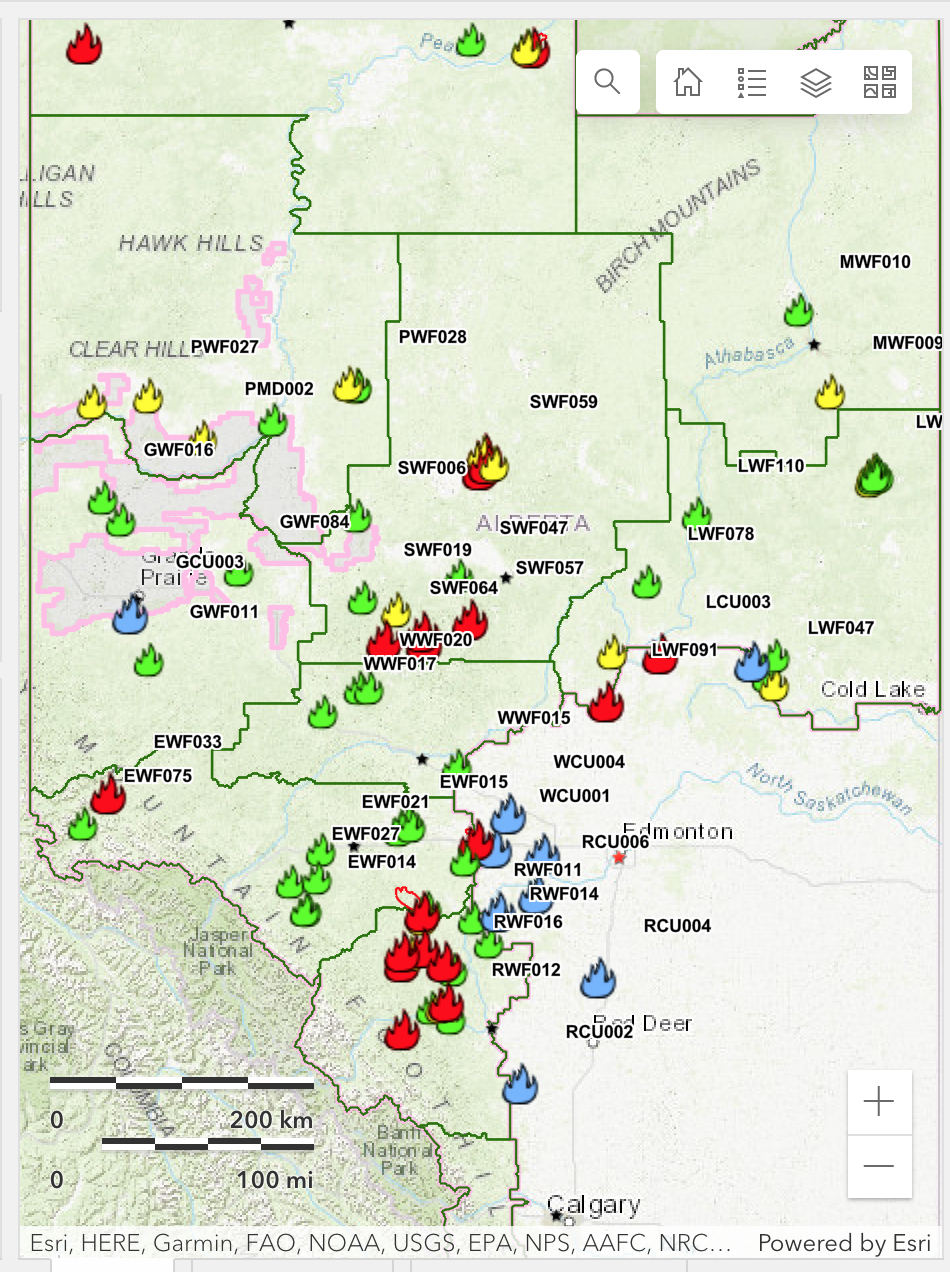
On Thursday, the fire in the Fox Lake area forced thousands of people from their homes. According to an update from Alberta Wildfire on Thursday afternoon, the wildfire covers about 4,400 hectares (~11,000 acres). Alberta Wildfire has forest area updates and fire data online, with maps and annual statistics on its Wildfire Status Dashboard website.
The documentary film Elemental: Reimagine Wildfire will be screened at Granada Theater in The Dalles, Oregon at 7 p.m. on Friday, May 5 and 1 p.m. Saturday, May 6. The film begins with views of a harrowing escape from Paradise, California, as the town was torched by wind-driven embers and burned within just hours of the fire’s start. The film features climate experts, Indigenous viewpoints, and fire survivors — and explores lessons from recent record-shattering fires across the West. The Columbia Gorge News reported that filmmaker Trip Jennings founded Balance Media and has worked with National Geographic for more than a decade. His films have won dozens of awards around the world and have aired on major networks on every continent.
Willamette Week reported that before this documentary began touring Oregon this spring — from Hood River to La Grande to Astoria — there was one statistic that director Trip Jennings wanted to add to the film:
“In California, 80 percent of homes that burn in wildfires are not surrounded by forests. Nationally, a majority of homes that burn in wildfires aren’t in forests.”
Why then, the film asks, are hundreds of millions of dollars spent annually fighting fires in forests? In response, Elemental explores fire’s natural ecology, how Indigenous burning practices could change the conversation, and how the best defense against wildfire begins with homes themselves.
Elemental has been selected for more than 40 film festivals and already has won numerous awards. The film is currently in theaters nationwide, and it will be available on streaming in June. SEE IT: Elemental tours Oregon during April and May. See a full list of screenings at elementalfilm.com/showtimes
A potential 10-year, $1 billion contract list for helicopter support services to the U.S. Forest Service was announced yesterday.
According to a post on GOVCONWIRE, the indefinite-delivery / indefinite-quantity contract covers the provision of helicopters in the Type 3 category to support national resource conservation and wildland fire management programs. A notice posted Wednesday on the SAM.gov site identifies contractors on the list in a PDF linked from that site.
Award Details
Contract Award Date: Apr 26, 2023
Contractor Awarded Address: Boise, ID USA
Base and All Options Value (Total Contract Value): $1,000,000,000.00
Additional details may be available from David P. Hershey at NIFC.
Type 3 helicopters are light rotorwing aircraft that weigh up to 7,000 lbs. and can carry up to nine passengers. These contracted aircraft will support a variety of missions such as fire monitoring and suppression, initial attack, prescribed fire and aerial ignition, short-haul, and rappelling operations. The government may also use the helicopters for law enforcement and administrative flights. The firm-fixed-price contract has a one-year base period along with nine option years.


 strong intergovernmental agreement known as the Northwest Compact allows Alaska and other states and provinces to request or share resurces internationally.




 The

 According to a post on